

EEG Test in Turkey: What Neurology Patients Can Expect
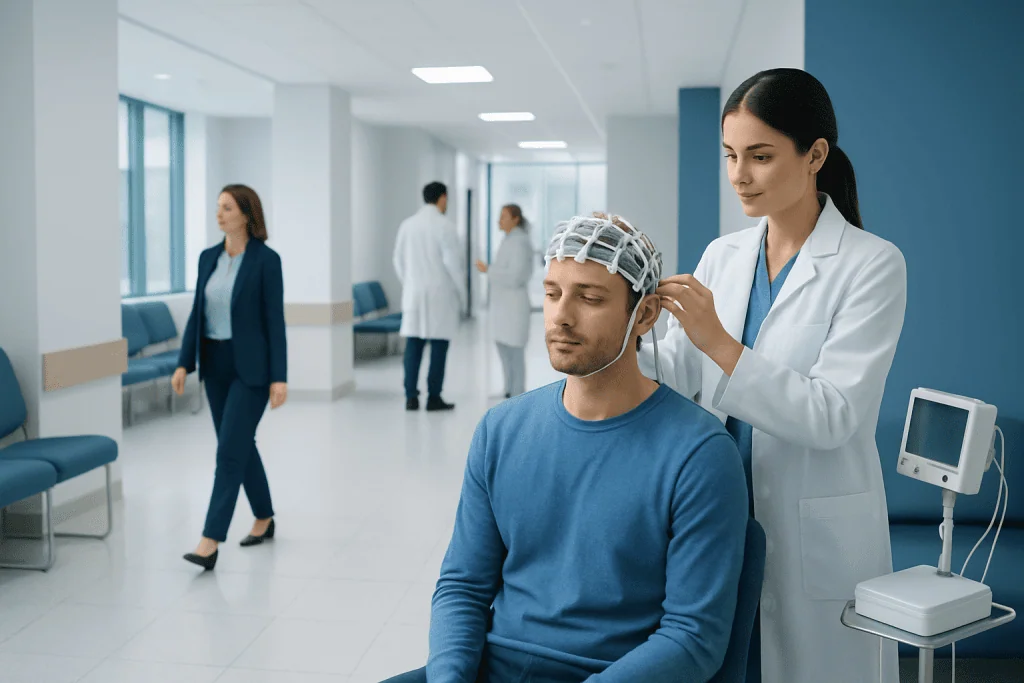
An EEG in Turkey is usually an outpatient recording of the brain's electrical activity, taken through small electrodes placed on the scalp. It is non-invasive, sends no electricity into the body, and often takes under an hour of recording time. Preparation is simple: clean hair, a complete medication list and previous reports. A neurologist interprets the result alongside your symptoms and other tests.
Will it hurt? How long will you be at the hospital? Can you still fly home that week? These are the questions most people actually have after a neurologist recommends an EEG, and they matter more when the test is happening in another country.
This guide explains the practical side of having an EEG test in Turkey as an international patient: what the test does and does not tell you, the different types of EEG you might be offered, how to prepare, what the appointment feels like, and how results and follow-up work when you live abroad.
At a glance
- Purpose: Records the brain’s electrical activity to support neurological assessment. It is a diagnostic recording, not a treatment.
- Typical setting: Neurology or neurophysiology unit, usually as an outpatient visit. Some monitoring types involve a longer or overnight stay.
- Comfort level: Non-invasive. Electrodes sit on the scalp with paste or gel; no electricity enters your body.
- Planning needs: Clean, product-free hair, a full medication list, previous reports and realistic travel timing.
- Support available: Interpreter services and appointment coordination can be arranged for international patients.
What an EEG test in Turkey involves and why you may need one
An electroencephalogram, usually shortened to EEG, records electrical activity from your brain through small sensors placed on your scalp. The sensors only listen. Nothing is injected, nothing is sent into your body, and the test itself does not treat any condition. What it produces is a tracing of brain activity that a neurologist reads alongside your symptoms, your history, a physical examination and any imaging or laboratory results.
Neurologists commonly request an EEG after episodes such as seizures, fainting, unexplained confusion, unusual movements, memory gaps, sleep-related events or changes in awareness. Some international patients arrange an EEG test in Turkey as part of a planned neurology evaluation booked from abroad; others have it added during a broader assessment after a consultation reveals something worth recording.
One point is worth stating plainly at the start, because it shapes everything else in this guide: an EEG captures brain activity during the recording window. If your episodes are occasional, a short recording may catch nothing unusual even when a condition exists, and certain patterns can appear in people without symptoms. That is not a flaw in the test: it is why the result only means something in the hands of the doctor who knows your full picture.
Types of EEG you may be offered
The word EEG covers several different tests, and the type requested affects your schedule in Turkey more than almost anything else.
- Routine (standard) EEG. The most common form. Recording typically lasts well under an hour, done awake and resting, sometimes with brief activation steps such as deep breathing or flashing lights. Usually an outpatient visit.
- Sleep or sleep-deprived EEG. Some brain activity patterns appear mainly during drowsiness or sleep, so you may be asked to sleep less than usual the night before. This changes your day: you will be tired, and you should not plan to drive or manage complicated travel alone afterwards.
- Ambulatory EEG. A portable recorder worn for an extended period, sometimes a day or more, while you go about quiet activities. This affects what you can do with your hair, your washing routine and your accommodation plans.
- Video-EEG monitoring. A longer recording combined with continuous video, typically in a monitoring unit, used when the team needs to see an episode as it happens alongside the brain tracing. This can involve staying in hospital for one or more nights, so it is worth reading about what an overnight hospital stay in Turkey involves for you and any companion.
Which type you need is a clinical decision, made by the neurologist based on your episodes and history. If your referral simply says “EEG”, it is reasonable to ask which type is planned before you book flights, because the difference between a routine outpatient recording and several days of monitoring is the difference between a short trip and a substantial one.
Before you travel: documents and medical details to gather
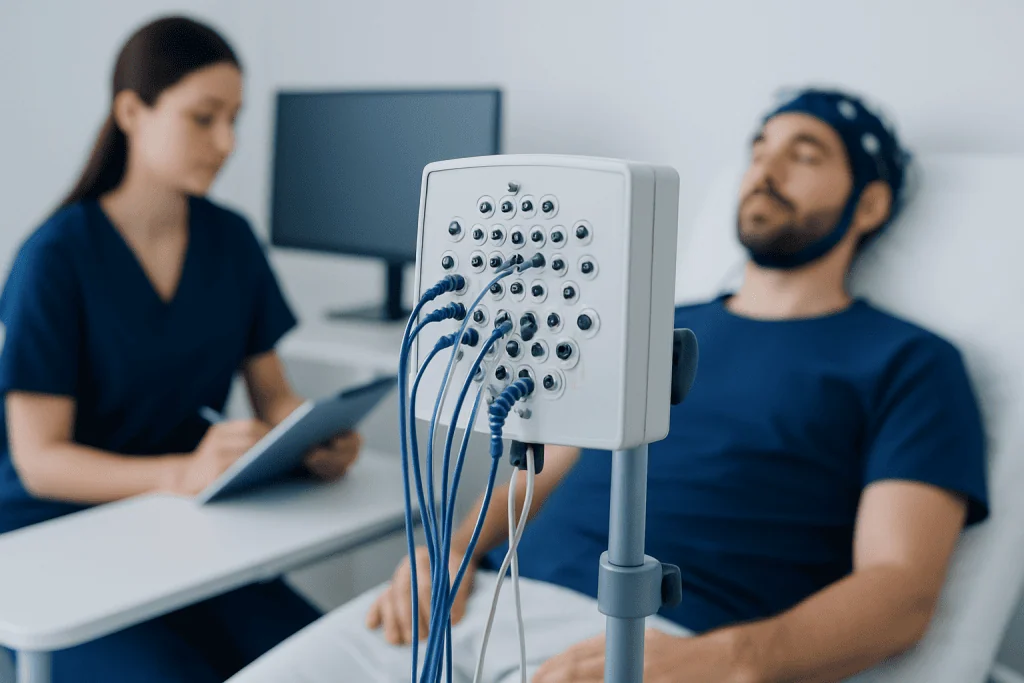
Good preparation starts long before the airport. The documents that make an EEG appointment genuinely useful are: previous neurology reports, hospital discharge notes, brain MRI or CT results with the images where possible, any prior EEG reports, and a complete medication list. If someone has captured a video of one of your episodes on a phone, keep it, recorded events are often more informative to a neurologist than a second-hand description, and the reviewing doctor can advise on how to share it securely.
Be thorough about medications: anti-seizure medicines, sleeping tablets, antidepressants, blood thinners, supplements and over-the-counter products all belong on the list. Do not stop or change any medication because a test is coming up. If the neurologist wants a sleep-deprived recording or any medication-related preparation, that instruction comes from the treating doctor, individually, in advance, never assume it.
A simple written timeline helps enormously: when the episodes began, how often they happen, how long they last, what you notice before and after, and any apparent triggers such as sleep loss, stress, alcohol, fever, flashing lights or missed doses. A companion who has witnessed events can add details you cannot remember. Many hospitals also offer an online doctor review before travel, which is a practical way to confirm the right type of EEG is planned before you commit to dates.
How to prepare on the day of your EEG

Day-of preparation is genuinely simple. Wash your hair the night before or that morning, and skip oil, gel, mousse, heavy conditioner and spray, anything that coats the hair makes it harder for electrodes to sit well against the scalp, and poor contact means a poorer recording. Wear comfortable clothing, ideally a top that opens or adjusts easily around the neck and shoulders. Skip complicated hairstyles: braids, weaves, extensions and clips can interfere with electrode placement, so ask in advance if any of these apply to you.
Eat normally unless the team has told you otherwise; arriving hungry or dehydrated helps no one. Bring water and a snack if your day also includes a consultation or other tests. If you have been asked to reduce sleep before the test, follow only the specific instructions given by your care team, and arrange transport rather than planning to drive or navigate alone, sleep deprivation is deliberately tiring.
For children, older adults or anyone anxious about medical settings, comfort planning is part of preparation. A familiar companion, a small familiar item, extra arrival time and a plain explanation of the steps all help. Sensory sensitivities, mobility needs and adhesive or skin sensitivities are worth mentioning when the appointment is arranged, so the team can adapt the session rather than improvising on the day.
What happens during the appointment
On arrival, staff confirm your identity, review the request and explain the steps. A trained technician measures points on your scalp and attaches small electrodes with conductive paste or gel: this measuring stage is often the longest part of the visit. You then sit in a reclining chair or lie down while the recording runs.
During the recording you may be asked to relax with your eyes closed, open and close your eyes on cue, breathe deeply for a short period, or watch a flashing light. These activation steps are not applied to everyone; the technician follows the neurologist’s request and your safety profile, and you can ask for a pause at any point if you feel unwell, dizzy or anxious.
The sensation is mostly one of sitting still with cool, slightly sticky paste in your hair. There are no needles and no electricity entering your body. The recording itself is often shorter than people expect, but plan for a longer total visit: registration, electrode placement, the recording, removal, cleaning up and any same-day consultation all add time. If an interpreter is supporting you, the explanation stages take a little longer too, which is a feature, not a delay, because understanding the instructions improves the recording.
After the test: results, reports and follow-up from abroad
Once the electrodes come off, most people return to normal activities immediately unless the doctor has said otherwise. Bring a comb, wipes or a hat, traces of paste usually stay in the hair until the next wash. If you were sleep-deprived, treat the rest of the day as a rest day: no driving, no demanding travel legs.
The tracing is reviewed by a qualified physician, usually a neurologist or neurophysiology specialist, and interpreted in the context of your symptoms, examination, medications and other tests. Two honest cautions apply. A normal EEG does not rule out a neurological condition, because the recording may simply not have captured an event. An abnormal pattern does not by itself confirm one specific diagnosis. The report is one instrument in an assessment, not a verdict.
As an international patient, the questions worth settling before you leave are practical: when the report will be ready, whether it will be issued in English or translated, whether the neurologist will discuss it with you in person or through a remote follow-up, and how the report and any imaging can be shared with your doctor at home with your consent. Sorting these out in advance is far easier than chasing documents across time zones later.
Planning your stay, timing, other tests and how costs work
A routine EEG is usually a single outpatient visit, but your overall schedule depends on why you are being assessed. Some patients need only a consultation and EEG; others also need MRI, blood tests, a sleep evaluation or additional specialist input. An MRI scan in Turkey is commonly requested alongside an EEG in neurological workups, and it is sensible to understand how unexpected additional tests affect timing and cost before you fix a return flight. The safest habit is simple: do not book a tight departure until the care team confirms a realistic timeline.
On cost, this guide deliberately gives no figures, because a single number for an “EEG in Turkey” would mislead you. What a quote depends on is knowable, though: the type of EEG (a routine outpatient recording sits at one end, multi-day video-EEG monitoring at the other), whether a neurology consultation and other tests are bundled into the same visit, whether sedation is needed for a young child, interpreter and report-translation arrangements, and the hospital’s international patient services. The same structure applies to MRI pricing, scanner region, contrast use and reporting all shape the figure. Ask for a written, itemised quote based on your actual referral and documents, and ask what would change it. A quote built on your real records is worth more than any published price list.
Travel-wise, think through arrival timing, hotel distance from the hospital, local transport and rest after the flight. Jet lag and poor sleep can affect how you feel during a neurology visit, and if fatigue is one of your triggers, arriving a day early to recover is a low-cost way to make the whole assessment more useful.
Comfort, safety and communication tips
Feeling nervous before a neurological test is normal, particularly after frightening symptoms. EEG teams work with anxious, tired and worried patients every day, and you are entitled to ask anything: how long placement takes, whether you can move, what happens if you need the toilet mid-recording, what to do if you feel uncomfortable.
Tell the team about anything that might affect the session: a scalp condition, recent head surgery, implanted devices, skin or adhesive sensitivity, pregnancy, or a history of events triggered by flashing lights or deep breathing. These details let staff adapt the activation steps safely. If you do not speak Turkish, use the interpreter service rather than piecing together instructions, clear two-way communication is a safety measure, not a luxury.
Finally, organisation lowers stress. Keep one folder on your phone and, if possible, one printed folder: passport details, appointment confirmation, medication list, allergies, previous reports, emergency contacts and insurance or payment documents. Hospital days move more smoothly when nothing has to be searched for.
Step by step
- Gather your neurology history first. Previous reports, imaging, prior EEGs, a medication list and a short symptom timeline let the neurologist decide whether a routine, sleep-related or monitored EEG is appropriate before dates are fixed.
- Confirm the appointment plan. Establish which type of EEG is scheduled, whether it comes before or after the consultation, what other tests share the day, the hospital location, arrival time, expected duration and interpreter arrangements.
- Follow the preparation instructions you are given. Wash your hair, skip styling products, eat normally, and continue medications as prescribed unless your treating doctor has given specific different instructions.
- Arrive with time to spare. Allow for traffic, registration and wayfinding, especially in Istanbul. An unhurried arrival makes the recording calmer and the day less stressful.
- Complete the recording. The technician places the electrodes and guides you through resting, eye opening and closing, deep breathing or flashing lights where medically appropriate. Ask for a pause whenever you need one.
- Settle the results plan before leaving the building. When will the report be ready, in what language, and will the discussion happen in person or remotely? Fix this while you are still on site.
- Keep copies for home care. Make sure you can access the EEG report and related recommendations after you leave Turkey, and that they can be shared with your local doctor if ongoing follow-up is needed.
Your checklist
- Passport or official ID and appointment confirmation
- Current medication list with doses and timing
- Previous EEG, MRI, CT, blood test or hospital reports
- Written description of episodes, triggers and recovery time
- Any phone video of an episode, kept ready to share securely
- Clean hair with no oil, gel, spray or heavy conditioner
- Comfortable clothing and a comb or hat for after the test
- Interpreter request confirmed if you do not speak Turkish
- Companion contact details and emergency contact information
- Insurance, payment or guarantee documents if applicable
Key takeaways
- An EEG test in Turkey is usually an outpatient, non-invasive recording of brain electrical activity; monitored types may need a longer stay.
- The type of EEG requested shapes your whole trip, confirm it before booking flights.
- Clean hair, a complete medication list and previous reports make the appointment smoother and the recording more useful.
- Settle report language, delivery timing and follow-up format before you travel home.
- A normal or abnormal tracing is not a diagnosis on its own; specialist interpretation alongside your symptoms is what gives it meaning.
Frequently asked questions
Is an EEG test painful?
The electrodes only record; nothing enters your body and there are no needles. Most people feel little more than cool, sticky paste on the scalp and the mild boredom of sitting still. Some find the paste in their hair afterwards the most annoying part: a comb and a later hair wash solve it.
How much does a one-hour EEG cost?
There is no honest single figure. The price of an EEG depends on the type of recording (routine, sleep-deprived, ambulatory or video-EEG monitoring), whether a neurology consultation and other tests are included in the same visit, whether sedation is needed, and interpreter or report-translation arrangements. Ask for a written, itemised quote based on your actual referral and records rather than relying on a generic list.
How much does an MRI cost in Turkey?
The same structural logic applies: the figure depends on the body region scanned, whether contrast is used, the reporting and translation arrangements, and whether the scan is bundled with a consultation. If an MRI is likely to accompany your EEG, our guide to MRI scans in Turkey explains what to expect, and a quote built on your own referral is the only reliable number.
Can foreigners go to hospital in Turkey?
Yes. Turkish private hospitals routinely treat international patients, and larger groups run dedicated international patient departments that handle appointment coordination, interpreters and documentation. You will need your passport and, depending on your situation, insurance or payment documents. Standard visa and entry rules for your nationality apply as for any visit.
Which country is best for neurologists?
No country holds that title, and claims otherwise deserve scepticism. Strong neurology exists in many countries, including Turkey. What matters for you is narrower: whether the specific team has experience with your condition, whether communication works in a language you understand, whether the diagnostic equipment matches what your assessment needs, and whether follow-up from your home country is realistic. Judge the pathway, not the flag.
Will I receive my EEG results the same day?
Timing varies with the type of EEG, the hospital schedule and the specialist review needed. Longer recordings naturally take longer to analyse. Ask when the appointment is arranged how long the report will take, what language it will be issued in, and whether the discussion can happen before your departure or through a remote follow-up afterwards.
Can I take my usual medications before the EEG?
In many cases patients continue their usual medicines, but only your treating doctor can confirm this for you. Never stop anti-seizure medication, sleeping medication or any prescribed treatment on your own initiative before a test. Bring your complete medication list, including supplements and over-the-counter products, to the appointment.
Do I need someone to come with me?
A companion is not always required, but it helps if you have episodes involving loss of awareness, memory gaps, mobility needs or significant anxiety. A witness can describe events you cannot remember, which is often clinically valuable. If you are sleep-deprived for the test, having someone to help you travel afterwards is a practical necessity rather than a comfort.
Add us as a Preferred Source to see more of our trusted health content across Google Search, AI Overviews and Discover.

Update history
- PublishedJune 16, 2026
- Medical review approvedSeptember 13, 2026
- Last content updateSeptember 12, 2026
References1
- Electroencephalogram (EEG): Cleveland Clinic my.clevelandclinic.org
More Patient Guides
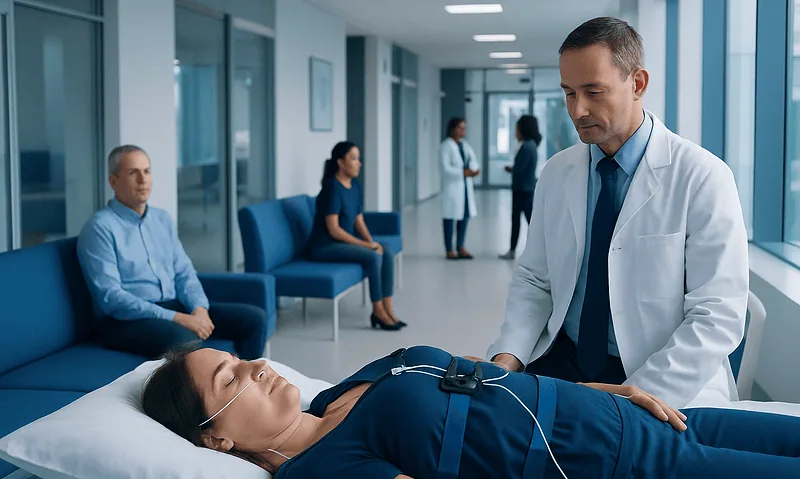
Sleep Apnea Testing in Turkey: What Happens During Your Evaluation
Sleep apnea testing in Turkey may include a consultation, overnight sleep study or home test, and a clear review of your results…

How to Organize Your Test Results Before Traveling to Turkey
Organize your test results before traveling to Turkey by sorting records, images, medicines and timelines so your Istanbul care team can review…

When Extra Tests Are Needed Before Treatment in Turkey
Extra tests before treatment in Turkey may be needed to confirm diagnosis, timing, and safety. Here is what you can expect in…

At Acibadem, How to Prepare for Blood Tests, Scans, and Pre-Op Checks
Blood tests, scans, and pre-op checks at Acibadem in Turkey help confirm you are ready for treatment and avoid delays on the…