

EMG and Nerve Conduction Study in Turkey: Patient Guide
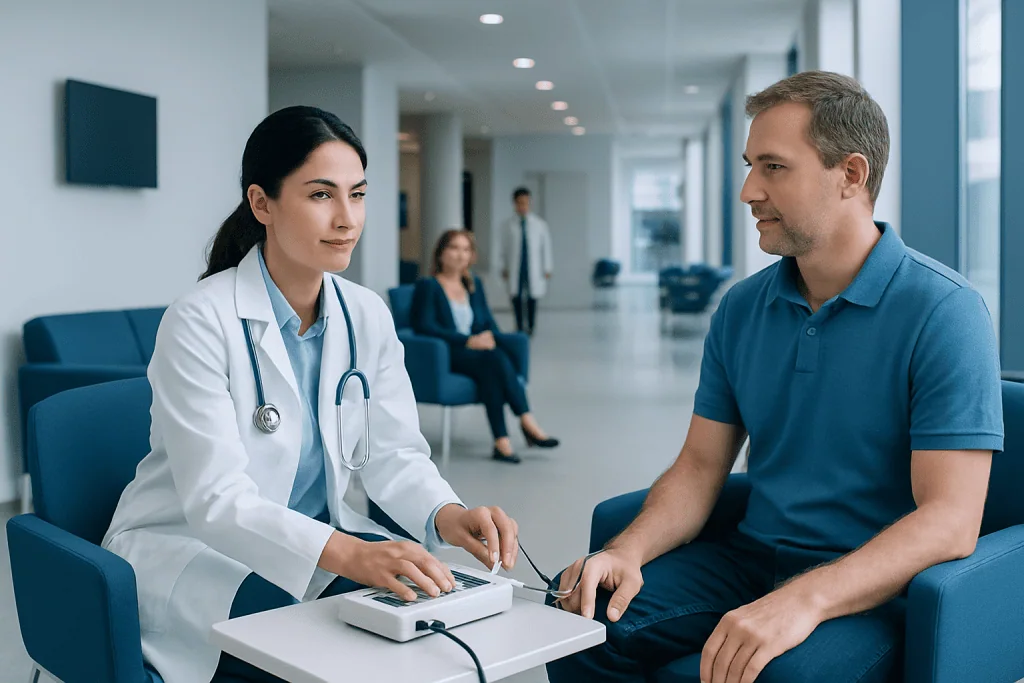
An EMG and nerve conduction study in Turkey is usually a planned outpatient test lasting roughly thirty to ninety minutes, depending on how many nerves and muscles are examined. Preparation is simple: clean skin without lotion, comfortable clothing, and your previous medical records. Most patients can travel normally afterwards, though mild muscle soreness from the needle portion is common for a day or so.
Two questions come up before almost every appointment: how much time will this test take out of my trip, and will it hurt? Both have honest answers, and neither should worry you. This guide explains what an EMG and nerve conduction study in Turkey involves, how to prepare, what the test feels like, and how to plan the rest of your visit around it.
You will also find practical notes on documents, timing, results, and what usually determines the price of the test, without pretending any of it can be pinned down before a doctor has seen your case.
At a glance
- Purpose: Assesses how your nerves carry electrical signals and how your muscles respond, when symptoms such as numbness, tingling, weakness or radiating pain need clarification.
- Two parts, one visit: The nerve conduction study uses surface electrodes and brief pulses; the EMG uses a fine needle electrode in selected muscles. They are usually done in the same session.
- Typical setting: A neurology or clinical neurophysiology unit, as an outpatient appointment.
- Duration: Commonly between thirty and ninety minutes, depending on how many areas are examined.
- Comfort level: Brief electrical pulses and short needle-related discomfort are normal. Most patients tolerate the test well.
- Language support: Interpreter support is typically available for international patients from registration through to the discussion of results.
What an EMG and Nerve Conduction Study in Turkey Involves
An EMG and nerve conduction study is really two tests performed together, and it helps to keep them separate in your mind. The nerve conduction study (sometimes written NCS or NCV) measures how quickly and how strongly electrical signals travel along your nerves. The electromyography, or EMG, records the electrical activity inside your muscles, both at rest and when you contract them.
So no, an EMG is not the same thing as a nerve conduction study, although the terms are often used loosely. In practice, most neurologists order them as a pair because the combination tells them more than either test alone. Together they help distinguish whether a symptom comes from a nerve, a nerve root near the spine, a muscle, or the junction where nerve meets muscle.
You may be referred for the test if you have persistent numbness, tingling, burning sensations, muscle weakness, cramps, pain radiating from the neck or back, or unexplained changes in how your hands or feet work. The test does not diagnose anything by itself. Your neurologist interprets the readings alongside your symptoms, examination and any imaging you already have.
For international patients, the most useful point is a practical one: an EMG and nerve conduction study in Turkey is usually a planned outpatient appointment, not a hospital stay. It fits naturally into a short visit that may also include a neurology consultation, imaging or laboratory work, and hospitals usually sequence those appointments so the consultation comes first and the test follows.
When This Test May Be Recommended
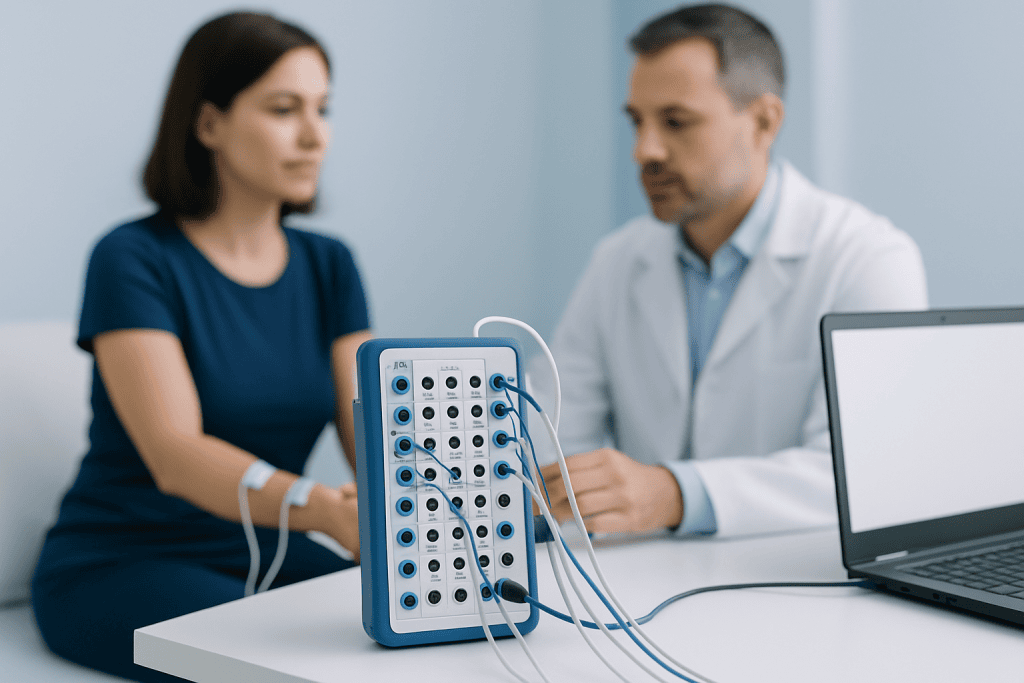
A physician typically recommends the test when a physical examination cannot fully explain your symptoms. It is often part of an assessment for conditions affecting peripheral nerves, nerve roots or muscles. It supplements clinical judgement; it does not replace it.
Common reasons for referral include:
- Persistent tingling or numbness in the hands or feet
- Suspected carpal tunnel syndrome or other nerve entrapments
- Sciatic-type pain radiating from the lower back into the leg
- Unexplained muscle weakness, wasting or cramps
- Suspected peripheral neuropathy, including in people with diabetes
- Follow-up after a nerve injury, to assess how the nerve is behaving over time
- Clarifying the location and severity of nerve involvement before a treatment decision, such as whether surgery is worth considering
One thing worth stating plainly: the test maps function, not pain. It can show a nerve conducting slowly or a muscle behaving abnormally, but it cannot measure how much something hurts. A test that comes back normal can still be genuinely useful, because it narrows down where your doctor looks next.
If you are travelling with previous results, bring them. MRI or CT reports, blood tests, prior neurology notes, medication lists and any earlier EMG reports all help the specialist compare findings and avoid repeating tests unnecessarily. An earlier EMG report is particularly valuable, because comparing two studies over time often says more than a single snapshot.
How to Prepare Before Your Appointment
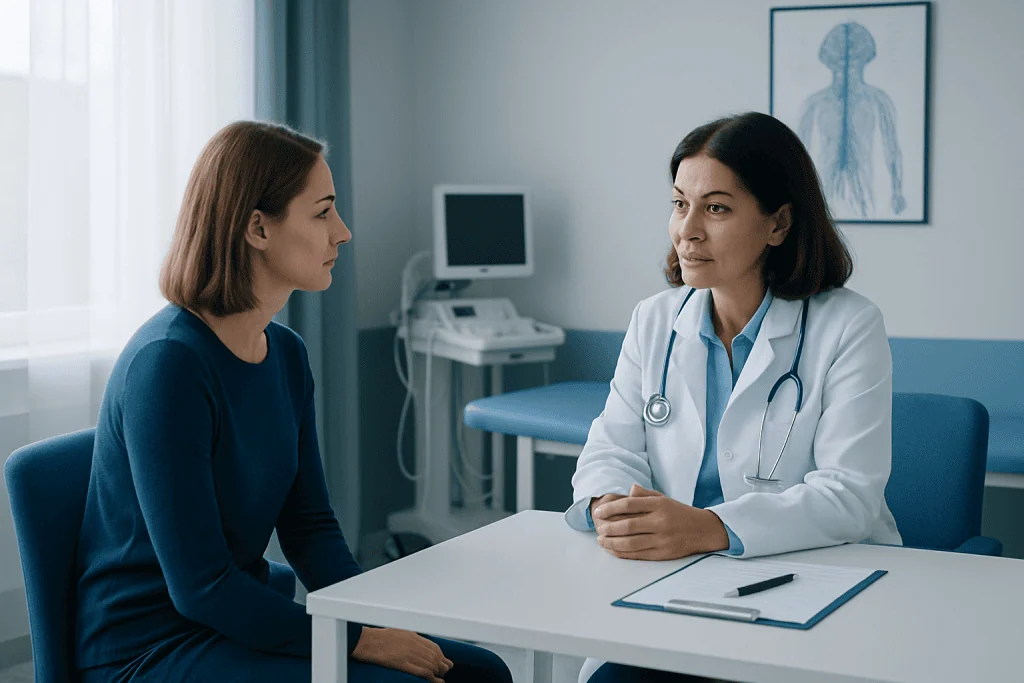
Preparation is genuinely simple, but a few small details make the appointment smoother and the readings cleaner.
Skin. On the day of the test, keep your skin clean and skip body lotion, oils and heavy creams on the arms, legs, neck or back unless your doctor has said otherwise. These products interfere with electrode contact and can degrade signal quality, which sometimes means repeating measurements.
Clothing. Wear loose, comfortable clothing that gives access to the area being tested. Short sleeves work well for hand or arm symptoms; trousers that roll up easily are practical for leg or foot symptoms. Depending on the area, you may be asked to change into a hospital gown.
Temperature. Cold limbs slow nerve conduction and can distort results. If you arrive with cold hands or feet, easy to do in winter or after a long flight, the team may warm the limb before starting. Allowing a few extra minutes for this is normal.
Safety information. Before the test, tell the medical team if you have a pacemaker or other implanted cardiac device, take blood thinners, have a bleeding disorder, have a skin infection in the test area, or are pregnant. None of these automatically rules the test out, but the team needs to know in advance. Do not stop or adjust any medication on your own; only your treating physician can decide whether any change is needed.
- Bring your passport or ID, appointment confirmation and medical records.
- Bring a current medication and allergy list, including supplements.
- Eat normally unless your doctor gives different instructions, fasting is not usually required.
- Arrive a little early to allow for registration and, if needed, interpreter coordination.
What Happens on the Day of the Test
On arrival, the team confirms your identity, symptoms, medical history and the area to be tested. If you need language support, an interpreter can be arranged so you can describe exactly where you feel symptoms and understand the instructions during the test. This matters more than it sounds: the doctor will ask you to relax, contract a muscle, or report sensations at specific moments, and precision helps.
The nerve conduction study
Small electrodes are taped or clipped to your skin over the nerves and muscles being studied. The doctor then delivers brief electrical pulses through a stimulator held against the skin. These feel like tapping, tingling or a quick static-style shock. Each pulse lasts a fraction of a second, and the sensation stops the moment the pulse does. Nothing about this part breaks the skin.
The needle EMG
For the EMG portion, the doctor inserts a very fine needle electrode into selected muscles. It is a recording electrode, not an injection, nothing is put into the muscle. You will usually be asked to let the muscle rest completely, then contract it gently while the doctor listens to and watches the electrical activity. There is some discomfort with insertion and movement of the needle, and some muscles are more sensitive than others. The doctor works systematically and will explain what is needed as the test progresses.
How long it takes
The appointment length depends on how many nerves and muscles need examining and whether one limb or several areas are involved. A focused study, one arm for suspected carpal tunnel syndrome, for example, sits at the shorter end. A study of multiple limbs for suspected generalised neuropathy takes longer. Most studies are completed within thirty to ninety minutes, in a single outpatient visit. Your exact schedule may differ based on your symptoms and the neurologist’s plan, and the doctor may extend or shorten the protocol depending on what the early readings show.
Comfort, Safety and Communication
Feeling apprehensive before a first EMG is entirely normal, and the phrase “electrical pulses and needles” does the test no favours. In reality, the sensations are brief, predictable and explained before they happen. You can ask for a pause at any point, to change position, to take a breath, or simply to ask what comes next.
The test is generally considered low-risk when performed by trained clinicians. The most common after-effects are mild soreness or small bruises at needle sites, which usually settle on their own within a day or two without any special treatment. If you take anticoagulants, have a bleeding tendency or have an implanted medical device, make sure the team knows before the examination begins so they can adapt their approach where needed.
Acibadem hospitals follow structured patient identification, hygiene and safety processes throughout the visit. For international patients coordinating several appointments in a short period, that consistency, the same checks at every step, tends to be reassuring.
Results, Next Steps and Follow-Up
After the test, the neurologist interprets the recordings in the context of your symptoms, your examination and any other investigations. Sometimes preliminary findings are discussed shortly after the test; in other cases a formal written report is prepared and reviewed at a follow-up appointment. Ask before you leave which of these applies to you, so you can plan the rest of your stay realistically.
Depending on what the study shows, your doctor may discuss medication, physiotherapy, further imaging, blood tests, injections, a surgical consultation, for instance with a peripheral nerve specialist, or simply monitoring over time. A normal result is not a wasted test: it can rule out certain nerve and muscle problems and redirect attention toward other explanations for your symptoms.
If you are returning home soon after the appointment, ask for copies of the report in a format your local doctor can use. Raw traces mean little outside a neurophysiology lab, but the written interpretation travels well. Translated documentation is often available on request, so your care can continue without gaps after you leave Turkey.
What the Cost Depends On
It is reasonable to want a figure before you travel, and equally reasonable to be sceptical of any website that prints one. The honest answer is that the price of an EMG and nerve conduction study in Turkey depends on variables that only become clear once a doctor has reviewed your case:
- Scope of the studyone limb or several, how many nerves and muscles the protocol covers, and whether both the conduction study and the needle EMG are needed.
- What surrounds the testwhether a neurology consultation, imaging or laboratory work is bundled into the same visit or billed separately.
- Reportingwhether a same-day verbal review, a formal written report, or both are included.
- Repeat or comparison studiesfollow-up testing to track a nerve over time is scoped differently from a first diagnostic study.
The practical approach is to request a written, itemised quote after the hospital has seen your referral or previous reports, and to confirm exactly what it covers before you book travel. A quote issued blind, before anyone has looked at your case, is a guess dressed as a price.
Planning Your Visit to Turkey
Many international patients combine an EMG and nerve conduction study in Turkey with a specialist consultation, imaging or a second opinion. When a hospital has your travel dates, previous reports and a summary of your symptoms in advance, appointments can be scheduled in a logical order, consultation first, test second, review third, rather than leaving you to shuttle between departments.
If the test is the main reason for your visit, a short stay is often enough. If broader evaluation is planned, build flexibility into your itinerary. Some diagnostic visits grow: a neurologist reviewing your EMG findings might, for example, want a scan, blood work or, if your symptoms include disturbed sleep, an overnight sleep study, which needs a night in hospital rather than an hour in a clinic room.
Interpreter support and coordinated scheduling are standard parts of the international patient process at large hospitals, and they matter: the less energy that goes into logistics, the more you have for the appointment itself.
Step by step
- Gather your medical information before travel. Recent reports, a symptom summary, your medication list and any previous EMG or imaging results all help the neurology team understand your case and plan the right appointment sequence. Hospitals usually review these before confirming a schedule.
- Confirm your appointment schedule. Check whether the EMG and nerve conduction study will happen on the same day as your consultation or separately, and whether interpreter support is arranged from registration through to discharge.
- Prepare practically the night before. No lotion or oils on the test areas, loose comfortable clothing, and your documents, passport and medication list gathered in one place so the morning is unhurried.
- Tell the team about safety details before the test begins. Blood thinners, bleeding disorders, implanted devices, allergies, pregnancy, or skin problems in the test area. Do not stop or change any medication yourself; that decision belongs to your treating physician.
- Follow instructions during the test. You will be asked to relax, move a limb or gently contract specific muscles at specific times. If anything is uncomfortable or unclear, say so: the doctor or interpreter can adjust or explain immediately.
- Ask how and when you will receive results. Confirm before leaving whether findings will be discussed the same day or at a later appointment, and ask for written copies if you will continue care at home.
- Plan your next medical step. Results may lead to treatment, rehabilitation, further testing or simple monitoring. If additional care is recommended while you are still in Turkey, a flexible itinerary makes it easier to fit in.
Your checklist
- Passport or official ID
- Appointment confirmation and hospital contact details
- Previous EMG, MRI, CT, ultrasound or laboratory reports
- Current medication list, including blood thinners and supplements
- Allergy list and information about any implanted devices
- Comfortable clothing that allows access to the affected area
- No lotion, oil or cream on the test area on the day of the appointment
- Questions you want to ask your neurologist
- Travel itinerary with some flexibility for follow-up if needed
Key takeaways
- An EMG and a nerve conduction study are two different tests, usually performed together in one outpatient visit to assess nerve and muscle function.
- Most studies take between thirty and ninety minutes, depending on how many nerves and muscles are examined.
- Preparation is simple: clean skin without lotion, comfortable clothing, and your previous medical records.
- Tell the team about blood thinners, implanted devices, bleeding problems, pregnancy or skin issues before the test; never change medication without your doctor’s instruction.
- The price depends on the scope of the study and what surrounds it, so an itemised written quote after your records are reviewed is the only figure worth relying on.
- Interpreter support, sensible appointment sequencing and written reports you can take home make the test straightforward to fit into a short visit.
Frequently asked questions
Is an EMG the same as a nerve conduction study?
No. The nerve conduction study measures how electrical signals travel along your nerves using surface electrodes and brief pulses. The EMG records electrical activity inside muscles using a fine needle electrode. They answer related but different questions, which is why neurologists usually perform them together in the same appointment.
How long does an EMG and nerve conduction study take?
Most studies take between thirty and ninety minutes. A focused study of one limb sits at the shorter end; examining multiple limbs takes longer. The doctor may also adjust the protocol during the test depending on early readings, so allow some flexibility in your schedule around the appointment.
How much does an EMG and nerve conduction study cost in Turkey?
There is no single figure. The price depends on how many nerves and muscles are examined, whether a consultation, imaging or laboratory work is included in the same visit, and how the report is delivered. Ask for a written, itemised quote after your referral or records have been reviewed, and confirm exactly what it covers before booking travel.
Is the test painful?
You will feel brief electrical pulses during the nerve conduction part and some discomfort during the needle EMG. Each sensation is short, and nothing is injected: the needle only records. Most patients tolerate the test well, especially when they know what to expect, and you can ask for a pause at any point.
Can I eat and take my medications before the test?
Most patients can eat normally beforehand; fasting is not usually required. Continue your medications as prescribed unless your treating physician gives you different instructions, and make sure the team knows about blood thinners, implanted cardiac devices and any significant medical conditions before the examination starts.
When will I get my results?
It varies. Some findings can be discussed shortly after the test, while a formal written report may follow later or be reviewed at a separate appointment. Ask before leaving how and when you will receive the report, and request copies in a format you can share with your doctor at home.
Can I travel after the test?
Most patients resume normal activities straight away, including flying. Mild soreness or small bruises at needle sites are common and usually settle within a day or two. If further evaluations are planned, leave enough room in your itinerary before your return journey.
What should I bring from my home country?
Previous medical reports, imaging discs or digital links, blood test results, a medication and allergy list, and any earlier nerve or muscle test reports. These help the specialist understand your history and compare findings over time. Where possible, having them reviewed before you travel makes scheduling more accurate.
Add us as a Preferred Source to see more of our trusted health content across Google Search, AI Overviews and Discover.

Update history
- PublishedJune 16, 2026
- Medical review approvedAugust 30, 2026
- Last content updateAugust 30, 2026
References2
- Electromyography (EMG) and Nerve Conduction Studies: MedlinePlus medlineplus.gov
- EMG (Electromyography): Cleveland Clinic my.clevelandclinic.org
More Patient Guides
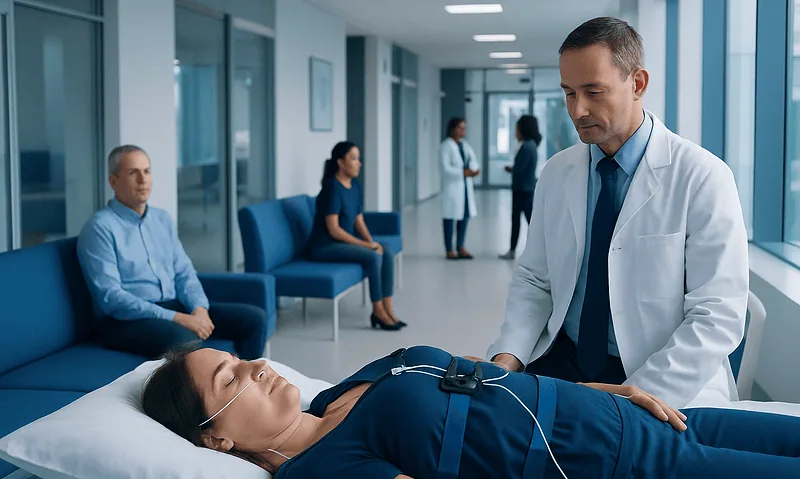
Sleep Apnea Testing in Turkey: What Happens During Your Evaluation
Sleep apnea testing in Turkey may include a consultation, overnight sleep study or home test, and a clear review of your results…

How to Organize Your Test Results Before Traveling to Turkey
Organize your test results before traveling to Turkey by sorting records, images, medicines and timelines so your Istanbul care team can review…

When Extra Tests Are Needed Before Treatment in Turkey
Extra tests before treatment in Turkey may be needed to confirm diagnosis, timing, and safety. Here is what you can expect in…

At Acibadem, How to Prepare for Blood Tests, Scans, and Pre-Op Checks
Blood tests, scans, and pre-op checks at Acibadem in Turkey help confirm you are ready for treatment and avoid delays on the…