

Endoscopy in Turkey: What Happens Before, During, and After
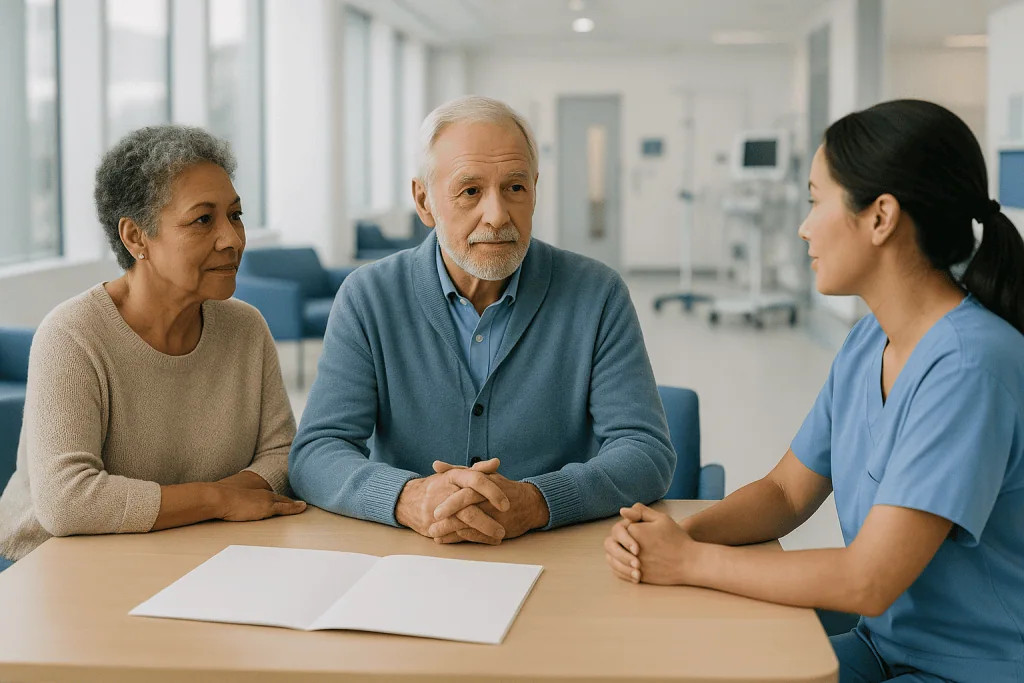
An endoscopy in Turkey is usually a same-day hospital procedure with four stages: preparation (fasting or bowel prep), a monitored examination that often takes under an hour, a recovery period after sedation, and results. Visible findings are often explained the same day; biopsy results take longer. Plan your travel around the recovery period, not just the test itself.
If your doctor has recommended an endoscopy and you are planning to have it in Turkey, you probably want the same three answers most patients want: how to prepare, whether you will be asleep, and how soon you can get back to your hotel. This guide covers all of it, scheduling, fasting, sedation, recovery, results, and the travel decisions around each stage.
One thing to understand from the start: the camera examination itself is usually short. What fills the day is everything around it, registration, pre-assessment, preparation checks, the procedure, recovery from sedation, and a first conversation about findings. If you plan for the whole day rather than the test alone, very little will surprise you. For the wider journey beyond this one test, see our guide to what happens before, during, and after treatment in Turkey.
At a glance
- Typical setting: A dedicated hospital endoscopy unit with pre-assessment, monitoring, and a recovery area, not an office visit
- Common types: Upper endoscopy (gastroscopy), colonoscopy, sigmoidoscopy, and related diagnostic procedures
- Preparation: Fasting for upper endoscopy; diet changes and laxative preparation for colonoscopy
- Sedation: Often used; your suitability is assessed by the care team on the day
- Results: Visible findings are often explained the same day; biopsy results take longer and may arrive after you travel home
- Travel planning: Do not schedule flights, meetings, or sightseeing for the hours after a sedated procedure
What endoscopy in Turkey involves for international patients
Endoscopy is a test that lets a specialist look inside part of your digestive system using a thin, flexible tube with a camera. Depending on your referral, that may mean an upper endoscopy, often called gastroscopy, which examines the oesophagus, stomach, and the first part of the small intestine, or a lower test such as colonoscopy or sigmoidoscopy, which examines the large bowel. Common reasons for referral include reflux, persistent stomach pain, anaemia, difficulty swallowing, changes in bowel habit, bleeding, or follow-up of an earlier finding.
Having an endoscopy in Turkey as an international patient adds a layer of logistics to a fairly standard medical procedure. You need the timing to work with your travel, preparation instructions in a language you understand, your previous records available to the specialist, and a realistic plan for the hours after sedation. None of this is complicated, but it goes better when it is arranged before you fly rather than improvised at the hospital entrance.
Foreign patients are treated routinely in Turkish hospitals. Large hospital groups, including Acibadem, run international patient departments that handle scheduling, interpreter arrangements, record collection, and practical questions about the visit. You do not need Turkish residency or Turkish insurance to be seen; you do need your passport, your medical history, and a way to settle the bill, either directly or through insurance, depending on your arrangements.
Endoscopy in Turkey is performed in a monitored hospital unit. On the day, you may meet nurses, a gastroenterology specialist, an anaesthesiology team if sedation is planned, and international patient staff. Their shared task is to confirm the test is appropriate for you, that your preparation was correct, and that you have a safe way to leave the hospital afterwards.
Before your appointment: records, timing, and preparation
The records the team will ask for
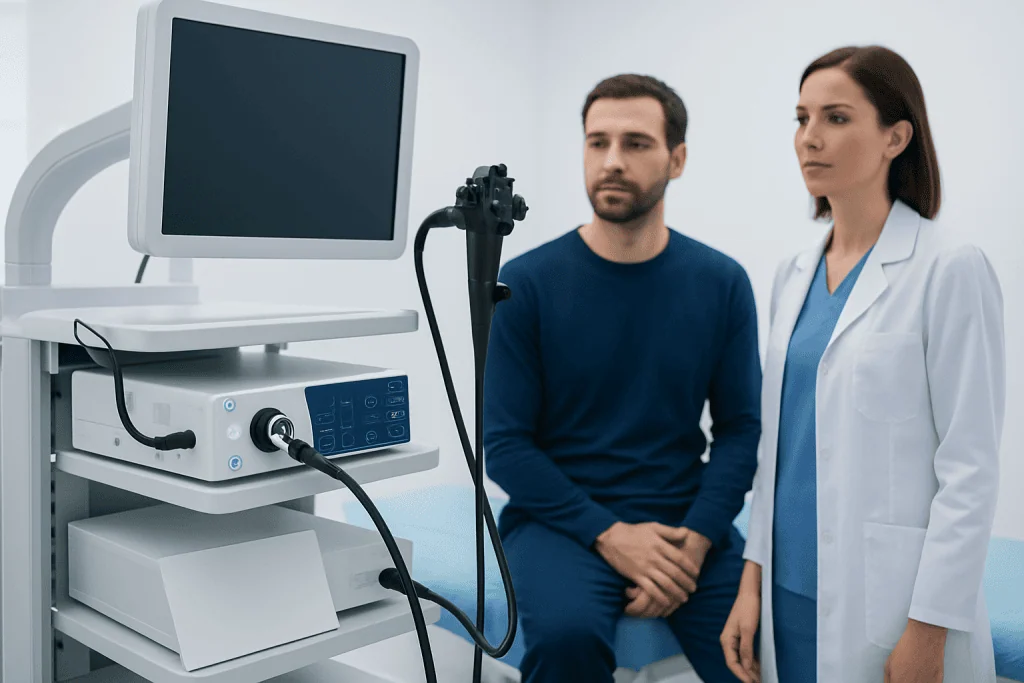
Before scheduling, you will usually be asked for your passport details, contact information, a current medication list, allergy history, previous endoscopy or imaging reports, and a short summary of your symptoms. If you have blood test results, pathology reports, CT or MRI scans, or a referral letter, bring digital copies and, where possible, printed ones. Records in any language can generally be reviewed; translation is handled as part of the assessment when needed.
Fasting and bowel preparation
Preparation depends on the type of endoscopy. For an upper endoscopy, you will usually fast for several hours so your stomach is empty: the exact window depends on your appointment time and health condition. For colonoscopy, preparation is more involved: typically a restricted diet, clear liquids, and laxative medication taken the day before or on a schedule the unit gives you. The bowel must be clean for the specialist to see properly; incomplete preparation is the most common reason a colonoscopy has to be repeated.
Always follow the written instructions from your own hospital team rather than a general schedule found online. Timing shifts depending on whether your appointment is in the morning or afternoon, what medicines you take, and your medical history. Ask for the instructions in a language you read comfortably, and ask early, bowel preparation cannot be compressed into the last few hours before the test.
Medicines and conditions the team needs to know about
Certain medicines change how an endoscopy is planned, particularly blood thinners, diabetes medication, and some heart and seizure medicines. Decisions about pausing, continuing, or adjusting any of them belong to your treating doctor, not to you and not to a general guide, which is why the medication list should be shared well before the procedure day, not at the reception desk. Our separate guide explains how medicines are managed before and after treatment.
The same applies to health conditions that affect sedation planning: pregnancy or possible pregnancy, sleep apnoea, significant heart or lung disease, kidney disease, and previous reactions to anaesthesia or sedation. Mentioning these while the appointment is being planned gives the anaesthesiology team time to assess you properly rather than making decisions under time pressure on the day.
How quotes work, and why this guide contains no prices
Cost is one of the most searched questions about endoscopy in Turkey, and the honest answer is that a single figure would mislead you. The price of a gastrointestinal endoscopy depends on the type of procedure (gastroscopy and colonoscopy are priced differently, and combining them changes the total), whether sedation or anaesthesia is used, whether biopsies are taken and sent to pathology, whether polyps are removed, and what pre-assessment your health history requires, blood tests, cardiology review, or an anaesthesia consultation, for example.
The same logic applies to full health-check programmes and to surgery: the quote reflects the scope of what is actually planned for you, which is why serious hospitals issue written, itemised quotes after reviewing your records rather than advertising flat figures. When you receive a quote, check what it includes: the procedure, sedation, pathology, interpreter support, and follow-up consultation are the usual line items, and what would trigger an additional charge, such as an unplanned polyp removal. Our guide on what happens after you accept a quote and before you arrive in Turkey explains the steps between agreement and appointment.
Arrival at the hospital in Turkey
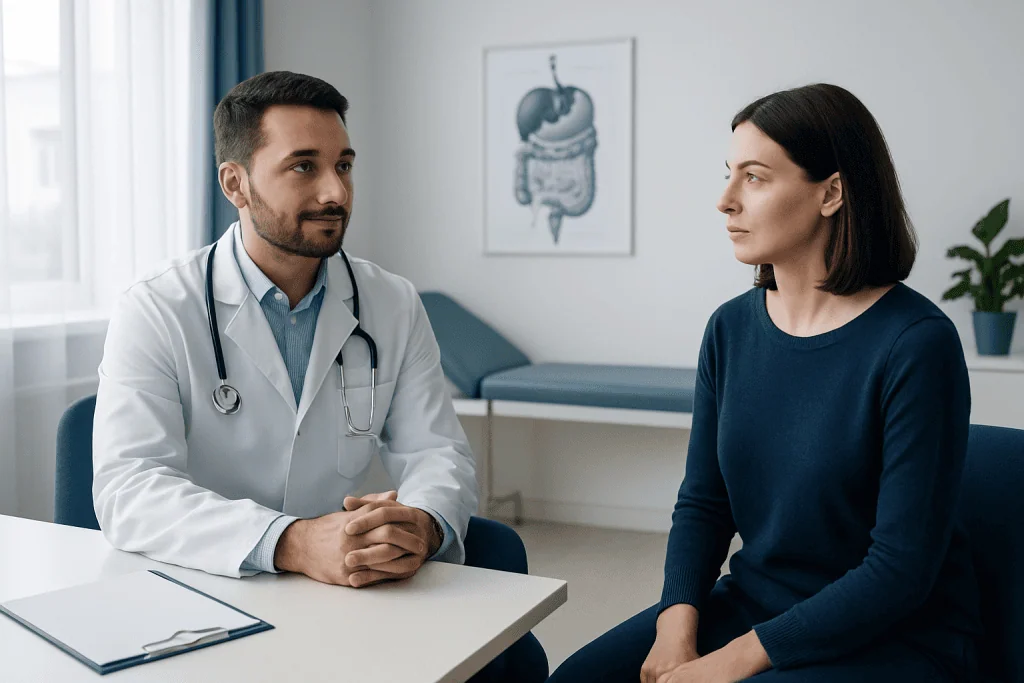
Plan to arrive earlier than your procedure time. International patients need time for registration, consent forms, interpreter arrangements, payment or insurance administration, and a final nursing assessment. Bring your passport, appointment confirmation, medication list, prior reports, glasses or hearing aids if you use them, and your companion’s contact details.
Expect to be asked the same questions more than once: your name, date of birth, allergies, fasting time, current medicines. This repetition is deliberate. Identity and safety checks are repeated at each handover point as you move between registration, consultation, the procedure room, and recovery, and they exist to catch errors before they happen. Answer patiently each time, even when it feels redundant.
If you do not speak Turkish, confirm interpreter support in advance rather than on arrival. And ask the practical questions without embarrassment: where your companion can wait, when you can drink water again, whether a taxi is more sensible than public transport afterwards, and how your results will be delivered. A calm, unhurried arrival makes the rest of the day easier, particularly when you are already fasting.
During the endoscopy: what you may experience
Before the procedure, you will usually change into a gown and have your blood pressure, pulse, and oxygen level checked. If sedation is planned, an intravenous line is placed and the sedation team reviews your suitability. Sedation is common but not automatic: the approach depends on the procedure, your health status, and the team’s assessment, which is why it is worth discussing expectations before the day rather than assuming you will be fully asleep.
For an upper endoscopy, your throat may be numbed with a spray and a mouth guard placed to protect your teeth and the instrument. For a colonoscopy, you lie on your side while the specialist examines the bowel, sometimes adjusting your position during the test. Many sedated patients remember little or nothing afterwards, though this varies with the medication used and your individual response.
The camera examination itself is often relatively short, commonly a matter of minutes for gastroscopy, longer for colonoscopy, but your total hospital time is measured in hours because of check-in, preparation, sedation, recovery, and the discussion of findings. If the specialist sees something that needs closer assessment, small tissue samples called biopsies may be taken through the endoscope. A biopsy is not, by itself, a sign of cancer; it is the standard way to check inflammation, infection, polyps, and other changes that cannot be judged by eye. Our guide to what to expect from a biopsy in Turkey explains that process in detail.
After the procedure: recovery, results, and leaving safely
After the test, you rest in a recovery area until the care team confirms your vital signs are stable and you are alert enough to leave. Feeling sleepy, bloated, or gassy is common, as is a mild sore throat after an upper endoscopy; these effects are usually temporary. Before discharge, the team will tell you what is expected in your specific case, when you can eat and drink, and when your regular routine, including any medicines paused for the procedure, resumes. Your written discharge instructions will also list the warning signs relevant to your procedure; keep that document, because it is specific to what was actually done.
If you received sedation, do not drive, operate machinery, make significant decisions, sign important documents, or drink alcohol for the period your team advises. Arrange a responsible adult to accompany you back to your hotel. If you are travelling alone, raise this before the appointment so transport and support can be planned rather than improvised while you are still drowsy.
Your specialist may explain visible findings the same day, often with images or a short report. If biopsies were taken or polyps removed, the pathology report takes additional time, sometimes several working days. Before you leave the unit, confirm four things: how the final report will reach you, whether it will be available in English, who will explain it, and whether follow-up will happen in person or remotely after you return home.
Travel, accommodation, and scheduling around the test
Endoscopy is usually a same-day procedure, but it still deserves careful travel planning. Do not book flights, important meetings, or sightseeing for the hours after a sedated test. If you are having a colonoscopy, treat the preparation day as a rest day too: the laxative regimen is tiring, and staying close to the hospital with easy bathroom access makes it far more manageable.
If the endoscopy is part of a larger visit, consultations, imaging, a health-check programme, ask for a realistic itinerary before you book travel. Some patients need blood tests, cardiology clearance, or an anaesthesia assessment before the procedure can be confirmed, and occasionally the specialist will want additional investigations after seeing your records in person. Building a day or two of flexibility into your schedule costs little and prevents the stress of rebooking flights; our guide on what happens if you need extra tests after arriving in Turkey explains how that situation is handled.
When choosing accommodation, weigh distance to the hospital, traffic in Istanbul or your treatment city, lift access, and whether your companion can stay with you. Keep the hospital phone number, your interpreter contact, and appointment details saved on your phone and printed on paper. Before leaving Turkey, gather your reports, any procedure images, the pathology follow-up plan, and medication instructions into one folder, organised paperwork is what lets your doctor at home continue your care without gaps.
Step by step
- Your medical information is reviewed first. Previous reports, your medication list, allergies, and a clear symptom summary help the specialist decide which type of endoscopy is appropriate and whether pre-assessment is needed before the procedure day.
- You receive written preparation instructions. Fasting or bowel preparation timing is specific to your appointment. Follow it exactly; decisions about blood thinners, diabetes medication, or other prescriptions rest with your treating doctor.
- You plan arrival and companion support. Arrive early with your passport, reports, and confirmation. If sedation is expected, you will need an adult companion or arranged transport, because you cannot drive yourself afterwards.
- Registration and safety checks take place. Registration, consent, nursing assessment, and repeated identity checks are normal parts of safe hospital practice, not signs of disorganisation.
- The endoscopy happens in a monitored setting. Sedation, throat spray, positioning, and biopsy decisions depend on the type of test and your individual assessment on the day.
- You recover before leaving the unit. You rest until the team confirms you are stable and alert. This is the moment to ask when you can eat, drink, resume medicines, and return to normal activity.
- Results and next steps are confirmed. Visible findings may be explained the same day; pathology takes longer. Confirm how the final report reaches you, in what language, and how follow-up will work once you are home.
Your checklist
- Passport and appointment confirmation
- Previous endoscopy, imaging, blood test, and pathology reports
- Current medication list with doses, including blood thinners and diabetes medication
- Allergy information and details of previous anaesthesia or sedation reactions
- Written fasting or bowel preparation instructions
- Comfortable clothing and a phone charger
- Companion or safe transport plan for after sedation
- Hotel address and hospital contact numbers
- Interpreter request confirmed if needed
Key takeaways
- Endoscopy in Turkey is a hospital-based procedure with preparation, monitoring, recovery, and follow-up stages: the camera examination is only one part of the day.
- Preparation depends on the type of endoscopy; fasting and bowel preparation instructions from your own unit override any general schedule.
- Blood thinners, diabetes medication, allergies, pregnancy, sleep apnoea, and heart or lung conditions all affect planning, decisions about medicines rest with your treating doctor.
- Sedation is common but assessed individually; it is not automatic for every patient.
- Visible findings are often explained the same day, while biopsy and pathology results take additional time and may arrive after you travel home.
- There is no single honest price for endoscopy: quotes reflect the procedure type, sedation, pathology, and pre-assessment your case actually requires.
Frequently asked questions
Can foreigners go to hospital in Turkey?
Yes. International patients are treated routinely in Turkish hospitals, and large hospital groups run dedicated international departments for scheduling, interpretation, and administration. You do not need Turkish residency or Turkish insurance: you need your passport, your medical records, and an agreed way to cover the cost, whether directly or through insurance.
What does a gastrointestinal endoscopy cost in Turkey?
There is no honest single figure. The cost depends on the type of procedure, whether sedation is used, whether biopsies are taken and analysed, whether polyps are removed, and what pre-assessment your health history requires. Reputable hospitals issue written, itemised quotes after reviewing your records, so you can see exactly what is and is not included before you commit.
How much does a full health check cost in Turkey?
Health-check programmes vary in scope, from basic blood panels to extensive packages that include imaging and endoscopy, so the price depends entirely on what the programme contains and what your age and history warrant. The reliable approach is the same as for any procedure: request an itemised quote for a defined list of tests rather than relying on advertised headline figures.
Will I be asleep during the procedure?
Sedation is often used, but the exact approach depends on the procedure, your health status, and the sedation team’s assessment. Some patients are deeply relaxed and remember very little; others have lighter sedation or local throat numbing only. Discuss expectations before the procedure day so nothing about the plan surprises you.
How long should I stay in Turkey for an endoscopy?
Many endoscopies are completed in a single day, but allow time for consultation, preparation, recovery, and a results discussion. If biopsies are taken, the pathology report may not be ready before a short trip ends, in which case results and follow-up are usually arranged remotely. Building a spare day into your itinerary keeps the schedule comfortable.
Can I fly home right after the endoscopy?
It is best not to book a flight for the hours immediately after a sedated procedure. You may feel drowsy or bloated, and the team may want a short observation period, particularly if a polyp was removed or biopsies were taken. Ask your doctor when flying is appropriate for your specific case before you fix your return date.
Is bowel preparation really necessary for colonoscopy?
Yes. The specialist needs a clear view of the bowel wall, and residue can hide exactly the findings the test is meant to detect. Incomplete preparation is the most common reason a colonoscopy has to be repeated. Follow your unit’s written instructions precisely; if the preparation cannot be completed as planned, the team may adjust timing or reschedule the test.
When will I receive my results?
Visible findings are often discussed shortly after you recover, sometimes with images from the procedure. If tissue samples were taken, the pathology report takes longer, often several working days, and may be delivered by written report or a remote consultation after you return home. Confirm before discharge how the final report will reach you and whether it will be in English.
Add us as a Preferred Source to see more of our trusted health content across Google Search, AI Overviews and Discover.

Update history
- PublishedJune 16, 2026
- Medical review approvedAugust 30, 2026
- Last content updateAugust 30, 2026
References2
- Gastroscopy: NHS nhs.uk
- Colonoscopy: MedlinePlus medlineplus.gov
More Patient Guides
Sleep Apnea Testing in Turkey: What Happens During Your Evaluation
Sleep apnea testing in Turkey may include a consultation, overnight sleep study or home test, and a clear review of your results…
How to Organize Your Test Results Before Traveling to Turkey
Organize your test results before traveling to Turkey by sorting records, images, medicines and timelines so your Istanbul care team can review…
When Extra Tests Are Needed Before Treatment in Turkey
Extra tests before treatment in Turkey may be needed to confirm diagnosis, timing, and safety. Here is what you can expect in…

At Acibadem, How to Prepare for Blood Tests, Scans, and Pre-Op Checks
Blood tests, scans, and pre-op checks at Acibadem in Turkey help confirm you are ready for treatment and avoid delays on the…