

Holter Monitor Testing in Turkey: Wearing and Returning the Device

Holter monitor testing in Turkey records your heart rhythm over 24 to 48 hours, sometimes longer, while you follow your normal day. A technician fits adhesive electrodes and a small recorder at one hospital visit; you keep the device dry, note any symptoms in a diary, and return everything at an agreed second visit so the cardiology team can analyse the recording.
A small recorder taped to your chest, a hotel night, perhaps a day of walking through Istanbul, then a return trip to the hospital. That is the whole shape of a Holter test. It sounds awkward. In practice it is one of the easiest cardiac investigations to complete, provided you understand a few rules about water, wires and timing.
This guide explains how Holter monitor testing in Turkey typically works for international patients: what the device does, what happens at the fitting appointment, how to wear it comfortably through a normal day and night, and how to return it so the recording can be analysed without delay. It does not replace the instructions your own cardiology team gives you. Where their advice differs from anything here, follow theirs.
At a glance
- Test type: Portable, non-invasive heart rhythm recording worn during normal daily activity
- Typical duration: Often 24–48 hours; longer periods are possible if your cardiologist requests them
- Discomfort: No needles; the main complaint is mild skin irritation from adhesive electrodes
- Hospital visits: Usually two, one to fit the device, one to return it
- The one strict rule: Keep the device dry; shower before fitting, not during the recording
- For travellers: Keep the monitoring window clear of flights, transfers and long excursions
What Holter monitor testing in Turkey involves and why it is requested
A Holter monitor is a small battery-powered recorder connected to adhesive electrodes on your chest. It captures a continuous electrocardiogram, the same signal as a standard ECG, but over hours or days instead of a few seconds on a clinic couch. That difference matters. Many rhythm problems are intermittent. Palpitations, skipped beats, brief episodes of a racing or slow heartbeat, unexplained dizziness or faintness may never appear during the short window of a resting ECG. A longer recording raises the chance of catching the rhythm as it actually happens, during the situations that provoke it: climbing stairs, sleeping, standing up quickly, sitting in traffic.
Cardiologists use Holter recordings for several purposes. The common ones are investigating palpitations or unexplained fainting, checking how often an already-diagnosed arrhythmia occurs, assessing heart rate patterns over a full day and night, and reviewing how the heart behaves after a change in treatment or a procedure. Which of these applies to you is a conversation for your consultation; the monitor itself is only the recording tool.
For international patients, Holter monitor testing in Turkey is usually arranged as part of a wider cardiology assessment, a second-opinion visit or planned follow-up. The recording length, 24 hours, 48 hours, occasionally longer with extended-wear devices, is decided by the cardiologist based on how often your symptoms occur. Infrequent symptoms sometimes call for longer monitoring, because a rhythm that appears once a week is unlikely to land inside a single day of recording. Your team will tell you which duration they have requested and why.
The practical side is deliberately simple: one visit to fit the device, a normal day or two in between, one visit to hand it back. If your trip includes other ambulatory investigations, for example a sleep apnoea evaluationthe timing of each test is usually planned together so the devices and appointments do not clash.
Getting fitted: what happens at the hospital
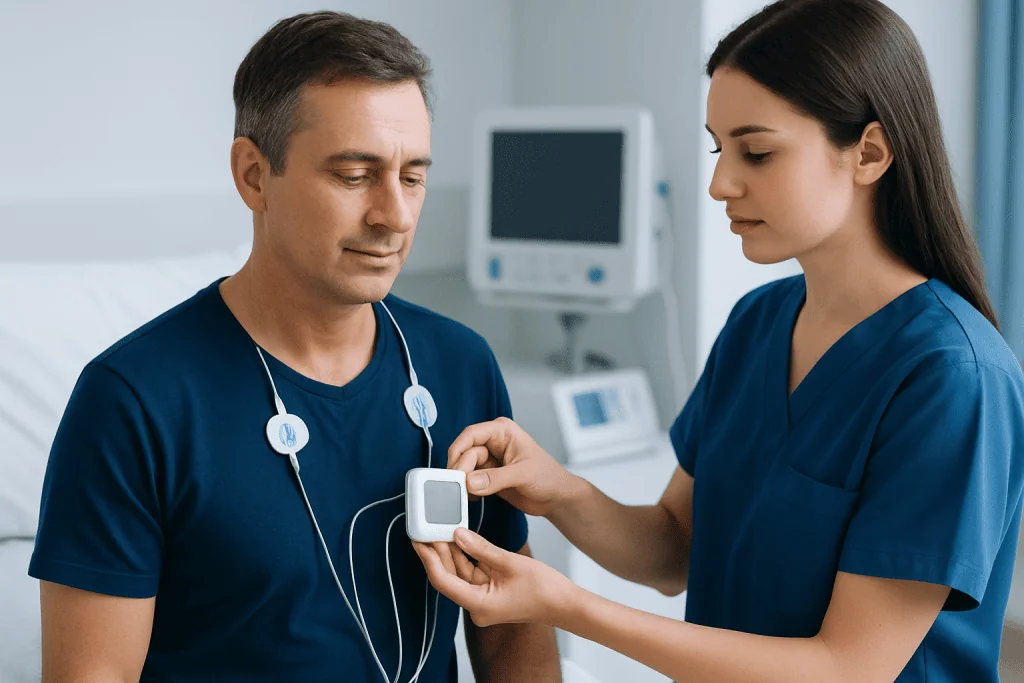
The fitting appointment is short. A technician or nurse cleans small areas of skin on your chest, sometimes shaving a small patch if needed, because the electrodes must sit flat against skin, and attaches adhesive electrode pads. Thin wires run from the pads to a compact recorder, worn on a belt, in a pouch, on a shoulder strap or clipped under clothing. The exact number and placement of electrodes depends on the device model and what the cardiologist wants to record.
Expect to be asked a few questions: your current medicines, any allergy to adhesives or plasters, whether you have an implanted cardiac device, and roughly what your next day or two will look like. Answer the adhesive question honestly. If you have reacted to plasters or ECG stickers before, saying so at fitting lets the team choose different pads rather than discovering the problem on your skin the next day.
Before you leave the room, make sure four things are completely clear. First, the exact date, time and department for returning the device, cardiology unit, diagnostics desk or international patient office, whichever applies at your hospital. Second, what to do if an electrode peels away, since practice varies: some teams give you spare pads and show you how to press one back on, others prefer you to phone the unit. Third, a telephone number you can actually reach from your hotel or mobile if a practical question comes up during the recording. Fourth, whether any activity restriction applies to you personally. Most patients are told to live normally; a minority are given specific limits, and those instructions override anything general.
If you are not fully comfortable in Turkish or English, ask for interpreter support at the fitting. The instructions are simple, but they only work if you leave with them clearly understood.
Wearing the device during your day in Turkey
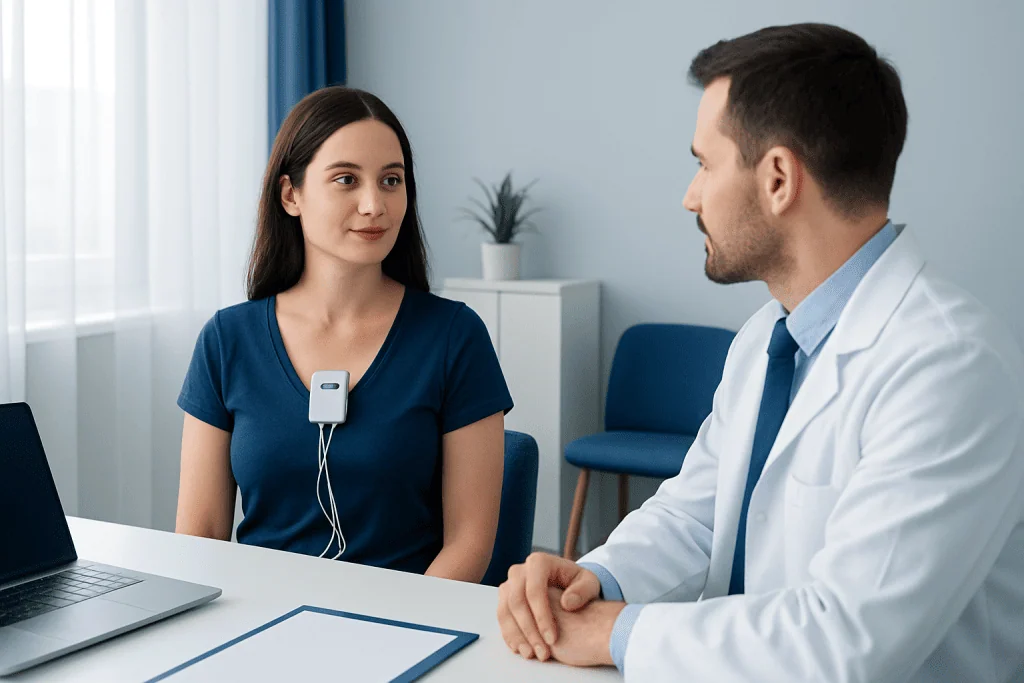
Once fitted, the usual instruction is the counterintuitive one: behave normally. Walk, eat, work at your laptop, take the tram, rest at your hotel. The value of the test comes from recording your heart during an ordinary day, including whatever ordinarily triggers your symptoms. A day spent lying motionless in a hotel room out of caution can actually make the recording less useful, unless your doctor has specifically told you to rest.
What not to do while wearing a Holter monitor
- Do not get the device wet. No showers, baths, swimming, saunas or hammams while wearing it. This is the rule most relevant to a trip to Turkey: if a hammam or spa visit is on your itinerary, book it after the device has been returned, and shower before the fitting appointment.
- Do not pull on the wires. Bag straps, seatbelts and tight clothing can tug electrodes loose. Keep the wires under your clothes and the recorder somewhere it cannot swing or snag.
- Do not open or tamper with the recorder. If something seems wrong with the device, use the contact number you were given rather than investigating yourself.
- Do not remove the electrodes early unless the team has told you to. A recording that stops hours short of the requested window may need to be repeated.
- Avoid activities that cause heavy sweating if you can, since sweat loosens adhesive. Normal walking is fine; a strenuous gym session in a warm climate is usually worth postponing by a day.
- Keep strong magnets away from the recorder and follow whatever guidance your team gives about metal detectors and electronic equipment, since advice varies by device model.
Clothing makes a real difference to comfort. A button-front shirt or loose top conceals the wires, reduces pulling on the electrodes and makes the recorder easy to check. Two-piece outfits are easier than dresses, because the recorder usually sits at the waist.
Can you sleep normally with a Holter monitor?
Yes, and you should. Night-time rhythm data is often exactly what the cardiologist wants, so the device stays on while you sleep unless you have been told otherwise. A few adjustments help: place the recorder beside you or secure it so it cannot fall off the bed and drag the wires; sleep on your back or side rather than directly on the recorder; and if you turn frequently at night, mention it at fitting so the technician can position the pouch or belt accordingly. Most people forget the device is there within a few hours. If a wire wakes you or an electrode peels overnight, note the time in your diary: that detail helps the team interpret any gap in the signal.
Symptom diary, medicines and daily activities
Most teams ask you to keep a diary during the recording: a paper form from the hospital, or simply notes on your phone. Its purpose is to let the cardiologist line up how you felt against what the monitor recorded at that exact moment. A palpitation logged at 14:37 can be matched to the trace at 14:37; a palpitation logged as “sometime in the afternoon” cannot.
- Record the time of any symptom, palpitations, fluttering, skipped beats, dizziness, breathlessness, faintness, chest discomfort, unusual fatigue, as precisely as your phone clock allows.
- Record what you were doing: climbing stairs, drinking coffee, walking after a meal, lying down, waking from sleep, feeling stressed.
- Log symptoms even if they were mild or passed in seconds. Brief events are often the most informative.
- Note caffeine, alcohol, exercise and medication times if your team asks for them.
- Keep the diary with the device so both are returned together.
On medicines: continue exactly as your treating doctor has prescribed. The Holter test is not, by itself, a reason to start, stop or adjust anything: those decisions belong to the doctor who is treating you, who may sometimes want the recording to show how your heart behaves on your current treatment. If new medicines are prescribed after the results are reviewed, our guide on returning home with new medicines after treatment in Turkey covers the practical side of carrying and organising them.
Travel, hotel and airport considerations
The single most useful planning decision is to keep the monitoring window free of tight commitments. Do not book a flight, a long road transfer or a guided excursion close to the return appointment. The device has to come back on time: the recording needs to be downloaded and processed, and the equipment is often scheduled for another patient. Istanbul traffic is genuinely unpredictable; build in margin.
At your hotel, the routine is unchanged apart from bathing. Keep the device on overnight, position the recorder so it cannot fall or twist, and carry on as normal in the morning. Housekeeping, hotel gyms with pools, and spa facilities are the only real hazards, all for the same reason: water.
Airports deserve specific caution. Whenever possible, complete the recording and return the device before your departure day, so that security screening while wired to hospital equipment never arises. If your schedule genuinely cannot avoid it, discuss this with the team at fitting and carry documentation from the hospital, because screening procedures and device guidance vary. The broader logistics of security lanes, documentation and batteries are covered in our guides on travelling to Turkey with medical devices and flying with medical devices or implants.
Returning the Holter monitor and receiving results
Bring back everything you were given: the recorder, wires, pouch or strap, the symptom diary and any unused adhesive pads. At the return appointment, staff remove any electrodes still attached and check the recording. Mention anything relevant from the monitoring period: a pad that came loose, a period when the device was jostled, symptoms you experienced, while you are there, because those details travel with the recording to the cardiologist.
Mild redness or stickiness where the pads sat is common and usually settles quickly. If your skin has reacted more strongly, significant itching or blistering, point it out to the staff at the return visit so it can be documented, especially if you have a history of adhesive sensitivity.
Results are not instant, and it is worth knowing why. A 24-hour recording contains roughly a hundred thousand heartbeats. Software flags candidate events, a technician checks signal quality, and a cardiologist then reviews the flagged sections against your diary before writing the report. How long this takes depends on the recording length and the department’s workflow. Before you leave the hospital, confirm three things: when the report is expected, how it will reach you, in-person consultation, secure message or patient portal, and whether you can have an English copy plus a summary for your doctor at home. If you will already have left Turkey when the report is ready, our guide on remote results review after returning home explains how follow-up reviews are typically organised at a distance.
How the cost of a Holter test is worked out
Search data shows many people ask what a 24-hour Holter test costs. There is no single honest number, because the price of the test depends on several variables that differ from patient to patient. What a quote reflects, in practice: the recording length requested (24 hours, 48 hours or longer), the type of device used, whether the test stands alone or sits inside a broader cardiology assessment with consultations and other investigations, whether report translation and international correspondence are included, and the specific hospital. The reliable route is a written, itemised quote prepared after the cardiologist has decided what monitoring you actually need, and it is reasonable to ask that the quote state explicitly what is included and what would be billed separately, such as a repeat recording if the first one is technically inadequate.
Step by step
- Confirm your appointment and test duration. Before the fitting day, check the hospital location, appointment time, expected recording length and return appointment. If you are travelling internationally, share your flight schedule so the two visits can be planned around it.
- Prepare your skin and clothing. Shower before the appointment, because the device must stay dry once fitted. Wear comfortable two-piece clothing that makes chest electrode placement easy and lets the recorder sit discreetly at your waist.
- Listen to the fitting instructions carefully. Confirm how to protect the device, what to do if a pad loosens, whether any activity limits apply to you, and get a contact number for practical questions. Use interpreter support if you need it.
- Keep a timed symptom diary. Note the time, the symptom and the activity whenever you feel palpitations, dizziness, chest discomfort or unusual breathlessness. Short events count; precise times matter most.
- Protect the monitor from water and pulling. No showers, swimming, saunas or hammams during the recording. Keep wires under clothing and away from bag straps and seatbelts.
- Return everything on time. Recorder, wires, pouch, strap, diary and spare supplies go back to the agreed department at the agreed time. Report any loose electrodes, symptoms or device issues when you hand it over.
- Clarify how you will receive your report. Ask when the cardiology report is expected, whether an English copy and a summary for your home doctor are available, and how follow-up will be handled if you have already left Turkey.
Your checklist
- Passport or ID and appointment confirmation
- List of current medicines and doses
- Comfortable two-piece, button-front clothing for the fitting visit
- Phone set to local time for accurate symptom notes
- Hospital contact number for device questions
- Hotel address and a return-transfer plan with traffic margin
- Symptom diary form, if provided
- Return appointment time and exact department name
- Any allergy information, especially adhesive or plaster reactions
Key takeaways
- A Holter monitor records your heart rhythm continuously during normal daily life, usually for 24–48 hours or as your cardiologist advises.
- Keep the device dry and secure: no showers, swimming, saunas or hammams during the recording. Shower before fitting; book spa plans after return.
- Live normally and sleep normally, ordinary activity and night-time data are precisely what the test is designed to capture.
- A timed symptom diary lets the cardiologist match how you felt to what the monitor recorded at that moment.
- Return the device, diary and accessories on time, and confirm before leaving how and when the report will reach you, including an English copy if you need one.
Frequently asked questions
What is a Holter monitor used for?
A Holter monitor records a continuous ECG over a day or more, so it can capture heart rhythm changes that come and go, palpitations, skipped beats, episodes of fast or slow heartbeat, and rhythm patterns linked to dizziness or fainting. Cardiologists also use it to see how often a known arrhythmia occurs and how the heart behaves across a full day and night, including sleep.
What should I not do while wearing a Holter monitor?
Do not get the device wet, no showers, baths, swimming, saunas or hammams. Do not pull on the wires, open the recorder, or remove electrodes early. Avoid heavy sweating where possible, keep strong magnets away from the recorder, and follow any device-specific guidance your team gives about electronic equipment or security scanners.
Can I sleep normally with a Holter monitor?
Yes. The device stays on overnight because night-time rhythm data is often exactly what the cardiologist wants. Secure the recorder so it cannot fall off the bed, avoid lying directly on it, and note in your diary if a wire disturbs you or a pad peels during the night. Most people stop noticing the device within a few hours.
Can I shower while wearing the device?
No, in almost all cases the device and electrodes must stay dry for the whole recording. Shower before the fitting appointment and plan any water-based activities, including hotel pools and Turkish baths, for after the device has been returned. Follow your own team’s specific instructions if they differ.
What happens if an electrode comes loose?
Follow the instructions given at fitting, because practice varies between units. Some teams provide spare adhesive pads and show you how to press a loose one back into place; others prefer you to phone the department. Either way, note the time it happened in your diary, and never open or attempt to repair the recorder itself.
Can I fly home while still wearing the Holter monitor?
It is usually better to complete the recording and return the device before your flight. Security screening with hospital equipment attached, plus the risk of travel delays affecting the equipment’s return, makes flying mid-test complicated. If it genuinely cannot be avoided, raise it with the team at fitting so they can advise and provide documentation.
How quickly will I get the results?
Not immediately. The recording must be downloaded, checked for signal quality, and reviewed by a cardiologist alongside your symptom diary: a 24-hour trace contains an enormous amount of data. Timing depends on recording length and departmental workflow. Before leaving the hospital, confirm when the report is expected and how it will be shared, including whether an English copy is available.
How is the cost of a 24-hour Holter test worked out?
There is no single fixed figure, because the price depends on the recording length requested, the device type, whether the test is standalone or part of a wider cardiology assessment, the hospital, and whether report translation is included. The reliable approach is a written, itemised quote prepared after the cardiologist has decided what monitoring you need, stating clearly what is and is not included.
Add us as a Preferred Source to see more of our trusted health content across Google Search, AI Overviews and Discover.

Update history
- PublishedJune 16, 2026
- Medical review approvedAugust 30, 2026
- Last content updateAugust 30, 2026
References2
- Holter monitor (24h): MedlinePlus Medical Encyclopedia medlineplus.gov
- Holter Monitor: StatPearls, NCBI Bookshelf ncbi.nlm.nih.gov
More Patient Guides
Sleep Apnea Testing in Turkey: What Happens During Your Evaluation
Sleep apnea testing in Turkey may include a consultation, overnight sleep study or home test, and a clear review of your results…

How to Organize Your Test Results Before Traveling to Turkey
Organize your test results before traveling to Turkey by sorting records, images, medicines and timelines so your Istanbul care team can review…

When Extra Tests Are Needed Before Treatment in Turkey
Extra tests before treatment in Turkey may be needed to confirm diagnosis, timing, and safety. Here is what you can expect in…

At Acibadem, How to Prepare for Blood Tests, Scans, and Pre-Op Checks
Blood tests, scans, and pre-op checks at Acibadem in Turkey help confirm you are ready for treatment and avoid delays on the…