

Hospital vs Outpatient Treatment in Turkey: What Changes for International Patients

Outpatient treatment in Turkey means you attend, are treated and leave the same day. Hospital (inpatient) treatment means formal admission and at least one night under monitoring. For international patients the practical differences are trip length, companion needs, pre-arrival paperwork, discharge planning and when it is safe to fly. Your treating team decides the setting after reviewing your records and examining you in person.
You are probably trying to answer one question: how many nights do I book, and are they in a hotel or a hospital bed? That is usually what people really mean when they compare hospital vs outpatient treatment in Turkey.
The medical difference is straightforward. The practical difference, for someone flying in from another country, is much bigger. It changes your flight dates, your accommodation, whether you need a companion, how much paperwork you prepare in advance, and how your discharge and journey home are planned. This guide walks through each of those changes so you can plan a realistic trip rather than an optimistic one.
At a glance
- Best for: International patients deciding how a same-day visit differs from a hospital admission in Turkey
- Main difference: Outpatient care means no overnight stay; inpatient care means formal admission with monitoring for at least one night
- Travel impact: Hospital treatment usually needs more days in Turkey, plus separate plans for a companion
- Paperwork: Both settings need medical records; admission adds pre-arrival review, consent documents and discharge planning
- Who decides: The treating team classifies your care after reviewing your records and examining you, not the treatment label you read online
- Support: International patient teams coordinate interpreters, scheduling, transfers and accommodation for both pathways
Hospital vs outpatient treatment in Turkey: what the labels actually mean
Outpatient treatment means you come to the hospital or clinic for a consultation, tests, imaging, an infusion, a minor procedure or therapy, and you leave the same day. You are not admitted. You sleep in your hotel.
Hospital treatment, also called inpatient treatment, means you are formally admitted. You are given a bed, your care team monitors you overnight or longer, and nursing staff manage your medication, pain relief and observations until the team decides you are ready to leave. Discharge is a planned step, not simply the end of an appointment.
There is a middle category worth knowing about. Many procedures in Turkey are done as day surgery: you have an operation under anaesthesia, recover for some hours under observation, and go back to your accommodation the same evening if the team is satisfied. It sits between the two labels and has its own planning demands, which we cover in a separate guide to day surgery in Turkey.
People also ask what separates an outpatient facility from a hospital as a building. In Turkey, as elsewhere, an outpatient facility or polyclinic handles consultations, diagnostics and minor procedures but has no inpatient beds. A hospital has admission wards, operating theatres, intensive care capacity and round-the-clock nursing, which is why care that needs monitoring, anaesthesia recovery or complication management is placed there. Large hospital campuses usually contain both: outpatient clinics on some floors, inpatient wards on others.
Here is how the two settings compare on the points that matter when you are travelling for care:
| What changes | Outpatient treatment | Hospital (inpatient) treatment |
|---|---|---|
| Where you sleep | Hotel or private accommodation | Hospital bed for at least one night, then accommodation |
| Typical trip shape | One or several appointments over a few days | Pre-admission checks, admission, stay, discharge review, recovery days |
| Companion role | Helpful, sometimes essential after sedation | Usually needed; may require separate accommodation or a companion room |
| Paperwork | Records, prescriptions, ID | The same, plus admission documents, consent forms, discharge summary |
| Flying home | Sometimes soon after, sometimes not, depends on the procedure | Usually after a follow-up check and a recovery buffer |
The honest caveat: the label alone does not tell you how demanding your trip will be. Some outpatient days involve fasting, sedation, contrast imaging and hours of waiting. Some short admissions are calmer than that. When you compare hospital vs outpatient treatment in Turkey, compare the total demands of the trip, not just where you sleep.
How your travel and accommodation plans change
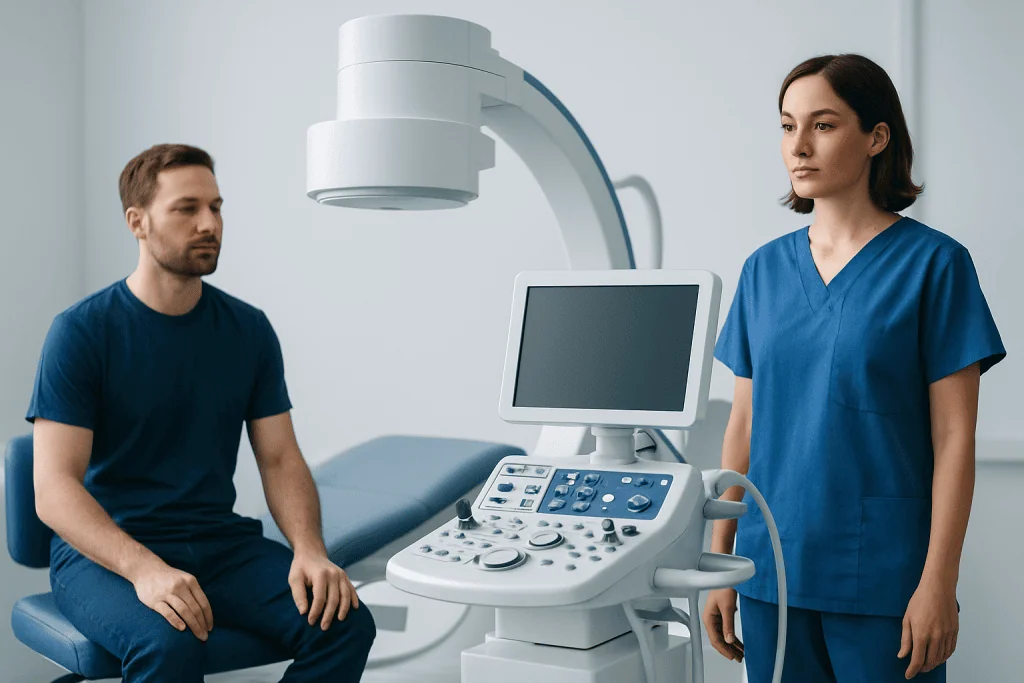
With outpatient care, you build your trip around appointments. You stay in a hotel, ideally near the hospital, and attend on scheduled days. This feels flexible, and often it is. But do not assume you can sightsee or travel onward straight after every appointment. Sedation, contrast dye, a biopsy or a painful procedure can leave you needing a quiet afternoon, and sometimes a next-day review.
With hospital treatment, your accommodation plan splits into phases. You may spend nights in a hotel before admission, then the admission itself, then more hotel nights between discharge and your flight. Your companion needs their own plan for the admission phase: where they sleep, how they reach the hospital daily, and what the visiting arrangements are. Some hospitals offer a bed for a companion in the patient’s room; if that matters to you, it is worth checking early, before your admission date is fixed.
The return flight is where the two settings diverge most. After some outpatient care you can fly within a short window; after other outpatient procedures the team will want to see you again first. After an inpatient stay, plan for a longer window: wound review, medication adjustment, a follow-up appointment, and enough physical recovery to sit through a flight comfortably. Cabin pressure, long immobility and limited access to help mid-air are all reasons teams are cautious about early flying after surgery.
A practical habit that serves international patients well: treat your first return-flight date as provisional. Changeable tickets, or simply a buffer day or two, cost less in stress than rebooking under pressure. It also helps to know in advance what happens if a same-day plan becomes an admission after assessment: this happens in healthcare everywhere, and our guide on unexpected overnight stays in Turkey covers how to prepare for it without anxiety.
Scheduling, tests and pre-arrival preparation

Outpatient care can often be arranged on a tighter timeline, particularly when your main need is a consultation, diagnostics or a second opinion. You may still need blood tests, imaging and a medication review on arrival, but the schedule is concentrated: a few dense days rather than a long itinerary.
Hospital treatment involves more steps before you travel. Expect to be asked for recent imaging, pathology reports, operation notes, a full medication list and details of chronic conditions. This is not bureaucracy for its own sake: it lets the team judge whether further tests are needed before admission, whether anaesthesia requires special precautions, and whether the plan you were quoted is realistic for your case. Turkish hospitals may also repeat certain tests on arrival regardless of what you bring, because results need to be recent and traceable, so allow time for this in your first days.
Timing matters differently in each setting. In outpatient care, a missing document or delayed test is inconvenient: an appointment shifts. In inpatient care, it can move an admission date or operating-theatre slot, which then moves everything downstream: your discharge, your follow-up, your flight. Keep digital and printed copies of your records, passport, prescriptions and insurance documents, and know which admission paperwork Turkish hospitals expect, see hospital admission documents for Turkey.
Paperwork also differs in kind, not just quantity. An admission involves consent forms for the procedure, anaesthesia and sometimes blood products. You are entitled to understand these before signing, and interpreter support exists precisely for this. Reading about medical consent forms in Turkey before you travel makes the admission day considerably calmer.
Hospitals with dedicated international patient departments usually review incoming records with the relevant specialists before arrival, which gives you an earlier and more honest picture of whether your pathway is likely to stay outpatient or involve admission after in-person assessment. No pre-arrival review can guarantee the plan, examination findings can change it, but it narrows the range of surprises.
Support needs: companion, mobility, language and discharge
Outpatient visits look independent on paper. In practice, many international patients benefit from a companion even for same-day care. If sedation is involved, most teams will require that someone accompanies you back to your accommodation. If you are anxious, have reduced mobility or do not speak Turkish, a second person to listen, ask questions and manage logistics makes the day far easier, instructions given after a procedure are exactly the ones patients forget.
Inpatient care raises the support requirement and extends it. Someone may need to help you pack for admission, look after belongings, keep family informed, and manage the practical side of discharge: collecting medication, arranging transport, settling you into the hotel. If you have children, elder-care duties or work obligations at home, an admission needs more advance planning than an outpatient trip of the same length.
Language support applies to both settings, but it is most consequential around consent and discharge. International patient departments in Turkish hospitals that treat foreign patients routinely arrange interpreters for consultations, consent discussions and instructions. Use them. A half-understood instruction about wound care or activity limits is worth clarifying twice.
Discharge is where the settings differ most sharply. After outpatient care, you receive same-day instructions and return to your accommodation if the team is satisfied. After an inpatient stay, discharge is a structured process: a written summary, medication plan, dressing or wound-care guidance where relevant, activity and diet limits, warning signs to be aware of, follow-up timing and an indication of when flying is reasonable. Ask for these instructions in written English before you leave the ward. If pain management after surgery concerns you, raise it during your consultation so you know what to expect on the ward and after discharge.
Cost structure and what to confirm before you travel
This guide gives no figures, because honest figures do not exist without your case details. What can be explained is structure. Outpatient care is usually built from consultation fees, tests, imaging and the procedure itself. Inpatient care adds room charges, nursing, longer monitoring, pharmacy items, anaesthesia and operating-theatre time where relevant, and pre-discharge follow-up. Two patients with the same diagnosis can have different totals because their pathways, comorbidities and lengths of stay differ.
The travel side of the budget behaves differently too. Outpatient trips concentrate spending on hotel nights and transport. Inpatient trips add companion accommodation, more hotel nights around admission and discharge, and a higher chance of changed flight dates. A plan that looks shorter on paper can still require extra recovery days in Turkey; the hospital bill is rarely the whole picture. Our guide to the hidden costs of a medical travel budget for Turkey lists the items patients most often miss.
Three things are worth confirming in writing before you book: what your quote includes, what could be added if the plan changes after in-person assessment, and how payment works if an outpatient visit becomes an admission. None of these questions is awkward: they are standard, and clear answers now prevent stress later. If you hold private travel or health insurance, check what documentation your insurer needs before treatment starts; the requirements differ by policy.
How to decide which setting is realistic for your trip
You do not choose the setting; your treating team classifies your care based on diagnosis, test results, the procedure planned and your overall health. What you choose is how well your trip matches that classification. If you have significant medical conditions, take blood thinners, have a complex surgical history or are travelling alone, a plan that sounds simple may still justify hospital monitoring. Conversely, many consultations, scans, infusions, endoscopic checks and minor procedures are managed entirely without admission.
The most revealing questions are practical, not medical. Will you need to fast? Is sedation planned? Must a companion be present on the day? Do you need a follow-up visit before flying? How many total days should you be in Turkey, counting pre-tests and recovery? The answers describe the real intensity of your trip better than the words inpatient or outpatient ever will. When you weigh up hospital vs outpatient treatment in Turkey, it is these totals, days, support, follow-up, that should drive your booking decisions.
Plan for flexibility as a policy, not an afterthought. Keep spare time in Turkey where you can, choose changeable flights, and avoid firm commitments immediately after your planned return date. Treatment plans can shift after in-person assessment for entirely legitimate clinical reasons; being financially and logistically able to absorb a shift is what separates a stressful trip from a manageable one. For a deeper decision framework, see our companion guide on how to choose between inpatient and outpatient treatment in Turkey.
On the broader questions people search, can foreigners go to hospital in Turkey, and is the system good? Yes, foreign nationals can be treated in Turkish hospitals; the country has a large private hospital sector alongside its public system, and many private hospitals in Istanbul, Ankara and Izmir serve international patients as a matter of routine, with dedicated departments for it. Quality, like anywhere, varies by institution, so the sensible approach is to evaluate the specific hospital and team treating you rather than a country-level reputation, and to ask them the practical questions above.
Step by step
- Share your records with the treating hospital before you finalise travel. Recent reports, scans, medication lists and a brief medical summary let the team judge whether your care is likely to stay outpatient or involve admission, and give you a schedule worth booking flights around.
- Ask how many days you need in Turkey, not how long the procedure takes. Pre-tests, recovery, follow-up and fitness to fly determine your itinerary; the procedure duration itself rarely does.
- Plan for a companion if sedation, anaesthesia or admission is possible. Even after outpatient care you may be tired, sore or unable to manage alone. For inpatient care, a companion helps with communication, comfort and discharge logistics.
- Confirm in writing what your quote includes and what could change. Ask specifically what happens, clinically and financially, if doctors recommend overnight monitoring after your assessment.
- Choose accommodation around recovery, not sightseeing. A hotel near the hospital, a reliable transfer and minimal stairs matter more after treatment than location or views. If mobility may be limited, raise it before you book.
- Get written discharge and follow-up instructions in English. Medications, warning signs, activity limits, wound care and follow-up timing should all be on paper before you leave the ward or clinic.
- Leave a buffer before your flight home. Do not book the earliest possible return if your treatment may cause fatigue, pain or the need for one more review. A spare day is the cheapest insurance a medical trip can buy.
Your checklist
- Passport and travel documents
- Recent medical reports, scans and test results, digital and printed
- Current medication list and allergy information
- Comfortable clothing and easy-to-remove shoes
- Contact details for your hospital coordinator
- A companion plan if sedation, anaesthesia or reduced mobility is possible
- Hotel and transfer arrangements close to the hospital
- Insurance documents and confirmation of what your quote covers
- Flexible or changeable return travel
Key takeaways
- Outpatient treatment means same-day care with no admission; hospital treatment means formal admission and monitoring for at least one night.
- For international patients, the real differences are trip length, accommodation phases, companion needs, consent paperwork and discharge planning.
- Do not plan around the label alone, ask for the total number of days in Turkey and when flying home is reasonable.
- Send complete records before booking, and confirm early what changes if outpatient assessment leads to admission.
- Interpreters, written English instructions and international patient coordination make both pathways significantly easier to manage.
Frequently asked questions
What is the difference between an outpatient facility and a hospital?
An outpatient facility or polyclinic provides consultations, diagnostics and minor procedures but has no inpatient beds, everyone goes home the same day. A hospital adds admission wards, operating theatres, intensive care capacity and round-the-clock nursing, which is why care requiring monitoring or anaesthesia recovery is placed there. Large hospital campuses typically house both types of service in one building.
Can foreigners go to hospital in Turkey?
Yes. Foreign nationals can receive treatment in Turkish hospitals, and many private hospitals in major cities treat international patients routinely, with dedicated international patient departments handling interpreters, scheduling and admission paperwork. You will need your passport, medical records and clarity on how payment or insurance will work.
Is Turkey good for medical treatment?
Turkey is an established destination for international patients, with a large private hospital sector, modern facilities in major cities and hospitals experienced in treating people from abroad. As in any country, standards vary between institutions, so evaluate the specific hospital and clinical team handling your case, their experience with your condition and with international patients, rather than relying on country-level reputation alone.
Can an outpatient appointment in Turkey turn into a hospital stay?
Yes. If your in-person assessment, test results or overall condition shows that closer monitoring is the safer option, the team may recommend admission. This does not always mean something is wrong, sometimes it is simply the more responsible way to manage your care. Confirming in advance how such a change would be handled, practically and financially, removes most of the stress.
Do I need to stay longer in Turkey for hospital treatment than for outpatient care?
Usually, yes. Hospital treatment typically involves pre-admission checks, the stay itself, a discharge review and recovery time before flying. Outpatient care is often shorter, but some outpatient procedures still require follow-up visits or a rest day before travel, so ask for a total day count rather than assuming.
Should I bring a companion even if my treatment is outpatient?
Often, yes, especially if sedation, anxiety, language barriers or mobility issues are involved. After sedation, most teams require someone to accompany you back to your accommodation. A companion also helps you remember instructions and manage the practical side of a long clinical day.
What should I ask the hospital before booking my flights?
Ask how many days you should remain in Turkey in total, whether fasting or sedation is planned, whether a companion is required on the day, whether a follow-up visit is needed before departure, and when flying is considered reasonable after your treatment. Also ask what would change if assessment leads to extra tests or admission.
Add us as a Preferred Source to see more of our trusted health content across Google Search, AI Overviews and Discover.

Update history
- PublishedAugust 14, 2026
- Medical review approvedSeptember 13, 2026
- Last content updateSeptember 12, 2026
References1
- Medical Tourism: CDC Travelers' Health wwwnc.cdc.gov
More Patient Guides

HoLEP in Turkey: How It Compares With TURP and What Recovery Involves
HoLEP in Turkey treats enlarged prostate tissue with laser enucleation; learn how it compares with TURP, recovery, travel and follow-up.

Porcelain Veneers in Turkey: Who Is Suitable and How Many Visits Are Needed?
Porcelain veneers in Turkey can enhance tooth shape and colour in two visits for suitable patients after a personalised dental assessment.

How to Prepare for a Sedation Procedure in Turkey
Prepare safely for a sedation procedure in Turkey with guidance on fasting, medicines, travel, recovery and follow-up.

Treatment Delays in Turkey: What Happens If Tests or Recovery Change Your Schedule
Treatment delays in Turkey can happen if tests or recovery change your plan. Learn how to manage appointments, travel, accommodation and follow-up.