

How to Prepare for Medical Tests in Turkey: Fasting, Clothing, and Timing

To prepare for medical tests in Turkey, confirm the written instructions for your exact test the day before: whether you must fast, whether water is allowed, and what time to arrive. Wear loose two-piece clothing without metal, bring your passport, appointment details, previous results and a complete medicines list, and allow 15-30 minutes extra for registration and interpreter support.
Can you have your morning coffee before tomorrow’s scan? How early do you really need to leave the hotel? These are the questions that keep patients awake the night before an appointment abroad, and almost all of them have clear answers, if you know where to look.
If you are travelling for tests or imaging, a small amount of preparation makes the day far smoother. This guide explains how to prepare for medical tests in Turkey: what fasting actually involves, what to wear, when to arrive, what to bring, and what usually happens afterwards. It cannot replace the instructions your own hospital gives you, those always come first, but it will help you understand what those instructions mean and why they exist.
At a glance
- Most important step: Confirm your fasting instructions and arrival time in writing the day before
- Fasting: Rules differ by test, food, water, coffee, gum and smoking may each be treated differently
- What to wear: Loose, two-piece clothing without metal parts; leave jewellery and valuables at the hotel
- When to arrive: Usually 15-30 minutes early for registration, unless told otherwise
- What to bring: Passport or ID, appointment details, previous results, and a full medicines list
- Language support: Interpreter support can be arranged in advance for international patients
Why you prepare for medical tests in Turkey before you fly, not on the morning
Every hospital gives preparation instructions, but international patients face an extra layer: the instructions arrive by email while you are still at home, the appointment sits inside a travel itinerary, and there is no familiar GP down the road to ask. That is why the sensible way to prepare for medical tests in Turkey is to sort out the details before your flight, not in the taxi.
Three things go wrong most often for visiting patients, and all three are avoidable. First, someone eats or drinks something they should not have, and a fasting test has to be moved. Second, someone arrives without previous scans or a medicines list, and the consultation loses value because the doctor has nothing to compare against. Third, someone underestimates registration, paperwork and travel time, and a tight same-day schedule slips. Each of these is a preparation problem, not a medical one, which means each one can be solved the night before.
If your trip is built entirely around diagnostics, it is worth reading how to plan a short medical trip for tests only, because the sequencing of appointments changes how many days you actually need.
Start with the exact instructions for your test
Not all tests need the same preparation, so the single most useful step is to check the instructions for your specific appointment. A blood panel, an ultrasound, an MRI, a CT scan with contrast, an endoscopy-related procedure and a cardiac assessment may each carry different rules about food, water, medicines, clothing and arrival time. General advice from the internet, including this guide, describes patterns, not your appointment.
Ask for the instructions in writing. This matters more for international patients than for locals: a written email or message can be reviewed calmly the night before, translated if needed, and shared with a companion. Verbal instructions given weeks earlier, in a second language, over a phone line, are easy to misremember.
Large Turkish hospitals that care for international patients usually provide pre-arrival guidance through dedicated coordinators. At Acibadem, international patient services can explain practical instructions, coordinate scheduling across departments, and arrange interpreter support if English is not your preferred language. If several tests are booked on the same day, coordination matters even more, because the strictest preparation rule among them usually governs the whole morning.
Useful questions to put to your care team before travelling include:
- Exactly when does fasting start, and when does it end?
- Is plain water allowed during the fast? In what quantity?
- Are coffee, tea, chewing gum or smoking restricted?
- Should regular morning medicines be taken as usual? (Only your treating doctor decides this.)
- Do I need someone to accompany me, for example if sedation is planned?
- Where exactly do I report first, international patient services, admissions, or the department itself?
Understand fasting rules before you travel to the hospital
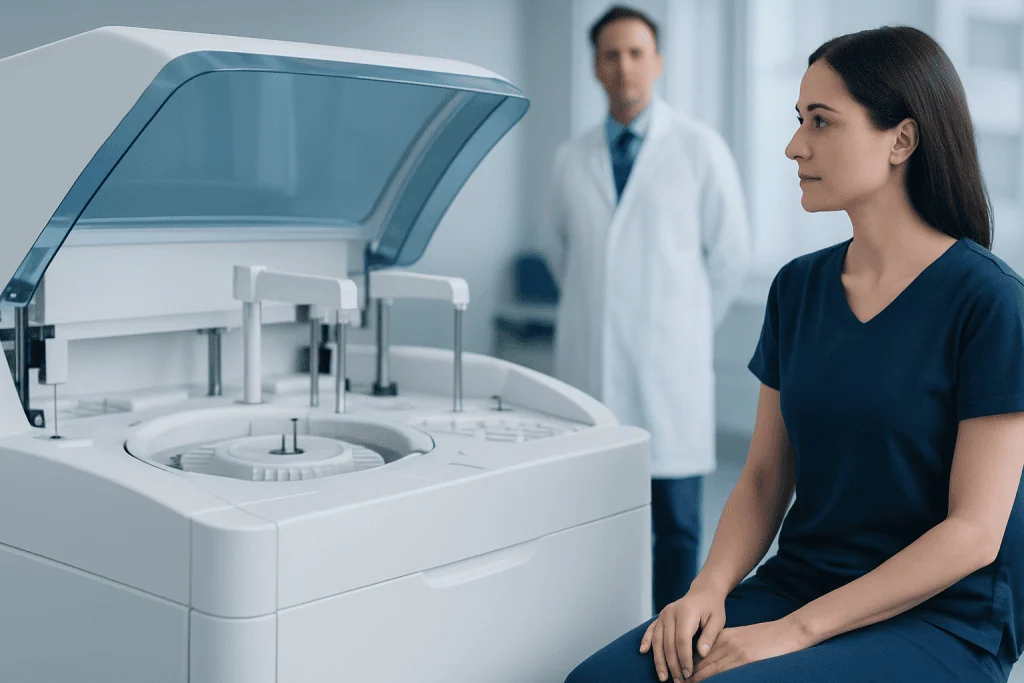
Fasting is the most common preparation requirement, and the most commonly misunderstood. It does not mean one fixed thing. For some blood tests you are asked to avoid solid food for a set number of hours. For others, milk, juice, sugary drinks, chewing gum and smoking are also restricted, because each can shift the values the laboratory is measuring. Sometimes plain water is fine and even encouraged; sometimes water is limited for a short window before the test. Procedures involving sedation carry their own, stricter rules. The only safe approach is to follow the exact guidance from your care team, hour by hour.
A few practical habits make fasting easier when you are staying in a hotel rather than at home. Eat a proper meal before the fast begins, and set an alarm for the moment eating must stop, hotel evenings drift, and a late dinner can quietly break tomorrow’s rules. Keep water by the bed only if water is permitted. Ask the hotel about early breakfast options for after the test, so you are not fasting longer than necessary once the sample is taken or the scan is done.
If you live with diabetes or another condition that makes going without food difficult, tell the hospital before your appointment rather than on the day. Teams routinely adjust for this: an early-morning slot, a resequenced schedule, specific guidance from the treating doctor about that morning’s medicines. Do not change or skip medicines on your own; decisions about insulin, tablets and timing belong to the clinician who knows your case.
Fasting rules are detailed enough that we cover them separately in Fasting Before Tests and Procedures in Turkey. The short version for planning purposes:
- Confirm exactly when fasting starts and ends, in hours, in writing
- Check whether plain water is allowed, and how much
- Ask specifically about coffee, tea, gum and smoking, since these are the items patients most often assume are fine
- Confirm what applies to your regular medicines with your treating doctor
What different tests usually involve
The table below shows common preparation themes by test type. It exists to help you ask better questions: your hospital’s written instructions always override it, because protocols vary by department, by machine and by what the doctor is looking for.
| Test type | Typical preparation themes | Worth asking about |
|---|---|---|
| Blood tests | Some panels require fasting; others do not. Timing of the sample can matter. | Which panels are fasting; whether water is allowed |
| Ultrasound | Depends on the area examined, some scans need a full bladder, some need an empty stomach, some need nothing. | Drinking instructions specific to your scan |
| MRI | Usually no fasting, but strict rules on metal: jewellery, hairpins, zips, underwires, and some devices and implants. | Any implants, clips or devices in your body, declare them all in advance |
| CT with contrast | May involve fasting and questions about kidney function, allergies and certain medicines. | Whether contrast is planned; recent kidney bloodwork |
| Endoscopy-related tests | Stricter fasting; sedation is common, which affects the rest of your day. | Whether you need an accompanying adult afterwards |
| Cardiac tests (ECG, echo, stress testing) | Comfortable clothing and footwear matter; caffeine or certain medicines may be restricted beforehand. | Caffeine rules; what to wear for a treadmill test |
If you carry a pacemaker, an implanted pump, cochlear implant or other device, this affects both your flight and your imaging appointments, see Flying to Turkey with Medical Devices or Implants and make sure the imaging department knows about every implant before you arrive, ideally with the device card or documentation.
Choose practical clothing and leave valuables behind
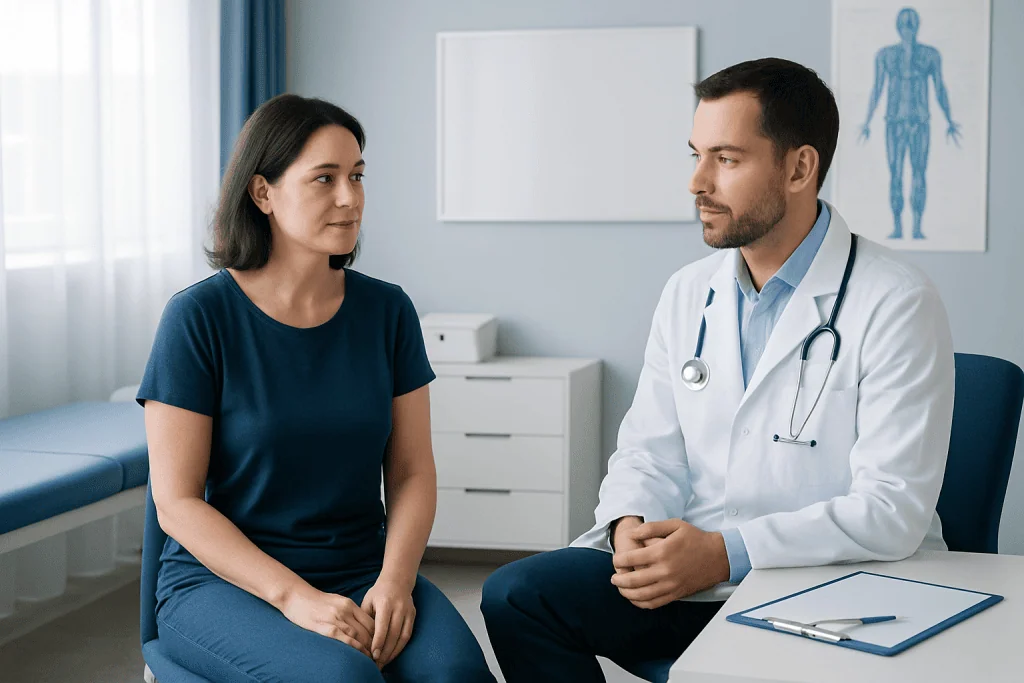
What you wear affects both your comfort and the speed of your appointment. The general rule: loose, comfortable, two-piece clothing that is easy to remove or adjust. Two pieces beat a dress or one-piece garment, because many exams only need one area of the body exposed, and you may otherwise end up changing fully into a gown for a two-minute check.
Avoid metal wherever you can, especially for imaging. Jewellery, watches, belts with large buckles, hairpins, underwired bras, and clothing with metal zips or studs may all need to come off. Some departments also ask you to avoid heavy makeup, nail products or body lotions for particular tests, where these interfere with sensors, skin contact or image quality, if this applies to you, it will be in your written instructions.
Wear shoes you can walk in. Hospital campuses can be large, and a morning of tests may take you between floors and buildings. Finally, leave expensive jewellery and unnecessary valuables at the hotel; changing rooms are secure, but the simplest way to protect something on a test day is not to bring it.
Timing matters: arrive early and plan your route
Even a short test takes longer than the test itself. Registration, identity checks, interpreter support, consent paperwork, payment formalities and walking between departments all add minutes. Arriving 15 to 30 minutes early is a sensible default unless your hospital specifies otherwise. Some appointments need more lead time, for example when contrast material, preliminary bloodwork or a period of observation is built into the protocol. We explain the reasoning in more depth in Arriving Early for Tests in Turkey: Why Timing Matters.
In Istanbul, add a traffic buffer on top of everything else. Journey times vary sharply by hour and by district, and hospital campuses often have multiple entrances. The night before, save the exact address on your phone, check which entrance to use, and confirm whether you report first to international patient services, the main admissions desk or the department itself. Five minutes of checking the evening before removes most of the stress of the morning.
Think about your energy as part of the plan. If you are fasting, have limited mobility, or feel anxious about needles or enclosed spaces, do not stack errands before the appointment. Coordinators can often sequence same-day tests so that fasting appointments come first and you can eat afterwards, worth requesting when the schedule is being built.
Bring the right documents, medicines list and previous results
The right paperwork saves time and prevents the same questions being asked three times. Bring your passport or ID, appointment confirmation, insurance or payment documents where relevant, and any referral letters or prior reports. If earlier results live on a CD, USB stick or patient portal, ask in advance which formats the hospital can open: a disc that cannot be read is the same as a disc left at home.
Your medicines list deserves particular care. Include prescription medicines, insulin, inhalers, blood thinners, over-the-counter tablets, vitamins, herbal products and recent injections. For each item, write the name, the dose, and when you last took it. This is not bureaucracy: medicines can affect fasting requirements, bleeding risk, kidney considerations for contrast studies and the interpretation of results, and the team can only account for what it knows about.
Previous results matter most when a doctor wants to compare new findings against old ones: a scan from last year can change how this year’s scan is read. If documents are not in English or Turkish, send them ahead where possible, or bring originals together with translated summaries. For a fuller treatment of formats, translation and what actually gets read, see How to Prepare Medical Records for Treatment in Turkey.
If you take regular medicines or manage a long-term condition
This is the area where patients most often want a general rule, and where no general rule exists. Whether a medicine is taken as usual, taken with a sip of water, or held until after the test depends on the medicine, the test and your medical history. Diabetes medicines, blood pressure medicines, blood thinners and anything normally taken with food are the categories most often affected by fasting appointments, which is precisely why the decision sits with your treating doctor, not with a guide.
What you can do is make that decision easy: raise the question before travel, list every medicine accurately, and get the answer in writing alongside your fasting instructions. Then follow it exactly on the day, without improvising exceptions.
Know what happens after the test
Preparation does not end when the test starts. Before the appointment, find out whether you can eat and drink normally afterwards, whether you can drive or travel, and how and when results will be shared. Many routine tests need no recovery time at all. Others, anything involving sedation, contrast material or a short observation period, shape the rest of your day, and if sedation is planned you will usually need an accompanying adult for the trip back to your hotel. Clarify this before the day, especially if you are travelling alone.
Pack small practical items for afterwards: a snack and water for when a fast ends, a phone charger, a book for waiting periods, provided none of it conflicts with your instructions. If a slip happens on the morning, you drank coffee out of habit, or took a tablet you were asked to hold, mention it at registration rather than staying quiet. Staff deal with this routinely, and the honest version usually costs less time than a test performed under the wrong conditions.
Occasionally a doctor reviewing your results will want an additional test that was not on the original plan. This is normal diagnostic practice rather than a sign that something has gone wrong, but it can affect your schedule; this guide on unexpected tests explains how such additions are handled and what they mean for a travel itinerary.
Step by step
- 1. Confirm your test details. Check the exact name of the test, the date, time, location and department. Ask for written instructions so you know whether fasting, clothing rules or medicine considerations apply to you.
- 2. Review food, drink and medicine rules. The day before, confirm when eating must stop and what you may still drink. If you take regular medicines, especially for diabetes, blood pressure or blood thinning, make sure your treating doctor has told you what to do on the morning of the test.
- 3. Prepare clothes and documents the night before. Lay out comfortable two-piece clothing without metal and shoes that are easy to walk in. Put your passport or ID, appointment confirmation, previous results and medicines list in one bag so nothing is forgotten in the morning.
- 4. Plan your route and arrival time. Allow extra time for traffic, parking, registration and finding the correct department. Save the address and entrance details on your phone before leaving the hotel.
- 5. Flag any special needs in advance. Interpreter support, wheelchair assistance, difficulty fasting, anxiety about needles or enclosed spaces, early notice lets the team organise the visit around them.
- 6. Follow the instructions exactly on the day. Do not assume small exceptions to fasting are acceptable unless your team has confirmed them. If a slip happens, tell the staff when you arrive rather than hoping it will not matter.
- 7. Ask about aftercare before you leave. Make sure you know when you can eat, drink, travel and resume your usual routine, how results will reach you, and what the next step in your plan is.
Your checklist
- Written preparation instructions for your exact test
- Passport or ID and appointment confirmation
- List of all medicines, supplements and allergies, with doses and last-taken times
- Previous reports, scans or blood results in a format the hospital can read
- Comfortable two-piece clothing without metal, and walkable shoes
- Extra travel time for traffic, registration and paperwork
- Interpreter or mobility assistance arranged in advance if needed
- Snack, water and charger for after the test, where permitted
Key takeaways
- Preparation depends on the exact test, so the written instructions for your appointment always override general advice.
- Fasting rules vary widely; check food, water, coffee, gum and smoking separately, and let your treating doctor decide anything involving medicines.
- Wear loose two-piece clothing without metal, and leave jewellery and valuables at the hotel.
- Arrive 15-30 minutes early with your ID, appointment details, medicines list and previous results.
- Sort out interpreters, sedation logistics and aftercare questions before the day, not during it.
Frequently asked questions
How long should I fast before medical tests in Turkey?
It depends entirely on the test. Some tests require no fasting, others require several hours without food, and some also restrict certain drinks, gum and smoking. There is no single rule that fits every appointment, so follow the exact hours given in your hospital’s written instructions.
Can I drink water while fasting for a test?
Sometimes yes, sometimes no. For many blood tests, small amounts of plain water are allowed; for some procedures and scans, water is limited for a period beforehand. If your instructions do not clearly mention water, ask your care team before assuming either way.
Can I have coffee or tea before a fasting blood test?
Usually not during the fasting window, even without milk or sugar, because caffeine and other compounds can affect certain measurements. Coffee, tea, gum and cigarettes are the items patients most often assume are harmless, treat them as restricted unless your team says otherwise.
What should I wear for tests and imaging appointments?
Loose, comfortable two-piece clothing that is easy to remove or adjust. Avoid jewellery, watches, belts, hairpins and garments with metal zips or underwires, especially for imaging. If a gown is needed, staff will provide one and guide you.
How early should I arrive for a hospital test in Istanbul or elsewhere in Turkey?
A good default is 15 to 30 minutes early, unless your hospital specifies otherwise. Registration, interpreter support, consent paperwork and finding the right department all take time, and Istanbul traffic is unpredictable, leave earlier than you think you need to.
Should I take my regular medicines before the test?
Not always, and this is not a decision to make alone. Some medicines are taken as usual, others may need timing adjustments depending on the test, particularly diabetes medicines, blood thinners and anything taken with food. Only your treating doctor can give instructions specific to you, so raise the question before the appointment day.
What documents should I bring to my appointment?
Your passport or ID, appointment confirmation, any referral letters, previous relevant results, and a written list of medicines, supplements and allergies. If scans are on a CD or reports are in another language, check in advance which formats the hospital can review.
Can someone help me if I do not speak Turkish?
Yes. Hospitals that regularly care for international patients offer interpreter and coordination services, and at Acibadem the international patient team can support appointments, practical instructions and communication during your visit. Requesting language support before the appointment day makes the visit run more smoothly.
Add us as a Preferred Source to see more of our trusted health content across Google Search, AI Overviews and Discover.

Update history
- PublishedJuly 6, 2026
- Medical review approvedSeptember 13, 2026
- Last content updateSeptember 12, 2026
References2
- Fasting for a Blood Test: MedlinePlus medlineplus.gov
- MRI scan: NHS nhs.uk
More Patient Guides
Sleep Apnea Testing in Turkey: What Happens During Your Evaluation
Sleep apnea testing in Turkey may include a consultation, overnight sleep study or home test, and a clear review of your results…

How to Organize Your Test Results Before Traveling to Turkey
Organize your test results before traveling to Turkey by sorting records, images, medicines and timelines so your Istanbul care team can review…

When Extra Tests Are Needed Before Treatment in Turkey
Extra tests before treatment in Turkey may be needed to confirm diagnosis, timing, and safety. Here is what you can expect in…

At Acibadem, How to Prepare for Blood Tests, Scans, and Pre-Op Checks
Blood tests, scans, and pre-op checks at Acibadem in Turkey help confirm you are ready for treatment and avoid delays on the…