

Planning Treatment in Turkey with a Long-Term Disability

Planning treatment in Turkey with a long-term disability works best when practical needs are settled before travel dates are fixed. Prepare a one-page accessibility profile, share it alongside your medical reports with the hospital's international patient team, confirm airline assistance and transfer arrangements early, check accommodation details room by room, and agree a discharge plan that fits your baseline function, not a generic recovery timeline.
Will the transfer car fit your wheelchair? Can a companion stay in the room with you? Is the hotel bathroom genuinely step-free, or does it just say “accessible” online? If you live with a long-term disability, these questions usually arrive long before the medical ones, and they deserve answers just as early.
Planning treatment in Turkey with a long-term disability is not fundamentally different from planning any medical trip. It simply has less room for improvisation. A gap that an able-bodied traveller absorbs with a shrug, a broken lift, a vehicle with no boot space, a hotel three flights up, can derail your day entirely. The fix is not luck. It is sequencing: sorting mobility, communication, medication, accommodation, companions and recovery in the right order, before anything is booked.
At a glance
- Best time to raise access needs: Before flights and hospital appointments are confirmed, not after
- Key contacts to line up: International patient coordinator, treating team, interpreter and an accessibility contact
- Travel planning focus: Airline assistance, equipment and battery rules, accessible transfers, medication in hand luggage
- Hospital support to discuss: Room access, appointment pacing, transfer and positioning help, communication preferences
- Aftercare priority: A discharge plan matched to your baseline function, home environment and local clinicians
Start with your everyday needs, not only your diagnosis
When you are planning treatment in Turkey with a long-term disability, the most useful information you can give a hospital is often practical rather than medical. Your reports describe your condition. They rarely describe how you actually move through a day: how you transfer, how you communicate, how long you can sit, what fatigue does to you by mid-afternoon, and what support you rely on at home. That is the information that shapes appointment schedules, room allocation and safe handling, and it only helps if it arrives early.
Before sending medical documents anywhere, write a short accessibility profile. One page is enough. Include:
- The aids you use: wheelchair (manual or powered), walker, cane, prosthesis, hearing aid, communication device, oxygen support, continence supplies, feeding equipment or anything else you depend on daily
- Your transfer status: independent, one-person assist, two-person assist, or hoist required
- Your honest limits: how long you can sit, whether you need to lie flat after travel, whether mornings are difficult, whether crowded or noisy spaces cause sensory overload
- What should never happen: movements, positions or handling that cause pain or risk injury
Describe your harder days, not your best ones. If your disability fluctuates, plans built on your good days will fail on your bad ones. Attach the profile to your medical documents when they go to the hospital, so your first hospital day is arranged around how you actually function, rather than assumptions.
What “long-term disability” means here, and what it does not
The phrase carries two separate meanings, and search results mix them freely. In many countries, “long-term disability” is an insurance or benefits category: a legal definition tied to whether you can work, decided by an insurer or government body under your home country’s rules. Which conditions qualify, and how payments work, depends entirely on that system. A hospital abroad cannot assess or influence it, and this guide does not attempt to.
In medical travel, the phrase means something simpler: you live with a lasting condition, mobility-related, sensory, neurological, or otherwise, that affects how you travel, communicate or recover, and your trip needs to be planned around it. That is the sense used throughout this guide. If your treatment or absence abroad affects a benefits claim at home, check with your insurer or benefits agency before travelling; keep copies of any medical documentation they may require, and ask your treating team in Turkey whether reports can be prepared in a format your home system accepts.
Coordinate early with the international patient team
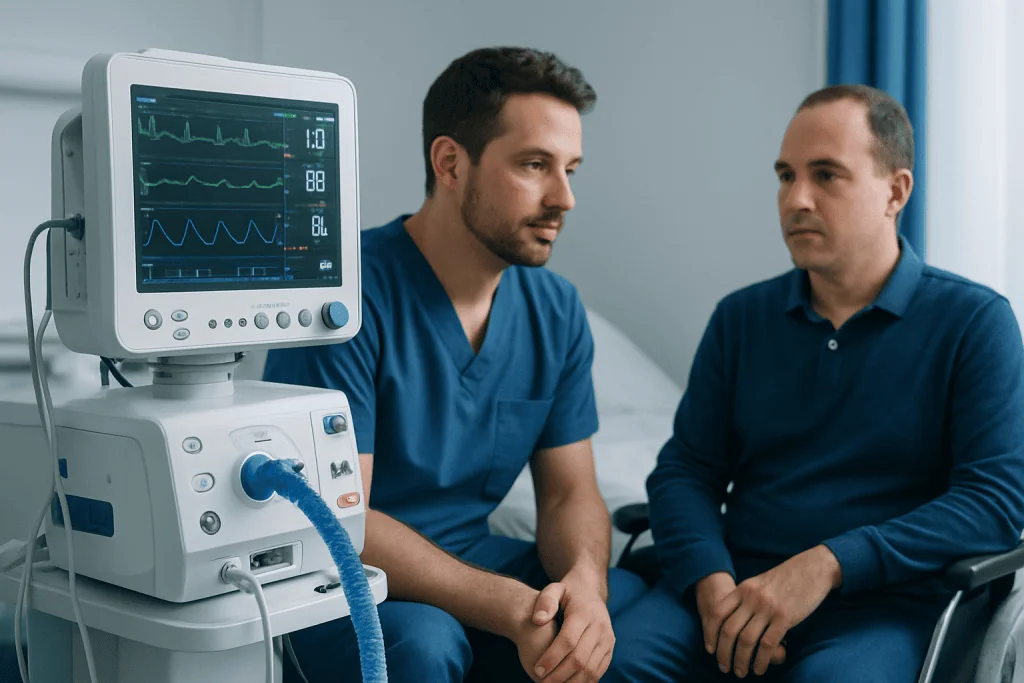
Early coordination is the single most valuable habit in accessible medical travel. The right order is: share documents and access needs first, receive a proposed treatment plan and schedule, and only then book flights. Reversing this order is how gaps appear: a transfer vehicle that cannot take an unfolded powered chair, appointments stacked on the morning after a night flight, a hotel room too far from a working lift.
An international patient department typically helps gather medical documents, relays questions to the relevant clinical departments, arranges interpreter support and discusses non-clinical needs such as transport and accommodation preferences. It does not replace your doctor’s medical advice; its job is to make sure the right questions reach the right people before you travel.
Be explicit about communication. State your preferred language, your companion’s details, and how you communicate best. If you use sign language, a speech device, written exchanges, lip reading, or simply need extra time to process information, say so before your first consultation. Accessible care is not only ramps and lifts. It is being heard, understood and involved in every decision about your own body.
Can foreigners be treated in Turkish hospitals?
Yes. Turkey has a large private hospital sector accustomed to receiving international patients, and foreign nationals can be treated as self-paying patients or, in some cases, through international insurance arrangements. The practical requirements are ordinary ones: a valid passport, any visa or entry permission your nationality requires, your medical records, and payment or insurance arrangements agreed in advance. International patient departments exist precisely to manage this process, document exchange, scheduling, interpretation and non-clinical logistics, so that arriving from abroad does not mean navigating an unfamiliar system alone. If you carry disability documentation from home, bring it; it is not required for admission, but it can help explain your needs quickly.
Plan flights, arrival and accessible transfers

Plan the journey around energy, safety and continuity, in that order. Request airport assistance from the airline when booking and confirm it again about 48 hours before departure. Ask specifically what happens at departure, transit and arrival, and where your own wheelchair will be returned: at the aircraft door or in the baggage hall. The difference matters if airport chairs do not suit your posture or pressure needs.
Keep essentials in hand luggage: medication in original packaging with prescriptions, a medical summary, device chargers, and a day or two of consumable supplies. If you use a powered wheelchair or a medical device, check the airline’s battery and documentation rules well in advance, and carry photographs of your equipment plus written handling instructions in English. Damaged or mishandled equipment is far easier to prevent than to repair abroad. Our guide to flying to Turkey with limited mobility covers airline assistance, transfers and hotel planning in more depth.
Sort the ground transfer before you fly, not at the kerb. Some travellers need only a standard car with boot space for folded equipment; others need a wheelchair-accessible vehicle with a ramp or extra hands for luggage. Say which you are, in writing, and confirm what has been booked, especially if you land late, travel with oxygen equipment or bring bulky aids. For the arrival day itself, see planning a low-stress arrival after a long flight.
Choose accommodation that supports recovery
Your hotel or apartment is part of the care plan, particularly if you stay in Turkey before or after treatment. “Accessible” is an unregulated word online. A room can carry the label and still have a narrow bathroom doorway, a step into the shower, a bed too low to transfer onto, or no turning space for a chair.
Ask specific questions and request written answers, measurements or photos where your needs are precise: entrance access, lift size and reliability, bathroom doorway width, roll-in shower or shower chair availability, grab bars, bed height, a refrigerator for medication, quiet rooms if you need them, and space for a companion. Weigh distance against size: if fatigue, pain or neurological symptoms affect you, a smaller room ten minutes from the hospital often beats a larger one forty minutes away in traffic.
International patient teams can usually point you towards accommodation commonly used by patients from abroad, but the final match against your own access needs is yours to make. Plan for your more difficult days, and leave slack in the booking, recovery does not always follow the schedule, and budgeting for extra nights is easier before you travel than during.
How costs and quotes work, without the guesswork
There is no single answer to what treatment in Turkey costs, and any page that gives you one number is simplifying. A serious quote is built from your own case: the procedure itself, the hospital and clinical team, the expected length of stay, anaesthesia and imaging, implants or materials where relevant, and follow-up. For anyone planning treatment in Turkey with a long-term disability, there are additional lines worth asking about explicitly: accessible transfers, a companion’s accommodation, extra recovery nights, and any equipment hire.
The reliable approach is procedural, not numerical. Share your records, receive a written quote, and ask what it includes and, just as importantly, what it excludes. Ask how the estimate changes if your stay runs longer than planned. Our guides on cost planning for longer hospital stays and what to do after you accept a treatment quote walk through the structure in detail.
Make hospital days easier and more predictable
A hospital day abroad can involve registration, imaging, laboratory tests, consultations and waiting periods, sometimes across several departments. If long days are hard for you, ask in advance whether appointments can be grouped sensibly or spaced with rest breaks. Say what you need between them: priority seating, a quiet space, accessible toilets nearby, or help moving between floors.
Bring your accessibility profile, medication list and assistive equipment with you each day. If a companion comes, agree their role beforehand, note-taking, transfer support, reminding staff about sensory needs, personal care, while keeping your own preferences and consent at the centre. Staff should hear from you directly wherever possible.
Above all, state your handling needs before any examination or test begins. Do not assume staff know what is safe for your body. One clear sentence, “I need support under my left side when transferring” or “Please speak slowly and face me”, prevents discomfort, misunderstanding and occasionally injury. Nobody knows your body’s rules better than you, and no hospital process replaces that knowledge.
Prepare for discharge, recovery and returning home
Discharge planning starts before your final hospital day. Ask what will be expected after treatment, mobility, wound care, medication routine, therapy, rest, follow-up, and how that advice adapts to your baseline. Standard recovery instructions are written for standard bodies. If you already use a wheelchair, manage fatigue daily, or rely on carers at home, say so, and ask the team to adjust the plan to the function you actually start from.
Before leaving Turkey, make sure you hold written discharge instructions, your medication schedule as set by your treating doctor, dressing guidance where relevant, activity limits, follow-up contacts and copies of key records, translated where available, and saved digitally for your clinicians at home. Ask which follow-up can happen remotely, which tests can be done locally and how results should be shared. Then identify one local doctor or therapist who understands your long-term disability and can carry the recovery forward in your usual environment. If your treatment leaves you with temporary new limits for the journey home, flying restrictions, seating needs, fresh wheelchair assistance requests, the guide on returning home with new medical restrictions covers what to arrange and when.
Step by step
- Write your accessibility profile. One page covering mobility, transfers, communication, equipment, daily routine and assistance level. Include what keeps you safe and what must be avoided during transfers, waits and examinations.
- Share documents before booking anything. Medical reports, medication list and the profile go to the hospital’s international patient team first, so the timeline can be checked and support arranged before flights are paid for.
- Define your companion’s role. Decide what they will do, personal care, notes, transport, emotional support, and make clear that staff should still hear your preferences directly.
- Confirm airline arrangements in writing. Wheelchair assistance, battery and device rules, seating, medication in hand luggage. Keep the confirmations and arrive early; accessible boarding takes extra time.
- Verify accommodation room by room. Doorway widths, shower layout, bed height, lift reliability, distance to the hospital, medication storage, companion space. Ask for measurements or photos where the label “accessible” is not enough.
- Build rest into the schedule. Avoid major appointments straight after a long flight unless the medical team advises otherwise. Many people with long-term disabilities need a recovery day before they can tolerate tests or make decisions well.
- Settle aftercare before discharge. Written instructions, follow-up contacts, a record-sharing plan for your local doctor, and a recovery plan that reflects your usual disability support, not only the treated condition.
Your checklist
- Passport, visa or entry documents checked well before travel
- Medical reports, imaging, prescriptions and disability documentation saved digitally and printed
- Accessibility profile shared with the international patient coordinator
- Airline assistance, mobility equipment rules and battery requirements confirmed in writing
- Medication packed in hand luggage with prescriptions and original packaging where possible
- Accessible transfer and accommodation details confirmed before arrival
- Companion role, rest breaks and communication preferences agreed
- Travel insurance reviewed for pre-existing conditions and disability-related needs
- Written quote reviewed for inclusions, exclusions and extra-night scenarios
- Local doctor or therapist at home identified for follow-up after return
Key takeaways
- Sequence matters: share access needs and documents first, receive a schedule, then book flights.
- Practical daily detail, transfers, fatigue, communication, is as important as medical reports.
- “Long-term disability” as a benefits category is a home-country matter; here it means planning around a lasting condition.
- Verify accessibility with measurements and photos, not labels; plan for your harder days.
- Costs are case-specific, judge quotes by what they include and exclude, not by headline figures elsewhere.
- Discharge plans should start from your baseline function, with a named local clinician to continue care at home.
Frequently asked questions
Can foreigners go to hospital in Turkey?
Yes. Foreign nationals are routinely treated in Turkish hospitals, usually as self-paying patients or through international insurance arrangements. You need a valid passport, any visa your nationality requires, your medical records and agreed payment arrangements. International patient departments handle scheduling, document exchange and interpretation so the process works in your language.
What medical conditions qualify for long-term disability?
That depends on your home country’s insurance or benefits system, which defines qualifying conditions and assesses claims under its own legal rules: a hospital abroad plays no part in that decision. In medical travel, “long-term disability” simply describes a lasting condition that affects how you travel and recover, which is the sense used throughout this guide.
How much does medical treatment cost in Turkey?
There is no honest single figure. Costs depend on the procedure, hospital, length of stay, anaesthesia, materials and follow-up, plus disability-related extras such as accessible transfers or additional recovery nights. The reliable route is a written, case-specific quote, then check exactly what it includes, what it excludes and how it changes if your stay runs longer.
Can I travel to Turkey for treatment if I use a wheelchair?
Many wheelchair users do, but the planning must be specific. State whether your chair is manual or powered, whether it folds, your transfer needs and battery details before booking. Confirm airline assistance, where your chair is returned on arrival, an appropriately sized transfer vehicle, and hotel bathroom access, all in writing, all before you fly.
Should I bring a companion if I have a long-term disability?
Often helpful, not always essential. It depends on your independence, the treatment plan and the support available at the hospital and your accommodation. If a companion comes, agree their role in advance. If you travel alone, tell the international patient team early so realistic assistance can be discussed before arrival.
How do I know whether a hotel is truly accessible?
Ask precise questions rather than trusting the label. Confirm entrance access, lift size, bathroom doorway width, shower layout, grab bars, bed height, equipment space and distance to the hospital. Request measurements or photos if your needs are specific, for example, turning space for a wheelchair or a genuinely step-free shower.
What medical documents should I share before travelling?
Recent reports, imaging, test results, medication lists and summaries covering both the planned treatment and your long-term disability. Include allergies, implanted devices, mobility restrictions and any previous anaesthesia concerns. Keep printed and digital copies with you during travel, records in your hand luggage are worth more than records in the hold.
What should I arrange before returning home?
Written discharge instructions, your medication schedule as set by your treating doctor, follow-up contacts and copies of key records. Ask your treating team which follow-up can be done remotely, which tests can be handled locally, and share the full plan with a doctor or therapist at home so support continues in your usual environment.
Add us as a Preferred Source to see more of our trusted health content across Google Search, AI Overviews and Discover.

Update history
- PublishedJune 8, 2026
- Medical review approvedSeptember 13, 2026
- Last content updateSeptember 13, 2026
References2
More Patient Guides

Airport Wheelchair Assistance: How to Book It for a Medical Trip
Airport wheelchair assistance is free, it exists at every commercial airport, and airlines are legally required to provide it, yet half…

Travelling With a Stoma: Flights, Supplies and Airport Screening
Traveling to Turkey with a stoma is manageable with the right supplies, airport screening plan, and recovery support in Istanbul or Turkey.
Mobility Aids in Turkey: Renting a Wheelchair, Walker, or Crutches
Mobility aids in Turkey can be rented through medical suppliers, pharmacies, and hospital-linked services in Istanbul and other cities.

Traveling to Turkey with Food Allergies or Special Diet Needs
Traveling to Turkey with food allergies or special diet needs is manageable with planning, translated allergy cards, and hotel and hospital support…