

Preparing for an Anesthesia Consultation in Turkey

Preparing for an anesthesia consultation in Turkey means gathering three things: a complete medication and allergy list, records of past anesthesia experiences, and recent test results. Send documents 2-4 weeks before travel if you can, confirm interpreter support, and never stop a prescribed medicine on your own. The consultation itself is a safety review, and the more accurate your information, the better the plan.
Wondering what the anesthesiologist will actually ask you, and whether the file of test results on your phone is enough? You are not alone. Your anesthesia consultation is a safety-focused conversation. It helps the team understand your health, choose the most suitable anesthesia approach, and reduce avoidable risks before your procedure.
This guide covers preparing for an anesthesia consultation in Turkey step by step: what to send before you travel, what the appointment involves, how fasting rules such as the “2-4-6” rule actually work, what to avoid in the week before surgery, and how Acibadem International can support you with records, interpreters, and hospital coordination.
At a glance
- Best time to prepare: Start gathering records 2-4 weeks before travel when possible
- Bring to the consultation: Medication list, past anesthesia notes, test results, allergy details, and medical history
- Main purpose: To assess safety, agree an anesthesia plan, and clarify fasting and medicine instructions
- Fasting rules: Follow the written instructions from your hospital team, not general internet advice
- Language support: Interpreter assistance can be coordinated for international patients
- Important reminder: Do not stop or change prescribed medicines unless your medical team advises you
Why preparing for an anesthesia consultation in Turkey matters
An anesthesia consultation is not a formality. It is a dedicated safety review in which an anesthesiologist examines your medical history, current medicines, allergies, previous anesthesia experiences, and the planned treatment. The goal is to understand your individual risk factors and build a plan that fits you, rather than applying a one-size-fits-all approach. It usually sits alongside other checks in your pathway, such as the reviews described in our guide to pre-operative clearance in Turkey.
If you are travelling for care, the appointment also connects the medical and practical sides of your journey. Your anesthesiology team may want to know when you arrived, whether you have had a long flight, whether you are dehydrated, whether you take blood thinners, and whether you use devices such as a CPAP machine for sleep apnoea. These details genuinely affect preparation and monitoring, which is why preparing for an anesthesia consultation in Turkey starts well before you board the plane.
At Acibadem International, the international patient services team can help you share medical records in advance, arrange interpreter support when needed, and coordinate the appointment with the rest of your treatment schedule. That gives the anesthesiologist clearer information before the day of your procedure, and gives you a calmer start.
What to send before you travel
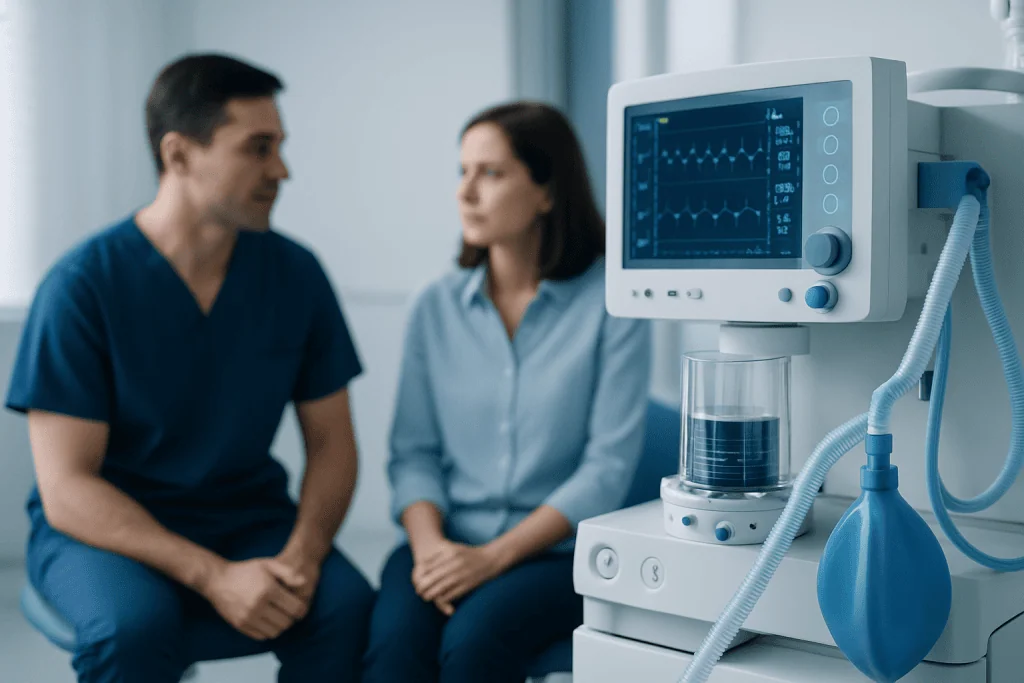
Whenever possible, send your key medical documents before you arrive in Turkey. This gives the team time to spot gaps, request additional tests if needed, and avoid last-minute delays. You do not need a perfect medical file. You need a clear, honest summary.
Useful documents include:
- Recent blood tests, ECG or heart reports, and imaging reports
- Discharge summaries and previous operation notes
- Any written record of past anesthesia, including anesthesia alert cards
- Latest specialist reports for chronic conditions such as heart disease, asthma, diabetes, kidney disease, epilepsy, thyroid disease, or sleep apnoea
If your records are in a language other than English or Turkish, ask the international patient team whether translation is recommended. For complex histories, even a short translated summary makes the consultation smoother. Keep original files with you while travelling and store digital copies on your phone or in secure cloud storage. Some of this review can happen remotely before you fly, see how to prepare for a pre-treatment video consultation for what a remote review usually covers.
Your medication list: make it accurate

Your medication list is one of the most important parts of anesthesia preparation. Include prescription medicines, over-the-counter tablets, injections, inhalers, eye drops, hormone treatments, supplements, herbal products, and vitamins. Products that feel minor to you can still matter for anesthesia, some affect bleeding, blood pressure, or blood sugar control.
Write the exact name of each medicine, the dose, how often you take it, and the time you usually take it. Bring the original packaging where practical, or take clear photos of the labels. This is especially useful when brand names differ between countries, which they often do. Our separate guide to preparing your current medicine list for Turkey walks through this in detail.
One rule matters above all others: do not stop medicines on your own. Blood thinners, diabetes medicines, weight-loss injections, blood pressure drugs, and psychiatric medicines may require specific instructions before anesthesia, but the safe plan depends on your condition and your procedure. Your anesthesiologist and treating doctor will tell you what to continue and what to pause, in writing, with timings.
Questions the anesthesiologist may ask you
Expect a mix of medical and practical questions. Common ones include:
- Have you had anesthesia before? Any nausea, vomiting, or delayed waking afterwards?
- Were you ever told intubation was difficult, or that you have a “difficult airway”?
- Has any family member had a serious reaction to anesthesia?
- Do you have allergies, and what exactly happened when you reacted?
- Do you smoke, vape, drink alcohol, or use recreational substances?
- Could you be pregnant?
- Do you have loose teeth, crowns, dentures, or recent dental work?
- Do you have reflux, heavy snoring, or diagnosed sleep apnoea?
- How far can you walk or how many stairs can you climb without stopping?
The exercise questions are not small talk. Your ability to manage everyday activity tells the anesthesiologist a great deal about how your heart and lungs will handle anesthesia. The same is true of the sensitive questions about smoking, alcohol, and substances: these change how anesthesia drugs behave in your body, so honest answers directly protect you. Anesthesia teams discuss this information routinely and confidentially. Their job is to prepare safely, not to judge.
Fasting instructions, and what the “2-4-6 rule” really means
You may have seen the “2-4-6 rule” mentioned online. It is a fasting framework used widely in anesthesia, most often in children’s care: clear fluids up to 2 hours before anesthesia, breast milk up to 4 hours before, and solid food or formula up to 6 hours before. Adult fasting guidance is broadly similar in spirit, solids stop earlier, clear fluids may be allowed closer to the procedure, but the exact rules vary by hospital, procedure, and your medical background.
That is why the honest answer to “what is the 2-4-6 rule?” is: it is a useful concept, and it is not your instruction. Your instruction is the written fasting guidance your hospital team gives you, which may set different cut-off times for solid food, clear fluids, and morning medicines. Conditions such as reflux, diabetes, or delayed stomach emptying can change the plan. Eating or drinking outside your instructions can lead to your procedure being postponed for your safety, and if it happens by accident, tell the team immediately rather than hoping it will not matter.
On the day itself: plan your route, allow extra time for traffic, and bring your passport or identification, any insurance or payment documents, and your medical files. Wear comfortable clothing and check in advance how nail polish, contact lenses, dentures, hearing aids, and mobility aids should be handled. For a fuller picture of the whole pathway, from preparation through to waking up, read preparing for general anesthesia in Turkey.
The week before surgery: what to avoid
A common search question is “what not to do 7 days before surgery?” There is no universal list: your team’s instructions always come first, but these principles hold for most patients:
- Do not start new supplements, herbal products, or over-the-counter remedies without telling your team. Some affect bleeding or interact with anesthesia drugs.
- Do not stop or change prescribed medicines on your own. If a medicine needs pausing before surgery, your team will tell you exactly which one and when.
- Do not hide a new illness. A fever, cough, chest infection, stomach bug, or skin infection in the final week can change the plan. Report it early.
- Avoid heavy alcohol use, and if you smoke or vape, tell the team honestly: they will advise you rather than judge you.
- Avoid crash diets and dehydration, especially around long flights.
- Do not get new piercings, tattoos, or dental work close to the procedure without discussing it first.
- Do not leave logistics to the last minute. Confirm your arrival time, interpreter, companion arrangements, and who will be with you after discharge.
If any of this list conflicts with your written hospital instructions, the written instructions win. General guidance is a starting point; your plan is individual.
What the anesthesia plan aims to do: the “5 A’s”
Another question patients often search is “what are the 5 A’s of anesthesia?” It is a teaching framework that describes what a general anesthetic is designed to achieve: anxiolysis (calming anxiety), amnesia (no memory of the procedure), analgesia (pain control), akinesia (keeping the body still, often with muscle relaxation), and autonomic stability (keeping heart rate, blood pressure, and breathing steady throughout).
Why does this matter for your consultation? Because it explains why the anesthesiologist asks such wide-ranging questions. Every answer you give, about your heart, your airway, your past reactions, your pain experiences, feeds into one of these five goals. Not every procedure needs a general anesthetic; sedation, regional blocks, and local anesthesia are alternatives your anesthesiologist may discuss, depending on the procedure and your health. Our guide to what international patients should expect from general anesthesia in Turkey covers the options in more depth.
How consultation costs work in Turkey
Patients often ask what a doctor’s consultation costs in Turkey. We do not quote figures in this guide, because there is no single answer, and any single number you see online is likely to mislead you. What you can rely on is the structure:
- For international patients travelling for a planned procedure, the anesthesia review is usually part of the overall treatment plan rather than billed as a stand-alone visit. How it appears in your quote depends on the hospital and the procedure.
- What affects the overall figure includes the specialty involved, whether additional tests are ordered, whether imaging or cardiology reviews are needed, and the complexity of your history.
- A remote record review before travel and an in-person consultation after arrival may be handled differently in your plan, ask which applies to you.
The practical advice: request a written, itemised quote from your international patient coordinator before you travel, and ask specifically whether the anesthesia consultation and pre-admission tests are included. A clear quote in advance prevents surprises far more reliably than any number found in a search result.
Special considerations for international patients
Travel adds extra variables to anesthesia planning. Long flights, time zone changes, altered sleep, dehydration, and dietary changes can all affect how you feel before your procedure. If you become unwell after arrival, fever, chest symptoms, diarrhoea, or a new infection, tell your care team promptly rather than saving it for the consultation.
If you use medical equipment at home, bring it or discuss alternatives before you travel: CPAP or BiPAP machines, glucose monitors, mobility devices, hearing aids, or braces. Pack plug adapters, chargers, and enough supplies for your full stay, plus a buffer in case your return flight changes.
Companions matter more than most patients expect. They help you remember instructions, manage documents, and support you after discharge, and after sedation or anesthesia, having someone with you is often a requirement, not a courtesy. Read when you need someone with you after sedation or anesthesia before you finalise your travel plans, and ask the hospital what your companion can attend and where they can wait.
How to feel more confident before the consultation
It is normal to feel anxious before speaking with an anesthesiologist, especially in another country. Write down your top concerns before the appointment, fear of waking during surgery, nausea, pain control, a previous bad experience, or worries about your heart, lungs, or blood sugar. Naming a fear out loud is usually the fastest way to have it addressed properly.
Ask for plain-language explanations, and request an interpreter if you are not fully comfortable in the consultation language. You have the right to understand the plan: the type of anesthesia being considered, the monitoring involved, the approach to pain management, and what will happen in the recovery area.
Remember that this is a two-way conversation. The anesthesiologist brings medical expertise; you bring essential information about your body, your history, and your preferences. That combination, not either side alone, is what makes anesthesia safer and calmer.
Step by step
- Gather your medical records early. Start collecting recent test results, operation notes, discharge summaries, and specialist reports as soon as your treatment plan begins. Send copies to your international patient coordinator if requested, and keep a digital backup with you during travel.
- Create a complete medication and allergy list. Write every medicine and supplement you take, including dose and timing. List allergies and describe the reaction, rash, swelling, breathing difficulty, or stomach upset, because the type of reaction matters.
- Note previous anesthesia experiences. Record any past issues such as severe nausea, delayed waking, difficult intubation, allergic reactions, confusion, or strong pain after surgery. Bring any old anesthesia report or alert card.
- Prepare your questions. Make a short list covering fasting, morning medicines, pain control, nausea prevention, and recovery room expectations. This helps you use the consultation time well, especially if you feel nervous.
- Confirm interpreter and appointment logistics. Ask where the consultation will take place, when to arrive, and whether interpreter support is arranged. Acibadem International patient services can coordinate these details.
- Follow fasting and medicine instructions exactly. Use the written instructions from your hospital team, not general internet advice. If you accidentally eat, drink, or take a medicine differently than instructed, tell the team immediately.
- Bring a companion if possible. A trusted companion can listen, ask questions, and remember instructions, and is especially important if you will be discharged the same day or need help with transport and communication.
Your checklist
- Passport or official identification
- Recent blood tests, ECG, imaging reports, and specialist letters
- Previous surgery and anesthesia records, if available
- Complete medication list with doses and timing
- Allergy list with reaction details
- Names and contact details of your regular doctors, if relevant
- CPAP machine, inhalers, glucose monitor, or other personal medical devices
- Written questions for the anesthesiologist
- Interpreter request confirmed, if needed
- Written quote reviewed, with the anesthesia consultation and pre-admission tests clarified
- Hospital arrival time, location, and companion plan confirmed
Key takeaways
- Your anesthesia consultation is a personalised safety review, not a paperwork step.
- Accurate medication, allergy, and previous anesthesia information is the most valuable thing you can bring.
- Fasting frameworks like the 2-4-6 rule are concepts; your written hospital instructions are the rule.
- International patients should share records early and confirm interpreter and arrival logistics before travel.
- Never stop or change prescribed medicines unless your medical team advises you.
- Ask for a written, itemised quote so you know exactly what the consultation and tests include.
Frequently asked questions
What is the 2-4-6 rule for anesthesia?
It is a fasting framework used widely in anesthesia, most often for children: clear fluids up to 2 hours before anesthesia, breast milk up to 4 hours, and solid food or formula up to 6 hours. Adult rules follow a similar logic but vary by hospital, procedure, and your medical background. Always follow the written fasting instructions from your own hospital team rather than a general rule found online.
How much does a doctor’s consultation cost in Turkey?
There is no single figure, and any one number online is likely to mislead. For international patients travelling for a planned procedure, the anesthesia review is usually part of the overall treatment plan. The overall figure depends on the specialty, the tests ordered, and the complexity of your history. Ask your coordinator for a written, itemised quote before you travel and confirm what it includes.
What should I not do in the 7 days before surgery?
As a general rule: do not start new supplements or herbal products without telling your team, do not stop prescribed medicines on your own, do not hide a new illness such as a fever or infection, avoid heavy alcohol use, and avoid new piercings, tattoos, or dental work without discussing them first. Your hospital’s written instructions always override general lists like this one.
What are the 5 A’s of anesthesia?
A teaching framework describing the goals of a general anesthetic: anxiolysis (calming anxiety), amnesia (no memory of the procedure), analgesia (pain control), akinesia (keeping the body still), and autonomic stability (steady heart rate, blood pressure, and breathing). The consultation questions you are asked all feed into planning these five goals for your specific body and procedure.
Can I have the consultation in English?
Many international patient pathways include language support, and interpreter assistance can be arranged when needed. Request it before your appointment so it can be scheduled. Clear communication matters for consent, safety instructions, and your peace of mind, so do not settle for partial understanding.
Should I stop blood thinners before travelling?
No, not unless your doctor or hospital team gives you specific instructions. Stopping too early or too late can create risks, and the right plan depends on why you take the medicine and what procedure is planned. Share the medication name and dose with your care team as early as possible so they can plan properly.
What should I tell the anesthesiologist about past anesthesia problems?
Mention anything unusual: severe nausea, delayed waking, breathing problems, allergic reactions, difficult intubation, an unexpected intensive care stay, or confusion after surgery. If a family member had a serious anesthesia reaction, say so as well. Even if you are unsure of the details, mention it: a vague warning is more useful than silence.
What happens if I eat or drink by mistake before anesthesia?
Tell the hospital team immediately and be honest about what and when you ate or drank. Your procedure may need to be delayed or adjusted for safety. That decision protects you from serious complications during anesthesia: it is never a punishment, and honesty always leads to a safer outcome than staying quiet.
Add us as a Preferred Source to see more of our trusted health content across Google Search, AI Overviews and Discover.

Update history
- PublishedJune 8, 2026
- Medical review approvedSeptember 13, 2026
- Last content updateSeptember 12, 2026
References2
- General anaesthesia: NHS nhs.uk
- Anesthesia: MedlinePlus medlineplus.gov
More Patient Guides

HoLEP in Turkey: How It Compares With TURP and What Recovery Involves
HoLEP in Turkey treats enlarged prostate tissue with laser enucleation; learn how it compares with TURP, recovery, travel and follow-up.

Porcelain Veneers in Turkey: Who Is Suitable and How Many Visits Are Needed?
Porcelain veneers in Turkey can enhance tooth shape and colour in two visits for suitable patients after a personalised dental assessment.

How to Prepare for a Sedation Procedure in Turkey
Prepare safely for a sedation procedure in Turkey with guidance on fasting, medicines, travel, recovery and follow-up.

Treatment Delays in Turkey: What Happens If Tests or Recovery Change Your Schedule
Treatment delays in Turkey can happen if tests or recovery change your plan. Learn how to manage appointments, travel, accommodation and follow-up.