

Radiotherapy in Turkey: Daily Routine and Support Services
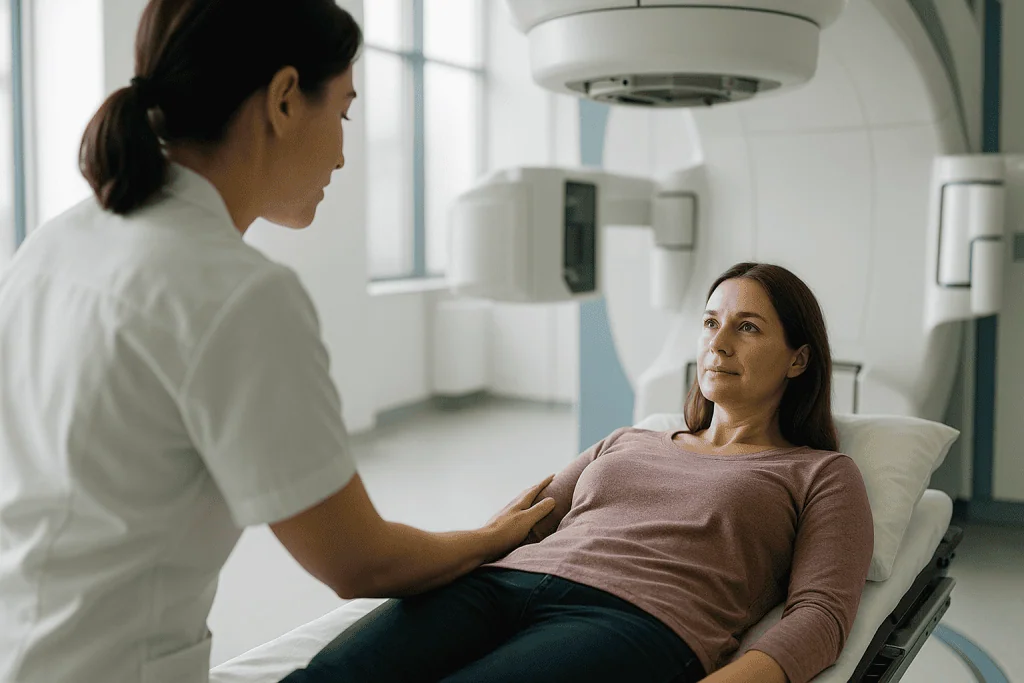
Radiotherapy in Turkey is usually delivered as short daily outpatient sessions over one to several weeks, after a planning phase with simulation scans. Most international patients stay in a hotel and travel to the hospital each day. Your total stay depends on your diagnosis and prescribed schedule, and support services such as interpreters, transfers and accommodation guidance help make the daily routine manageable.
How many weeks will you need to stay, and can you manage daily hospital visits from a hotel? These are usually the first questions patients ask when radiotherapy becomes part of the plan.
This guide explains what radiotherapy is, when doctors recommend it, what a treatment day actually looks like, and how to plan a course of radiotherapy in Turkey as an international patient. It covers preparation, the daily session routine, side effects, recovery, travel timing, and the support services that make repeated hospital visits workable. It does not tell you whether radiotherapy is right for you, only a specialist review of your records and an in-person assessment can do that.
At a glance
- Procedure type: Non-surgical cancer treatment using precisely targeted radiation, usually delivered in planned outpatient sessions
- Purpose: To destroy or control cancer cells, reduce the chance of recurrence, or relieve symptoms, depending on the diagnosis and treatment goal
- Anaesthesia: Usually not needed; sedation is considered only in special situations
- Hospital stay: Most courses are outpatient; admission is sometimes advised for combined treatment or complex medical needs
- Estimated recovery: Many people continue daily activities during treatment, though fatigue and local side effects can build gradually over the course
- Return to daily life: Often during treatment with adjustments; timing depends on the treated area, overall health, and whether chemotherapy or surgery is also involved
- Final result timeline: Effects develop over weeks to months; response is assessed with follow-up imaging and specialist review
- Suitable department: Radiation Oncology, working within a multidisciplinary cancer programme
- International patient support: Interpreter services, airport–hotel–hospital transfer coordination, accommodation guidance, and remote follow-up support
What is radiotherapy?
Radiotherapy uses carefully planned high-energy radiation to damage cancer cells in a defined area of the body. The aim may be to treat the cancer itself, to reduce the chance of it returning after surgery, to shrink a tumour before another treatment, or to relieve symptoms caused by advanced disease. The right approach depends on your diagnosis, the tumour’s location, your overall health, and what your cancer team is trying to achieve.
In most cases, radiation is delivered from outside the body by a machine that directs beams at a precisely mapped treatment area. This is external beam radiotherapy, and it is the form most international patients receiving radiotherapy in Turkey will have. Other forms of radiation treatment exist for selected cancers and locations, and your radiation oncologist will explain which applies to you.
Radiotherapy is not surgery. There is no incision, and you do not usually feel anything while the beam is on, although side effects can develop over the course of treatment. Planning typically involves radiation oncologists, medical physicists and imaging teams working together, because the value of the treatment lies in how accurately it is targeted and how well nearby healthy tissue is protected.
When is it recommended?
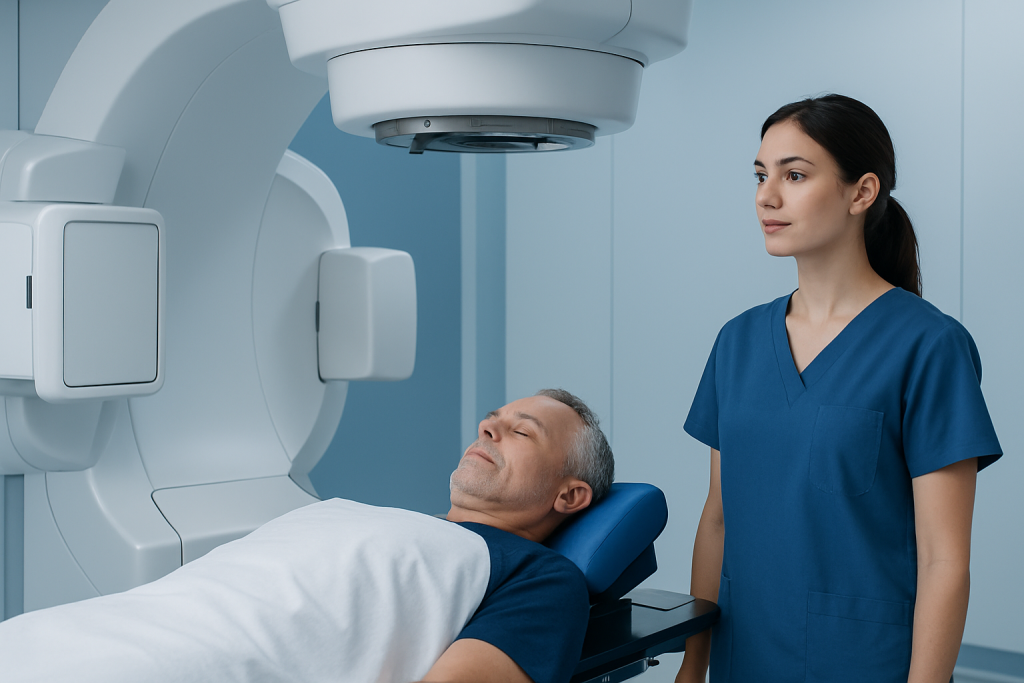
Radiotherapy is used across many cancer types. It can serve as a main treatment, follow surgery to lower recurrence risk, precede surgery in selected cases, or run alongside systemic treatments such as chemotherapy, targeted therapy or immunotherapy when that combination is medically appropriate.
Doctors also recommend radiotherapy when the goal is comfort rather than disease elimination. Short palliative courses can reduce pain, bleeding or pressure caused by tumours in certain locations, and these schedules are usually much shorter than longer curative-intent courses.
Whether radiotherapy suits a particular patient depends on tumour type, stage, previous treatments, the exact body area involved, and general condition. Multidisciplinary review matters here: the best timing and the best combination of treatments vary considerably from one patient to another, and radiotherapy decisions are rarely made by one doctor in isolation.
Who is a good candidate?

Candidacy rests on two questions: is this cancer type known to respond to radiation, and can the dose be delivered safely to the target area? The radiation oncologist weighs expected benefit against the need to protect nearby organs: the spinal cord, lungs, bowel, heart or salivary glands, depending on the site.
Age alone does not decide the matter. The team considers your diagnosis, medical history, previous surgery or chemotherapy, existing conditions, mobility, nutritional status, and your practical ability to attend the full schedule. Some people need only a handful of sessions; others attend daily for several weeks.
Previous radiotherapy does not automatically rule out further treatment, but it makes the decision more complex, because tissues remember prior dose and their tolerance is limited. If you have been irradiated before, the exact details of that earlier course, dates, area treated, and dose if available, become an important part of the assessment.
Treatment options
Radiotherapy is not a single standard product. Your plan is built around the cancer type, the treatment goal and the body area involved. Common approaches include conventional external beam courses delivered over multiple weeks, short-course schedules for selected cancers, and brief palliative courses aimed at symptom relief.
Modern planning techniques improve precision and spare healthy tissue. Depending on your case, the team may discuss image-guided radiotherapy, intensity-modulated techniques, stereotactic approaches for selected small targets, or specialised immobilisation such as custom-fitted masks and body supports. Not every technique suits every patient, and the choice is always clinical: a more advanced-sounding technique is not automatically the better one for your tumour.
Radiotherapy also fits into combined pathways:
- Curative-intent radiotherapy as the main treatment
- Adjuvant radiotherapy after surgery to reduce recurrence risk
- Neoadjuvant radiotherapy before surgery in selected cancers
- Concurrent chemoradiotherapy where evidence supports the combination
- Palliative radiotherapy for symptom relief
- Highly focused approaches for selected small lesions when medically suitable
Your radiation oncologist should be able to explain why a particular schedule, treatment field and technique are proposed for you, and what the alternatives would be.
Online evaluation before travel
Before travelling, your case can often be reviewed remotely from your medical records: pathology reports, previous treatment summaries, imaging reports and image files, biopsy results, operative notes, and a current medication list. If some tests will need repeating after arrival, the team will say so and explain why.
A remote review helps clarify whether radiotherapy is likely to be part of your treatment and roughly how long you may need to stay, because a course involves both a planning phase and a treatment phase. It is a genuinely useful step, but it has limits: it cannot replace in-person examination, and the final plan is confirmed only after assessment in Turkey. Treat any pre-travel estimate of duration as provisional.
International patient teams can help you assemble documents, arrange translation of reports where needed, and coordinate the review with the appropriate specialists.
Before the treatment: planning and simulation
Treatment does not start on the day you arrive. First comes a consultation with the radiation oncologist and a planning process called simulation. This usually involves a CT scan in the treatment position, sometimes correlated with existing MRI or PET results, so the team can map the target area and the healthy structures around it.
Depending on the site, you may need a custom positioning device: a fitted thermoplastic mask for head, neck or brain treatment, or moulded body supports for other areas. Small skin marks or other reference points help the therapists reproduce the exact same position at every session. Between simulation and your first session there is a plan-preparation period, during which physicists and the oncologist calculate and check the dose distribution. Build this gap into your travel expectations.
You may also receive practical preparation advice: skin care, eating and hydration guidance, and bladder or bowel preparation instructions for certain pelvic treatments. Tell the team about pregnancy or the possibility of it, implanted devices such as pacemakers, claustrophobia, pain when lying flat, diabetes, kidney disease, allergies, previous radiation, and any difficulty swallowing or breathing. Each of these can change how the plan is built. Any adjustment to your regular medicines is decided by your treating doctor, do not change anything on your own before travel.
What happens during a daily session
Radiotherapy sessions are short, but the setup is exacting. On arrival you check in, change if required, and lie on the treatment couch while radiation therapists position you exactly as planned at simulation. Imaging is often taken before delivery to verify alignment to within millimetres. You need to stay still; the team will do what it can to keep you comfortable.
The machine does not normally touch you. You will hear it move and hum, and staff monitor you from a control room where they can see and hear you throughout, treatment can be paused at any moment. Much of your time in the room is careful preparation; the radiation delivery itself often takes only minutes.
For most people undergoing radiotherapy in Turkey, the days quickly become predictable: transfer from the hotel, check-in, positioning, image verification, treatment, and back to your accommodation. Sessions typically run on weekdays, with weekends free. Regular review appointments with the radiation oncology team are built into the course to track side effects, adjust supportive care, and answer practical questions about eating, activity and skin care. A structured routine helps: our daily session and skin care checklist sets out what to bring and what to do between sessions.
Hospital stay and discharge
Most radiotherapy is outpatient. You do not stay in hospital between sessions; instead, most international patients base themselves in a hotel or serviced apartment and travel in daily. Choosing accommodation close to the hospital, or on a simple transfer route, matters more over a multi-week course than it does for a single procedure.
Inpatient admission is sometimes recommended, typically when radiotherapy is combined with chemotherapy, when symptoms need close monitoring, or when a patient is medically fragile. This is a clinical decision made case by case, not a standard part of the pathway.
At the end of the course, your doctor reviews your condition, gives guidance for the early recovery period, and sets out the follow-up plan. Some patients are cleared to travel soon after the final session; others are advised to stay a little longer for symptom control or a first post-treatment review. Ask about this early, so your return flight is booked with room to adjust.
Recovery timeline
Recovery depends heavily on the area treated, the total dose and schedule, whether chemotherapy is also given, and your health before treatment. Some people feel largely well throughout; others notice symptoms that build gradually and peak near the end of the course or shortly after it.
| Timeframe | What to expect |
|---|---|
| First 24 hours | Most people notice little immediate change after a single session. Travel, anxiety or pre-existing symptoms can be more tiring than the treatment itself. |
| First week | You settle into the daily schedule. Side effects are often still mild or absent, and the team begins preventive advice on skin care, mouth care, hydration, nutrition and pacing. |
| Weeks 2–4 | Treatment-related symptoms may become more noticeable depending on the area treated. Fatigue can build gradually, and local irritation may affect eating, swallowing, bowel habit, urination or skin comfort in some patients. |
| Months 1–3 | Early side effects usually begin to settle after treatment ends, though the pace varies. Follow-up visits, blood tests or imaging may be arranged to assess recovery and response. |
| Final result | The full effect of radiotherapy is judged over weeks to months. Imaging and specialist review are usually needed, because the complete response is rarely visible immediately. |
This is a general outline, not a prediction for your case. Keeping brief daily notes on energy, appetite and skin changes gives your review appointments something concrete to work with: a daily recovery log makes this easy to sustain over several weeks.
What to avoid after treatment
The general principle is simple: avoid anything that irritates the treated area or makes side effects harder to manage. That usually means no harsh skin products on irradiated skin unless your team approves them, protecting the treated area from strong sun, and not starting supplements or over-the-counter medicines without checking with your treating doctor first.
If your treatment affects eating, swallowing, bowel habit or bladder comfort, you may be given temporary dietary restrictions. These vary widely by treatment site, so follow the instructions written for you rather than general advice found online.
Pace yourself if fatigue is building. Many patients stay active through treatment, and gentle activity is often encouraged, but overexertion tends to compound tiredness rather than push through it. Smoking and alcohol can worsen irritation and slow tissue healing in some treatment settings, so expect your team to raise both.
Risks and possible complications
All cancer treatment carries risk, and radiotherapy is no exception. Side effects depend strongly on the body area treated, total dose, number of sessions, previous treatments and individual sensitivity. Some are temporary; others can persist or appear months to years later.
Common short-term effects include fatigue and inflammation in the treated area. Depending on the site, that can mean skin irritation, soreness in the mouth or throat, swallowing changes, cough, bowel changes, urinary discomfort, or temporary worsening of existing symptoms. Your team will discuss the effects most relevant to your specific plan before you consent to treatment.
Less common but more significant complications can occur, particularly when the target sits close to sensitive organs or when radiotherapy is combined with other therapies. Delayed tissue changes, scarring, organ-specific problems or persistent symptoms are possible in a minority of cases. This is precisely why simulation, daily image verification and in-course reviews exist.
An honest team will set out both expected benefits and known risks for your diagnosis. No responsible centre can promise a particular result or that side effects and recurrence will not happen; what it can do is design the plan to maximise benefit while protecting healthy tissue as far as possible.
How side effects are monitored during the course
Monitoring is built into a radiotherapy course rather than left to chance. Radiation therapists see you at every session and are trained to notice skin changes, weight loss and difficulty holding position. Scheduled review appointments with the radiation oncologist, typically at regular intervals during the course, cover symptoms, nutrition, hydration and pain control, and supportive prescriptions can be adjusted as the course progresses.
Before your first session, the team explains which changes they want reported between reviews and how out-of-hours contact works during the course, including evenings and weekends. If you are staying in a hotel, keep those contact details with your travel documents. For patients receiving combined chemoradiotherapy, blood tests may be added to the routine, since the two treatments together place greater demands on the body.
Results and expectations
Radiotherapy results are rarely immediate. Cancer cells can continue to respond for weeks or months after the final session, so early scans do not always show the final picture. Your doctor will tell you when follow-up imaging or examinations are most meaningful for your case, scanning too early can be misleading in both directions.
Expectations should match the treatment goal. Some patients receive radiotherapy with curative intent; others receive it to control disease or relieve symptoms. In palliative settings, partial relief is a genuine outcome if it improves comfort, mobility, sleep or independence.
The eventual result depends on cancer type, stage, tumour biology, previous treatment, overall health and how the tumour responds. Further treatment may still be needed later, surgery, systemic therapy, rehabilitation or ongoing supportive care, and a good follow-up plan says clearly who reviews what, and when, after you return home.
Planning travel and length of stay
Radiotherapy in Turkey requires more travel planning than a single-day procedure, because the course itself is spread over repeated visits. A realistic timeline includes arrival a few days before treatment, in-person consultation, simulation scans, the plan-preparation period, and then the daily session schedule, which may run from a few days to several weeks depending on your prescription.
Choose accommodation with straightforward transport to the hospital, a restful environment, and food options that suit your appetite as it changes through the course. If prayer times, dietary rules or other routines shape your day, it helps to plan them around the session schedule from the start, see our guide to planning prayer, diet and daily routine during treatment in Turkey.
Support services take much of the friction out of a multi-week stay: airport meet-and-greet on arrival, coordinated transfers between hotel and hospital, and interpreter support at consultations and reviews. If you are travelling with a companion, ask whether they can join consultations and what support exists if your energy drops mid-course. If you are coming by yourself, read about support options when travelling alone for treatment before you book.
Finally, do not book a fixed return flight for the day after your last session without checking. Your doctor will advise on travel timing based on fatigue, nutrition, symptom control, any combined chemotherapy, and whether a review should happen before departure.
Cost and package information
The cost of a radiotherapy course varies considerably because the treatment is highly individualised. The main drivers are the cancer type and treatment goal, the number of sessions prescribed, planning complexity, imaging needs, whether custom positioning devices are required, whether chemotherapy or hospitalisation is involved, and how many specialist reviews the course includes.
A quotation for an international patient usually reflects both the medical treatment and the practical structure of care. Typical inclusions cover specialist consultation, planning imaging related to radiotherapy, treatment planning, the treatment sessions themselves, and routine in-course reviews. Interpreter coordination and patient support services may also form part of the pathway.
Items often excluded unless specifically stated: flights, visas, accommodation, meals, companion expenses, unrelated medical tests, treatment of unexpected complications, medicines taken outside the hospital, and additional oncology treatments that were not in the original plan. Follow-up imaging or consultations after you return home may be billed separately. For the day-to-day spending side of a multi-week stay, our guide to daily expenses during medical travel in Turkey is a useful companion.
The clearest way to understand any quotation is to request a written breakdown after your records have been medically reviewed, showing what is included, what is conditional on final physician assessment, and what may change if tests in Turkey alter the plan.
Why patients consider Acibadem
Radiotherapy works best as part of coordinated cancer care rather than an isolated procedure. Acibadem hospitals bring radiation oncology together with diagnostic imaging, pathology, surgery, medical oncology and supportive care, so a case can be reviewed in a multidisciplinary way and decisions sit within one treatment plan. That matters particularly when you are travelling from abroad and cannot easily shuttle between separate providers.
For a treatment built on repeated daily visits, practical coordination, document collection before arrival, interpreters at reviews, transfers, accommodation guidance, carries real weight over several weeks. Even so, choose your provider on medical suitability, communication and confidence in the proposed plan. A good radiotherapy centre explains the limitations, side effects and logistics as plainly as the expected benefits.
Medical review and disclaimer
This guide has been medically reviewed by the Acibadem International medical team. It is intended to help you understand radiotherapy in general: the daily routine, preparation, recovery, and travel considerations for treatment in Turkey.
The information here is for general educational purposes only and does not replace consultation, examination, or a personalised recommendation from a qualified physician. Radiotherapy is individualised, and what is appropriate for one patient may not be appropriate for another.
Your suitability for radiotherapy, the expected benefits, potential risks, treatment timeline and travel fitness can only be confirmed after physician evaluation of your medical records, imaging, pathology and overall health.
Step by step
- Initial contact. You contact Acibadem International with your diagnosis, main concerns, and preferred travel timing.
- Medical record submission. You share pathology reports, imaging, previous treatment summaries, medication lists, and any other relevant records for review.
- Preliminary medical review. The relevant specialists review your case to see whether radiotherapy may be appropriate and what further information is needed.
- Treatment plan and quotation. You receive a preliminary plan outlining likely consultations, planning scans, expected treatment duration, and a written quotation based on current information.
- Travel planning. Your international patient coordinator helps with timing, airport transfers, interpreter needs, and accommodation guidance based on the expected course.
- Arrival. After arriving in Turkey, you are guided through registration and the practical arrangements for your first hospital visits.
- In-person consultation. You meet the radiation oncologist for examination, review of records, and confirmation of whether radiotherapy is suitable.
- Planning tests and simulation. Radiotherapy is not an operation, but you may still need blood tests, simulation scans, and positioning preparation such as a fitted mask before treatment starts.
- Treatment. You begin the planned radiotherapy sessions, usually as daily outpatient visits over the recommended schedule.
- Hospital stay if needed. Most patients do not stay overnight, but inpatient care may be arranged if combined treatment or closer monitoring is required.
- In-course reviews. During the course, regular reviews monitor side effects, symptom control and practical needs.
- Discharge and travel clearance. At the end of treatment, your doctor advises on medications, self-care, follow-up timing, and when it is appropriate to travel.
- Remote follow-up. After you return home, remote coordination can help you share updates, receive guidance on next steps, and plan follow-up reviews where appropriate.
Your checklist
- Passport and travel documents
- Pathology or biopsy reports
- Recent imaging reports and image files if available
- Previous oncology treatment summaries
- List of current medications and supplements
- Allergy information
- Past medical history and chronic conditions
- Previous surgeries and procedure history
- Current symptoms and how long you have had them
- Any prior radiotherapy details, including dates and treated area, if applicable
- Recent blood test results if available
- Emergency contact and companion details if travelling with someone
Key takeaways
- Radiotherapy may be used alone or combined with surgery, chemotherapy or other cancer treatments, and the goal may be disease control or symptom relief.
- Most patients attend short daily outpatient sessions over days or weeks, staying in a hotel rather than in hospital.
- Your stay in Turkey must cover consultation, simulation scans, plan preparation and the full session schedule, not just the sessions themselves.
- Side effects depend on the treated area and usually build gradually, which is why in-course reviews and supportive care are built into the pathway.
- Results are assessed over weeks to months with imaging and specialist review, not on the final treatment day.
- Support services, interpreters, transfers, accommodation guidance and remote follow-up, carry real weight over a multi-week course.
Frequently asked questions
Which country is best for radiotherapy?
There is no single best country. Radiotherapy quality depends on the equipment available, the experience of the planning team, multidisciplinary review, and reliable follow-up, factors that vary between centres more than between countries. Turkey has modern radiation oncology centres in its major cities, and the sensible comparison is between specific hospitals and teams, not national flags.
What medical treatment is Turkey famous for?
Internationally, Turkey is best known for hair transplantation, dental treatment and eye surgery, but its major hospital groups also run full oncology programmes covering surgery, chemotherapy and radiotherapy. For cancer care specifically, the relevant question is the depth of a hospital’s multidisciplinary team rather than the country’s general reputation.
Which country has the best treatment for cancer?
No country holds that title. Cancer outcomes depend on early and accurate diagnosis, appropriate treatment sequencing, and consistent follow-up, all of which are delivered by individual institutions. Well-equipped centres exist in many countries, including Turkey; compare the specific hospital, its technology and its team against your diagnosis.
How long do I need to stay in Turkey for radiotherapy?
Long enough for consultation, simulation scans, plan preparation and the full prescribed schedule. Short palliative courses may need only days of treatment; curative-intent courses can run for several weeks. A remote review of your records gives a provisional estimate, confirmed after in-person assessment.
Are radiotherapy sessions painful?
You do not usually feel anything while the radiation is being delivered: the machine does not normally touch you. Side effects such as skin irritation or soreness can develop over the course, however, which is why regular reviews and supportive care are part of the schedule.
Will I need to stay in hospital during treatment?
Usually not. Most radiotherapy is outpatient, and patients return to their accommodation after each session. Admission may be recommended if you are receiving combined chemoradiotherapy, need close symptom control, or have more complex medical needs.
Can radiotherapy be combined with chemotherapy or surgery?
Yes. In many cancers radiotherapy is part of a combined plan, before surgery, after surgery, or alongside chemotherapy, when the multidisciplinary team judges that combination to be the most appropriate strategy for the diagnosis.
What affects the cost of radiotherapy in Turkey?
The cancer type and goal, the number of sessions, planning complexity, imaging needs, custom positioning devices, outpatient versus inpatient care, and whether other treatments are combined with radiotherapy. A reliable written quotation is only possible after a medical review of your records, and it should state what is included and what is conditional.
Add us as a Preferred Source to see more of our trusted health content across Google Search, AI Overviews and Discover.

Update history
- PublishedJune 22, 2026
- Medical review approvedAugust 31, 2026
- Last content updateAugust 31, 2026
References3
- Radiotherapy: NHS nhs.uk
- Radiation Therapy to Treat Cancer: National Cancer Institute cancer.gov
- Radiation Therapy: MedlinePlus medlineplus.gov
More Patient Guides

HoLEP in Turkey: How It Compares With TURP and What Recovery Involves
HoLEP in Turkey treats enlarged prostate tissue with laser enucleation; learn how it compares with TURP, recovery, travel and follow-up.
Porcelain Veneers in Turkey: Who Is Suitable and How Many Visits Are Needed?
Porcelain veneers in Turkey can enhance tooth shape and colour in two visits for suitable patients after a personalised dental assessment.
How to Prepare for a Sedation Procedure in Turkey
Prepare safely for a sedation procedure in Turkey with guidance on fasting, medicines, travel, recovery and follow-up.
Treatment Delays in Turkey: What Happens If Tests or Recovery Change Your Schedule
Treatment delays in Turkey can happen if tests or recovery change your plan. Learn how to manage appointments, travel, accommodation and follow-up.