

Stitches, Staples, and Suture Removal After Treatment in Turkey
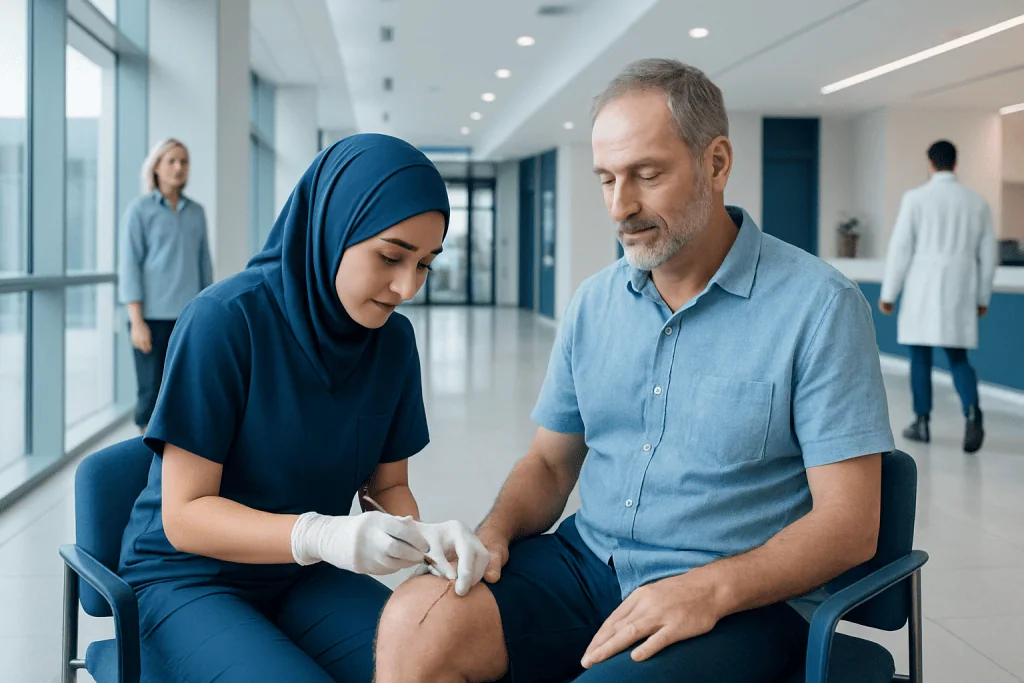
Stitches and staples are removed once the skin surface has healed enough to hold on its own, which varies by body area and procedure. Facial sutures often come out earlier than those over joints or the trunk. Whether removal happens in Turkey or at home depends on your surgeon's timeline and your flight date, so confirm the plan before booking your return.
Will your stitches be out before you fly home, or will a doctor in your own country remove them? It is one of the most practical questions international patients ask, and the honest answer is: it depends on your procedure, where the incision sits, and how your wound is healing on the day.
This guide explains how stitches, staples, and suture removal after treatment in Turkey actually work: which closure materials need removal and which dissolve, typical timing by body area, what removal feels like, what a wound check involves, and how the schedule fits around a return flight. It reflects general practice; your surgeon’s plan always takes priority over any timeline printed here.
At a glance
- Procedure type: Post-treatment wound check, dressing care, and removal of non-absorbable sutures or staples when the wound is ready
- Purpose: To confirm healing is on track, remove external closure material at the right time, and plan safe travel or local follow-up
- Anaesthesia: Usually none; removal is brief and most people describe tugging or a quick pinch rather than pain
- Hospital stay: Removal itself is an outpatient visit; any hospital stay relates to the original treatment, not the removal
- Estimated recovery: The skin surface closes over days to weeks; deeper tissue strength builds for months afterwards
- Return to daily life: Set by your surgeon and depends on the operation and incision location, not on the removal visit alone
- Final result timeline: Scars keep maturing for months and often continue to soften and fade for a year or more
- Suitable department: The surgical specialty that performed your treatment, supported by nursing and wound care teams
- International patient support: Interpreter assistance, appointment coordination, transfers, accommodation guidance, and remote follow-up after you go home
What is this treatment?
Stitches, staples, adhesive strips, and tissue glue all do the same job: they hold skin and deeper tissue together while the body rebuilds its own strength across the incision. Removal is the small closing chapter of that process. A clinician inspects the wound, confirms the edges are holding, and takes out any external material that has finished its work.
Not everything needs removing. Absorbable sutures dissolve on their own, often placed in deeper layers or under the skin where you never see them. Non-absorbable skin sutures and metal staples must be taken out at a planned visit. Adhesive strips and glue usually lift away by themselves over one to two weeks. Many operations combine several of these, which is why two patients from the same ward can leave with completely different aftercare instructions.
For international patients, stitches, staples, and suture removal after treatment in Turkey carries one extra layer: geography. Removal either happens here before you fly, or is documented clearly enough for a clinician at home to do it confidently. Both are routine. The important thing is knowing which applies to you before you book the return flight.
When is it recommended?
Removal is recommended when the outer wound has gained enough strength to stay closed without external support. Too early, and the edges can pull apart. Too late, and sutures or staples can leave track marks, become embedded, or irritate the surrounding skin. The window between those two problems is what your surgeon is judging at each wound check.
Timing depends heavily on where the incision sits. Skin under low tension, such as the face, heals its surface quickly. Skin that stretches with every movement, over joints, the back, the abdomen, the legs, needs support for longer. The ranges below are the ones clinicians commonly work from, but they are starting points, not rules. Your surgeon may deliberately choose earlier or later timing based on the operation, the closure technique, and how your tissue is behaving.
| Body area | Commonly quoted removal window |
|---|---|
| Face | Around 5 to 7 days, sometimes earlier, to limit visible marks |
| Scalp | Around 7 to 10 days |
| Chest, abdomen, arms | Around 7 to 10 days |
| Back, legs, and skin over joints | Around 10 to 14 days, occasionally longer where tension is high |
| Staples (most sites) | Typically 7 to 14 days depending on location and healing |
A wound check may also happen ahead of schedule if there is increasing redness, drainage, or discomfort around the incision, or simply because you are flying soon and the team wants to see the wound before clearing travel. An early review does not mean early removal; sometimes the outcome is a fresh dressing and a later date.
Who is a good candidate?
A wound is ready for removal when its edges sit together cleanly, there is no significant drainage, and the surface has enough strength to hold. That judgement is made by looking at the wound directly, sometimes with gentle assessment of the surrounding skin, which is exactly why removal dates written on discharge papers are always provisional.
Some patients heal more slowly or unpredictably. Diabetes, immune conditions, circulation problems, smoking, poor nutrition, previous wound-healing difficulties, and certain medications can all shift the timeline. None of these automatically prevents removal on schedule, but they may lead the team to choose staged removal, extra supportive strips, or a further check before signing off.
Travel readiness is assessed separately from wound readiness. A wound can be fine while other aspects of recovery, mobility, swelling, clot-prevention advice for long flights, still need attention. The guide on when it is safe to fly home after surgery in Turkey covers that side in detail.
Treatment options: sutures, staples, strips, and glue
Non-absorbable skin sutures are the classic case: placed at the end of surgery, removed at a scheduled visit. Absorbable sutures dissolve gradually, some within a couple of weeks, others over months, and usually need nothing from you. Occasionally a visible knot or thread end from an absorbable suture is trimmed at a check-up; whether to leave, trim, or remove such threads is your doctor’s call, not yours.
Staples are common on longer incisions and areas where quick, secure closure helps, such as the scalp, abdomen, or after orthopaedic surgery. They are removed with a sterile staple extractor that bends each staple so it lifts out of the skin cleanly. Adhesive strips and tissue glue often accompany deeper sutures; both loosen and shed on their own and should not be peeled off early.
Some wounds get staged removal: alternate sutures or staples come out first, and the rest a few days later. This is deliberate, used for incisions under tension or patients whose healing needs extra support. If it happens to you, it is caution, not a complication. Supportive strips are often applied after removal to protect the young scar while the skin keeps strengthening underneath.
Online evaluation before travel
Wound-care planning usually starts before arrival. During the online evaluation, coordinators and the clinical team review the planned procedure, previous surgeries, medical conditions, medications, allergies, and any history of healing problems, so that aftercare, including the likely removal window, can be anticipated rather than improvised.
For patients who had a procedure elsewhere and want a wound assessed in Turkey, the review typically draws on the operation report, discharge summary, and photographs of the incision. Useful photos are taken in good light, without filters, from both close-up and a wider angle, showing the wound edges and any dressing.
Online review is a planning tool, not a substitute for examination. Decisions about removal timing, dressings, medication, or travel clearance are made in person by a physician, sometimes with additional tests.
Before the treatment
Ahead of a wound check or removal appointment, follow the dressing instructions you were given at discharge and nothing extra. Creams, antiseptics, powders, and scar products applied without approval can irritate the incision and make it harder to assess.
Bring your discharge documents, medication list, allergy information, and any photos showing how the wound has changed. Mention anything relevant when asked: pain, fever, drainage, odour, bleeding, itching, tightness, or a stitch that caught on clothing. Small details genuinely change decisions.
Wear clothing that gives easy access to the incision. If the wound is in a sensitive area, interpreter support and nursing staff are there to keep the visit comfortable and clear, and it is entirely reasonable to ask the clinician to talk you through each step before it happens.
What happens during the treatment
The clinician examines the incision, the surrounding skin, swelling, tenderness, and any drainage, confirms which closure materials were used, and decides between full removal, partial removal, a dressing change, or waiting. Only then does removal begin.
Suture removal takes minutes. The skin is cleaned, each stitch is lifted with forceps, cut close to the skin, and pulled through in a direction that avoids dragging the external thread through the wound. Staple removal uses the extractor described above, one staple at a time; most people describe each one as a brief pinch or tug lasting a second or two. Neither procedure normally needs anaesthetic. If the area is tender or you are anxious, say so before the first stitch, clinicians can adjust their approach, and knowing what to expect makes a real difference. Broader questions about discomfort in recovery are covered in the guide on pain control after surgery in Turkey.
Afterwards, the incision may be covered with adhesive strips, a light dressing, or nothing at all depending on the site. You leave with specific instructions on showering, dressing changes, movement, sun protection, and when scar care can start.
Hospital stay and discharge
Removal itself never requires admission. If you are still in hospital after a major operation, wound checks are simply part of daily care; if you were discharged after a smaller procedure, removal is a short outpatient visit.
At discharge, international patients receive a treatment summary, wound care instructions, medication guidance where relevant, and follow-up recommendations. If removal will happen after you return home, the documentation should state the closure type, the suggested removal date, and any special precautions: the information a local nurse or doctor needs to do the job without guesswork. Practical detail on managing dressings once you leave the hospital is in the guide on wound care and dressings after discharge in Turkey.
Travel clearance considers more than the incision’s appearance: general recovery, mobility, swelling and bleeding risk, and whether one more check is worthwhile before the flight all factor in.
Recovery timeline
Healing is layered. The surface can look closed early while deeper tissue is still weeks away from real strength. The timeline below is general; your surgeon’s version wins.
| Timeframe | What to expect |
|---|---|
| First 24 hours | The wound is usually dressed. Mild swelling, bruising, tightness, or spotting can occur depending on the original treatment. |
| First week | The incision is monitored for redness, drainage, and edge separation. Sutures or staples stay in place; avoid pulling, scratching, or soaking. |
| Weeks 2–4 | Most external sutures and staples have been removed by this stage, depending on location. The scar may be pink, firm, slightly raised, or itchy while the skin remodels. |
| Months 1–3 | Scar tissue matures. Activity restrictions ease gradually with surgical approval. Sun protection and approved scar care become relevant. |
| Beyond | Scar appearance keeps changing for months, often over a year. The final look depends on genetics, site, skin type, procedure, and aftercare. |
If you are leaving Turkey before wound care is complete, travel with written instructions for whoever continues it at home: closure type, removal timing, and what a normally healing wound should look like at each stage.
What to avoid after treatment
Do not remove stitches, staples, strips, scabs, or glue yourself. Pulling at the wound can reopen the incision, introduce bacteria, or worsen the scar. A stitch that feels tight or a staple that snags on clothing is a matter for the clinical team, not for tweezers at the hotel.
Keep the incision out of baths, pools, the sea, saunas, and hot tubs until cleared. Showering is usually permitted earlier than soaking, for many wounds, brief showers are allowed once the surgeon confirms the surface is sealed, often soon after removal, but the exact instruction is procedure-specific. When showering is allowed, pat the area dry rather than rubbing.
Also avoid heavy lifting, stretching across the incision, smoking, unapproved creams, and direct sun on a fresh scar. If you fly with closure material still in place, keep seatbelts, luggage straps, and tight waistbands off the wound and follow your surgeon’s advice on movement and hydration during the flight: the guide on flying home with drains, casts, or stitches walks through the practicalities.
Risks and possible complications
Removal is a simple, low-risk step, but wounds do not always cooperate. Possible issues include discomfort during removal, minor bleeding, skin irritation, stitch or staple marks, delayed healing, wound separation, infection, or a wider scar than hoped. Staples left in too long can become partially embedded, which is one reason the removal date matters in both directions.
Some people are simply more prone to raised, thickened, or darkened scars because of skin type, genetics, wound tension, or previous scarring history. That tendency cannot always be prevented, though careful wound care, sun protection, and well-timed scar management support the best result the skin can give.
If a wound is not ready on the day, the clinician may delay removal, take out only alternate stitches, add supportive strips, or adjust the dressing plan. That is protective caution, not a setback.
Signs that prompt a clinical review
Mild tenderness, tightness, bruising, and itching are normal parts of healing and should gradually settle. What changes a clinician’s assessment is the trajectory: a wound that is getting worse rather than better. At wound checks, teams look specifically for spreading or increasingly warm redness, pus-like or foul-smelling drainage, bleeding that does not settle, wound edges opening, sutures or staples pulling through the skin, sudden new swelling or severe pain, fever, and darkening skin around the incision. Any of these findings typically leads to closer monitoring, dressing changes, tests, or treatment rather than routine removal.
The broader picture of postoperative symptoms, including those unrelated to the wound itself, is covered in the guide on pain, swelling, and fever after surgery in Turkey.
Results and expectations
The goal of removal is a closed, stable incision. Many people notice that the area feels freer afterwards, less pulling, less tightness, nothing catching on clothing, although itching, firmness, and sensitivity in the scar itself often continue for weeks. A scar is nowhere near its final form on the day the stitches come out: pink, raised, or uneven appearances at this stage are usually part of normal remodelling.
Final scar appearance varies widely between people and depends on the procedure, incision direction, skin tension, genetics, age, nutrition, smoking, sun exposure, and aftercare. Even with careful technique, some scars stay visible or benefit from later scar management.
Silicone-based products, massage, supportive taping, and sun protection are commonly recommended, but timing matters. Starting scar products before the wound is fully closed can irritate it, so each of these waits for physician approval.
International patient travel planning
The single most useful piece of planning: find out the expected removal date before booking the return flight. Some procedures need stitches or staples out before travel; others are perfectly suited to removal by a local provider at home. Either works, what causes stress is not knowing which.
Useful questions to settle before flights are booked: when is the first dressing change, will external sutures or staples be used, is removal expected in Turkey or at home, and what written documentation will you carry back. If removal happens at home, the discharge summary should name the closure material and the recommended date.
Acibadem International coordinates appointments, interpreters, airport transfers, and accommodation guidance, and can support remote follow-up after you return, including structured sharing of photos and local medical updates with the treating team.
Cost and package information
The cost of wound checks and suture or staple removal depends on structure, not a single figure: whether the visit is part of your original postoperative pathway or a standalone appointment, which department is involved, whether a physician examination is needed, and whether additional dressings, tests, or treatment become necessary if the wound raises concerns.
For international patients, a treatment package may cover medical coordination, scheduled consultations, hospital services related to the procedure, nursing care, standard postoperative controls, interpreter support, and transfers. What is included is confirmed in a personalised quotation, because packages vary by treatment and clinical need.
Items commonly outside a package include extended hotel stays, consultations beyond the planned pathway, unexpected tests or treatment, specialised wound care products, medications after discharge, companion expenses, and care received in your home country. Individualised information follows medical review; suitability is never decided by a package alone.
Why choose Acibadem
Acibadem is a healthcare group in Turkey with multidisciplinary teams experienced in caring for international patients before, during, and after treatment. Wound care sits with the surgical specialty that performed your procedure, supported by nursing teams and, when healing needs it, departments such as infectious diseases, dermatology, plastic surgery, or rehabilitation.
For patients managing recovery far from home, organisation matters as much as medicine. Acibadem International coordinates appointments, interpreter support, hospital navigation, transfers, accommodation guidance, discharge documentation, and remote follow-up, so aftercare has a clear structure rather than a series of open questions.
The approach is deliberately individual: your wound is assessed in the context of your operation, your health, and your travel plans, and removal and clearance decisions follow from that assessment rather than a fixed schedule.
Medical review and disclaimer
This guide has been reviewed by the Acibadem International medical team and provides general information about stitches, staples, and suture removal after treatment in Turkey. It is written to help you understand common aftercare steps and prepare useful questions for your doctor.
It does not replace consultation, physical examination, diagnosis, or a personalised treatment plan from a qualified physician. Wound care instructions differ significantly by operation, incision location, closure material, medical history, and healing progress.
Suitability for travel, removal timing, dressing changes, medication, and scar care must all be determined by a physician who has assessed you directly.
Step by step
- Initial contact. You get in touch with Acibadem International about your planned treatment or recent procedure. A coordinator identifies the right department and explains what information is needed.
- Medical record and photo submission. You provide passport details for registration, medical history, operation notes if available, discharge papers, medication and allergy lists, and clear incision photos where relevant.
- Preliminary medical review. The clinical team reviews the closure type, expected removal timing, and any risk factors, and determines whether an in-person visit is needed and when.
- Treatment plan and quotation. You receive the recommended appointment plan, likely wound-care steps, and a personalised cost outline. Final decisions follow examination.
- Travel planning. Your coordinator helps align appointment timing, transfers, accommodation, and interpreter needs with your flights and expected recovery.
- Arrival. International patient staff assist with registration and communication at the hospital or clinic.
- In-person consultation. The doctor reviews your history, examines the incision, and confirms whether removal is appropriate now or whether waiting is safer.
- Pre-procedure tests. Simple removal usually needs none. If there are signs of infection, delayed healing, or bleeding concerns, tests may come first.
- Treatment. Sutures, staples, or dressings are managed with sterile technique; supportive strips or a fresh dressing may follow.
- Hospital stay. Removal visits are outpatient; after larger procedures, wound care continues on the ward as part of routine monitoring.
- First control. The incision is checked again where recommended, especially after partial removal, delayed healing, or ahead of travel.
- Discharge and travel clearance. You receive written instructions for wound care, bathing, activity, warning signs, and whether follow-up continues in Turkey or at home.
- Remote follow-up. After returning home, updates, photos, and local reports can be shared with the treating department through the international patient team.
Your checklist
- Passport or official identification for hospital registration
- Operation report or procedure summary, if available
- Discharge summary and previous wound-care instructions
- Current medication list, including blood thinners, supplements, and topical products
- Allergy information, especially reactions to dressings, adhesives, antiseptics, or medications
- Medical history, including diabetes, immune conditions, circulation problems, or smoking status
- History of previous surgeries, poor wound healing, keloids, or thick scars
- Current symptoms such as pain, fever, redness, drainage, bleeding, itching, or wound opening
- Relevant test results, culture results, or imaging if the wound has been investigated
- Clear wound photos taken in good light, close-up and wider views
- Flight dates and planned length of stay in Turkey
- Contact details for your local doctor or clinic for follow-up after returning home
Key takeaways
- Stitches and staples come out only when the incision can hold on its own; typical windows range from around 5–7 days on the face to 10–14 days over joints and high-tension areas, and your surgeon’s assessment overrides any table.
- Absorbable sutures dissolve and need no removal; staples and non-absorbable skin sutures need a planned visit, either in Turkey or with a local provider at home.
- Removal is brief and usually well tolerated, tugging and quick pinches rather than pain, and no anaesthetic is normally needed.
- Before leaving Turkey, the incision is checked and you receive written instructions covering dressing care, bathing, activity, travel, and follow-up.
- Confirm the expected removal date before booking your return flight, and carry documentation naming the closure type and timing if removal happens at home.
Frequently asked questions
How painful is removing staples after surgery?
Most people describe each staple as a brief pinch or tugging sensation lasting a second or two, not sharp pain. The extractor bends the staple so it lifts out of the skin cleanly, and no anaesthetic is normally needed. Tender or swollen skin can feel more sensitive, so mention it before removal starts and the clinician will work accordingly.
How long can staples stay in an incision?
Staples typically stay in for around 7 to 14 days depending on the body area, the operation, and how healing progresses, scalp staples often come out earlier, trunk and limb staples later. Leaving them well beyond the planned date can cause skin marks or partial embedding, which is why the removal date is set deliberately rather than left open.
How soon after staple removal can I shower?
It varies by wound and operation. Many surgeons allow brief showers soon after removal once the surface is sealed, sometimes with supportive strips still in place, while soaking in baths, pools, or the sea waits considerably longer. The instruction you receive at the removal visit is specific to your incision, and when showering is permitted the area is patted dry rather than rubbed.
Does it feel better after stitches are removed?
Often, yes. Many people notice less pulling and tightness and nothing catching on clothing once external material is out. The scar itself can still itch, feel firm, or stay sensitive for weeks, because removal marks the end of external support, not the end of healing, deeper tissue keeps strengthening for months afterwards.
Can I fly home with stitches or staples still in place?
In many cases, yes, flying with closure material in place is routine when the surgeon confirms fitness to travel. Clearance considers the original procedure, wound condition, mobility, and swelling and clot risk on the flight, not just the incision’s appearance. Patients travelling this way carry written instructions stating the closure type and the recommended removal date for a provider at home.
What happens if my stitches need to come out after I return home?
This is common and works well when documented properly. The discharge summary should state what closure material was used, the suggested removal date, and any precautions, so a local doctor, nurse, or clinic can perform the removal confidently. Arranging that local appointment before you travel keeps the timing on track.
Can I remove stitches or staples myself?
No, not unless a qualified doctor has specifically instructed you and explained exactly how. Removal requires the right timing, sterile technique, and an assessment of whether the wound is actually ready. Self-removal risks wound opening, infection, bleeding, and a worse scar, and staples in particular need a purpose-made extractor.
Will stitch or staple marks fade?
Small marks often fade over months, but the outcome varies. Removal timing, skin type, incision location, wound tension, genetics, sun exposure, and aftercare all play a role, and some skin types are more prone to visible marks or thickened scars. Scars keep changing for a year or more, so the appearance at removal is far from final.
Add us as a Preferred Source to see more of our trusted health content across Google Search, AI Overviews and Discover.

Update history
- PublishedJune 22, 2026
- Medical review approvedSeptember 13, 2026
- Last content updateSeptember 12, 2026
References2
- Wounds and Injuries: MedlinePlus medlineplus.gov
- After Surgery: MedlinePlus medlineplus.gov
More Patient Guides

HoLEP in Turkey: How It Compares With TURP and What Recovery Involves
HoLEP in Turkey treats enlarged prostate tissue with laser enucleation; learn how it compares with TURP, recovery, travel and follow-up.
Porcelain Veneers in Turkey: Who Is Suitable and How Many Visits Are Needed?
Porcelain veneers in Turkey can enhance tooth shape and colour in two visits for suitable patients after a personalised dental assessment.

How to Prepare for a Sedation Procedure in Turkey
Prepare safely for a sedation procedure in Turkey with guidance on fasting, medicines, travel, recovery and follow-up.
Treatment Delays in Turkey: What Happens If Tests or Recovery Change Your Schedule
Treatment delays in Turkey can happen if tests or recovery change your plan. Learn how to manage appointments, travel, accommodation and follow-up.