

Veneers and Smile Makeover in Turkey: Treatment Guide
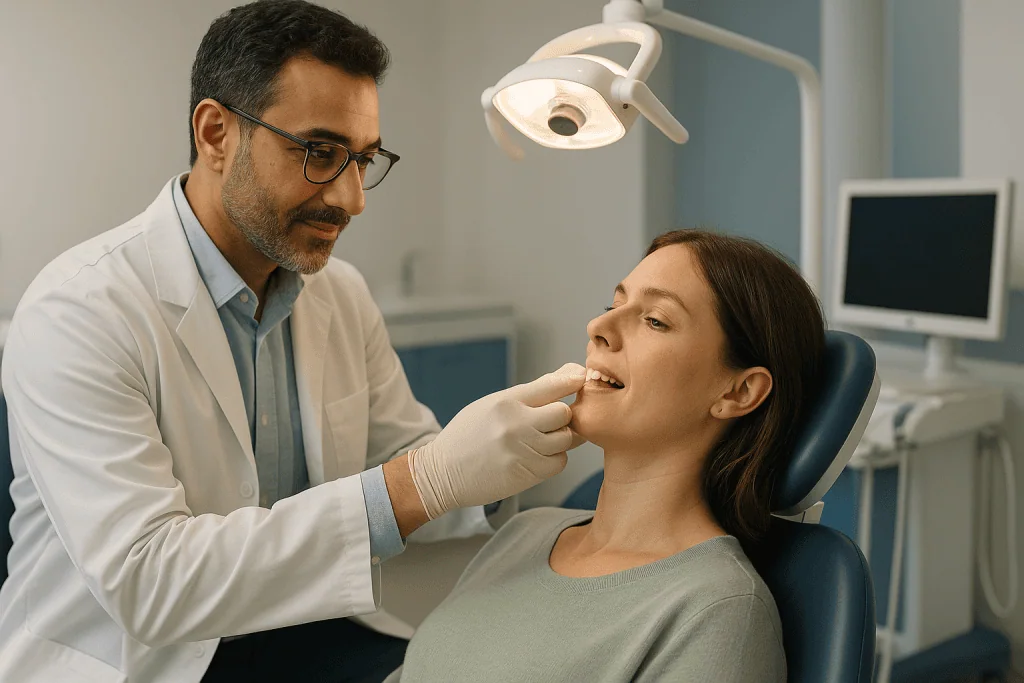
Veneers in Turkey are usually done as outpatient dental visits, often with local anesthesia for tooth preparation, so no overnight hospital stay is normally needed. The process starts with an online evaluation of your photos and records, but the final plan is confirmed only after an in-person exam. Most people return to daily life the same or next day.
“Hollywood smile” is the most searched phrase in cosmetic dentistry and the least defined: depending on who is selling, it means anything from two bonded veneers to twenty aggressive crowns. This guide pins the term down properly, what a smile makeover actually consists of, the veneers-versus-crowns decision that determines how much of your natural teeth survive, composite versus porcelain compared honestly, and how digital smile design turned guesswork into preview.
The stakes deserve stating plainly: a smile makeover done conservatively is reversible-adjacent dentistry that preserves your teeth under beautiful surfaces; done aggressively, it converts healthy teeth into lifelong crown-wearers. Both are sold under the same name at similar prices. The difference is planning, and planning is what this guide teaches you to recognise.
Turkey performs more smile makeovers for international patients than anywhere in Europe; the commercial comparison, clinics, costs, guarantees, lives on our veneers in Turkey page. This guide’s job is the dentistry itself.
What a Hollywood smile actually consists of
A genuine smile makeover is a mixed treatment plan across the visible teeth, typically the upper eight to ten and often the lower front, combining whitening as the foundation (matching future veneers to a whitened base, not the reverse), veneers on teeth needing shape or colour change, crowns only where teeth are structurally compromised, composite bonding for minor corrections, and sometimes gum contouring to balance the frame. Alignment issues may route through short orthodontics first, moving teeth before veneering them is the conservative sequence, not the slow one.
The tell of quality planning is exactly that mixture: a per-tooth plan naming different procedures for different teeth. The tell of production dentistry is uniformity, twenty identical crowns quoted from a selfie. Same phrase, opposite philosophies.
Veneers vs crowns: the decision that determines what survives
A porcelain veneer bonds to the front of the tooth after removal of a fraction of a millimetre of enamel, in selected cases none. The tooth stays structurally itself. A crown encircles the whole tooth, requiring reduction of every surface, appropriate engineering for a heavily filled, root-treated or fractured tooth, and irreversible over-treatment for a healthy one. Once reduced for a crown, a tooth wears crowns for life, on a replacement cycle of ten to fifteen years.
The honest rule is per-tooth: intact-but-imperfect teeth get veneers; structurally compromised teeth get crowns (zirconia being the modern standard); nothing healthy gets ground down for uniformity’s sake. Ask for the plan in writing with each tooth’s procedure named, and ask why any crown is proposed where a veneer might serve. Those two questions filter this entire market, and their answers are the difference between a smile makeover and the “Turkey teeth” story.
Composite vs porcelain: material honesty
Porcelain (including lithium-disilicate systems) is the premium tier: colour-stable, stain-resistant, remarkably lifelike, lasting commonly ten to fifteen years and beyond, at higher cost, with laboratory fabrication and a try-in stage. Composite is sculpted directly onto teeth in one visit, with no or minimal drilling: cheaper, immediate, genuinely conservative, and honestly shorter-lived, more stain-prone, needing polish and periodic repair.
Neither is universally right. Composite suits minor corrections, younger patients deferring the porcelain decision, and budget-staged plans; porcelain suits full smile transformations meant to last a decade-plus. A clinic offering both, recommending per case, earns trust; one that only sells its single product is selling its workflow.
Digital smile design: preview before commitment
Modern planning photographs and scans your face and teeth, designs the new smile digitally against your features, and, decisively, lets you preview it: on-screen and, in serious clinics, as a physical mock-up placed over your teeth for the mirror test. Approving the design before any preparation converts the biggest anxiety of cosmetic dentistry into a checkpoint you control.
The try-in stage repeats that checkpoint at the end: porcelain veneers held in place but not yet bonded, shade and shape assessed in daylight, adjustments still possible. Once bonded, porcelain is permanent. A programme that photographs your approval at both checkpoints is running consent as a process, exactly what you want from dentistry you will wear for fifteen years.
The journey and the honest maintenance contract
A porcelain smile makeover needs five to seven clinical days or two visits: examination, imaging and design approval; conservative preparation and temporaries; laboratory fabrication; try-in, bonding, bite refinement. Composite makeovers compress into days. Recovery is gentle, mild sensitivity for days, a short adaptation to new tooth contours, with normal eating quickly restored.
Then the contract: night grinding gets screened and splinted (bruxism is the great veneer-killer), hygiene visits continue wherever you live, teeth are not tools, and porcelain eventually, a decade or more out, enters a maintenance cycle. Confirm the guarantee in writing: coverage period, who honours it, and the remote-review process for a chipped or debonded unit after you fly home. That single document separates programmes from packages faster than any before-and-after gallery.
Frequently asked questions
What is a Hollywood smile?
Marketing shorthand for a full smile makeover, typically whitening plus veneers across the visible teeth, with crowns only where structurally needed. The phrase has no fixed clinical meaning: the written per-tooth plan behind it is what you are actually buying.
How much does a Hollywood smile cost in Turkey?
Quoted per tooth and by material, composite lowest, premium porcelain highest, landing at a fraction of UK or US pricing for equivalent work. The honest figure follows examination and a written per-tooth plan; photo-quotes are opening bids.
Veneers or crowns, which will I need?
Per tooth: veneers for intact teeth needing cosmetic change, crowns for structurally compromised ones. A mixed plan signals honest dentistry; a uniform all-crowns quote on healthy teeth deserves a second opinion before anything touches your enamel.
Are composite veneers worth it?
For minor corrections and staged budgets, genuinely: no drilling, one visit, immediate results, with a shorter lifespan and more maintenance than porcelain. For a decade-plus transformation, porcelain remains the honest recommendation.
How long does a smile makeover take in Turkey?
Porcelain: five to seven clinical days or two visits, with laboratory time between preparation and fitting. Composite: often two to three days. Compressing porcelain below its honest timeline cuts the design or laboratory phase, both cuts show within years.
Do veneers ruin your natural teeth?
Genuine veneers, no, preparation is a fraction of a millimetre and the tooth remains sound. Aggressive crowning marketed as veneers is the damaging version. The protection is written, per-tooth procedure confirmation before any drilling.
How long does a Hollywood smile last?
Porcelain commonly serves ten to fifteen years and beyond with night-guard discipline and normal hygiene; composite fewer, with easy repair. Either way the makeover is a long relationship with maintenance, not a one-time purchase.
Can I see my new smile before it is permanent?
Yes, insist on it: digital design preview, physical mock-up, and the porcelain try-in before bonding. Clinics that build both checkpoints into the schedule are the ones treating your approval as part of the procedure.
What about gum contouring?
Reshaping the gumline balances short or uneven teeth within a makeover, minor laser or surgical work in the right cases. It belongs in the design conversation from the start, not as a day-of addition.
How do I avoid “Turkey teeth”?
Three written questions before booking: which procedure per tooth, how much reduction per tooth, and why any crown where a veneer might serve. Add examination-before-quotation and a real guarantee, and the viral cautionary tale becomes structurally impossible for your mouth.
Add us as a Preferred Source to see more of our trusted health content across Google Search, AI Overviews and Discover.

Update history
- PublishedJune 9, 2026
- Medical review approvedSeptember 1, 2026
- Last content updateSeptember 2, 2026
References2
- Dental Veneers - MedlinePlus medlineplus.gov
- Travelers' Health - CDC wwwnc.cdc.gov
More Patient Guides

HoLEP in Turkey: How It Compares With TURP and What Recovery Involves
HoLEP in Turkey treats enlarged prostate tissue with laser enucleation; learn how it compares with TURP, recovery, travel and follow-up.
Porcelain Veneers in Turkey: Who Is Suitable and How Many Visits Are Needed?
Porcelain veneers in Turkey can enhance tooth shape and colour in two visits for suitable patients after a personalised dental assessment.

How to Prepare for a Sedation Procedure in Turkey
Prepare safely for a sedation procedure in Turkey with guidance on fasting, medicines, travel, recovery and follow-up.

Treatment Delays in Turkey: What Happens If Tests or Recovery Change Your Schedule
Treatment delays in Turkey can happen if tests or recovery change your plan. Learn how to manage appointments, travel, accommodation and follow-up.