

Warning Signs After Discharge in Turkey

Warning signs after discharge are symptoms that fall outside the recovery pattern your treating team described, for example fever, escalating pain, breathlessness, heavy bleeding or wound changes. They are not a diagnosis; they are the triggers your written discharge instructions attach to a medical review. What each sign means depends on your treatment, and your discharge paperwork sets out the response for your specific case.
This guide explains what warning signs after discharge in Turkey actually are, how they differ from normal recovery changes, and how follow-up, travel clearance and remote review fit around them. It describes how Acibadem structures discharge instructions for international patients, what they contain, why they are individual, and what they cannot do.
At a glance
- Procedure type: Post-discharge monitoring and follow-up, part of every treatment pathway, not a separate procedure
- Purpose: To help you separate expected recovery changes from symptoms that need medical review
- Anesthesia: None for monitoring itself; relevant only to the treatment you received
- Hospital stay: Set by your treating physician based on the treatment and how you respond to it
- Estimated recovery: Depends on diagnosis, procedure, general health and any chronic conditions
- Return to daily life: Gradual, on your physician’s advice, not on a fixed calendar
- Final result timeline: Days for some treatments, months for others; healing continues well after discharge
- Suitable department: Your treating specialty, supported by internal medicine, emergency medicine or other teams where needed
- International patient support: Interpreters, care coordination, transfers, accommodation guidance, discharge planning and remote follow-up where medically appropriate
What is this treatment?
Warning signs after discharge in Turkey are not a treatment. They are the symptoms and changes that your medical team asks you to watch for once you leave the ward: the markers that separate an ordinary recovery day from something that needs assessment. Every discharge from hospital, whether after surgery, an interventional procedure, cardiac care, cancer treatment or a medical admission, comes with a version of this list tailored to what was done.
The reason the list exists is simple: your body keeps healing after the monitoring stops. Tiredness, mild swelling, reduced appetite, bruising and some discomfort around a treatment site can all be part of that. What clinicians care about is the direction of travel. Symptoms that intensify, appear suddenly, or fall outside what your discharge instructions describe are the ones that generally prompt a review.
At Acibadem, discharge planning is treated as part of the treatment itself. Before you leave, the team explains what is expected for your specific case, what belongs in routine follow-up, and which changes count as warning signs. Interpreter support means those instructions can be given and repeated in your language, which matters more than it sounds when the details involve medication timing and wound care.
When is it recommended?
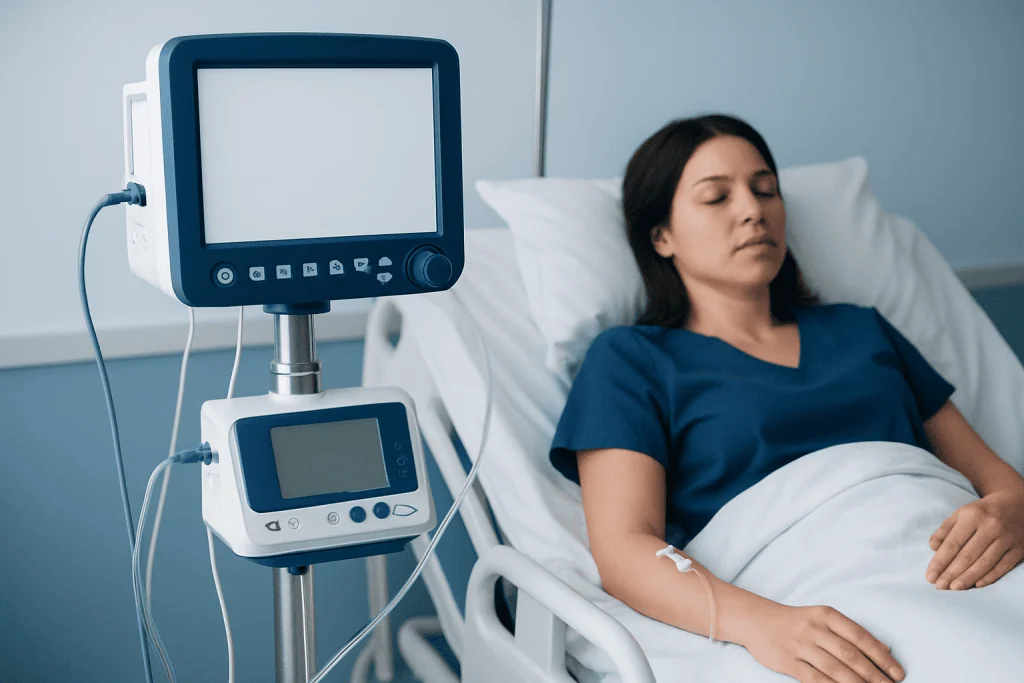
Post-discharge monitoring applies to every patient, but it carries extra weight when you have had surgery, anesthesia, an invasive procedure, a new medication plan, or treatment for a serious condition. It also matters more when you are recovering far from home. Flights, hotel rooms, time-zone shifts and unfamiliar pharmacies all add friction to a recovery that would be straightforward in your own city.
The first days after discharge are when attention is most valuable, because this is when your body moves from supervised inpatient care to outpatient recovery. What you watch depends on the treatment. After surgery, the focus is usually wounds, pain and mobility, covered in more depth in our guide to wound care, dressings and red flags after discharge in Turkey. After cardiac care, it tends to be breathing, chest discomfort and swelling. After anesthesia, drowsiness, nausea and dizziness have their own expected pattern, described in our guide to post-anesthesia side effects after discharge.
Monitoring also runs up to the moment you travel. Your doctor may want a control visit before you fly, to review results, inspect a dressing, assess mobility, or confirm stability. Feeling well for a few hours is not the same as being cleared for a flight. Travel clearance is a clinical decision, and it comes from your treating physician, not from your itinerary.
Who is a good candidate?

Everyone leaving hospital receives discharge education, so in one sense every patient is a candidate. That includes adults, children with a parent or guardian, older patients, people managing chronic disease, and patients recovering from planned or urgent treatment alike.
Some circumstances make the instructions more important, not because a complication is expected, but because there is less margin for confusion. Diabetes, heart or lung disease, immune suppression, a history of blood clots, complex surgery, a long inpatient stay, multiple medications, limited mobility and language barriers all fall into this group. None of these predicts a problem. Each of them raises the value of clear, written, translated instructions.
Travelling alone changes the practical picture too. A companion notices things you may not, increasing drowsiness, a change in breathing, confusion. Before discharge, it is reasonable to discuss whether a companion, a hotel closer to the hospital, or arranged support would suit your early recovery.
Treatment options
When a symptom is reported after discharge, the response is graded to match it. Many concerns resolve through a scheduled follow-up visit, a call with the care team, or clarification about medication timing, diet, hydration or activity. Others need an in-person examination, blood tests, imaging, or review by the relevant specialist. A smaller group needs emergency assessment.
The practical pathways include a routine control appointment, a same-day hospital review, an emergency department assessment, a dressing change, medication review by the treating doctor, physiotherapy guidance, or a consultation with a second specialty. Which pathway applies is a clinical judgement based on the symptom, its severity, its timing relative to your treatment, and your medical history.
Your written discharge instructions are the map for this. They state which symptoms belong to which pathway for your specific case, which numbers connect to which team, and where a scheduled appointment is appropriate versus urgent local care. That document is worth reading twice before you leave the ward, because it is written for you, not for patients in general.
Online evaluation before travel
Before you travel to Turkey, an online evaluation lets the medical team understand your diagnosis, previous care, medications, allergies, test results and travel plans. It is not a substitute for in-person consultation, no remote review is, but it makes the treatment and aftercare plan more accurate before you arrive.
Records that help include medical reports, imaging, laboratory results, photographs of the treatment area where relevant, and a full list of medicines and supplements. Previous complications matter most: reactions to anesthesia, blood clots, infections, or unplanned hospital admissions all change how discharge is planned, so they belong in the record early rather than being mentioned on the ward.
Online planning also surfaces practical needs before they become problems: interpreter support, accessible accommodation, mobility assistance, dietary requirements, or extra follow-up time in Turkey. Final suitability for treatment and travel is always confirmed by physicians after in-person evaluation. If something in your health changes before departure, our guide on when to delay travel for treatment in Turkey explains how pre-travel review works.
Before the treatment
Before admission, your team reviews your condition and explains the expected recovery path. The most useful questions are specific ones: which symptoms are expected and for how long, how pain will be managed, how to care for wounds or devices, and when walking, showering, normal eating, flying and daily activities become reasonable.
A written list of your medications, allergies, previous surgeries, chronic conditions and emergency contacts saves time and prevents gaps. Blood thinners, diabetes medication, heart medication, immune-suppressing treatment and herbal supplements all influence treatment planning and recovery instructions, so they need to be on that list even if they seem routine to you.
Before discharge itself, the test is simple: can you explain your own plan back to the team? Medication schedule, follow-up date, activity restrictions, wound care steps and warning signs, if any of these is fuzzy, that is the moment to ask, with an interpreter if needed. Repeating the plan aloud catches misunderstandings that written sheets miss.
What happens during the treatment
During your hospital stay, the team monitors your condition and watches for anything that should shift the discharge timing. Depending on your treatment, that may involve vital sign checks, wound assessment, blood tests, imaging, mobility assessment, medication adjustments or specialist consultations.
Discharge is considered when your physician is satisfied on four points: your condition is stable, your symptoms are manageable, you can follow the recovery plan, and any support you need is arranged. For some patients that point arrives quickly; for others, longer observation is the safer choice. Neither pattern says anything about how well the treatment went.
Discharge education is part of the clinical work, not an administrative step. You should leave with instructions covering normal recovery, warning signs, follow-up appointments, medications, diet, activity, hygiene and travel. Asking for clarification before leaving is always appropriate: the team expects it.
Hospital stay and discharge
Length of stay depends on the treatment, your overall health and your response. Some patients leave the same day after a minor procedure; others need inpatient monitoring. The timing is individual and decided by your treating physician, not by a standard schedule.
Before you leave, the team may check vital signs, review results, examine the treatment area, assess walking or breathing, and confirm you can manage your medications. If you have drains, dressings, catheters, braces or other devices, you should be shown how to handle them, or told exactly when to return so the team handles them instead.
For international patients, discharge also has a logistics layer: interpreter support, transfers, accommodation guidance and follow-up scheduling can all be coordinated. The full sequence from ward to airport is set out in our guide to discharge, follow-up and flying home after treatment in Turkey.
Recovery timeline
Recovery timelines vary widely with the treatment, diagnosis, anesthesia, age and general health. The table below is a general orientation, not a schedule, and it never overrides the instructions your own physician gives you.
| Timeframe | What to expect |
|---|---|
| First 24 hours | Tiredness, sleepiness, soreness and reduced appetite are common. Rest, follow medication instructions exactly, and keep travel decisions on hold until your doctor has weighed in. |
| First week | Gradual improvement is the expected pattern for many treatments. This is the period for closest attention to temperature, pain level, wound appearance, breathing, urination, bowel function, mobility and medication side effects. |
| Weeks 2–4 | Energy and comfort often improve, though swelling, stiffness, bruising or reduced stamina may persist depending on the treatment. Follow-up appointments belong in this window; activity increases only with your doctor’s agreement. |
| Months 1–3 | Deeper healing continues. Some patients resume most daily activities; others need rehabilitation, ongoing medication or specialist monitoring. |
| Final result | Scars, swelling, strength, function and treatment response can take months to settle, and the endpoint differs from person to person and treatment to treatment. |
The single most useful signal in any recovery is direction. A recovery that reverses, pain returning after it had improved, a fever appearing, a wound changing noticeably, is the pattern that discharge instructions everywhere treat as grounds for medical review rather than watchful waiting.
What to avoid after treatment
Avoid activities your physician has not approved. Depending on the treatment, restrictions may cover heavy lifting, strenuous exercise, swimming, sauna use, driving, alcohol, smoking, long walks, sexual activity and early flying. These limits are case-specific, general advice from other patients, however well-meant, does not account for your operation, your medication or your history.
Decisions about starting, stopping or adjusting any medicine sit with your treating doctor. That applies with particular force to antibiotics, blood thinners, pain medication, heart medication, diabetes medication, steroids and immune-related treatments, where timing and dose interact with the treatment you have just had.
The other thing to avoid is silence for the sake of an itinerary. A concern raised early is usually a small conversation; the same concern carried onto a flight is a bigger problem in a worse place. Travel plans can be adjusted. That trade is almost always worth making.
Risks and possible complications
Every medical treatment carries risk, and the specific risks depend on the procedure, condition, anesthesia, medications and your health profile. After discharge, the concerns clinicians plan for include infection, bleeding, dehydration, medication reactions, blood clots, breathing problems, wound healing issues, uncontrolled pain and worsening of the original condition.
Complications can develop after leaving hospital even when the treatment itself went smoothly, because healing continues long after the last inpatient check. That is not a flaw in the system; it is the reason follow-up appointments, written instructions and honest symptom reporting exist at all.
Your physician will discuss the risks that matter for your treatment specifically. Chronic disease, previous complications, allergies, and any history of clotting or bleeding problems should be on the table before treatment and again at discharge planning, because they shape which warning signs carry the most weight in your case.
Warning signs: what discharge teams flag for review
Across specialties, the warning signs after discharge in Turkey are broadly the same signs a hospital anywhere would flag, symptoms that are severe, sudden, worsening, or out of pattern for the treatment you had. Discharge instructions commonly draw attention to:
- Fever, chills, or feeling increasingly unwell, particularly after a period of improvement
- Pain that escalates despite prescribed medication, or pain that suddenly changes character
- Shortness of breath, chest pain, coughing blood, or breathing that worsens quickly
- Heavy or persistent bleeding, black stools, vomiting blood, or bleeding from a wound
- Wound redness, warmth, swelling, pus, odour, opening edges, or rapidly spreading skin changes
- Severe headache, confusion, fainting, seizure, new weakness, facial drooping, or trouble speaking
- Repeated vomiting, inability to keep fluids down, or signs of dehydration
- One-sided calf pain, swelling or warmth in a leg: a pattern particularly noted after surgery or long travel
- Difficulty urinating, very low urine output, painful abdominal swelling, or persistent painful constipation
- Swelling of the face or throat, widespread rash, wheezing, or severe dizziness
This list is general and deliberately incomplete. The signs that matter for you depend on your treatment, and your written discharge instructions take precedence over any general list, including this one. Two companion guides go deeper by phase: warning signs to report before flying home after surgery in Turkey, and warning signs after you return home from Turkey.
Results and expectations
The realistic expectation after discharge is steady, gradual improvement in line with your physician’s plan, with the acknowledgement that some days will feel worse than others without anything being wrong. What clinicians track is the overall trend and the absence of the warning-sign patterns above.
How quickly results appear depends on the treatment. Some are visible early; others depend on healing, rehabilitation, medication response or staged assessments over months. Occasionally additional treatment or adjustment is needed. That does not mean something was done incorrectly, medicine sometimes proceeds in stages, and honest discharge planning says so upfront.
Simple records help your physician read your progress, especially after you return home: symptom notes, temperature readings where advised, photographs of a wound if requested, and dated questions about medication. A well-kept week of notes tells a remote reviewer more than a well-worded phone call.
International patient travel planning
Travel planning belongs inside your medical plan, not alongside it. Before booking return flights, the questions to settle with your physician are: how long you should stay in Turkey, when the first control visit happens, and whether there are restrictions on flying, long walking, carrying luggage or extended sitting.
After surgery or a significant treatment, extra days in Turkey are sometimes recommended for observation or follow-up, for dressings to be checked, drains removed, medication reviewed or early healing assessed before a long flight. Building flexibility into your ticket from the start is cheaper in every sense than fighting a fixed itinerary later.
Acibadem coordinates the practical layer: airport transfers, interpreters, accommodation guidance, appointment scheduling and communication with the care team. If your medical plan changes, the logistics can change with it.
Cost and package information
The cost of treatment and aftercare is built from identifiable components: diagnosis, treatment type, length of hospital stay, physician evaluations, anesthesia where used, operating room or procedure requirements, imaging, laboratory tests, medications, pathology analysis, rehabilitation, and any additional consultations. No two cases assemble these components identically, which is why quotes are individual rather than listed.
International patient packages typically bundle a defined set of items, consultation, the planned treatment, standard hospital accommodation, nursing care, routine inpatient medications, interpreter support, transfers and coordination. The exact inclusions belong in your written treatment plan, and reading that document line by line is the only reliable way to know what is covered.
Items that commonly sit outside a package include extra tests, unplanned additional treatment, an extended stay, intensive care, special implants or devices, post-discharge medications, companion expenses, hotels, flights and care for unrelated conditions. Quotations are prepared after medical review of your records, and final figures can change if your medical needs change after in-person evaluation. That is a limitation of remote planning worth stating plainly, not a fine-print surprise.
Why choose Acibadem
Acibadem treats patients from many countries through specialist teams and coordinated international patient services. For discharge safety specifically, that means structured written instructions, planned follow-up, and communication support designed for patients recovering far from home and often in a second language.
Warning signs frequently cross specialty lines: a symptom after surgery may need input from the surgical team, internal medicine, infectious diseases, cardiology, radiology, emergency medicine or rehabilitation. Multidisciplinary access matters here because the goal is not to guess which team a symptom belongs to, but to route it to the right assessment at the right time.
Support services, interpreters, transfers, accommodation guidance, appointment coordination, and remote follow-up where medically appropriate, exist to remove uncertainty from recovery logistics.
Medical review and disclaimer
This guide has been reviewed by the Acibadem International medical team and provides general information for international patients planning treatment, discharge, recovery and follow-up in Turkey.
It does not replace a consultation, diagnosis, emergency assessment, or personalised medical advice from a qualified physician. The same symptom can mean different things depending on your treatment, medical history, medications and examination findings, which is why no general guide can interpret a symptom for you.
Suitability for treatment, discharge timing, travel clearance and follow-up planning are determined by your physician after appropriate evaluation. Your written discharge instructions and local emergency guidance are the operative documents for your own recovery.
Step by step
- Initial contact. You contact Acibadem with your treatment request, current diagnosis and travel expectations. A coordinator explains the process and what information the medical review needs.
- Medical record / photo submission. You share medical reports, laboratory results, imaging, prescriptions, allergy information and, if requested, photos of the relevant area. Complete records make the pre-travel assessment more accurate.
- Preliminary medical review. The relevant specialist team reviews your information and may request further documents. This identifies possible treatment options, the likely hospital stay, recovery needs and safety considerations.
- Treatment plan and quotation. You receive a preliminary plan and an individualised quotation based on the available information. Recommendations and figures can change after in-person consultation and tests.
- Travel planning. Your coordinator helps with appointments, transfers, accommodation and interpreters. Enough time is planned in Turkey to cover treatment and the first control visit.
- Arrival. Transfer and reception support can be arranged. You are guided through registration and to your appointment.
- In-person consultation. Your physician examines you, reviews your records, confirms the diagnosis, and explains benefits, risks, alternatives and recovery instructions.
- Pre-operative tests. If a procedure is planned, fitness for anesthesia and treatment is assessed, blood tests, imaging, heart evaluation or other specialty assessments as your case requires.
- Treatment. Treatment proceeds according to the confirmed plan, with monitoring and instructions on early recovery and symptom control.
- Hospital stay. Nurses and physicians monitor vital signs, pain, mobility, the treatment area, medications and overall stability. Discharge is planned only when your physician considers it appropriate.
- First control. The first follow-up may include examination, dressing review, medication review, test results and travel-readiness discussion. This is the natural moment to walk through your warning signs line by line.
- Discharge / travel clearance. You receive written and verbal discharge instructions covering medications, restrictions, warning signs, contact routes and follow-up timing. Your physician advises when travel is appropriate.
- Remote follow-up. After you return home, remote communication may be used where appropriate to review progress, answer questions, and advise whether local medical assessment is the right next step.
Your checklist
- Valid passport and travel documents
- Medical history summary, including chronic conditions
- Current medication list, including supplements and blood thinners
- Known allergies and previous medication or anesthesia reactions
- Previous surgeries, hospitalisations or complications
- Current symptoms and how long they have been present
- Laboratory results, imaging reports, pathology reports and prior discharge summaries
- Photos of wounds, swelling or the treatment area if relevant and requested
- Contact details for your home physician and an emergency contact person
- Insurance or payment documents if applicable
- Written questions about recovery, travel clearance and your personal warning signs
Key takeaways
- Mild tiredness, temporary discomfort, small bruises and gradual improvement can be normal; what matters is the overall direction of your recovery.
- Fever, escalating pain, breathing difficulty, heavy bleeding, wound changes, fainting and new neurological symptoms are the categories discharge instructions consistently flag for medical review.
- Your written discharge plan covers medication instructions, wound care, activity limits, follow-up timing and the contact route for your specific case: it takes precedence over any general list.
- Staying in Turkey until your treating physician confirms travel clearance is the safe sequence; feeling well is not the same as being cleared to fly.
- Remote follow-up is useful for progress review and questions, but it cannot replace examination, tests or imaging when those are needed.
Frequently asked questions
How do I know if a symptom after discharge is normal or serious?
Normal recovery symptoms tend to improve gradually and match what your doctor described before you left. The patterns clinicians treat as significant are severity, suddenness, worsening after improvement, and symptoms outside your discharge instructions. Your written instructions are the reference point, because they are specific to your treatment rather than to patients in general.
Who is the right first contact if a warning sign appears while I am still in Turkey?
That is set before you leave the ward. Your discharge paperwork names the contact route for your case, typically the treating department, the coordination team, or local emergency services, depending on the severity of the symptom. The right first contact is the one your instructions specify, which is why walking through them with the team before discharge is worth the extra ten minutes.
How long should I stay in Turkey after treatment?
It depends on the treatment, your general health and what the first follow-up needs to check. Some patients need only a short observation period; others stay longer for wound checks, test results, rehabilitation or travel clearance. Your treating physician sets the timing, and flexible return tickets make that decision easier to follow.
Can I fly home if I feel well after discharge?
Feeling well is encouraging but is not travel clearance. Flying involves long sitting, airport distances, luggage and reduced access to your treating team, and some post-treatment risks, clot risk after surgery, for example, are assessed clinically rather than by how you feel. Travel clearance is a decision your physician makes after evaluating your specific case.
What does a fever after treatment usually mean?
Fever is one of the signs discharge teams across specialties treat seriously, because it can point to infection or another developing problem. What it means in any individual case depends on the treatment, the timing and the accompanying symptoms, and assessing it usually requires examination and sometimes blood tests, things no remote conversation can replace. This is why fever appears on virtually every discharge instruction sheet.
Are pain and swelling always warning signs?
No. Some pain, bruising and swelling are expected after many treatments, especially surgery. The patterns clinicians watch for are pain or swelling that increases rather than settles, becomes one-sided, arrives with redness or fever, or does not follow the course your discharge instructions described. Your own instructions explain what is typical for your case.
Is remote follow-up enough after I return home?
It is useful for progress updates, general questions, and reviewing certain symptoms or photos where appropriate. It cannot replace a physical examination, laboratory tests, imaging or urgent care when those are needed: a limitation any honest remote service acknowledges. Remote follow-up works best as a bridge between your treating team and local care, not as a substitute for either.
Can complications happen even if the treatment went well?
Yes. Healing continues for weeks or months after discharge, and a complication can develop after an otherwise smooth treatment without anyone having done anything wrong. This is precisely why follow-up visits, monitoring and written warning-sign instructions exist: they are the system’s answer to the fact that recovery does not end at the hospital door.
Add us as a Preferred Source to see more of our trusted health content across Google Search, AI Overviews and Discover.

Update history
- PublishedJune 22, 2026
- Medical review approvedAugust 30, 2026
- Last content updateAugust 30, 2026
References3
- MedlinePlus: After Surgery medlineplus.gov
- CDC Travelers' Health: Medical Tourism wwwnc.cdc.gov
- NHS: Blood clots nhs.uk
More Patient Guides

HoLEP in Turkey: How It Compares With TURP and What Recovery Involves
HoLEP in Turkey treats enlarged prostate tissue with laser enucleation; learn how it compares with TURP, recovery, travel and follow-up.

Porcelain Veneers in Turkey: Who Is Suitable and How Many Visits Are Needed?
Porcelain veneers in Turkey can enhance tooth shape and colour in two visits for suitable patients after a personalised dental assessment.

How to Prepare for a Sedation Procedure in Turkey
Prepare safely for a sedation procedure in Turkey with guidance on fasting, medicines, travel, recovery and follow-up.

Treatment Delays in Turkey: What Happens If Tests or Recovery Change Your Schedule
Treatment delays in Turkey can happen if tests or recovery change your plan. Learn how to manage appointments, travel, accommodation and follow-up.