

Who Is a Good Candidate for Treatment in Turkey?

You are likely a good candidate for treatment in Turkey if you have a stable, treatable condition, can share complete medical records in advance, are fit enough to travel, and can stay long enough for treatment, early recovery and a first follow-up. People with urgent, unstable or emergency conditions usually need local care first. Final suitability is always confirmed by the treating physician, not by a remote review alone.
Perhaps you already have a diagnosis, maybe even a quote, and the real question keeping you up is simpler: is travelling abroad for this actually sensible for someone in your situation? That is the question this guide answers, honestly, including the cases where the answer is “not yet” or “no”.
You will find how suitability is assessed, what disqualifies or delays a candidate, what Turkey’s hospital system is genuinely known for, and what the process looks like from first record review to follow-up after you return home.
At a glance
- What this covers: Any planned medical, surgical, dental, fertility, oncology, orthopaedic or cardiology care arranged in advance in Turkey
- Purpose: To assess whether travelling for treatment is medically appropriate and practically workable for you
- Anaesthesia: Depends entirely on the treatment, none, local, sedation, regional or general
- Hospital stay: From same-day care to several days, set by the procedure and your health background
- Recovery: Varies by condition and procedure; plan for the recovery your treatment actually needs, not the shortest trip possible
- Suitability decided by: Remote record review first, then in-person examination: the final decision always sits with the treating physician
- Best-suited patients: Stable condition, complete records, realistic expectations, enough time to stay for a first follow-up
- Less suited: Urgent or unstable conditions, uncontrolled infection, situations needing emergency care at home
- International patient support: Online case review, interpreters, airport–hospital transfers, accommodation guidance, remote follow-up
What “treatment in Turkey” means in this guide
Here, “treatment in Turkey” means travelling for a planned medical service after a specialist has reviewed your case. That could be surgery, a non-surgical procedure, complex diagnostics, dental work, fertility care, cancer treatment, orthopaedic or cardiac care. The specialty varies; the underlying question does not. Whether you are a good candidate for treatment in Turkey depends less on the procedure itself and more on three things: your medical fitness to travel, the completeness of the information a doctor can review before you arrive, and whether sensible follow-up can be arranged once you are back home.
That framing matters. A person can be an excellent candidate for a given operation and still be a poor candidate for having that operation abroad, because the timing is wrong, the journey is risky, or the aftercare cannot be managed at a distance. Good decisions separate those two questions and answer both.
When is travelling for treatment recommended?
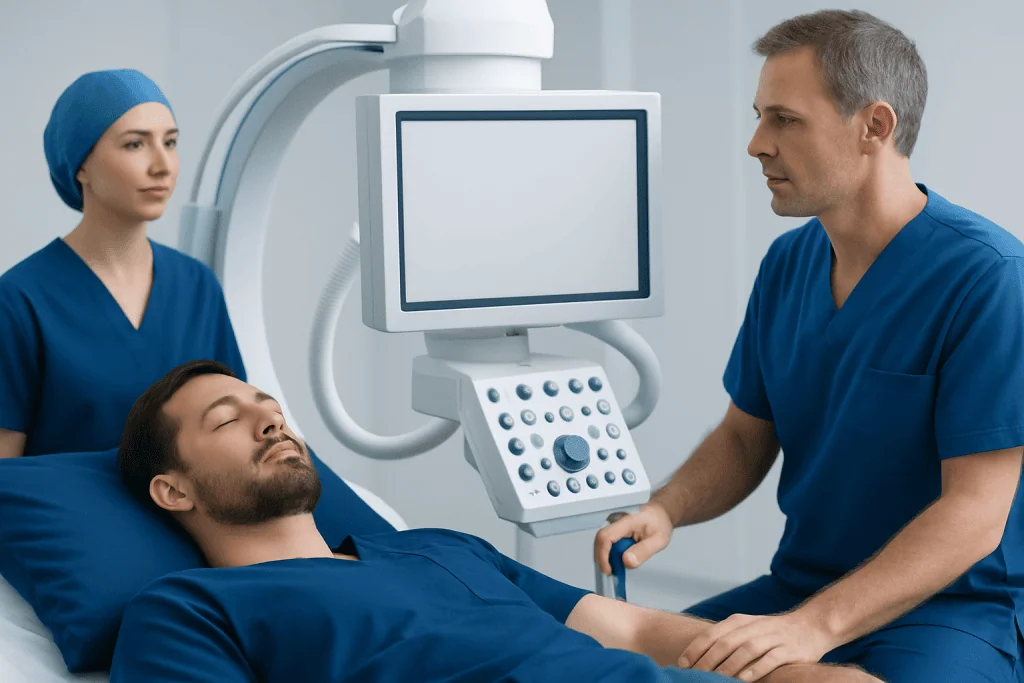
Travelling for care makes most sense when you already have a diagnosis or a clearly defined concern, and you want coordinated specialist assessment, advanced hospital facilities, or a plan that combines consultation, testing and intervention in one trip where that is medically appropriate. It also suits people seeking a structured second opinion before committing to treatment anywhere.
It is recommended only after your case has been reviewed in enough detail to judge whether travel is reasonable. For some patients, the right next step is in-person evaluation and further testing before any treatment is scheduled. For others, treatment can be tentatively planned before arrival because the diagnosis and records are already clear.
Travel works best when your condition is stable enough for the journey, your expected recovery can be managed safely, and the timing does not add avoidable risk. If your situation is urgent or unstable, treatment abroad should wait until you are medically fit: that is not caution for its own sake, it is the difference between planned care and a preventable problem in transit.
Who is a good candidate for treatment in Turkey?

You may be a good candidate for treatment in Turkey if you have a treatable condition, can share reliable and recent medical information before travelling, and are well enough to make the journey. Good candidates tend to share a few less obvious traits too: they have realistic expectations, they accept that a recommendation may change after in-person examination, and they are willing to follow preparation and aftercare instructions precisely.
Strong candidates often include people seeking planned surgery, specialist consultation, second opinions, complex diagnostics, or multidisciplinary care that is hard to coordinate at home. Candidacy also depends on the specific treatment: a person suitable for one procedure may not be suitable for another. Procedure-specific guides such as who is a good candidate for LASIK in Turkey and the dental implants candidate checklist show how the general principles here translate into concrete criteria for individual treatments.
- Best suited: planned care, stable condition, complete records, enough time in-country, a clear plan for recovery and follow-up
- Needs extra review: multiple chronic illnesses, recent hospitalisation, higher anaesthesia risk, an unclear or disputed diagnosis
- May need delay: urgent symptoms, unstable medical status, or severe mobility and travel limitations without adequate support
Who should wait, or be treated at home
Some situations make immediate travel unsuitable. Active uncontrolled infection, unstable heart or lung disease, a very recent major deterioration, unmanaged bleeding risk, or any condition needing emergency care all point towards local treatment first. In many of these cases travel becomes possible later, after stabilisation, additional tests or specialist clearance: the answer is often “not now” rather than “never”.
There is also a category the industry rarely discusses: people whose expectations do not match what the treatment can deliver. If the realistic aim of a treatment is symptom control or improved function rather than complete resolution, a candid pre-travel review should say so. A responsible team will occasionally advise a patient not to proceed at all, because the balance of risk and benefit is unfavourable. If a provider has never told anyone no, treat that as a warning sign, not a selling point.
Is it safe to get medical procedures in Turkey?
Safety is not a property of a country. It is a property of a specific hospital, a specific team, and a specific plan for a specific patient. Turkey has a large, modern private hospital sector, and many of its hospitals hold international accreditations that can be verified on the accrediting bodies’ public registries. It also has clinics operating at a much lower standard. The gap between the best and the worst is the real risk, and it is one you can manage.
Practically, safer care abroad depends on the same things it depends on anywhere: a thorough pre-treatment review of your health, honest disclosure of your history and medications, appropriate anaesthesia assessment, a hospital setting equipped for complications, and a plan for follow-up. International travel adds its own layer, flight timing around procedures, mobility after treatment, and enough local recovery time before flying home. Public health bodies such as the CDC publish general guidance for anyone considering medical travel; the questions they suggest asking apply fully to Turkey.
Is healthcare in Turkey good, and what is it known for?
Turkey has invested heavily in hospital infrastructure over the past two decades, and its larger private hospital groups run multi-site networks with multidisciplinary teams, modern imaging and dedicated international patient departments. Quality varies by institution, as it does in every country, which is why checking the specific hospital matters more than reading about the country in general.
Internationally, Turkey is best known for dental treatment, hair transplantation, eye surgery, cosmetic and reconstructive surgery, and fertility care: the fields most visible in medical travel. Less advertised but equally established are oncology, cardiology, cardiovascular surgery, orthopaedics, organ transplantation and complex diagnostics, which is where large hospital groups tend to concentrate their multidisciplinary capacity. If your case sits in one of these heavier specialties, the hospital’s ability to coordinate several departments around you matters far more than any single procedure’s reputation.
The online evaluation before you travel
Before any trip, your case is reviewed remotely using what you provide: medical history, medication list, previous operations, current symptoms, clinic letters, blood tests, imaging reports and scans where relevant. The more complete and current your records, the more useful the preliminary opinion. Old or partial records produce vague answers: that is a limitation of the information, not the review.
A good remote review answers several questions: whether your condition appears suitable for treatment in Turkey, whether more tests are likely on arrival, how time-sensitive your case seems, and roughly how long you may need to stay. It can also flag early concerns, higher anaesthesia risk, the need for additional specialist clearance, or situations where local treatment is safer first. You can read exactly how this works in practice in our guide to how we confirm you are a good candidate for treatment.
Be clear about what a remote review is not. It is preliminary. It does not replace examination, repeat testing where needed, or a formal decision by the treating physician. Any provider offering a “final” plan from photographs alone is overpromising.
Preparing before treatment
Preparation starts with accurate information and an honest account of your goals. Share all major diagnoses, previous surgeries, allergies, regular medicines, smoking status, and any history of heart, lung, bleeding or anaesthesia-related problems. Depending on the procedure, you may need updated blood tests, imaging or specialist clearance before treatment can go ahead.
Medicines that affect bleeding, blood sugar, immunity or healing are always reviewed by the treating doctor before a procedure. Any adjustment is that doctor’s decision, made with your full history in view, never something to attempt on your own. If you are pregnant, or pregnancy is possible, this belongs in the record from the start.
Practical preparation matters as much as medical preparation. Allow enough time in Turkey for consultation, testing, treatment, early recovery and the first follow-up visit. Many patients benefit from travelling with a companion, particularly after surgery or where mobility, communication or self-care may be limited at first.
Treatment day and hospital stay
The day itself depends on the care you are receiving. For most patients it begins with admission, identity and document checks, consent review, and confirmation of the plan. If anaesthesia is involved, you meet the anaesthesia team for final safety checks. During treatment, the clinical team follows the protocol for your specialty and health status, monitoring, imaging guidance, minimally invasive techniques, surgery or supportive care as your case requires. If new findings appear, the plan may be adjusted in your medical interest; that flexibility is a feature of careful care, not a flaw in the quote.
Afterwards you are monitored in a recovery area or patient room, with pain control, hydration, wound care and mobility handled according to the procedure. Some patients are discharged the same day; others stay for monitoring, medication adjustment or early follow-up tests. Before discharge, the team confirms you are medically stable, and you receive prescriptions, wound and activity instructions, and a date for your first control appointment. Discharge may be delayed briefly if a safer recovery requires it, travel clearance follows your medical condition, not your flight booking.
Recovery timeline
Recovery varies widely because different specialties heal differently. Some people resume light activity quickly; others need structured rehabilitation. Your doctor will advise on movement, bathing, diet, wound care and when travelling home is sensible. The table below shows the general shape of recovery: your own timeline depends on your actual treatment.
| Timeframe | What to expect |
|---|---|
| First 24 hours | Monitoring, rest, symptom control and early medical checks after treatment or anaesthesia where relevant. |
| First week | Initial healing, a follow-up review, possible fatigue or discomfort, and activity limits set by the procedure. |
| Weeks 2–4 | Gradual return to light routines for many patients, though limits may remain on exercise, lifting or long travel. |
| Months 1–3 | Healing continues; specialist follow-up shifts towards function and treatment response. |
| Final result | Depends on the treatment type, some results appear early, others need longer healing, rehabilitation or staged review. |
If your treatment involves pathology review, rehabilitation, medication monitoring or serial imaging, the timeline extends accordingly. This is one reason a clear post-return plan belongs in the candidacy decision itself, not as an afterthought.
What to avoid after treatment
Avoid anything that interferes with healing, raises bleeding risk or worsens swelling. The exact restrictions depend on your procedure, but common examples include heavy lifting, strenuous exercise, smoking, alcohol, long periods of immobility, and skipped follow-up appointments. Flying too soon after certain treatments may also be discouraged; your team will set the timing.
Do not change or stop prescribed medicines on your own, every adjustment belongs to the treating doctor. And avoid measuring your recovery against someone else’s. Even after identical procedures, healing differs with age, baseline health, medication use and whether additional treatment was needed.
Risks and possible complications
Every treatment carries risk, whether minor or major, surgical or not. Possible issues include bleeding, infection, pain, delayed healing, medication reactions, anaesthesia-related problems, blood clots and complications specific to the procedure. International travel adds practical considerations: flight timing, mobility after treatment, sufficient local recovery time, and continuity of care once home. Patients with complex histories may need extra pre-treatment evaluation to reduce avoidable risk.
Before discharge, your team gives you written instructions that explain which symptoms are a normal part of your particular recovery and which ones need prompt medical attention. Those instructions are specific to your procedure and your health, which is why this guide does not attempt a general list: a generic list would be less accurate than the one you will actually receive.
A careful review balances expected benefit against these risks case by case. Sometimes the safest recommendation is to postpone, to choose a different treatment, or to manage the condition locally first. A responsible plan is individualised, never assumed in advance.
Results and expectations
What counts as a good result depends on why you are seeking treatment: symptom relief, functional improvement, diagnostic clarity, disease management, reconstruction or a planned corrective procedure. A good candidate is someone whose goals are medically appropriate and honestly aligned with what the treatment can and cannot do.
Expect a personalised recommendation, not a promised outcome. For some conditions the realistic aim is control, reduced symptoms or better function rather than complete resolution, and some conditions need staged treatment or long-term follow-up. Expect practical realities too: you may need more than one appointment, more than one specialty, or more recovery time than first estimated. Plans sometimes change after examination, and occasionally the honest advice is not to proceed.
Travel planning for international patients
Start travel planning only after a preliminary medical review suggests treatment in Turkey may suit you. Allow time for arrival, consultation, possible tests, treatment, early recovery and a first control visit before flying home. A very short trip creates pressure that helps no one, and it may simply not be medically appropriate.
Bring your passport, all relevant records, your medication list, and imaging or reports in an accessible format. If mobility is limited or you may need help after treatment, raise it early so support can be planned. Acibadem International coordinates interpreters, transfers and accommodation guidance for international patients, useful support, but always secondary to the medical plan and your doctor’s clearance for treatment and return travel.
How cost is worked out
This guide deliberately avoids figures, because a number without your case behind it is misleading. What you can rely on is the structure. Cost depends on the diagnosis, the specialty, the complexity of care, whether surgery or hospitalisation is needed, room type, implants or special materials, anaesthesia requirements, additional tests, pathology, imaging, medications and expected length of stay.
A quotation for an international patient is based on the records available before travel, and it may be revised if in-person evaluation changes the plan. Straightforward cases are easier to quote precisely; complex or uncertain cases carry more room for revision. When you compare quotes, compare what is inside them: packages typically cover consultation, admission, the planned procedure, standard nursing care and routine tests on that pathway. Items often excluded are extra hospital nights, additional specialist opinions, unplanned tests, intensive care if required, companion expenses, flights, visas and post-discharge accommodation unless specifically stated. The only meaningful figure is an individualised one issued after medical review.
Why choose Acibadem
If you are weighing up whether you are a good candidate for treatment in Turkey, the provider’s job is to combine honest medical review with practical coordination. Acibadem International supports patients through pre-travel case assessment, hospital-based specialist care across many disciplines, and planning for follow-up after they return home, including cases where the right answer is further testing before any treatment is booked.
Multidisciplinary hospital teams matter most when a case crosses specialties: cardiology and surgery, oncology and imaging, orthopaedics and rehabilitation. A structured hospital environment matters not only for the treatment itself, but for safety checks, discharge planning and recovery support. Interpreters, transfer assistance and communication support make the process easier to organise; they never replace medical decision-making, and they are not presented as if they did.
Medical review and disclaimer
This guide has been medically reviewed by the Acibadem International medical team. It explains how suitability for treatment in Turkey is generally assessed and which practical factors affect planning.
The information is for general educational purposes and does not replace consultation, diagnosis or a treatment recommendation from a physician. The same condition can require a different approach depending on symptoms, history, test results and travel fitness. A preliminary remote opinion helps with planning, but final decisions are made by the treating physician after reviewing your case in full and, where necessary, examining you in person.
Step by step
- Initial contact. You get in touch with Acibadem International and describe the treatment or health concern you would like reviewed.
- Medical record / photo submission. You share your passport details, medical history, reports, test results, imaging, and photos where relevant.
- Preliminary medical review. The relevant specialty team reviews your records to assess whether treatment in Turkey may be suitable.
- Treatment plan and quotation. You receive a preliminary opinion, expected next steps, likely length of stay, and an individualised quotation based on the available information.
- Travel planning. Once the plan appears suitable, your trip is organised with guidance on dates, documents, accommodation and transfers.
- Arrival. Transfer and coordination support help you reach your hospital or accommodation smoothly.
- In-person consultation. You meet the doctor for examination, discussion of expectations, and confirmation or adjustment of the plan.
- Pre-operative tests. If needed, blood tests, imaging, anaesthesia review or other assessments confirm treatment safety.
- Treatment. Your planned procedure or medical treatment is carried out according to the confirmed clinical plan.
- Hospital stay. You stay for monitoring if required, with nursing care, symptom management and early recovery support.
- First control. A follow-up review checks early recovery, answers questions, and confirms the next stage of aftercare.
- Discharge / travel clearance. You are discharged when medically appropriate and advised when it is safe to travel or continue recovery outside hospital.
- Remote follow-up. After you return home, remote communication supports follow-up, report review and recovery questions where appropriate.
Your checklist
- Valid passport and travel documents
- Brief summary of your current health concern or diagnosis
- Past medical history, including chronic conditions
- Full medication list, including supplements and blood thinners
- Known allergies or previous reactions to medicines or anaesthesia
- Details of previous surgeries or hospitalisations
- Current symptoms and how long you have had them
- Recent blood tests and relevant laboratory results
- Imaging reports and image files where relevant
- Pathology reports or biopsy results if applicable
- Photos related to the condition if requested
- Contact details for your local doctor, where helpful for follow-up
Key takeaways
- You may be a good candidate if your condition can be safely assessed and treated with sensible travel timing and follow-up planning.
- Suitability depends on your diagnosis, general health, expectations and fitness to travel, not on the procedure alone.
- A remote review of complete, recent records is the right first step, but it is preliminary; the treating physician makes the final call.
- Plan enough time in Turkey for consultation, treatment, recovery and the first control visit.
- Not everyone is suitable for immediate travel; some need additional tests, local stabilisation, or a different pathway, and being told so is a sign of a careful provider.
Frequently asked questions
How do I know if I am a good candidate for treatment in Turkey?
Through a medical review of your records followed by physician evaluation. In general, you may be a good candidate if your condition suits planned treatment, you are fit to travel, and your recovery can be managed safely with proper follow-up. A remote opinion is a useful starting point, but only the treating doctor can confirm suitability.
Is it safe to get medical procedures in Turkey?
Safety depends on the specific hospital, team and plan rather than the country. Turkey has modern, well-equipped hospitals, some holding verifiable international accreditation, alongside lower-standard clinics. Thorough pre-treatment review, honest disclosure of your history, a hospital setting equipped for complications, and sensible flight timing are what make care abroad safer.
Is healthcare in Turkey good?
Turkey’s larger hospital groups operate modern, multidisciplinary facilities with dedicated international patient services, and the country has invested heavily in hospital infrastructure. Quality varies by institution, as everywhere, so the meaningful question is always about the specific hospital and team, not the country average.
What medical treatment is Turkey famous for?
Internationally, Turkey is best known for dental treatment, hair transplantation, eye surgery, cosmetic surgery and fertility care. Its large hospital groups also have established capacity in oncology, cardiology, cardiovascular surgery, orthopaedics, transplantation and complex diagnostics, which matters most for medically heavier cases.
What is the biggest cause of death in Turkey?
Cardiovascular disease is the leading cause of death in Turkey, as in much of Europe. This is a population-level statistic about the country as a whole; it says nothing about the safety of planned hospital care for an individual travelling patient, which depends on that patient’s own assessment and plan.
Who may not be suitable for immediate treatment abroad?
People with urgent emergencies, unstable heart or lung conditions, uncontrolled infection, significant unmanaged bleeding risk, or a recent major deterioration usually need local care first. Many become suitable later, after stabilisation, clearance or further testing: the answer is often “not yet” rather than “no”.
How long should I plan to stay in Turkey?
It depends on the specialty, whether tests are needed on arrival, the type of treatment, and your early recovery. Plan enough time for consultation, treatment and at least the first follow-up visit rather than booking the shortest possible trip.
Will the treatment plan be final before I travel?
Usually you receive a preliminary plan based on your records. The final plan is confirmed only after in-person examination and any necessary tests, because new findings can change the safest or most appropriate approach. Quotations may be revised for the same reason.
Add us as a Preferred Source to see more of our trusted health content across Google Search, AI Overviews and Discover.

Update history
- PublishedJune 22, 2026
- Medical review approvedSeptember 13, 2026
- Last content updateSeptember 12, 2026
References3
- CDC Travelers' Health: Medical Tourism wwwnc.cdc.gov
- GOV.UK: Foreign travel advice: Turkey gov.uk
- World Health Organization: Türkiye who.int
More Patient Guides

HoLEP in Turkey: How It Compares With TURP and What Recovery Involves
HoLEP in Turkey treats enlarged prostate tissue with laser enucleation; learn how it compares with TURP, recovery, travel and follow-up.
Porcelain Veneers in Turkey: Who Is Suitable and How Many Visits Are Needed?
Porcelain veneers in Turkey can enhance tooth shape and colour in two visits for suitable patients after a personalised dental assessment.

How to Prepare for a Sedation Procedure in Turkey
Prepare safely for a sedation procedure in Turkey with guidance on fasting, medicines, travel, recovery and follow-up.

Treatment Delays in Turkey: What Happens If Tests or Recovery Change Your Schedule
Treatment delays in Turkey can happen if tests or recovery change your plan. Learn how to manage appointments, travel, accommodation and follow-up.