Alopecia Areata Treatment
Alopecia areata is an autoimmune hair loss condition causing patchy or widespread hair shedding. Dermatology care focuses on diagnosis, triggers, and personalized treatments to support regrowth.
Quick answer
Alopecia areata is an autoimmune condition that causes patchy or more widespread hair loss and is managed by confirming the diagnosis, identifying possible triggers, and choosing treatment to support regrowth. At Acibadem in Turkey, dermatology specialists evaluate the scalp and hair, rule out related conditions, and tailor care with medical therapies and follow-up according to the pattern and extent of…
When Hair Loss Feels Sudden, Visible and Difficult to Explain
Alopecia areata can be emotionally unsettling because it often appears without warning. A small circular patch may develop on the scalp, beard, eyebrow or another hair-bearing area. In some people, the hair loss progresses quickly; in others, it remains limited or comes and goes over time. Because the skin usually looks normal and there may be no pain, redness or scaling, patients are often left wondering whether stress, nutrition, hormones, infection or an underlying illness is responsible.
For many people, the most difficult part is uncertainty. Will the hair grow back? Could more hair fall out? Is it contagious? Is there something serious happening inside the body? These are common and reasonable questions. Alopecia areata is not contagious, and it is not caused by poor hygiene or routine hair care. It is an autoimmune condition in which the immune system mistakenly targets the hair follicles, leading to hair shedding. The follicles usually remain alive, which is why regrowth is possible, but the condition can be unpredictable.
Dermatology care matters because alopecia areata is not a single-pattern disorder. Some patients have one or two small patches that improve with localized treatment. Others develop extensive scalp involvement, eyebrow or eyelash loss, beard loss, or widespread shedding that requires a more comprehensive plan. The right approach begins with an accurate diagnosis, an assessment of disease activity and a discussion about what matters most to the patient: regrowth, preventing progression, cosmetic coverage, managing recurrence, or understanding associated autoimmune risks.
At Acibadem, dermatology teams evaluate alopecia areata with attention to both medical precision and the patient experience. For international patients, this includes clear communication, coordination of appointments and personalized care planning. The goal is not only to treat visible hair loss, but also to explain the condition, identify factors that may influence it and choose therapies that fit the patient’s pattern of disease, medical history and expectations.
 Dr. Şule ErenMDBoard Commentary
Alopecia areata should be treated according to disease activity, extent of hair loss and the sites involved, rather than simply according to the presence of a bald patch. Trichoscopy can help confirm the diagnosis, distinguish active disease from other forms of hair loss and document response over time. For limited disease, local corticosteroid therapy remains an established approach, whereas extensive scalp, eyebrow or eyelash involvement may justify systemic treatment. The treatment landscape has changed substantially with JAK inhibitors: in the phase III BRAVE-AA trials, approximately 36–39% of adults with severe alopecia areata receiving baricitinib 4 mg achieved 80% or greater scalp coverage by week 36, compared with approximately 3–6% receiving placebo. Ritlecitinib has also demonstrated significant hair regrowth in adults and adolescents aged 12 years and older with severe disease. Longer-term data suggest that many patients who respond to continuous JAK-inhibitor treatment can maintain substantial regrowth for several years. Treatment selection still requires assessment of disease severity, previous therapies, autoimmune comorbidities and the safety considerations associated with systemic immune-modulating therapy.
What Alopecia Areata Treatment Is
Treatment for alopecia areata is a personalized dermatology plan designed to reduce autoimmune inflammation around the hair follicles, support regrowth and lower the risk of ongoing shedding where possible. Because alopecia areata behaves differently from one person to another, there is no single treatment that is appropriate for every patient. The plan may include observation, topical medications, injections into affected patches, systemic medicines, supportive hair growth therapies, cosmetic guidance and ongoing follow-up.
Alopecia areata is considered a non-scarring form of hair loss. This means the hair follicle is usually not permanently destroyed. In many patients, especially those with limited patchy hair loss, spontaneous regrowth can occur. However, treatment may be recommended when the patches are expanding, cosmetically distressing, recurrent, located in sensitive areas such as eyebrows or beard, or associated with more extensive involvement.
Localized treatments often aim to calm inflammation in a specific patch. Intralesional corticosteroid injections, for example, may be used for small to moderate patches on the scalp or beard when medically appropriate. Topical corticosteroids, topical minoxidil and other locally applied therapies may also be considered. For more extensive disease, dermatologists may discuss systemic options, including short courses of oral anti-inflammatory treatment in selected cases, immunomodulating medications or newer targeted therapies such as Janus kinase pathway inhibitors where indicated and available under local medical regulations.
Treatment may also include management of associated conditions. Some patients with alopecia areata have other autoimmune tendencies, such as thyroid disease, vitiligo, atopic dermatitis or autoimmune conditions in the family. Not every patient needs extensive testing, but a dermatologist may recommend targeted blood tests or referrals if symptoms or history suggest an associated disorder. The care plan is therefore both dermatologic and individualized, rather than a one-size-fits-all hair regrowth program.
Who May Need Evaluation and Treatment
Anyone who develops sudden, patchy or unexplained hair loss should consider seeing a dermatologist. Alopecia areata can affect children and adults, men and women, and all ethnic backgrounds. It most often appears as one or more smooth, round or oval patches on the scalp, but it can also affect the beard, eyebrows, eyelashes, arms, legs or body hair. The skin in the affected area is usually not scarred, and there may be short broken hairs at the edge of the patch.
Some patients notice increased shedding in the shower or on a pillow before they see a defined patch. Others discover hair loss when a barber, hairdresser or family member notices a circular area. Beard alopecia may create sharply defined bald patches on the face. Eyebrow or eyelash alopecia can affect facial expression, eye protection and personal confidence. Nail changes, such as tiny pits, ridges or roughness, can occur in some patients and may provide an additional clue to the diagnosis.
Diagnosis begins with a careful history and physical examination. The dermatologist asks when the hair loss began, how quickly it progressed, whether there has been prior hair loss, whether the patient has itching, burning, scaling or pain, and whether there is a personal or family history of autoimmune disease. Recent illness, major stress, childbirth, medications and nutritional concerns may also be discussed, because other forms of hair loss can mimic or coexist with alopecia areata.
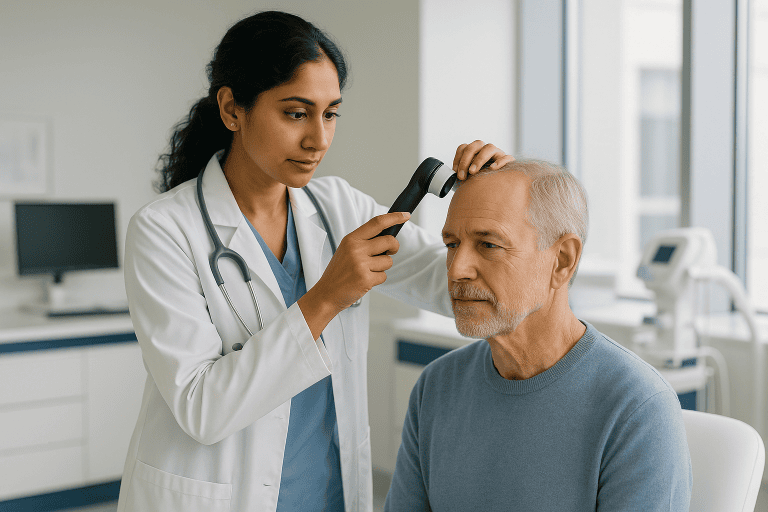
A close scalp and skin examination is central. Dermatologists often use dermoscopy or trichoscopy, a magnified light-based examination of the hair and scalp, to look for characteristic features such as exclamation mark hairs, yellow dots, black dots, short regrowing hairs and the pattern of follicular openings. A gentle hair pull test may help assess whether the condition is active. Blood tests are not required for every case, but may be used to evaluate thyroid function, iron status, vitamin levels or autoimmune markers when the clinical picture suggests a need. A scalp biopsy is rarely necessary, but it may be recommended if the diagnosis is uncertain or if scarring hair loss must be ruled out.
Treatment is especially important for patients with rapidly expanding patches, recurrent episodes, extensive scalp involvement, loss of eyebrows or eyelashes, significant emotional distress, occupational or social concerns, or hair loss that does not improve over time. Children and adolescents may also benefit from early specialist assessment, because treatment choices must be age-appropriate and sensitive to emotional wellbeing.
Conditions and Indications Addressed
Alopecia areata care addresses several patterns of autoimmune hair loss. The most common form is patchy alopecia areata, where one or multiple smooth areas of hair loss appear on the scalp or other body sites. This pattern may respond well to localized treatments, although recurrence is possible.
Alopecia totalis refers to complete or near-complete loss of scalp hair. Alopecia universalis describes loss of hair across the scalp and body, including eyebrows, eyelashes and body hair. These forms can be more persistent and may require systemic treatment discussions. Diffuse alopecia areata can resemble general shedding rather than clear patches, making diagnosis more challenging. Ophiasis is a pattern of hair loss along the sides and back of the scalp, often near the hairline, and can be more resistant to treatment in some patients.
Dermatology care may also address alopecia areata of the beard, eyebrows and eyelashes. These areas require careful treatment selection because the skin is sensitive and the functional and cosmetic impact can be significant. Eyelash loss may expose the eyes to irritation, while eyebrow loss can affect facial symmetry and expression. Treatment may include topical or injectable options depending on the site, extent and safety considerations.
In addition to active hair loss, care may focus on recurrence prevention, monitoring regrowth, managing side effects of medicines, and distinguishing alopecia areata from other conditions such as fungal infection, traction alopecia, telogen effluvium, androgenetic alopecia, trichotillomania, lupus-related hair loss or scarring alopecias. A precise diagnosis helps avoid ineffective or inappropriate treatments and allows the patient to understand the likely course of the condition.
How Alopecia Areata Treatment Is Performed
Preparation and Initial Assessment
The first step is a structured dermatology consultation. Patients are encouraged to bring photographs showing when the hair loss began, a list of current medications and supplements, previous treatments, relevant blood test results and information about personal or family autoimmune conditions. For international patients, records can often be reviewed before travel so the visit can be planned efficiently.
During the examination, the dermatologist maps the affected areas and assesses whether hair loss is stable, active or improving. The extent of involvement is important because it influences treatment selection. A small stable patch may be managed differently from rapidly progressive disease or widespread scalp loss. The physician also examines the nails, eyebrows, eyelashes, beard and body hair where relevant.
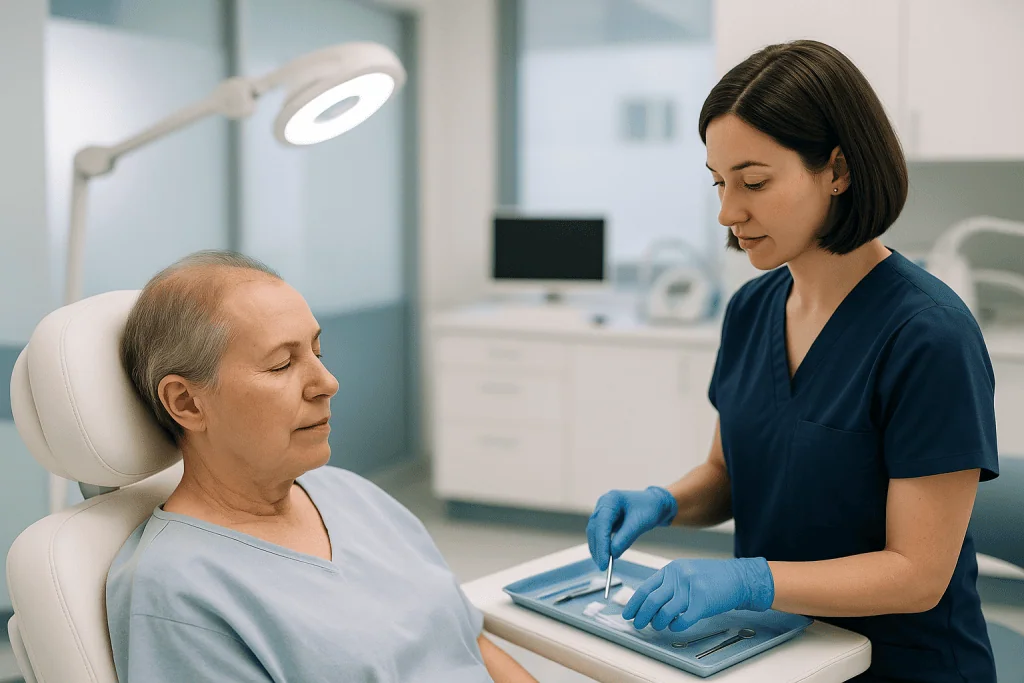
Diagnostic technology may include trichoscopy, which allows magnified visualization of hair shafts, follicular openings and signs of disease activity. Standardized clinical photographs may be taken to compare progress over time. In selected cases, laboratory testing is used to evaluate associated conditions or contributing factors. If the diagnosis is uncertain, a small scalp biopsy under local anesthesia may be performed and examined by pathology specialists.
Choosing the Treatment Plan
Once the diagnosis and disease pattern are clear, the dermatologist discusses treatment options. For limited patchy alopecia areata, intralesional corticosteroid injections are commonly considered. A very small amount of medication is injected into the affected skin at intervals, with the aim of reducing local immune activity around the follicles. The procedure is usually brief and performed in the clinic. Some patients feel mild stinging or pressure, and topical numbing methods may be used when appropriate.
Topical corticosteroids may be prescribed for scalp, eyebrow or body involvement, depending on the area and patient age. The strength and duration are carefully selected to reduce the risk of skin thinning or irritation. Topical minoxidil may be used as an adjunct to support hair growth, although it does not directly treat the autoimmune process. In some cases, topical immunotherapy may be discussed, particularly for more extensive disease, where controlled allergic stimulation of the skin is used to redirect immune activity. This requires careful supervision and repeated visits.
For moderate to severe alopecia areata, rapidly progressive cases or patients with major functional or psychosocial burden, systemic treatment may be considered. This can include anti-inflammatory medications, immunomodulating therapy or targeted oral treatments that act on immune signaling pathways involved in alopecia areata. These medicines require careful screening, discussion of benefits and risks, monitoring blood tests when indicated, and follow-up to assess response and safety.
Supportive care is also part of treatment. Patients may receive guidance on gentle hair care, scalp protection from sun exposure, camouflage options, eyebrow cosmetics, wigs or hair prostheses if desired, and emotional support. When hair loss affects self-image, social life or professional confidence, these supportive measures can be medically meaningful, not merely cosmetic.
The Procedure and Visit Experience
Most alopecia areata treatments are outpatient dermatology services. The initial consultation may take longer because it includes diagnosis, assessment and planning. Local injections, trichoscopy and clinical photography are usually completed during the same visit when indicated. Topical treatments are started at home with written instructions. Systemic medications require more detailed counseling and may require baseline laboratory tests before the first dose.
For injection treatment, the affected area is cleaned, and small injections are placed into the skin at spaced intervals across the patch. The session often lasts only a short time, depending on the number and size of patches. Patients can usually return to normal daily activities immediately. Mild tenderness, temporary redness, small pinpoint bleeding or local skin changes may occur. The dermatologist explains how often sessions may be repeated and when to expect early signs of regrowth.
For patients receiving topical immunotherapy or phototherapy-based approaches, visits may be scheduled at regular intervals. Light-based treatments, when appropriate, use controlled medical energy to influence inflammation in the skin. The suitability of these treatments depends on the type and extent of hair loss, skin type, patient age and previous response to therapy. They are not required for every patient.
Recovery and Follow-Up
Hair regrowth is gradual. Even when inflammation improves, follicles need time to produce visible hair. Early regrowth may appear as fine, pale or soft hair before it becomes thicker and more pigmented. Many treatment plans are assessed over several months rather than days or weeks. Follow-up visits help determine whether the chosen therapy is working, whether the disease is still active and whether the plan should be adjusted.
Recovery from the treatment itself is usually minimal for localized therapy. Patients can wash the scalp as advised, continue daily routines and travel, unless they are taking systemic medication that requires monitoring. For international patients, the care team may help coordinate follow-up timing and provide documentation for continued care at home when appropriate.
Why Acting Early Matters
Alopecia areata can be unpredictable, and not every small patch will progress. However, early dermatology evaluation is valuable because it confirms the diagnosis and identifies signs of active disease. Treating a limited patch may be simpler than treating extensive hair loss after it has expanded. Early care can also help distinguish alopecia areata from fungal infections, scarring alopecias, traction-related hair loss or other conditions that require different management.
Delaying assessment may allow active autoimmune inflammation to continue unnoticed, especially when hair loss is hidden under longer hair or in the beard. In eyebrow or eyelash involvement, delay can affect appearance and eye comfort. In children and adolescents, untreated visible hair loss may increase anxiety, teasing or withdrawal from social activities. Adults may experience similar emotional strain in professional and social settings.
Early evaluation also helps prevent unnecessary treatments. Many patients try over-the-counter hair products, cosmetic procedures or supplements before seeing a dermatologist. While some supportive measures may be harmless, they do not address autoimmune activity and can delay appropriate care. A specialist can clarify which therapies have evidence, which are unlikely to help and which may carry avoidable risk.
Benefits of Treatment
The potential benefits of alopecia areata treatment depend on the disease pattern, but a well-planned approach can support both medical control and quality of life.
| Benefit | What It Means for You |
|---|---|
| Accurate diagnosis | Dermatology assessment helps confirm alopecia areata and rule out conditions that may look similar but require different treatment. |
| Personalized regrowth strategy | Treatment is selected according to the size, location and activity of hair loss, rather than using the same approach for every patient. |
| Earlier control of active patches | Local or systemic therapy may reduce inflammation around the follicles and support regrowth when the follicles remain responsive. |
| Monitoring for associated conditions | When appropriate, targeted testing can identify thyroid disease, nutritional issues or other factors that may affect care planning. |
| Support for visible hair loss | Guidance on camouflage, scalp care, eyebrow options or hair prostheses can help patients manage appearance during treatment. |
| Structured follow-up | Progress is documented over time, allowing the dermatologist to adjust therapy if regrowth is slow, incomplete or relapse occurs. |
Recovery Timeline
Hair regrowth varies widely, but the following timeline describes what many patients can generally expect during evaluation and treatment.
| Time Period | What Patients Can Expect |
|---|---|
| Day 1 | Diagnosis, trichoscopy and treatment planning are completed. Local injections or topical therapy may begin if appropriate. |
| First Week | Most patients continue normal activities. Mild redness or tenderness may occur after injections. Topical medications are used as instructed. |
| First Month | Follow-up may be scheduled depending on the plan. Some patients notice reduced shedding, but visible regrowth may still be limited. |
| Months 2 to 4 | Early regrowth may appear as fine or light-colored hair. Treatment response is assessed, and adjustments may be made. |
| Longer Term | Hair may continue to thicken gradually. Some patients need maintenance, repeat treatment or monitoring for recurrence. |
Factors That Influence Outcomes
Outcomes in alopecia areata depend on several medical and individual factors. Limited patchy hair loss that has been present for a shorter time often has a more favorable outlook than extensive or long-standing disease, although individual responses vary. The amount of scalp involvement, whether the hairline pattern is ophiasis, and whether eyebrows, eyelashes or body hair are affected can influence treatment planning and expectations.
Disease activity is another important factor. Patches with ongoing shedding at the edges may require a different strategy than stable patches with early regrowth. Nail changes can sometimes be associated with more persistent disease. A personal or family history of autoimmune conditions, atopic dermatitis or previous recurrent alopecia areata may also influence the course.
Age, pregnancy plans, other medical conditions and current medications affect which treatments are suitable. For example, some systemic medications require laboratory monitoring and may not be appropriate for every patient. Children require particular caution, with treatment choices balanced against comfort, safety and long-term wellbeing. For adults, lifestyle, travel schedule and willingness to attend repeat visits may influence the best approach.
Adherence matters. Topical medicines must be used consistently and correctly. Injection schedules may need to be repeated at planned intervals. Systemic therapies require monitoring and communication about side effects. It is also important to avoid harsh cosmetic practices that irritate the scalp or place traction on vulnerable hair. Gentle hair care will not cure alopecia areata, but it can reduce additional breakage and help protect regrowing hair.
Emotional health is part of a good result. Hair loss can affect identity, confidence and social comfort. Patients who receive clear explanations, realistic expectations and supportive options often feel more in control, even while waiting for regrowth. A good outcome is therefore not measured only by hair count, but also by disease understanding, safe treatment, functional improvement and the patient’s ability to navigate recurrence if it occurs.
Why International Patients Choose Acibadem for Alopecia Areata Care
International patients often seek care abroad when they want a clear diagnosis, access to experienced dermatology specialists or a second opinion on a condition that has not responded as expected. Alopecia areata is a good example of a disorder where specialist evaluation can change the treatment pathway. A careful dermatology assessment may confirm the diagnosis, reveal a different type of hair loss, identify coexisting conditions or clarify whether more advanced therapies should be considered.
Acibadem’s approach is based on individualized dermatology care within JCI-accredited hospitals. Patients are evaluated by physicians who consider the pattern of hair loss, disease activity, medical history, previous treatment response and personal priorities. When needed, dermatology care can be coordinated with other specialties such as endocrinology, pediatrics, ophthalmology, rheumatology, pathology or psychology. This multidisciplinary structure is especially useful when alopecia areata is associated with thyroid symptoms, autoimmune history, eye irritation from eyelash loss, childhood onset or significant emotional distress.
Modern diagnostic pathways support decision-making. Trichoscopy helps dermatologists examine the scalp and hair follicles in detail without surgery. Clinical photography allows objective comparison over time. Laboratory evaluation can be targeted rather than excessive, focusing on what is medically relevant. Pathology review is available when biopsy is needed to distinguish alopecia areata from other forms of hair loss. These tools help create a treatment plan that is evidence-based and appropriate for the patient’s situation.
For treatment, Acibadem dermatology teams may use a range of medical options, from localized therapies for small patches to systemic treatments for more extensive disease when appropriate. The aim is to match the intensity of therapy to the severity of the condition and the patient’s risk profile. Patients receive explanations about expected timelines, possible side effects, monitoring needs and the possibility of recurrence. This clarity is particularly important for people traveling from another country, where follow-up planning must be realistic.
Acibadem International supports patients before, during and after their visit. Services may include appointment coordination, medical record transfer, multilingual communication, travel-related assistance and scheduling across departments when several consultations are needed. For patients coming from the United States or other countries, this coordination can make a complex medical trip more manageable while keeping the focus on accurate diagnosis and appropriate care.
The decision to travel for alopecia areata treatment is personal. Some patients come for confirmation of diagnosis before starting systemic medication. Others seek options for recurrent patchy disease, eyebrow or beard involvement, or extensive alopecia that has affected quality of life. In each case, the value lies in a thoughtful medical evaluation, access to dermatology expertise and a care plan that can be continued safely over time.
Taking the Next Step
Alopecia areata can feel sudden and discouraging, but it is a recognized medical condition with established diagnostic methods and a range of treatment options. Because the hair follicles often remain capable of regrowth, timely evaluation can make an important difference in understanding the disease and selecting an appropriate plan. Even when the condition is extensive or recurrent, specialist care can help patients navigate choices, monitor progress and manage the visible and emotional effects of hair loss.
If you or your child has developed patchy hair loss, eyebrow or eyelash thinning, beard patches or unexplained shedding, a dermatology consultation can provide clarity. Acibadem can review your medical history, previous treatments and photographs, and help determine whether an in-person evaluation, second opinion or treatment plan is appropriate.
This information is general and is not a substitute for professional medical advice. Diagnosis and treatment decisions should be made with a qualified physician who can evaluate your individual condition.
Preparation
- A dermatologist reviews hair loss history, family history, medications, stress factors, and associated autoimmune symptoms. Scalp examination, dermoscopy, and selected blood tests may be recommended. Patients should bring previous test results and avoid applying cosmetic scalp products before assessment.
Aftercare
- Follow the prescribed topical, injectable, or systemic treatment plan and attend scheduled follow-up visits to monitor regrowth. Protect affected scalp areas from sun exposure and avoid harsh hair treatments. Report rapid spreading, nail changes, or side effects promptly.
Frequently Asked Questions
What affects the cost of alopecia areata treatment?
The main factors are the extent of hair loss, whether diagnostic tests are needed, the treatment selected, medication monitoring, follow-up frequency, and whether travel or language support is included.
How can I get a personalised quote in Turkey?
You can request a free consultation and share photos, medical history, previous test results, and treatments already tried. A dermatologist can then recommend an assessment plan and provide a personalised quote.
Are medicines included in the treatment package?
This depends on the package and the medication. Some plans include consultation and basic coordination, while prescriptions, monitoring tests, or specialised medicines may be quoted separately.
Will I need to travel more than once?
Alopecia areata often needs follow-up, but the schedule depends on the treatment plan and response. Some follow-up may be coordinated remotely when clinically appropriate.
Is hair transplantation a usual treatment for alopecia areata?
Hair transplantation is generally not a standard treatment for active alopecia areata because the autoimmune process can affect transplanted hair. A dermatologist should assess disease stability and discuss safer options.
Medically reviewed by the Acıbadem International Medical Board August 28, 2026
See our medical review board →
Update history
- PublishedJune 8, 2026
- Medical review approvedAugust 28, 2026
- Board commentary addedSeptember 8, 2026
- Last content updateSeptember 8, 2026
References7
- Bozca BC, Dicle Ö. Diagnostic Methods and Laboratory Evaluation in Alopecia Areata. Turkiye Klinikleri J Dermatol-Special Topics. 2018;11(1):15-21. (Review – Authored by Prof. Dr. Özlem Dicle, currently practicing at Acıbadem Maslak Hospital; reviews clinical diagnosis, trichoscopy and histopathologic evaluation of alopecia areata. The publication predates her Acıbadem affiliation.)
- King B, Ohyama M, Kwon O, Zlotogorski A, Ko J, Mesinkovska NA, Hordinsky M, Dutronc Y, Wu WS, McCollam J, Chiasserini C, Yu G, Stanley S, Holzwarth K, DeLozier AM, Sinclair R; BRAVE-AA Investigators. Two Phase 3 Trials of Baricitinib for Alopecia Areata. N Engl J Med. 2022;386(18):1687-1699. doi:10.1056/NEJMoa2110343. PMID: 35334197. (Randomized phase III trials – BRAVE-AA1 and BRAVE-AA2 enrolled 1,200 adults with severe alopecia areata and demonstrated significantly greater scalp hair regrowth with baricitinib than placebo.)
- Senna M, Mostaghimi A, Sinclair R, Ohyama M, Chiasserini C, Yu G, Liu C, Somani N, Ball S, Kolodsick J, King B. Maintenance of long-term efficacy with continuous baricitinib treatment in patients with severe alopecia areata: 3-year results from BRAVE-AA1 and BRAVE-AA2. J Am Acad Dermatol. 2026;94(4):1126-1133. doi:10.1016/j.jaad.2025.11.064. PMID: 41314424. (Phase III long-term extension – Among week-52 responders continuing treatment, 89.1% on baricitinib 4 mg and 83.6% on 2 mg maintained a SALT score ≤20 at week 152.)
- King B, Zhang X, Gubelin Harcha W, Szepietowski JC, Shapiro J, Lynde C, Mesinkovska NA, Zwillich SH, Napatalung L, Wajsbrot D, Fayyad R, Freyman A, Mitra D, Purohit V, Sinclair R, Wolk R. Efficacy and safety of ritlecitinib in adults and adolescents with alopecia areata: a randomised, double-blind, multicentre, phase 2b-3 trial. Lancet. 2023;401(10387):1518-1529. doi:10.1016/S0140-6736(23)00222-2. PMID: 37062298. (Randomized phase IIb/III trial – 718 patients aged ≥12 years with at least 50% scalp hair loss; ritlecitinib produced significantly greater scalp hair regrowth than placebo.)
- Rudnicka L, Arenbergerova M, Grimalt R, Ioannides D, Katoulis AC, Lazaridou E, Olszewska M, Ovcharenko YS, Piraccini BM, Prohic A, Rakowska A, Reygagne P, Richard MA, Soares RO, Starace M, Vañó-Galvan S, Waskiel-Burnat A. European expert consensus statement on the systemic treatment of alopecia areata. J Eur Acad Dermatol Venereol. 2024;38(4):687-694. doi:10.1111/jdv.19768. PMID: 38169088. (European expert consensus – Provides a severity-based systemic treatment algorithm and positions JAK inhibitors among the principal options for severe alopecia areata.)
- Alopecia Areata medlineplus.gov
- Alopecia Areata my.clevelandclinic.org
Trusted care for international patients
From the Acibadem Blog

When Alopecia Areata Returns After Regrowth: What a Relapse Means for the Next Treatment Step
An alopecia areata relapse means the immune system has again targeted hair follicles that had recovered. Relapse is common in this condition and does…

How Alopecia Areata Treatment Is Planned: Topical, Injectable and Systemic Options in Sequence
Alopecia areata treatment is usually planned in steps that match how much hair is affected and how fast it is changing. Small patches are…