Sapphire Transplant
Sapphire Transplant is a hair restoration technique using sapphire-tipped blades to create precise channels for graft placement, supporting natural-looking density and comfortable scalp healing.
Quick answer
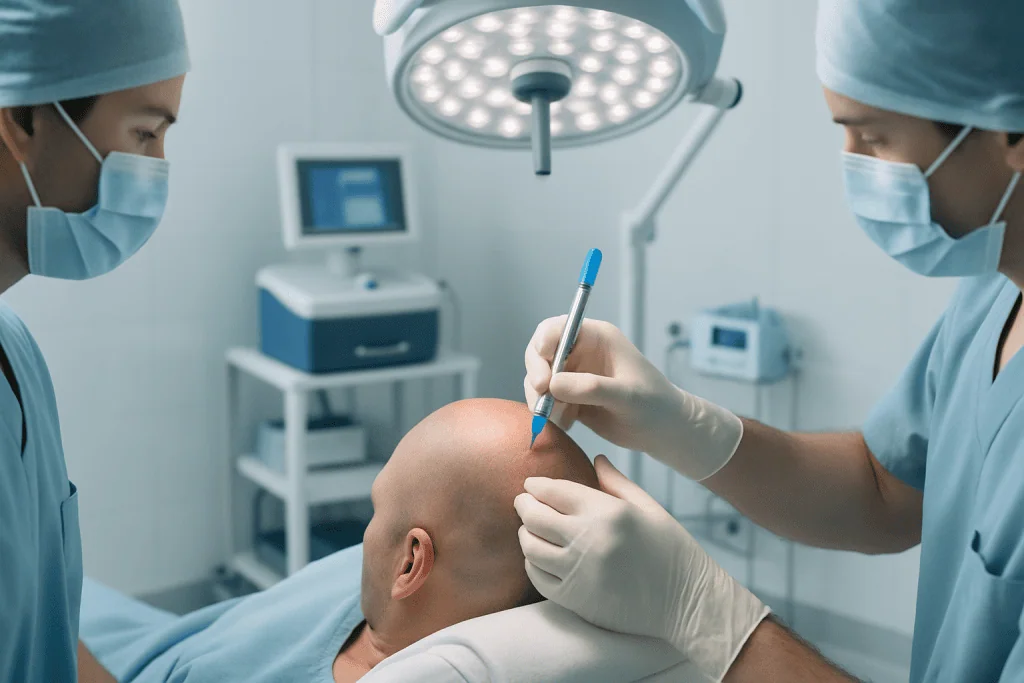
A sapphire transplant is a hair restoration procedure in which follicles from your own donor area are implanted into small channels opened with sapphire-tipped blades. It is usually combined with FUE extraction. The sapphire blade shapes the angle, depth and direction of each recipient channel, which influences how naturally the transplanted hair grows and blends with existing hair.
Sapphire Transplant: What It Is and Why People Consider It
A sapphire transplant is a hair restoration procedure in which follicles taken from your own donor area, usually the back and sides of the scalp, are implanted into tiny channels opened with sapphire-tipped blades. It treats visible thinning: a receding hairline, a widening parting, a thinning crown. It is most often chosen by adults with pattern hair loss who have enough healthy donor hair to support a realistic, long-term plan.
Hair loss is rarely just a cosmetic concern. It changes how you recognise yourself in the mirror, how you appear in photographs, and how confident you feel in professional or social settings. Some people research treatment after years of gradual thinning; others notice recession at the temples or a thinning crown earlier than they expected. Whenever the research starts, the questions tend to be the same. Will the result look natural? Will the transplanted hair keep growing? How visible will the recovery be? And how do you judge whether a technique with an appealing name actually deserves the attention it gets?
The sapphire in a sapphire transplant refers to the instrument, not the graft. Sapphire-tipped blades are used for one specific stage of the procedure: creating the recipient channels into which each follicular unit is placed. Those channels determine the angle, direction, depth and distribution of the implanted grafts, details that decide whether a result looks like hair or like a procedure. The technique is often selected by patients who want improved density, a more defined hairline, or coverage in areas affected by pattern hair loss.
At Acibadem, a sapphire transplant is approached as a medical procedure, not a simple aesthetic appointment. The process begins with careful assessment of your type of hair loss, the quality of your donor area, your scalp condition, your expectations and your likely future pattern of loss. A responsible restoration plan considers not only where hair is missing today, but how your hair loss may evolve as you age.
That long view matters. An overly aggressive hairline, poor donor management or unplanned graft placement can create real difficulties later, difficulties that are harder to correct than they were to avoid. The measured approach is individualised and balanced: restore visible density now, protect donor hair for the future.
What Is Sapphire Hair Transplant?
Sapphire hair transplant is a hair restoration technique in which the surgical team uses blades made with sapphire tips to create recipient channels in the scalp: the small openings where hair grafts are placed. The grafts themselves come from your donor area, most commonly the back and sides of the head, where follicles are typically more resistant to genetic pattern hair loss. Because the transplanted hair is your own, it carries your natural colour, texture and growth characteristics.
Hair transplantation is a design-based procedure, and the sapphire stage is where much of that design becomes physical. Each channel is opened at a chosen angle, depth and direction, and each graft must then be positioned according to your facial proportions, natural hair flow, existing density, donor capacity and future hair loss risk. Single-hair grafts are usually reserved for the front hairline, where softness and irregularity create realism. Grafts containing two or more hairs are placed behind the hairline or in the crown, where they build the perception of density.
One limit is worth stating plainly: a sapphire transplant does not create new hair follicles. It redistributes existing follicles from donor zones to areas where more coverage is wanted. Donor hair is finite, so planning is essential. A well-designed procedure aims to create the most natural visual improvement with the grafts available, while avoiding overharvesting and preserving the appearance of the donor area itself.
What is the sapphire method in hair transplant?
The sapphire method refers specifically to the channel-opening stage of the procedure: the moment between graft extraction and graft placement. The smoothness and shape of a sapphire tip can support fine incision control, allowing channels to be made in carefully chosen directions and depths, closely spaced where the scalp allows. That precision is the method’s appeal. But the result depends on far more than the blade material: patient selection, donor quality, hair characteristics, graft handling, surgical planning and aftercare all shape the final outcome. A sapphire blade in inexperienced hands produces an inexperienced result.
What is a sapphire blade hair transplant?
A sapphire blade hair transplant is the same procedure, named after the instrument itself. Sapphire is an extremely hard crystal, and blades tipped with it can be manufactured with a fine, smooth cutting edge in a range of widths. The team selects blade widths to match the size of the grafts being placed, narrower channels for single-hair grafts at the hairline, slightly wider ones for multi-hair grafts behind it. A channel that fits its graft snugly holds it in the intended position and orientation, which is exactly what a natural result requires.
What is sapphire FUE hair transplant?
Sapphire FUE hair transplant combines two stages: follicular unit extraction (FUE), in which grafts are removed individually from the donor area with fine punches, and sapphire channel opening in the recipient area. There is no strip of scalp removed and therefore no long linear donor scar of the kind associated with older strip techniques. Most sapphire transplants performed today follow this combination, which is why the terms are often used interchangeably. If you want to understand the extraction side in more depth, the FUE hair transplant page explains how follicular units are harvested and preserved.
What is sapphire micro FUE hair transplant?
Sapphire micro FUE hair transplant is, in most clinics’ usage, the same combination described above: the word “micro” refers to the very fine punches used to extract individual follicular units. It is a descriptive label rather than a distinct medical technique. When you see the term in marketing material, it is reasonable to ask the clinic exactly what it means by it: which punch sizes are used, who performs the extraction, and how the sapphire stage is carried out. Precise answers to those questions tell you more than the name does.
Is a Sapphire Hair Transplant Better?
Not automatically. The blade is one variable among many, and no blade material can compensate for a poor plan, careless graft handling or an unrealistic design. What sapphire changes is the character of the recipient channel; what it cannot change is the biology of your hair, the capacity of your donor area, or the judgement of the team performing the procedure. Anyone promising that a sapphire transplant is better in every case is selling the name rather than explaining the medicine.
That said, the technique was refined for reasons. Sapphire tips can be manufactured with a narrow, smooth edge that holds its profile through a long session of repeated incisions. The channels they open tend to be narrow and cleanly shaped, which may support snug graft fit, controlled orientation and orderly healing in suitable scalps. For visible areas such as the frontal hairline, where every degree of angle shows, that level of incision control is genuinely useful when an experienced team is holding the instrument.
What stays the same regardless of the blade: the way grafts are extracted, sorted and preserved; the design of the hairline; the distribution of grafts across the treated area; and your own healing characteristics. These carry more weight in the final result than the channel-opening instrument does.
| Aspect | Classic FUE (steel instruments) | Sapphire FUE |
|---|---|---|
| Recipient channel | Opened with steel slit blades or needles | Opened with sapphire-tipped blades in a narrow, smooth-edged profile |
| Edge behaviour over a session | Steel edges can dull with repeated use | Sapphire is a hard crystal and tends to retain its edge through long sessions |
| Channel precision | Depends on instrument and operator | Blade shape may support fine control of angle, depth and spacing, still operator-dependent |
| Extraction, graft handling, design | Identical in both approaches | Identical in both approaches |
How does sapphire FUE compare with DHI?
Sapphire FUE and DHI differ in how grafts reach the scalp. In sapphire FUE, channels are opened first with sapphire blades and grafts are placed into them in a separate step. In DHI hair transplant, an implanter pen opens the site and places the graft in a single motion. Each approach has situations where it suits the patient’s scalp, hair characteristics and treatment plan better; neither is universally superior. The honest comparison is made case by case, during examination, not in a headline.
Who Is a Candidate for a Sapphire Transplant?
A sapphire transplant may be considered by adults with stable or progressive thinning who have enough healthy donor hair to support transplantation. The most common reason is androgenetic alopecia, male or female pattern hair loss. In men, this may appear as a receding hairline, thinning temples, crown loss or more advanced thinning across the top of the scalp. In women, pattern loss more often presents as diffuse thinning along the central parting or crown while the frontal hairline is relatively preserved; candidacy in women needs particularly careful evaluation, which is why hair transplant for women is assessed as its own clinical question rather than a copy of male planning.
Some patients seek treatment after a previous transplant that produced insufficient density or an unnatural hairline. In selected cases, transplantation may help camouflage scars from injury or surgery, or improve localised hair loss when the underlying condition is stable. Not every form of hair loss is suitable. Active inflammatory scalp disease, uncontrolled medical conditions or ongoing diffuse shedding may need to be identified and managed first, transplanting into an unstable scalp wastes grafts and rarely satisfies anyone.
Diagnosis begins with a medical history and scalp evaluation. The physician reviews when your hair loss began, how quickly it progressed, family history, previous treatments, current medications, and any recent illness, stress, weight change, hormonal shift or nutritional issue. The scalp and donor area are examined for density, miniaturisation, scarring, inflammation and hair calibre. In some patients, blood tests may be recommended to check iron levels, thyroid function, vitamin status, hormonal factors or other contributors to shedding.
A thorough consultation also covers expectations. Some patients want a lower hairline; others care most about crown coverage or overall density. The physician’s job is to explain what the available donor hair can realistically achieve. A patient with extensive baldness and limited donor density can often gain visible, worthwhile improvement, but not the density of teenage hair. A patient with early loss may need a deliberately conservative plan that anticipates further thinning.
Age is relevant but never the only factor. Younger patients need extra caution because their final loss pattern is not yet clear, and a hairline designed for a twenty-five-year-old face can look wrong at fifty. Older patients may still be candidates if they are medically fit and have sufficient donor hair. The right plan is individual, not chronological.
Conditions and Goals a Sapphire Transplant Can Address
The most frequent indication is androgenetic alopecia in its various presentations: temple recession, frontal thinning, crown loss, or larger areas across the top of the scalp in men; carefully selected pattern thinning in women where donor hair remains strong and grafts can be placed safely between existing hairs.
Hairline refinement is a common goal in its own right. A natural hairline is not a straight line. It has subtle irregularity, an appropriate height for the face, soft transition zones and angles that follow your facial structure. Sapphire channel creation lets the team place grafts in a controlled way in exactly the region where control matters most: the few centimetres everyone sees first.
Crown restoration is another frequent request, and one of the harder ones. The crown grows in a spiral, and grafts must follow that natural whorl or the area looks combed against itself. The crown can also absorb many grafts before it reads as dense. In some patients the medical team recommends prioritising the frontal hairline and mid-scalp before the crown, depending on age, donor capacity and what actually frames the face. That advice can feel counterintuitive; it usually ages well.
Revision transplantation may be considered after previous procedures that left pluggy grafts, unnatural direction, low density or visible scarring. Revision cases are more complex: donor hair is already partly used, and scar tissue can affect blood supply and graft placement. This is specialised planning work, covered in more depth on the hair transplant repair page. The aim is to improve the appearance without creating new limitations.
In selected circumstances, transplantation can restore hair in scarred areas, after trauma, burns or surgery, provided the scar’s thickness, blood supply and stability allow it. Facial hair restoration is also possible for suitable candidates: a beard transplant or an eyebrow transplant uses the same core principles but demands its own design, because facial hair differs from scalp hair in angle, density and growth pattern.
A sapphire transplant is not usually the first treatment for temporary shedding, active alopecia areata, untreated scalp inflammation, or hair loss driven by a reversible medical problem. In those situations the priority is identifying and managing the underlying cause. Transplantation works best when the loss is stable enough to plan safely and the donor area is healthy.
How a Sapphire Transplant Is Performed
Before the procedure day
Planning starts well before anyone picks up a blade. A comprehensive consultation evaluates your hair loss pattern, donor area, scalp health, medical history and goals. The team reviews your current medications, allergies, previous procedures and any health conditions that could affect healing or bleeding risk; any adjustment to what you take is a decision for your treating doctor, made as part of this review.
Preparation typically includes guidance on alcohol, smoking and hair care in the days before treatment. On or before the procedure day, the treatment areas are marked and the hairline design is drawn with attention to your age, facial proportions, natural asymmetry and future loss risk. You and the physician review the plan together before anything begins. This is the moment to ask every remaining question: a good team welcomes it.
What happens during a sapphire transplant?
The procedure follows a defined sequence:
- Step 1: Donor preparation and anaesthesia. The donor area is prepared and numbed with local anaesthetic. You remain awake throughout the procedure.
- Step 2: Extraction. Follicular units are removed individually from the donor zone with fine punches. Extraction is spread evenly to avoid visible thinning in any one spot. Each graft may contain one, two, three or occasionally more hairs.
- Step 3: Sorting and preservation. Grafts are counted, assessed under magnification and organised by the number of hairs they contain. Follicular units are living tissue, sensitive to drying, temperature change and trauma, so they are kept in appropriate storage solutions while outside the body.
- Step 4: Sapphire channel opening. The recipient area is numbed, and sapphire-tipped blades open small channels at planned angles, depths and directions. Hair at the front generally grows forward and slightly downward; temple and crown hairs follow different orientations. The channels must respect your natural hair flow so transplanted hair blends with what you already have.
- Step 5: Implantation. Each follicular unit is placed into its designated channel according to the surgical plan. Single-hair grafts build the soft transition of the hairline; multi-hair grafts create fullness behind it. Placement is gradual and meticulous.
- Step 6: Final check and instructions. Donor and recipient areas are checked, and you receive detailed written instructions on washing, sleeping position, medications prescribed for recovery, and activity limits.
How long does a sapphire transplant take?
A session usually takes several hours, and you should plan for a full treatment day. Duration depends on the number of grafts, the complexity of the design, donor characteristics and whether one or more areas are being treated. Local anaesthesia, comfort measures and planned breaks are built into the day. Because the work is slow and detailed by design, a very short quoted session time is worth questioning rather than celebrating.
Technology supports each stage without replacing judgement. Digital photography and scalp analysis document hair loss and donor density. Magnification supports graft assessment and placement. Controlled extraction instruments remove follicular units with attention to surrounding tissue. Sapphire-tipped blades shape the recipient channels, and temperature-conscious preservation protects follicles while they are outside the body. The value of every one of these tools depends on the experience of the people using them.
Afterwards, mild swelling, redness, tenderness, scabbing or a feeling of tightness can occur in the early days. Most patients return to light daily activity within a few days, though visible redness or crusting may remain for a short period. Strenuous exercise, swimming, direct sun exposure and heavy sweating are usually restricted during early healing, and the treated area must be protected from rubbing and scratching. Your team’s written instructions are specific to your scalp and your plan, and they are the ones to follow.
Why Acting Early Matters
Hair restoration is easier to plan well before donor options narrow or the pattern becomes advanced. Acting early does not always mean having surgery soon. For many people, early action means getting an accurate diagnosis, starting appropriate medical therapy when a doctor recommends it, monitoring progression, and building a long-term strategy. That work can preserve existing hair and prevent rushed decisions later.
Delaying evaluation carries its own risks. Iron deficiency, thyroid imbalance, hormonal change, medication effects and scalp inflammation can all contribute to shedding, and if they go unrecognised, transplantation alone will not address the underlying problem. In pattern hair loss, miniaturisation of existing hair can continue after a transplant unless the broader plan accounts for it.
There is also an emotional risk. When hair loss becomes very visible, patients sometimes request very high graft numbers or aggressive hairline lowering, hoping for rapid correction. Responsible planning may need to be more conservative than that, especially when donor hair is limited. In advanced loss, the plan often prioritises the areas with the greatest cosmetic impact rather than promising coverage everywhere.
Patients arriving after poorly planned procedures elsewhere face additional constraints: depleted donor areas, unnatural graft placement, scarring, limited revision options. The lesson is consistent: the best time to plan is while there is still flexibility.
Benefits of a Sapphire Transplant
The potential benefits are best read alongside your own diagnosis, donor quality and treatment plan: they describe what the technique can support, not what any individual is promised.
| Benefit | What It Means for You |
|---|---|
| Natural-looking hairline design | Grafts can be placed with attention to angle, direction, and density, helping the restored area blend with your facial features and existing hair. |
| Use of your own hair follicles | Transplanted hair comes from your donor area, so it has your natural colour, texture, and growth characteristics. |
| Precise recipient channel creation | Sapphire-tipped blades allow carefully shaped channels, which may support orderly graft placement and comfortable early healing. |
| Improved visual density | Strategic placement of single- and multi-hair grafts can create the appearance of fuller hair in thinning areas. |
| Long-term planning | A medically guided approach considers future hair loss, donor preservation, and whether additional treatments may be needed over time. |
| Minimal linear scarring | When combined with individual follicular unit extraction, the approach avoids the long linear donor scar associated with older strip techniques. |
Recovery Timeline After Sapphire Transplant
Recovery varies by patient, but the timeline below reflects what many people can generally expect after a sapphire transplant.
| Time Period | What Patients Can Expect |
|---|---|
| Day 1 | Mild soreness, tightness, redness, or swelling may be present. Patients receive instructions on sleeping position, medications, and scalp protection. |
| First Week | Small scabs form around grafts and begin to loosen with proper washing. Light daily activity is usually possible, but strenuous exercise is restricted. |
| Weeks 2 to 4 | Redness fades for many patients. Transplanted hairs may shed, which is expected and does not usually mean the grafts have failed. |
| First Month | The scalp generally feels more comfortable. Patients continue to avoid harsh hair treatments, intense sun exposure, and trauma to the treated area. |
| Months 3 to 6 | Early new growth often becomes noticeable. Hair may initially appear fine or uneven before gradually thickening. |
| Longer Term | Density and texture continue to mature over many months. The final cosmetic impression is usually assessed after the growth cycle has had time to complete. |
Why does transplanted hair shed after a sapphire transplant?
Because the hair shaft and the follicle are not the same thing. In the weeks after transplantation, many of the transplanted hairs fall out: an event that alarms patients who are not warned about it, and which is a normal part of the hair growth cycle. The follicles remain in the scalp, enter a resting phase, and later begin producing new hair. Shedding of the shaft in this window does not usually mean the graft has failed.
When will you see new growth?
Early growth often begins several months after the procedure, and the new hairs may at first look fine, wispy or uneven before gradually thickening. Density improves progressively because follicles do not all restart on the same schedule. The final impression takes many months to mature, which is why judging a transplant early is judging it unfairly. Follow-up reviews are usually planned across this period so the team can track progress against what was expected.
What Influences the Final Result
A good result is the product of planning, biology, technique and aftercare, in that order of sequence, if not of importance. The first factor is diagnosis. Transplantation is most appropriate when the type and pattern of hair loss are clearly understood. If shedding is driven by an untreated medical condition or active scalp disease, the result is less predictable, and treating the underlying condition first may be necessary.
Donor quality is the second major factor. The density, thickness, curl and colour contrast of donor hair determine how much visual coverage can be created. Coarser or wavier hair often provides more apparent fullness than very fine hair, and hair that closely matches scalp colour can create the impression of better density. Patients with limited donor supply need especially careful planning to avoid overharvesting a resource that does not regenerate.
Graft number and distribution matter, but more is not always better. Excessive placement can compromise scalp circulation, waste donor hair or create an unnatural pattern. A thoughtful plan spends grafts where they earn the most visual return, for many faces, the frontal hairline and mid-scalp frame the face more powerfully than the crown does, though your own pattern and hairstyle may argue otherwise.
Hairline design is the most visible single element. A natural hairline reflects your age, facial proportions, ethnicity and expected future loss. It should not sit too low or be packed too densely at the very front; subtle irregularity and a gradual transition into thicker hair are what make it read as real.
Graft handling affects survival. Follicles must be extracted with care, kept moist, protected from trauma and implanted efficiently. The longer grafts stay outside the body and the more they are handled, the more the preservation protocol matters. Experienced teams work in an organised rhythm precisely to minimise avoidable stress on the tissue.
Channel angle and depth, the sapphire stage itself, shape how the hair lies and moves. Hair growing in the wrong direction is hard to style and can look artificial no matter how many grafts survived. The crown’s whorl must be respected; temple angles are sharper and more delicate. The blade supports precision, but precision comes from the team’s understanding of natural hair anatomy.
Finally, your own health and habits influence healing. Smoking, poorly controlled diabetes, nutritional deficiencies and inadequate aftercare can all affect recovery. Follow the washing instructions, resist picking at scabs, protect the scalp from sun, and attend the follow-up appointments. And because non-transplanted hair can continue to thin over time, your doctor may discuss whether medical therapy alongside the transplant makes sense for you: a transplant is often one component of a broader hair restoration strategy, not the whole of it.
What Determines the Cost of a Sapphire Transplant?
There is no single honest figure, because a sapphire transplant is priced around variables that differ from patient to patient. The main cost drivers are the number of grafts your plan requires, the complexity of the design, whether one or more areas are treated, the composition and experience of the team performing the work, the setting in which the procedure takes place, and what the quoted package actually includes, consultation, medications, aftercare products, follow-up reviews. Two quotes that look similar on the surface can cover very different things underneath.
How much do 3,000 hair grafts cost?
Any specific number you find online answers for one clinic, one country and one moment, not for you. Graft count is only one input into a quotation, and, more importantly, the right question is not what 3,000 grafts cost but whether 3,000 grafts is the right plan for your scalp. Some patients need fewer grafts placed well; some need a staged approach; some should not have surgery yet at all. When you compare quotations, compare what is included, who performs each stage, and how follow-up is handled, not the headline figure alone.
Non-Surgical Options and Ongoing Research
Transplantation is not the only response to hair loss, and it is rarely the first one. Depending on your diagnosis, a doctor may recommend medical therapy to slow or partially reverse thinning, address an underlying deficiency or condition, or stabilise the pattern before any surgery is considered. Which therapy, at what point, is a decision for the physician who has examined you.
Does stem cell therapy really regrow hair?
Not in any established, routine clinical sense. Stem cell and regenerative approaches to hair loss are areas of active research, and some experimental work is genuinely interesting, but they are not a proven, standardised alternative to transplantation, and marketing that presents them as one runs ahead of the evidence. A sapphire transplant works differently and more modestly: it does not create new follicles, it redistributes healthy ones you already have. That modesty is also its reliability: the follicles being moved are real, mature and already growing.
Hair Restoration at Acibadem
Hair restoration at Acibadem sits inside a hospital group rather than a standalone cosmetic clinic, and that context shapes how the work is done. Evaluation comes first: the degree of hair loss, donor capacity, scalp condition, medical history and expectations are assessed before any strategy is recommended. When needed, related specialties can be involved to look at dermatological, endocrine or broader medical factors that influence hair loss and healing: a perspective that matters most for women with diffuse thinning, patients with complex medical histories, and those seeking revision after earlier procedures elsewhere.
Evidence-based planning is central. You may arrive with a specific request, maximum density, a very low hairline, and the medical team’s role is to explain what is safe, natural and sustainable, including donor limitations, future loss risk, and whether medical treatment should accompany surgery. A carefully planned procedure is sometimes more conservative than what you first imagined; it is usually better aligned with how you will want to look in ten years.
The infrastructure supports the detail work: scalp evaluation and photographic documentation, magnification-assisted graft handling, controlled extraction systems, sapphire-tipped instruments for recipient channels, and organised graft preservation. These tools help the team work precisely, and their value depends entirely on the trained people using them.
Follow-up is structured across the growth period, so you understand what is normal during recovery, what deserves attention, and when visible growth is expected. Hair loss also sometimes connects to conditions beyond the scalp, and being evaluated within a comprehensive hospital system means appropriate referrals are available when a case turns out to be less typical than it first appeared.
A Measured Way Forward
A sapphire transplant can be an effective option for carefully selected patients who want natural-looking restoration using their own follicles, and it is at its most valuable where precision in channel creation, hairline design and graft direction carries visible weight. But the name of the technique decides less than people hope. What decides the result is accurate diagnosis, realistic planning, donor preservation, careful graft handling and a long view of how your hair loss will evolve. Judge any clinic, including this one, by how honestly it explains those things, how conservatively it plans when conservatism is warranted, and how clearly it describes the limits of what surgery can do. A technique is only ever as good as the judgement behind it.
Preparation
- A specialist evaluates hair loss pattern, donor area quality, medical history, and expectations before planning graft numbers and hairline design. Patients may be asked to stop blood-thinning medicines, alcohol, and smoking before the procedure, as advised by the doctor. The scalp should be clean on the day of treatment, and comfortable clothing is recommended.
Aftercare
- Mild swelling, redness, and scabbing are common in the first few days and usually improve with proper washing and medication instructions. Patients should avoid scratching, heavy exercise, direct sun exposure, and hats unless approved by the care team. Follow-up visits help monitor healing, shedding, and new hair growth over the following months.
Frequently Asked Questions
What affects the cost of a Sapphire Transplant?
The final cost is influenced by the degree of hair loss, donor hair quality, graft plan, technique used, surgeon and team involvement, hospital or clinic setting, and what services are included in the package. Travel, accommodation, interpreter support and aftercare can also affect the overall budget.
How can I get a personalised quote?
You can request a free consultation and share scalp photos, donor area photos, medical history and treatment goals. A specialist team can then assess your suitability and provide a personalised plan and quote without listing generic prices.
Is Sapphire Transplant always the best option?
Not always. Sapphire FUE may be appropriate for many patients, but standard FUE, DHI, FUT or medical therapy may be more suitable depending on donor area, hair loss pattern, scalp condition and expectations. Suitability must be decided by a specialist.
What is usually included in an international patient package in Turkey?
Packages may include consultation, hair analysis, the procedure, local anaesthesia, medications, aftercare instructions, interpreter support, airport transfers and accommodation options. Inclusions vary, so patients should request a written breakdown before confirming treatment.
Will I need to travel again for follow-up?
Many follow-up steps can be planned remotely with photo reviews and care guidance, but the need for in-person follow-up depends on healing, medical findings and the specialist’s recommendation. Patients should ask how aftercare is organised before travel.
Are quotes comparable between countries?
Quotes are only comparable when they include the same clinical plan and services. Patients should check the recommended technique, surgeon involvement, facility standards, aftercare, medications, travel support and any exclusions before making a decision.
Medically reviewed by the Acıbadem International Medical Board August 31, 2026
See our medical review board →
Update history
- PublishedJune 8, 2026
- Medical review approvedAugust 31, 2026
- Last content updateAugust 31, 2026
Trusted care for international patients
Hair transplant cost in Turkeyledger-based guide ranges, or browse the full Turkey Medical Price Index.
From the Acibadem Blog
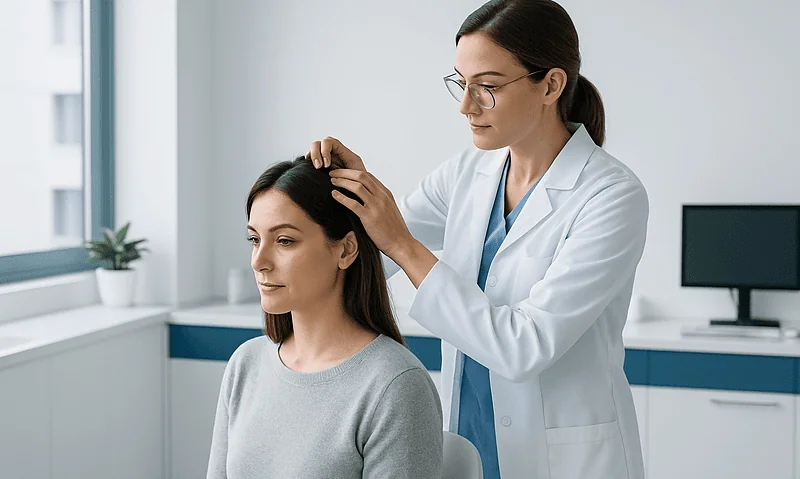
Why Channel Angle and Depth Shape How Natural a Sapphire Transplant Hairline Looks
Sapphire transplant results look natural mainly because of how each recipient channel is planned, not because of the blade material. A channel's angle fixes…