Sports and Exercise Rehabilitation
Sports and exercise rehabilitation is a supervised course of progressive exercise, manual therapy, and education used to restore movement, strength, and function after sports injuries, orthopedic surgery, or periods of inactivity. Delivered…
Quick answer
Sports and exercise rehabilitation is a supervised program of progressive exercise, hands-on therapy, and education that helps people recover from injuries, surgery, or lost fitness and return safely to activity. It is non-surgical, delivered mainly in outpatient sessions over weeks or months, and is considered low risk when preceded by a proper medical assessment.
What is sports and exercise rehabilitation?
Sports and exercise rehabilitation is a structured, supervised program of movement, strengthening, and education that helps a person recover from an injury or a period of reduced activity and return safely to sport, work, or everyday life. It is not a single operation or a drug. It is a course of care delivered over weeks or months by rehabilitation specialists, most often physical therapists (health professionals trained to restore movement and function), working alongside sports medicine doctors and physical medicine and rehabilitation physicians (doctors who specialize in non-surgical treatment of muscles, bones, nerves, and joints).
The approach is used for a wide range of musculoskeletal problems, meaning conditions that affect muscles, tendons, ligaments, bones, and joints. Common examples include:
- Sprains (stretched or torn ligaments, the bands that connect bones) and strains (stretched or torn muscles or tendons, the cords that attach muscle to bone)
- Recovery after orthopedic surgery, such as ligament reconstruction in the knee, rotator cuff repair in the shoulder, or joint replacement
- Overuse injuries such as tendinopathy (painful, irritated tendons), stress fractures (small cracks in bone from repeated load), and shin splints
- Back and neck pain related to training, posture, or a specific event
- Loss of fitness or strength after a long illness, hospital stay, or immobilization in a cast or brace
- Chronic conditions, such as arthritis or heart and lung disease, in which supervised exercise is used to improve function (this is sometimes called exercise therapy or exercise-based rehabilitation)
In many hospital groups this care is coordinated through a physical medicine and rehabilitation department. At Acibadem, for example, it is managed within the Physical Medicine & Rehabilitation unit, often in cooperation with orthopedic and sports medicine teams.
Who is a candidate: who needs sports and exercise rehabilitation
People often ask who needs sports and exercise rehabilitation. In general, a clinician may recommend it when pain, weakness, stiffness, or poor balance is limiting activity and the underlying cause has been identified. Typical candidates include:
- Athletes of any level, from recreational to professional, recovering from an acute injury
- Patients who have had bone, joint, tendon, or ligament surgery and need a guided return to function
- Active adults with recurring injuries that keep coming back despite rest
- Older adults who want to regain strength and balance after a fall or a period of inactivity
- People with long-term conditions in whom a doctor has judged that supervised exercise is safe and likely to help
Rehabilitation is not suitable in every situation, or it may need to be delayed. It is generally not appropriate, or requires medical clearance first, when:
- A fracture, dislocation, or complete tendon or ligament tear has not yet been assessed, because loading an unstable injury may make it worse
- There is an active infection in a joint or wound, or a surgical wound has not healed
- There are unexplained symptoms such as fever, unexplained weight loss, night pain, or numbness that need investigation before exercise begins
- A heart, lung, or blood-clotting problem is unstable and has not been reviewed by the treating physician
- The person is unable, for medical or cognitive reasons, to follow safety instructions during exercise
Your doctor or therapist will decide the right timing. In some cases a short period of protection, rest, or medical treatment comes first, and rehabilitation starts once the tissue is stable enough to be loaded safely.
How the sports and exercise rehabilitation procedure works
Although people sometimes search for a “sports and exercise rehabilitation procedure,” it is best understood as a staged process rather than a single event. The stages below are typical, though the details vary with the injury and the person.
Before: assessment. The first visit is usually an evaluation lasting longer than later sessions. The therapist or doctor takes a history of the injury and your goals, then examines range of motion (how far a joint moves), strength, flexibility, balance, and movement patterns such as walking, squatting, or jumping. Imaging such as X-rays or an MRI (magnetic resonance imaging, a detailed scan of soft tissue) may already have been done by the referring doctor; the rehabilitation team uses those results but usually does not repeat them. From this assessment, a written plan with measurable goals is agreed.
During: the phases of treatment. Most programs move through overlapping phases:
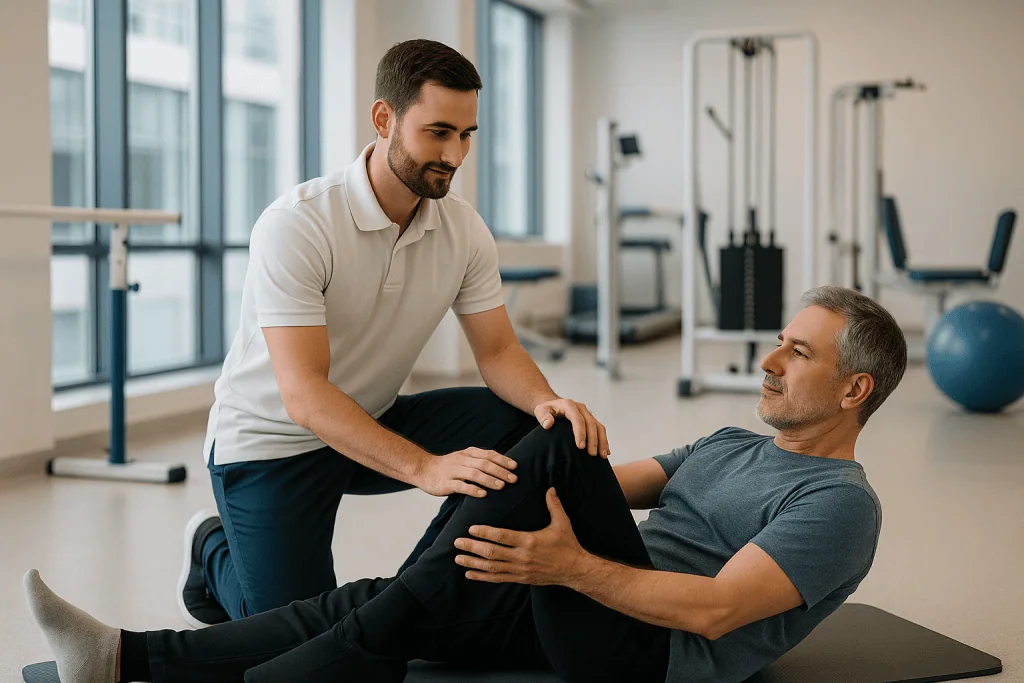
- Protection and pain control. Early on, the aim is to reduce swelling and pain while avoiding further damage. This may include gentle movement, ice or heat, taping or bracing, and manual therapy (hands-on techniques applied by the therapist). Some clinics use devices such as electrical stimulation or ultrasound; the evidence for these is mixed, and they are usually an add-on rather than the core of treatment.
- Restoring movement. Stretching and controlled range-of-motion exercises help the joint or muscle move normally again.
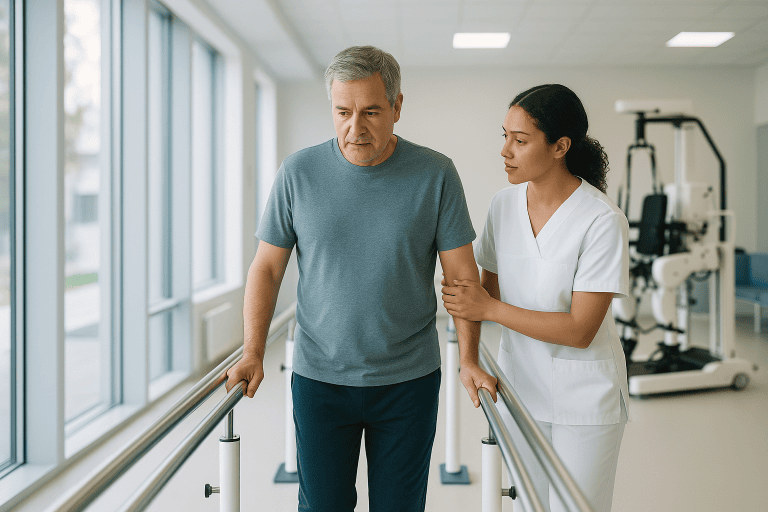
- Rebuilding strength and control. Progressive resistance exercise (gradually increasing load with weights, bands, or body weight) restores muscle strength. Balance and proprioception work, meaning training the body’s sense of joint position, is often added, especially after ankle and knee injuries.
- Sport- or task-specific training. Movements are made more demanding and closer to real activity, for example running drills, cutting and pivoting, throwing, or lifting techniques required at work.
- Return to activity. Before clearance, the team may use functional tests, such as hop tests or strength comparisons between the injured and uninjured side, to judge readiness. Return is usually gradual, with training volume increased step by step.
Sessions are typically held one to three times a week and last roughly 30 to 60 minutes. Between visits you will be given a home exercise program, which is a large part of the treatment.
After: discharge and maintenance. When goals are met, you are usually discharged with a maintenance plan. This often includes ongoing strengthening, warm-up routines, and advice on how to increase training load gradually to lower the chance of re-injury.
Preparation for sports and exercise rehabilitation
Preparation is straightforward but does make a difference to how smoothly the program runs.
- Bring your medical information. Take any imaging reports, operative notes, and a list of medications to the first visit. If you have had surgery, bring the surgeon’s post-operative instructions, because these often set limits on movement or weight-bearing in the early weeks.
- Wear suitable clothing. Loose or athletic clothing and supportive footwear allow the therapist to see and assess the injured area.
- Think about your goals. Be ready to describe what you want to return to: a specific sport, a job, or simply walking without pain. Goals shape the plan.
- Manage pain sensibly. Follow your doctor’s advice on pain relief. Taking a prescribed or over-the-counter pain reliever before a session may be reasonable, but check with your clinician first, as some medicines can mask warning signs.
- Plan your schedule. Consistency matters. Missing sessions or skipping home exercises is one of the most common reasons progress stalls.
- Eat and hydrate normally. Unlike surgery, there is no need to fast. Arriving well rested and hydrated helps you tolerate the exercise.
Recovery and aftercare: sports and exercise rehabilitation recovery time
Sports and exercise rehabilitation recovery time varies widely, because it depends on the tissue injured, the severity, whether surgery was involved, your age and general health, and how consistently the program is followed. The ranges below are general and are not a prediction for any individual.
- Mild sprains and strains often improve within a few weeks, with a return to full activity in many cases over several weeks.
- Moderate ligament or muscle injuries typically require several weeks to a few months of structured rehabilitation.
- Tendon problems can be slow to settle. Many patients need a few months of progressive loading, and patience is important because tendons adapt gradually.
- After major surgery, such as ligament reconstruction or joint replacement, programs commonly last many months, and a return to high-demand sport is often not advised until the surgeon and therapist agree that strength and control have recovered sufficiently.
During recovery, some muscle soreness after sessions is expected, especially when the load increases. Sharp pain, new swelling, or pain that lasts more than a day or two after exercise usually means the program needs adjusting, and you should tell your therapist. Progress is rarely a straight line; small setbacks are common and do not mean the treatment is failing.
Aftercare focuses on preventing re-injury. This typically means continuing key strengthening exercises after discharge, warming up properly, increasing training load gradually rather than suddenly, and addressing sleep, nutrition, and overall fitness. Some people benefit from a periodic review with a therapist, particularly before a new season or a change in sport.
Risks and side effects
Compared with surgery or medication, sports and exercise rehabilitation is considered low risk, but it is not risk-free. Weighing sports and exercise rehabilitation risks and benefits with your clinician is part of good care.
Possible side effects and risks include:
- Temporary soreness and stiffness. Muscle soreness for a day or two after a session is common and usually settles.
- Flare-up of symptoms. If exercise is progressed too quickly, pain or swelling can increase. This is generally reversible by adjusting the program.
- Re-injury or new injury. Any loading of healing tissue carries a small risk of aggravating it, and new strains can occur during more demanding drills. Supervision and gradual progression are intended to reduce this risk.
- Skin irritation from tape, braces, or electrode pads.
- Bruising or discomfort after manual therapy, which is usually mild.
- Falls during balance training, which is why such exercises are done with support at first.
- Cardiovascular events. Vigorous exercise carries a small risk of heart-related problems in people with underlying heart disease, which is why medical clearance is sought when there are risk factors.
A different kind of risk is delayed diagnosis. If an underlying problem such as a fracture, a serious tear, or a non-musculoskeletal cause of pain is missed, rehabilitation may not help and time may be lost. This is why a proper medical assessment before starting, and reassessment if you are not improving, is important.
Results and outlook
The broad body of clinical evidence supports supervised, progressive exercise as a core treatment for most common sports injuries and for recovery after orthopedic surgery. Reviews of the research generally find that active rehabilitation improves pain, strength, and function compared with rest alone, and that structured programs are associated with better return-to-activity outcomes and lower rates of some recurrent injuries, particularly ankle sprains and certain knee injuries.
Results are strongly influenced by factors you can affect: adherence to the home program, gradual rather than abrupt increases in load, and honest communication about symptoms. They are also affected by factors you cannot control, such as the severity of the original injury, age, and other health conditions. Exact success rates cannot be stated in general terms because they differ so much between conditions; your treating team can discuss what is realistic for your specific situation.
Some people do not achieve a full return to their previous level of sport, especially after severe injuries or major surgery. In these cases rehabilitation still aims to maximize function and comfort in daily life and to help identify safe alternative activities. Passive treatments such as ultrasound, electrical stimulation, or massage on their own have weaker evidence and are usually considered supportive rather than central.
Cost considerations
Sports and exercise rehabilitation is almost always delivered on an outpatient basis, so there is usually no hospital stay to pay for. The main drivers of overall cost are:
- Number and length of sessions. A program lasting several months naturally costs more than one lasting a few weeks.
- Level of supervision. One-to-one sessions with a therapist generally cost more than group classes or a largely home-based program with periodic reviews.
- Initial and follow-up medical visits with a sports medicine or rehabilitation physician.
- Imaging if scans are needed to confirm the diagnosis or check healing.
- Equipment and devices such as braces, orthotics (custom shoe inserts), resistance bands, or home exercise tools.
- Add-on modalities such as electrotherapy or specialized testing, which may be billed separately.
Insurance coverage for rehabilitation varies considerably by policy and by whether the treatment follows surgery. It is sensible to check with your insurer and the clinic’s administrative staff what is covered before starting.
Frequently asked questions
What is sports and exercise rehabilitation, in simple terms?
It is a guided program of exercises, hands-on treatment, and education designed to help you recover from an injury, surgery, or loss of fitness and return safely to activity. A therapist assesses your movement and strength, sets goals with you, and gradually increases the demands placed on the healing area until it can cope with the activities you want to do.
Who needs sports and exercise rehabilitation?
Anyone whose pain, weakness, or stiffness is limiting their activity may be a candidate, from professional athletes to people recovering from a fall or a hospital stay. It is most often recommended after sprains, strains, tendon problems, and orthopedic surgery. A doctor or therapist should confirm the diagnosis first, because some injuries need protection or medical treatment before exercise is safe.
What does the sports and exercise rehabilitation procedure involve at the first visit?
The first visit is mainly an assessment. You will be asked about your injury, health history, and goals, and the clinician will examine how the area moves, how strong it is, and how you perform everyday or sporting movements. You will usually leave with a written plan and a small number of starting exercises. The first session is typically longer than later ones.
How long is sports and exercise rehabilitation recovery time?
There is no single answer. Minor injuries often improve over a few weeks, moderate injuries typically need several weeks to a few months, and recovery after major surgery commonly takes many months. Your therapist can give an estimate based on your specific injury, but timelines are adjusted as healing progresses, and setbacks along the way are common.
What are the main sports and exercise rehabilitation risks and benefits?
The benefits generally include reduced pain, restored strength and movement, a safer return to activity, and a lower chance of the same injury recurring. Risks are usually minor and include temporary soreness, symptom flare-ups if progression is too fast, skin irritation from tape or braces, and a small risk of re-injury. Serious complications are uncommon, particularly when a medical assessment has been done first.
Can I do sports and exercise rehabilitation at home instead of at a clinic?
Home exercise is a central part of nearly every program, and some people with simple injuries do well with a home plan and occasional check-ins. However, an initial professional assessment is important to confirm the diagnosis and choose the right exercises, and periodic reviews help ensure the program is progressed safely. Self-directed programs without assessment carry a higher risk of doing the wrong exercises or missing a more serious problem.
When can I return to sport?
Return to sport is decided by function rather than the calendar. Your team will usually look for near-full range of motion, strength close to that of the uninjured side, good control during sport-specific movements, and little or no pain or swelling during and after activity. Returning too early is one of the most common reasons injuries recur, so a gradual, staged return is generally advised.
When to see a doctor
You should be assessed by a doctor or rehabilitation specialist rather than trying to manage on your own if:
- Pain from an injury is not improving after one to two weeks of rest and simple self-care
- You cannot bear weight on a leg, or a joint gives way, locks, or feels unstable
- There is obvious deformity, significant swelling, or a pop or snap was heard at the time of injury
- The same injury keeps recurring despite rest
- Pain wakes you at night or is present at rest, not only with activity
- You have numbness, tingling, or weakness in a limb
- You want to return to sport after surgery or a long break and are unsure how to do so safely
During or after a rehabilitation program, seek urgent medical attention if you notice any of the following red flags:
- Sudden, severe pain or a new inability to move or bear weight on the injured part
- A hot, red, rapidly swelling joint, or fever, which may indicate infection
- Calf pain, swelling, or warmth in one leg, especially after surgery or immobilization, which can be a sign of a blood clot (deep vein thrombosis)
- Chest pain, severe shortness of breath, fainting, or an irregular heartbeat during exercise
- Loss of bladder or bowel control, or numbness in the groin or inner thighs, with back pain, which needs emergency assessment
- Signs of a wound problem after surgery, such as discharge, opening of the incision, or spreading redness
Reporting these symptoms promptly allows your treating team to pause or adjust the program and to investigate any problem before it becomes more serious.
Preparation
- Bring imaging reports, surgical notes, and a medication list to the first visit, along with any post-operative instructions from your surgeon. Wear loose athletic clothing and supportive shoes so the injured area can be examined. Think about the specific activities you want to return to, and ask your doctor before taking pain relief prior to sessions. No fasting is needed.
Aftercare
- Expect mild soreness for a day or two after sessions, but report sharp pain, new swelling, or symptoms lasting longer than that so the program can be adjusted. Complete your home exercises consistently, as they are a major part of treatment. After discharge, continue key strengthening exercises, warm up before activity, and increase training load gradually to lower the risk of re-injury.
Medically reviewed by the Acıbadem International Medical Board September 13, 2026
See our medical review board →
Update history
- PublishedSeptember 13, 2026
- Medical review approvedSeptember 13, 2026
- Last content updateSeptember 13, 2026
References3
From the Acibadem Blog
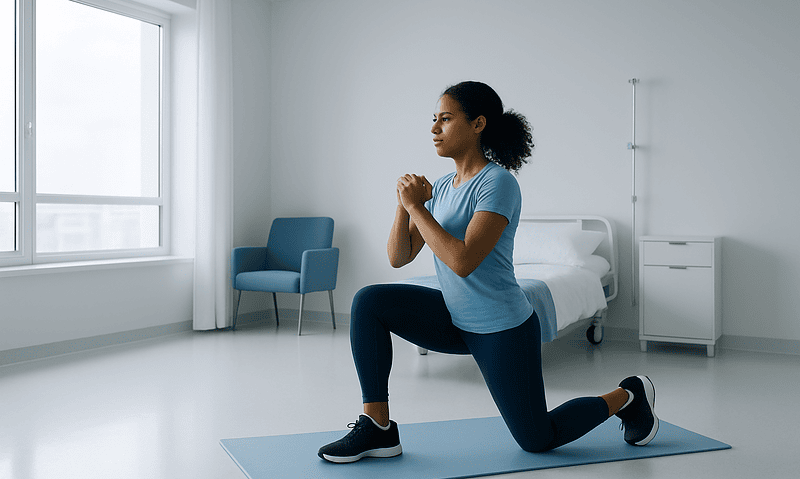
Sports and Exercise Rehabilitation for Weekend Athletes vs Competitive Players: What Changes
Sports rehabilitation for amateur athletes follows the same biology and the same staged plan as rehabilitation for competitive players: protect the tissue, restore motion,…
Doctors Performing This Treatment


Physical Medicine & Rehabilitation
Ataeollah Moghtasad Azar, Physiotherapist











Physical Medicine & Rehabilitation
Ceren Kandemir Gençsoylu, Physiotherapist

Physical Medicine & Rehabilitation