Transcranial Magnetic Stimulation (TMS)
Transcranial magnetic stimulation (TMS) is a non-invasive brain stimulation treatment in which an electromagnetic coil placed against the scalp delivers brief magnetic pulses to a targeted area of the brain. It is…

Quick answer
Transcranial magnetic stimulation (TMS) is a non-invasive outpatient treatment that uses magnetic pulses from a coil placed on the scalp to stimulate targeted brain areas. It is mainly used for depression that has not responded to medication, and for OCD. Sessions last roughly 20 to 40 minutes, need no anesthesia, and are usually given daily for several weeks.
What is transcranial magnetic stimulation (TMS)?
Transcranial magnetic stimulation (TMS) is a non-invasive brain stimulation treatment. Non-invasive means that nothing is placed inside the body and no incision is made. During a session, an electromagnetic coil rests against the scalp and delivers brief magnetic pulses. These pulses pass painlessly through the skull and create small electrical currents in a targeted area of the brain, which changes the activity of nerve cells (neurons) in that region. Over a course of treatment, this is thought to help restore more normal patterns of activity in brain circuits involved in mood and behavior.
The most common form is repetitive TMS (rTMS), in which pulses are delivered in short trains during daily sessions over several weeks. Newer protocols such as theta burst stimulation deliver pulses in a pattern that allows much shorter sessions, and deep TMS uses a differently shaped coil designed to reach slightly deeper brain tissue.
TMS is most widely used for major depressive disorder that has not responded adequately to antidepressant medication, often called treatment-resistant depression. Regulators in several countries have also approved TMS protocols for obsessive-compulsive disorder (OCD), for reducing cravings in people trying to stop smoking, and for migraine with aura using a hand-held single-pulse device. TMS is being studied for other conditions, including anxiety disorders, post-traumatic stress disorder, chronic pain, tinnitus (ringing in the ears) and rehabilitation after stroke, but for most of these uses it is still considered investigational rather than standard care.
TMS is different from electroconvulsive therapy (ECT). ECT deliberately triggers a brief seizure under general anesthesia; TMS does not, and the patient stays awake and alert throughout. In many hospitals, including Acibadem, TMS is managed by the Psychiatry & Psychology department.
Who needs transcranial magnetic stimulation? Candidates and when it is not suitable
Deciding who needs transcranial magnetic stimulation is a specialist judgment based on diagnosis, treatment history and safety screening. In general, a psychiatrist may consider TMS for adults who:
- Have a confirmed diagnosis of major depressive disorder and have not improved enough after one or more adequate trials of antidepressant medication, or could not tolerate the side effects.
- Have OCD that has not responded sufficiently to medication and cognitive behavioral therapy.
- Prefer a treatment that does not involve daily medication or anesthesia, after discussing the alternatives.
- Are able to attend frequent outpatient sessions, usually on most weekdays for several weeks.
TMS is usually not suitable, or requires special caution, in the following situations:
- Metal or electronic devices in or near the head that cannot be removed, such as cochlear implants, aneurysm clips or coils, stents in the neck or brain, implanted stimulators, deep brain stimulation electrodes, or metal fragments from injury. Magnetic pulses can heat or move these objects or disrupt their function. Dental fillings and braces are generally not a problem.
- A history of epilepsy or seizures, or conditions and medications that lower the seizure threshold. This does not always rule out TMS, but the risk must be weighed carefully.
- Recent serious head injury, brain surgery, brain tumor or stroke, which may change the way the brain responds to stimulation.
- Certain implanted devices elsewhere in the body, such as pacemakers or medication pumps, which need individual assessment.
- Pregnancy, where evidence is limited and the decision is made case by case.
TMS is also generally not a first-line option for someone with mild depression who has not yet tried standard treatments, and it is not designed to manage an acute crisis such as active suicidal intent, which requires urgent care.
How the transcranial magnetic stimulation procedure works
The transcranial magnetic stimulation procedure is performed as an outpatient treatment. You remain awake, no anesthesia is used, and you can usually return to normal activities immediately afterward.
Before the first session: A psychiatrist reviews your diagnosis, past treatments, medical history and any implants or metal in your body. You may be asked to complete mood questionnaires that will be repeated during treatment to track progress. Once you are cleared, a first mapping session is scheduled.
The mapping session: This is usually the longest visit. You sit in a reclining chair and are given earplugs, because the machine makes a loud clicking sound with each pulse. The clinician places the coil over the part of the brain that controls hand movement and delivers single pulses until your thumb or fingers twitch. The lowest pulse strength that produces this twitch is called your motor threshold. The treatment dose is set as a percentage of this threshold, so it is personalized to you. The clinician then measures and marks the treatment location, most often the left dorsolateral prefrontal cortex, an area at the front of the brain involved in mood regulation. Some centers use a cap, head positioning system or image-guided navigation to find the same spot each day.
During a treatment session: You sit comfortably while the coil is positioned against your scalp. The machine delivers pulses in short trains with pauses in between. Most people describe a tapping or knocking sensation on the head and sometimes a twitch of the face or jaw muscles. Standard rTMS sessions often last about 20 to 40 minutes; theta burst sessions can be considerably shorter, sometimes only a few minutes of stimulation. You can talk to the technician at any time, and the session can be paused if you are uncomfortable.
After the session: The coil is removed and you can leave right away. Because there is no sedation, most people drive themselves home or return to work or school.
The course of treatment: A typical course involves sessions on five days a week for roughly four to six weeks, followed in some protocols by a taper with fewer sessions per week. Your psychiatrist decides the exact number based on the protocol used and how you respond.
Preparation for transcranial magnetic stimulation
Preparation for TMS is straightforward compared with many hospital procedures, but a few steps help sessions go smoothly:
- Give your care team a complete list of medications, including any changes during treatment, because some medicines can affect seizure risk or the way the brain responds to stimulation.
- Report every implant, surgery, head injury, or episode of fainting or seizure, even if it seems unrelated.
- Continue your usual antidepressant or other prescribed medication unless your psychiatrist advises otherwise. TMS is often given alongside medication and psychotherapy rather than instead of them.
- Sleep as normally as possible the night before, and avoid alcohol and recreational drugs during the treatment course, since both can lower the seizure threshold.
- Arrive with clean, dry hair and no hair products, wigs or hairpins that would sit between the coil and your scalp. Remove earrings, glasses and hearing aids before the session.
- Eat normally; fasting is not required because no anesthesia is involved.
- Plan your schedule so you can attend most weekday appointments for several weeks. Missed sessions may reduce the benefit.
Recovery and aftercare: transcranial magnetic stimulation recovery time
Transcranial magnetic stimulation recovery time is minimal for most people. There is no wound, no sedation and no hospital stay, so the concept of recovery is closer to that of a physical therapy appointment than to surgery.
- Immediately after a session: Some people notice mild scalp tenderness, a headache or a feeling of lightheadedness that typically settles within an hour or two. Over-the-counter pain relievers, if your doctor approves them, are usually enough.
- During the first week: Scalp discomfort and headaches are most common early in the course and often become milder as the body adapts to the sensation.
- Over the treatment course: Mood changes, when they occur, tend to build gradually. Many patients notice the first improvements after two to three weeks of daily sessions, while others respond later in the course. A lack of change in the first week does not mean the treatment will not work.
- After the course ends: Your psychiatrist will usually reassess your symptoms and plan ongoing care. This often includes continuing medication and psychotherapy, and in some cases scheduled maintenance TMS sessions if symptoms begin to return.
Practical aftercare mostly involves keeping appointments, taking prescribed medication as directed, maintaining regular sleep, and reporting any new or worsening symptoms promptly. There are no activity, diet or driving restrictions in the usual case.
Transcranial magnetic stimulation risks and benefits
Weighing transcranial magnetic stimulation risks and benefits is a shared decision between you and your psychiatrist. The main benefits are that TMS is non-invasive, does not require anesthesia, does not cause the memory problems associated with ECT, and does not have the body-wide side effects of many medications, such as weight gain, sexual dysfunction or drowsiness. For people who have not improved with several medications, it offers an additional evidence-based option.
Common side effects are usually mild and short-lived:
- Scalp pain or discomfort at the treatment site during or after sessions.
- Headache.
- Tingling, spasms or twitching of facial muscles during stimulation.
- Lightheadedness or fatigue.
- Temporary hearing sensitivity if ear protection is not worn.
Uncommon or rare risks include:
- Seizure. This is the most serious known risk. It is rare when screening guidelines and safety limits are followed, but the risk is higher in people with epilepsy, brain injury, certain medications or heavy alcohol use.
- Hearing damage if earplugs are not used consistently, because of the loud clicking of the coil.
- Mania or hypomania (an abnormally elevated, energized or irritable mood) in people with bipolar disorder, which is why an accurate diagnosis matters before treatment.
- Fainting (syncope), which is generally brief and not dangerous but should be reported.
Long-term side effects have not been clearly identified in the years TMS has been in clinical use, but as with any relatively newer treatment, research continues. TMS also carries the practical burden of frequent visits, and it does not help everyone.
Results and outlook
Clinical trials and real-world studies generally show that a meaningful proportion of people with treatment-resistant depression experience a clinically significant improvement in symptoms with a full course of TMS, and some reach remission, meaning few or no remaining symptoms. Response rates vary between studies, protocols and patient groups, so your psychiatrist can give you a more individual sense of what to expect than any general figure. Results for OCD and smoking cessation are more modest and the evidence base is smaller.
Improvement is often gradual and may continue for a short time after the course ends. Benefits can last for many months, but depression is frequently a recurring condition, and some people relapse. Continuing medication or psychotherapy after TMS, and having a plan for repeat or maintenance sessions if symptoms return, are common strategies. People who responded to TMS once often respond again to a repeat course.
Factors that may influence outcome include how long the current episode has lasted, how many medications have already been tried, other medical or psychiatric conditions, and how consistently sessions are attended. TMS works best as part of a broader treatment plan rather than as a stand-alone cure.
Cost considerations
Because TMS is an outpatient treatment with no anesthesia, hospital admission or implanted device, its cost structure is different from that of surgery. The main drivers are:
- Number of sessions. A full course involves many visits, and each session carries a charge for equipment use and clinician time.
- Protocol and equipment. Deep TMS, image-guided navigation or accelerated protocols with several sessions per day may be priced differently from standard rTMS.
- Assessment and follow-up. Psychiatric evaluation, the mapping session, progress monitoring and post-treatment reviews are usually billed separately from the sessions themselves.
- Maintenance sessions. If repeat treatment is needed later, this adds to the overall cost.
Insurance coverage varies widely and often depends on a documented diagnosis and record of previous medication trials. Ask the treating department for a written estimate and check with your insurer before starting.
Frequently asked questions
Does transcranial magnetic stimulation hurt?
Most people do not describe TMS as painful, but the sensation takes some getting used to. It is commonly reported as firm tapping on the scalp, sometimes with twitching of the face or jaw. Discomfort is usually strongest in the first few sessions and often eases over the first week. The intensity can be adjusted if needed, so tell the technician if a session is uncomfortable.
How long does the transcranial magnetic stimulation procedure take?
A standard rTMS session often lasts about 20 to 40 minutes, while theta burst sessions can be much shorter. The first mapping visit is longer because it includes finding your motor threshold and treatment site. A complete course usually spans four to six weeks of near-daily sessions, sometimes followed by a taper.
What is the transcranial magnetic stimulation recovery time between sessions?
There is essentially no recovery period. You can drive, work, study and exercise immediately after a session. Mild headache or scalp tenderness may last an hour or two, especially early in the course, and simple pain relief is usually sufficient if your doctor agrees.
Who needs transcranial magnetic stimulation rather than medication?
TMS is generally considered for adults with depression or OCD who have not improved enough with medication and psychotherapy, or who could not tolerate medication side effects. It is not usually a first-line option, and it is often used together with ongoing medication and therapy rather than as a replacement. A psychiatrist is the appropriate specialist to assess whether it fits your situation.
What are the main transcranial magnetic stimulation risks and benefits I should weigh?
The benefits are that TMS is non-invasive, needs no anesthesia and avoids many medication side effects. The common risks are scalp discomfort and headache; the rare but serious risk is seizure, and people with bipolar disorder may have a small risk of mood switching. The practical trade-off is the time commitment of frequent visits, and the fact that not everyone responds.
Can I keep taking my antidepressant during TMS?
In most cases, yes. TMS is often given alongside existing medication, and stopping medication suddenly can be harmful. Do not change any dose without discussing it with your psychiatrist, who will also want to know about medications that could affect seizure risk.
Is TMS the same as electroconvulsive therapy?
No. ECT uses electrical current to trigger a controlled seizure under general anesthesia and can cause temporary memory problems. TMS uses magnetic pulses, does not cause a seizure when performed correctly, requires no anesthesia and has not been linked to memory loss. ECT remains an important option for very severe or life-threatening depression.
When to see a doctor
You should be assessed by a psychiatrist or your primary care doctor if you have symptoms of depression that persist for more than two weeks and interfere with daily life, such as persistent low mood, loss of interest, changes in sleep or appetite, poor concentration or feelings of worthlessness, especially if medication has not helped or has caused troublesome side effects. Intrusive, repetitive thoughts or rituals that consume significant time each day also warrant specialist evaluation. A specialist can determine whether TMS, a change in medication, psychotherapy or another approach is most appropriate.
Seek urgent medical help during or after TMS treatment if you experience any of the following:
- A seizure, loss of consciousness, or an episode of confusion or unresponsiveness.
- Sudden hearing loss or persistent ringing in the ears after a session.
- A severe or unusual headache that does not settle, or a headache with vision changes, weakness or difficulty speaking.
- A marked shift toward unusually elevated, agitated or impulsive behavior, decreased need for sleep or racing thoughts, which may indicate mania.
- New or worsening thoughts of self-harm or suicide, which require immediate emergency care regardless of any planned treatment.
Less urgent but still important to report at your next visit are worsening depression, side effects that do not improve over the first week, or any new medication started by another doctor.
Preparation
- Provide a full list of medications and report any implants, metal in the head, head injuries, or history of seizures. Continue prescribed medication unless your psychiatrist advises otherwise, and avoid alcohol and recreational drugs during the course. Arrive with clean, product-free hair, remove earrings, glasses and hearing aids, and plan your schedule for near-daily visits over several weeks. No fasting is needed.
Aftercare
- Most people return to normal activities immediately, including driving. Mild scalp tenderness or headache usually settles within an hour or two and may be eased with over-the-counter pain relief if your doctor approves. Attend all scheduled sessions and follow-up reviews, keep taking prescribed medication, and report any seizure-like episode, hearing change, severe headache, unusually elevated mood or thoughts of self-harm promptly.
Medically reviewed by the Acıbadem International Medical Board September 13, 2026
See our medical review board →
Update history
- PublishedSeptember 13, 2026
- Medical review approvedSeptember 13, 2026
- Last content updateSeptember 13, 2026
References2
From the Acibadem Blog

Who Is a Candidate for TMS? Why Implants, Metal in the Head and Seizure History Matter
TMS is usually considered for adults with depression that has not improved after standard treatment, and for a few other approved conditions. Candidacy depends…
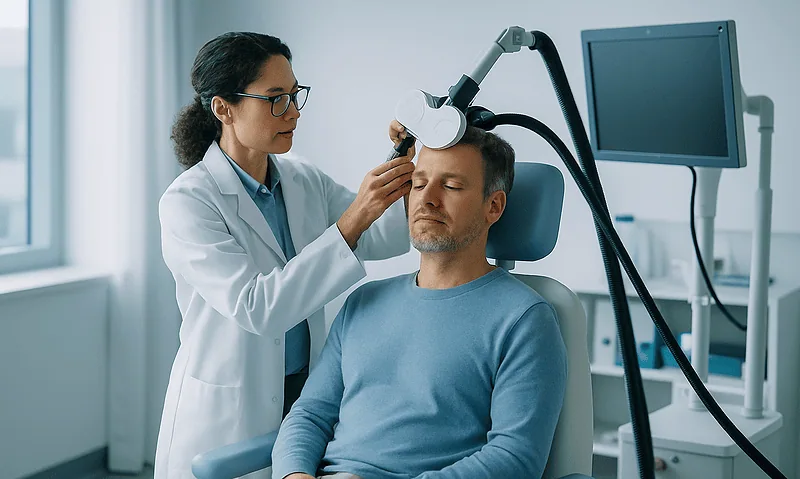
Preparing for Transcranial Magnetic Stimulation: Medication List, Implants and First Mapping
Preparing for TMS usually means three things: giving your care team a complete list of every prescription, over-the-counter medicine and supplement you take; disclosing…
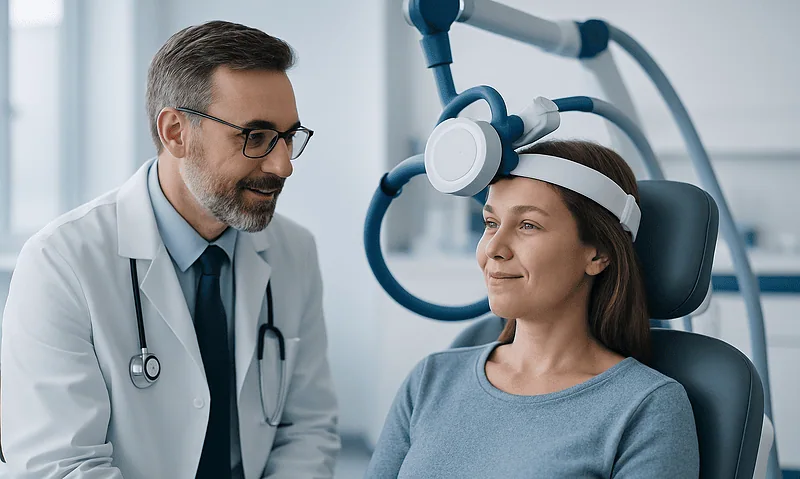
Does Transcranial Magnetic Stimulation Hurt? Scalp Tenderness, Headache and How Long They Last
Transcranial magnetic stimulation is usually described as uncomfortable rather than painful. Most people feel a firm tapping or pecking on the scalp during the…