Quick answer
Pancreatic cancer is a malignant tumor that starts in the tissues of the pancreas, often affecting digestion and blood sugar regulation and requiring prompt, specialized care. At Acibadem in Turkey, evaluation and treatment are planned by a multidisciplinary team and may include imaging, biopsy, surgery, chemotherapy, radiotherapy, and supportive care according to the cancer’s type and stage.
What is pancreatic cancer?
Pancreatic cancer is a disease in which abnormal cells grow out of control in the pancreas, a gland that sits deep in the upper abdomen, behind the stomach. The pancreas has two main jobs: it makes digestive enzymes (substances that help break down food) and it produces hormones such as insulin, which controls blood sugar. When cells in the pancreas develop changes in their genetic material and begin to multiply in an uncontrolled way, they can form a tumor, which is a lump of abnormal tissue. If that tumor is malignant (cancerous), it can invade nearby tissue and spread to other parts of the body.
Most pancreatic cancers begin in the ducts of the pancreas, the small tubes that carry digestive juices. This common type is called pancreatic ductal adenocarcinoma. A smaller group of tumors starts in the hormone-producing cells and is known as pancreatic neuroendocrine tumors. These two types often behave differently and may be treated differently, which is one reason an accurate diagnosis matters so much.
Pancreatic cancer becomes more common with age and most often affects people over 60, although it can occur earlier. It affects both men and women. Because the pancreas lies deep in the body, tumors often grow quietly for some time before they cause noticeable problems. This is why pancreatic cancer is frequently found at a later stage than many other cancers, and why paying attention to persistent symptoms is important.
Symptoms of pancreatic cancer
Pancreatic cancer symptoms are often vague at first and can be mistaken for more common, less serious digestive problems. In many cases there are few or no symptoms in the early stages. Symptoms tend to appear or become more obvious as the tumor grows or begins to press on nearby structures such as the bile duct (the tube that drains bile from the liver), the stomach, or nerves in the abdomen.
Common pancreatic cancer symptoms include:
- Jaundiceyellowing of the skin and the whites of the eyes, often with dark urine, pale or clay-colored stools, and itchy skin. Jaundice happens when a tumor blocks the bile duct.
- Pain in the upper abdomen or middle backoften a dull ache that may worsen after eating or when lying down.
- Unintended weight losslosing weight without trying, often together with loss of appetite.
- Nausea and vomitingespecially if the tumor presses on the stomach and slows the passage of food.
- Changes in stoolgreasy, pale, foul-smelling stools that float, which can happen when the pancreas no longer releases enough digestive enzymes.
- New-onset diabetes or worsening blood sugar controlthe pancreas makes insulin, so a tumor can disturb blood sugar regulation.
- Fatiguepersistent tiredness that does not improve with rest.
- Blood clotsin some people, an unexplained clot in a leg vein (deep vein thrombosis) can be an early sign.
Symptoms can vary depending on where the tumor sits in the pancreas. Tumors in the head of the pancreas are more likely to block the bile duct and cause jaundice relatively early, which sometimes leads to earlier detection. Tumors in the body or tail of the pancreas may grow for longer without obvious signs and often present with pain, weight loss, or back discomfort instead.
Symptoms also differ by tumor type. Pancreatic neuroendocrine tumors that produce hormones can cause symptoms related to those hormones, such as episodes of low blood sugar, flushing, or diarrhea, depending on which hormone is overproduced. Many neuroendocrine tumors, however, do not produce hormones and cause symptoms similar to other pancreatic tumors.
None of these symptoms proves that a person has pancreatic cancer, most people with abdominal pain or indigestion have a different, less serious cause. The key warning pattern is symptoms that are persistent, unexplained, or progressively worsening, particularly jaundice or unintended weight loss.
Causes and risk factors
Pancreatic cancer causes are not fully understood. Like most cancers, it develops when cells acquire changes (mutations) in their DNA that allow them to grow and divide abnormally. In most people, doctors cannot point to a single cause. However, research has identified several factors that increase the risk of developing the disease:
- Smokingtobacco use is one of the most important avoidable risk factors for pancreatic cancer.
- Older agethe risk rises with age, and most cases occur after age 60.
- Chronic pancreatitislong-standing inflammation of the pancreas, often related to heavy alcohol use, raises risk over time.
- Diabeteslong-standing type 2 diabetes is associated with a higher risk. Diabetes that appears suddenly in an older adult can occasionally be an early sign of the cancer itself.
- Obesitycarrying excess body weight is linked to increased risk.
- Family history and inherited gene changeshaving close relatives with pancreatic cancer, or inheriting certain gene mutations (for example, in the BRCA genes, which are also linked to breast and ovarian cancer, or genes involved in Lynch syndrome), raises risk. Only a minority of cases are clearly hereditary.
- Heavy alcohol usemainly through its role in causing chronic pancreatitis.
Having one or more risk factors does not mean a person will develop pancreatic cancer, and some people who develop it have no known risk factors. Quitting smoking, moderating alcohol intake, and maintaining a healthy weight are sensible steps that may lower risk, although no lifestyle change can eliminate it. People with a strong family history may be offered genetic counseling: a discussion with a specialist about inherited risk and, in selected cases, surveillance programs.
Diagnosis
Pancreatic cancer diagnosis usually involves several steps, because no single test can confirm the disease on its own. Doctors combine the patient’s story, a physical examination, blood tests, imaging, and usually a tissue sample.
Medical history and examination. The doctor asks about symptoms, weight changes, smoking, alcohol use, diabetes, and family history, and examines the abdomen and skin for signs such as jaundice or a mass.
Blood tests. These may include liver function tests (which can show a blocked bile duct), blood sugar levels, and tumor markers. The most commonly used marker is CA 19-9, a substance that is often elevated in pancreatic cancer. It is not reliable enough to diagnose cancer by itself, it can be raised in benign conditions and normal in some people with cancer, but it can help doctors monitor the disease over time.
Imaging tests. Imaging is central to diagnosis and staging (determining how far the cancer has spread):
- Contrast-enhanced CT scana detailed X-ray-based scan, often performed with a special pancreas protocol, is usually the main test for seeing the tumor and judging whether it involves nearby blood vessels.
- MRImagnetic resonance imaging can give additional detail of the pancreas, bile ducts, and liver.
- Endoscopic ultrasound (EUS)a thin, flexible tube with an ultrasound probe is passed through the mouth into the stomach, allowing very close views of the pancreas. Doctors can also take a tissue sample through the same instrument (fine-needle biopsy).
- ERCPendoscopic retrograde cholangiopancreatography, a procedure that examines the bile and pancreatic ducts and can be used to place a stent (a small tube) to relieve a blocked bile duct.
- PET scansometimes used to look for spread to distant parts of the body.
Biopsy. A biopsy means removing a small sample of tissue so a pathologist (a doctor who examines tissue under a microscope) can confirm whether cancer cells are present and identify the type. A biopsy is usually required before chemotherapy is given. In some situations where imaging strongly suggests a resectable tumor (one that can be removed surgically), surgeons may proceed to an operation without a prior biopsy, following established guidelines.
Staging. Once cancer is confirmed, doctors assign a stage based on the tumor’s size, whether it involves major blood vessels, whether lymph nodes are affected, and whether it has spread to distant organs such as the liver or lungs. Doctors often group tumors as resectable (removable by surgery), borderline resectable, locally advanced, or metastatic (spread to distant sites). Staging guides every subsequent treatment decision.
Treatment options
Pancreatic cancer treatment depends on the type of tumor, its stage, its location in the pancreas, and the patient’s overall health and preferences. Care is usually planned by a multidisciplinary team, surgeons, medical oncologists (cancer drug specialists), radiation oncologists, gastroenterologists, radiologists, and supportive care specialists working together. In hospital groups such as Acibadem, drug-based cancer care of this kind is coordinated through the medical oncology department, working alongside surgical and radiation teams. A general overview of how this condition is managed is also available on the pancreatic cancer treatment page.
The main treatment approaches are:
Surgery. Surgery offers the best chance of long-term control when the tumor can be completely removed, which is possible only in a minority of cases at diagnosis. The most common operation for tumors in the head of the pancreas is the Whipple procedure (pancreaticoduodenectomy), in which the head of the pancreas, the first part of the small intestine, the gallbladder, and part of the bile duct are removed and the digestive system is reconnected. Tumors in the body or tail may be treated with a distal pancreatectomy, often together with removal of the spleen. These are major operations with meaningful risks and a significant recovery period, and they are best performed in centers experienced in pancreatic surgery.
Chemotherapy. Chemotherapy uses drugs to kill or slow cancer cells throughout the body. It may be given before surgery (neoadjuvant therapy, to shrink the tumor and treat unseen spread), after surgery (adjuvant therapy, to reduce the chance of the cancer returning), or as the main treatment when surgery is not possible. Several drug combinations are in standard use; the choice depends on the person’s fitness and the tumor’s features.
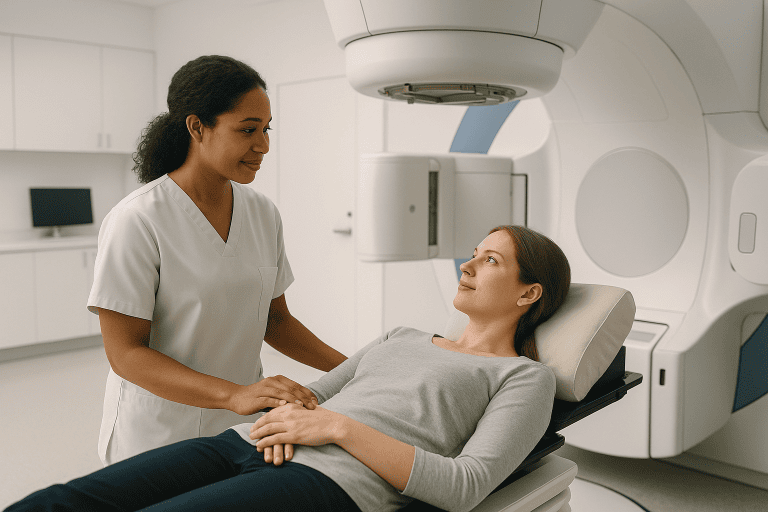
Radiation therapy. Radiation uses focused high-energy beams to damage cancer cells. It is sometimes combined with chemotherapy for locally advanced tumors, or used to relieve pain or other symptoms.
Targeted therapy and immunotherapy. A small proportion of pancreatic cancers carry specific gene changes, for example, BRCA mutations or certain DNA-repair abnormalities, that make them candidates for targeted drugs or immunotherapy. Doctors may test the tumor and, in some cases, the patient’s inherited genes to look for these features. These options apply only to selected patients.
Watchful waiting (active surveillance). For most pancreatic ductal adenocarcinomas, active treatment is recommended rather than observation. However, some small, slow-growing pancreatic neuroendocrine tumors, and some precancerous cysts of the pancreas, may be monitored with regular imaging instead of immediate surgery. Observation may also be appropriate when a person’s overall health makes aggressive treatment unsafe, with the focus shifted to comfort.
Symptom-relieving procedures and supportive (palliative) care. Regardless of stage, treating symptoms is a core part of care. This can include placing a stent to relieve a blocked bile duct or a narrowed part of the intestine, pancreatic enzyme replacement capsules to help digestion, treatment of diabetes, nutritional support, and specialist pain management, including nerve-block procedures in selected cases. Palliative care, care focused on quality of life, can be provided alongside active cancer treatment and is not limited to end-of-life situations.
Clinical trials. Because research into pancreatic cancer is ongoing, your doctor may discuss whether a clinical trial of a new treatment approach is appropriate for your situation.
Living with pancreatic cancer / outlook
An honest conversation about outlook is part of good care. Pancreatic cancer is, in general, a serious disease, and overall survival rates are lower than for many other cancers, largely because it is often found after it has already grown or spread. At the same time, outcomes vary widely between individuals. People whose tumors are found early and removed completely, and those with certain neuroendocrine tumors, often do considerably better than average statistics suggest. Your own outlook depends on the tumor type, its stage, how it responds to treatment, and your general health, only your treating team can discuss what the statistics may mean for you personally.
Day to day, living with pancreatic cancer often involves managing digestion and energy. Many people benefit from pancreatic enzyme capsules taken with meals, smaller and more frequent meals, and guidance from a dietitian. Blood sugar may need monitoring or treatment. Fatigue is common, and gentle, regular activity within your limits often helps. Emotional strain, anxiety, low mood, worry about the future, is a normal response to this diagnosis, and psychological support, counseling, or patient support groups can make a real difference for patients and families alike.
After treatment, follow-up usually includes regular visits, blood tests such as CA 19-9, and periodic imaging to watch for recurrence and to manage long-term effects of surgery or chemotherapy. Keeping your care team informed about new or changing symptoms between visits is an important part of follow-up.
Frequently asked questions
What is pancreatic cancer in simple terms?
Pancreatic cancer is a growth of abnormal, uncontrolled cells in the pancreas, the gland behind the stomach that makes digestive juices and insulin. Most cases start in the ducts of the pancreas. Because the gland sits deep in the abdomen, the disease often grows without clear symptoms at first, which is why it is frequently diagnosed at a later stage.
Can pancreatic cancer be cured?
In some cases, yes, particularly when the tumor is found early enough to be completely removed by surgery, usually followed by chemotherapy. However, many pancreatic cancers are found after they have spread, when treatment aims to control the disease, relieve symptoms, and extend life rather than cure it. No doctor can guarantee an outcome; what is realistic in your case depends on the type and stage of the tumor.
How serious is pancreatic cancer?
Pancreatic cancer is generally considered one of the more serious cancers because it is often detected late and can be difficult to treat. That said, seriousness varies considerably with the stage at diagnosis and the tumor type, neuroendocrine tumors, for example, often grow more slowly than the common ductal type. Your care team can explain what your specific findings mean.
What are the first warning signs of pancreatic cancer?
Early pancreatic cancer often causes no symptoms at all. When early signs do appear, they may include yellowing of the skin or eyes (jaundice), persistent upper abdominal or back pain, unexplained weight loss, loss of appetite, greasy pale stools, or diabetes that appears suddenly in later life. These symptoms have many other, more common causes, but if they persist they should be checked by a doctor.
How is pancreatic cancer diagnosed?
Doctors usually combine blood tests, a contrast-enhanced CT scan or MRI, and often an endoscopic ultrasound, during which a small tissue sample (biopsy) can be taken to confirm the diagnosis under a microscope. Further scans are then used to determine the stage, how far the cancer has grown or spread, which guides treatment planning.
What does recovery after pancreatic cancer surgery involve?
Operations such as the Whipple procedure are major surgery. A hospital stay of one to two weeks is common, and full recovery at home often takes several weeks to a few months. Many people need pancreatic enzyme capsules to help digestion afterward, and some develop or notice changes in diabetes. Chemotherapy is often recommended after recovery from surgery to reduce the risk of the cancer returning. Your surgical and oncology teams will set out a plan tailored to you.
Can lifestyle changes prevent pancreatic cancer?
There is no guaranteed way to prevent pancreatic cancer, but some steps may lower risk: not smoking (or quitting), limiting alcohol, maintaining a healthy weight, and managing diabetes well. People with a strong family history of pancreatic or related cancers may benefit from genetic counseling to discuss inherited risk and whether surveillance is appropriate.
When to see a doctor
See a doctor promptly if you have symptoms that are persistent, unexplained, or getting worse, especially if you are over 50 or have risk factors such as smoking, chronic pancreatitis, diabetes, or a family history of pancreatic cancer. In particular, seek medical attention without delay if you notice any of the following red-flag signs:
- Yellowing of the skin or eyes, dark urine, or pale, clay-colored stools
- Unintended weight loss or a marked loss of appetite
- Persistent pain in the upper abdomen or middle back that does not settle
- New diabetes appearing suddenly in adulthood, or previously stable blood sugar becoming hard to control
- Ongoing nausea, vomiting, or difficulty keeping food down
- Greasy, floating, foul-smelling stools that continue over weeks
- An unexplained blood clot, such as sudden swelling and pain in one leg
If you develop severe abdominal pain, repeated vomiting, signs of infection with jaundice (such as fever and chills), or sudden shortness of breath or chest pain, which can indicate a blood clot, seek emergency care immediately. Most people with these symptoms will not have pancreatic cancer, but timely evaluation gives doctors the best chance of finding the cause early, whatever it turns out to be.
Medically reviewed by the Acıbadem International Medical Board September 2, 2026
See our medical review board →
Update history
- PublishedJune 14, 2026
- Medical review approvedSeptember 2, 2026
- Last content updateSeptember 2, 2026