Femur: An Evidence-Based Guide for Patients
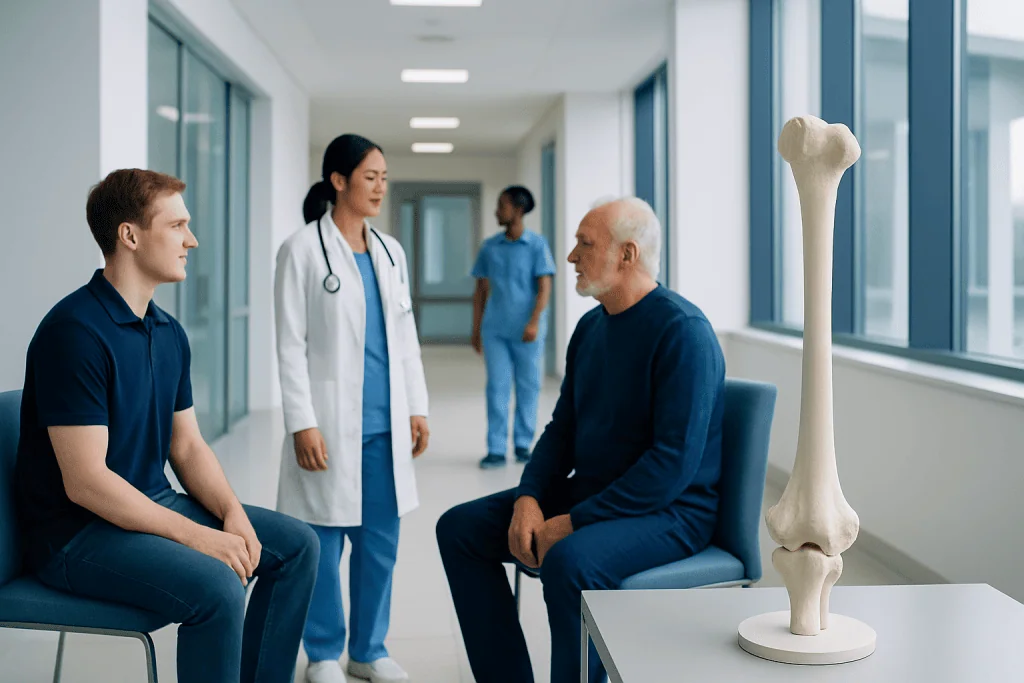
The femur is the main bone of the thigh and plays a central role in movement and weight-bearing. Femur problems include fractures, stress injuries, bone bruises, joint-related pain, and less commonly infections or tumors.
Key Takeaways
- The femur is the main bone of the thigh and plays a central role in movement and weight-bearing.
- Femur problems include fractures, stress injuries, bone bruises, joint-related pain, and less commonly infections or tumors.
- Sudden severe thigh pain, inability to bear weight, or a visibly deformed leg needs prompt medical care.
- Diagnosis may include a physical exam, X-rays, CT, or MRI depending on the suspected problem.
- Treatment ranges from rest and rehabilitation to surgery, depending on the cause and severity.
The femur is the thigh bone and the longest, strongest bone in the human body. It supports standing, walking, and hip and knee movement, but it can also be affected by fractures, overuse injuries, arthritis, and other conditions that may need medical evaluation.
Overview: what the femur is and why it matters
The femur is the thigh bone. It runs from the hip to the knee and is the body’s longest and strongest bone, helping the leg support body weight and generate power for standing, walking, climbing stairs, and many sports. Because it connects with both the hip joint and the knee joint, femur health affects movement across the entire lower limb.
The upper end of the femur fits into the hip socket, while the lower end forms part of the knee joint. Muscles of the hips and thighs attach along the femur, allowing the leg to bend, straighten, rotate, and absorb force. This is why a problem in the femur can cause pain not only in the thigh, but also around the hip, groin, or knee.
Many people search for “femur” when they are trying to understand anatomy, but also when there is pain, an injury, or concern about a fracture. A broken femur is a serious injury, usually caused by major trauma in younger adults or a fall in older adults with weaker bones. However, not all femur-related symptoms are due to fractures. Overuse, arthritis, tendon problems, bone stress injuries, and referred pain from nearby joints can also be involved.
Femur anatomy in simple terms
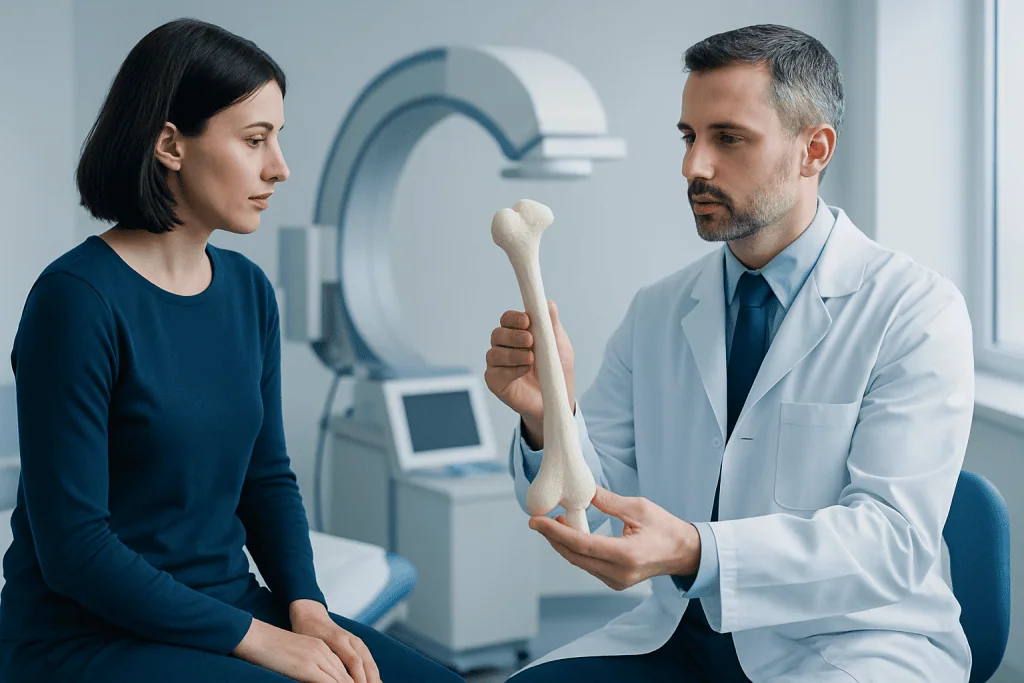
The femur has several important parts. The rounded head of the femur forms the ball of the hip joint. Just below it is the neck of the femur, an area that can be vulnerable to fracture, especially in older adults. The shaft is the long central portion of the bone, and the lower end widens to help form the knee joint.
Two bony areas near the upper femur, called the greater and lesser trochanters, serve as attachment points for muscles and tendons. These structures help stabilize the pelvis and move the leg. Pain around the outer hip or upper thigh can sometimes come from the soft tissues around these areas rather than from the bone itself.
Inside the femur is bone marrow, and like other bones, the femur is living tissue. It is constantly remodeled and repaired. Good bone strength depends on age, nutrition, hormones, activity level, and overall health. Conditions such as osteoporosis can weaken bone over time and raise the risk of fractures, including fractures involving the hip and upper femur.
Because the femur is closely linked to neighboring joints, a person with thigh pain may also need evaluation for problems such as knee arthritis or hip osteoarthritis when symptoms suggest joint disease rather than a direct bone injury.
Common femur problems and symptoms
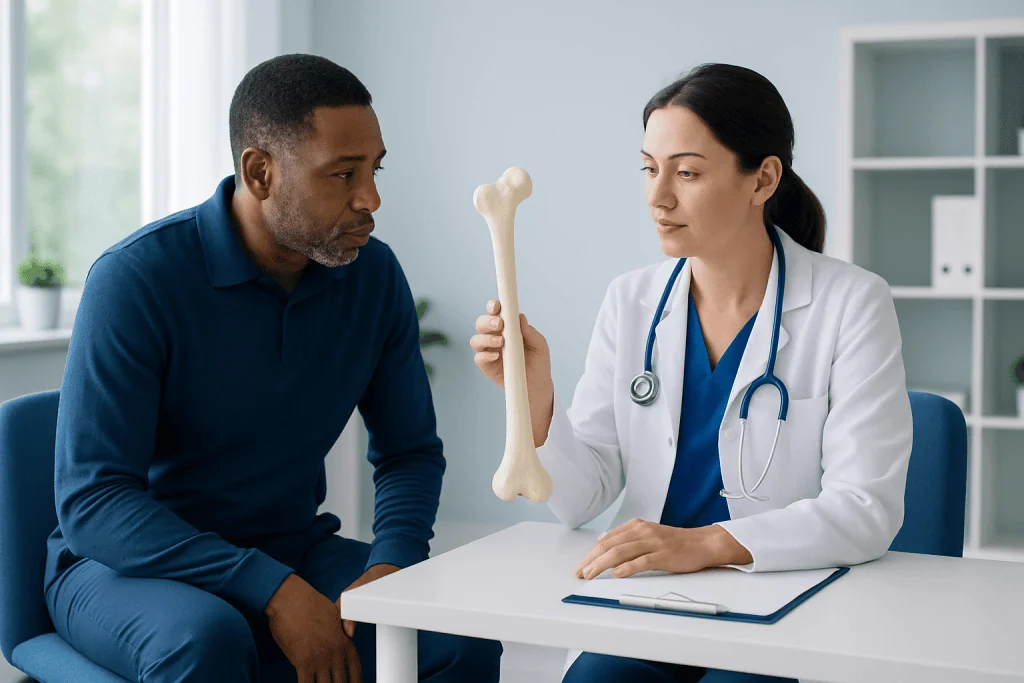
Femur-related symptoms vary depending on the cause. A fracture usually causes sudden severe pain, swelling, difficulty moving the leg, and inability to bear weight. In some cases, the leg may look shortened, rotated, or visibly deformed. This is an urgent medical situation.
Not all femur pain is sudden. Stress injuries can develop gradually in runners, military recruits, or people who suddenly increase activity. These may cause deep aching pain in the thigh or groin that worsens with exercise and improves with rest at first. If activity continues, pain can become more constant.
Other symptoms may point to nearby structures. Hip joint disorders can cause groin pain that radiates down the thigh, while knee joint conditions may create pain near the lower femur. Less common warning signs include unexplained night pain, fever, significant swelling, or pain that does not improve with routine care, which may need further investigation.
- Sudden severe thigh pain after a fall or accident
- Inability to stand or walk normally
- Swelling, bruising, or deformity of the thigh or hip
- Gradual pain with running or impact activity
- Pain in the groin, thigh, or knee linked to movement
- Persistent pain without a clear injury
Causes and risk factors
A femur fracture most often happens after high-energy trauma such as a car accident, sports injury, or fall from height. In older adults, especially those with osteoporosis, even a lower-impact fall can cause a fracture of the upper femur near the hip. Bone strength naturally changes with age, which is why the same injury can have different effects in different people.
Stress fractures are caused by repetitive loading rather than one sudden event. They are more likely in athletes, dancers, and people with training errors, poor nutrition, low bone density, or biomechanical imbalances. Some medications and medical conditions can also affect bone quality and healing.
Pain in the femur area may also come from osteoarthritis, tendon disorders, bursitis, referred pain from the lower back, or less commonly infection or bone tumors. A doctor considers the pattern of pain, age, injury history, and overall health when deciding what is most likely.
Important risk factors include older age, osteoporosis, falls, contact or high-speed trauma, repetitive impact exercise, smoking, low calcium or vitamin D intake, certain endocrine conditions, and previous fractures. In children, the causes and patterns of injury can differ, so age-specific assessment is important.
How doctors diagnose femur conditions
Diagnosis starts with a medical history and physical examination. The doctor asks when the pain began, whether there was an injury, where the pain is felt, and whether walking is possible. The leg is examined for tenderness, swelling, bruising, deformity, and range of motion at the hip and knee.
X-rays are usually the first imaging test for a suspected fracture. They can show many breaks clearly and help doctors plan treatment. If a fracture is complex or extends near a joint, CT may be used to give more detail. MRI is especially useful when symptoms suggest a stress fracture, bone marrow injury, or soft tissue problem that may not appear on an early X-ray.
Blood tests are not needed for every person, but they may be used if infection, inflammation, or metabolic bone disease is suspected. In some situations, bone density testing is recommended, particularly in older adults after a fragility fracture. If a patient has ongoing joint-related symptoms, imaging and specialist review may also assess the need for treatments such as knee replacement or hip replacement when advanced joint damage is the main issue rather than a femoral shaft problem.
Treatment options for femur injuries and pain
Treatment depends on the exact diagnosis. A broken femur often needs urgent stabilization and usually surgery, because this bone is essential for weight-bearing and alignment. Surgical care may involve rods, plates, screws, or joint-focused procedures depending on where the fracture is located and whether the hip or knee joint is involved.
Some stable or incomplete injuries may be managed without surgery, but this decision is made carefully by an orthopedic specialist. Non-surgical treatment may include restricted weight-bearing, crutches or a walker, pain control, and close follow-up imaging. Stress fractures often require rest from impact activity and a gradual return under medical guidance.
Physical therapy is an important part of recovery for many patients. Rehabilitation helps restore strength, flexibility, balance, and safe walking mechanics. When surgery is required for a fracture or for related joint disease, structured orthopedic rehabilitation can support recovery and function.
If pain comes from severe arthritis or damage around the hip, doctors may discuss options including medicines, physiotherapy, injections in selected cases, and in advanced cases procedures such as hip replacement. The treatment plan is individualized to the person’s age, bone health, activity level, and overall medical condition.
Prevention and self-care
Not every femur problem can be prevented, but many risks can be reduced. Protecting bone health is important at every age. Regular weight-bearing exercise, adequate intake of calcium and vitamin D, avoiding smoking, and limiting excess alcohol can all support stronger bones. People at risk for osteoporosis should discuss screening and prevention with their doctor.
Fall prevention is especially important for older adults. Good lighting, removing trip hazards, reviewing medications, and using supportive footwear can lower the chance of injury at home. Vision checks and balance-focused exercise may also help reduce falls.
For active people, gradual training progression matters. Sudden increases in running distance, jumping, or high-impact exercise can raise the risk of stress injury. Rest days, proper technique, muscle strengthening, and attention to persistent pain can help prevent small problems from becoming larger ones.
Self-care is useful for mild overuse symptoms, but severe pain or inability to bear weight should not be managed at home. Ice, short-term activity modification, and medical evaluation for persistent symptoms are sensible first steps. Patients should avoid returning to sport or heavy activity until a clinician confirms that healing is progressing safely.
When to seek medical care
Prompt medical care is needed for sudden severe thigh, hip, or knee pain after a fall, collision, or twisting injury, especially if the person cannot stand or walk. Immediate assessment is also important if the leg looks deformed, there is major swelling, or pain is intense and worsening. These signs can suggest a fracture or another urgent injury.
A doctor should also assess pain that persists for more than a few days, keeps returning with exercise, causes limping, or occurs at night. Fever, redness, unexplained weight loss, or pain without a clear cause should not be ignored, because they may point to less common but important conditions.
People recovering from a femur injury should seek review if pain suddenly increases, swelling worsens, mobility declines, or they develop new numbness, weakness, chest symptoms, or concerns about wound healing after surgery. Early follow-up can help prevent complications and support recovery.
At Acibadem International, multidisciplinary specialists in orthopedics, radiology, and rehabilitation at JCI-accredited hospitals evaluate and treat femur injuries and related bone and joint conditions for international patients.
Frequently asked questions
What is the femur?
The femur is the thigh bone. It connects the hip to the knee and is the longest and strongest bone in the human body.
Where is femur pain usually felt?
Femur-related pain may be felt in the thigh, groin, hip, or near the knee. The exact location depends on whether the problem involves the upper femur, shaft, lower femur, or a nearby joint.
Is a femur fracture serious?
Yes, a femur fracture is generally considered a serious injury because the femur is a major weight-bearing bone. It often needs urgent medical evaluation and, in many cases, surgical treatment.
Can someone walk with a femur fracture?
Many people cannot walk with a complete femur fracture because of severe pain and instability. Some smaller or stress-related fractures may still allow limited walking, but they still need prompt medical assessment.
How is a femur problem diagnosed?
Doctors diagnose femur problems using the patient’s history, a physical exam, and imaging tests. X-rays are commonly used first, while CT or MRI may be needed for more detail or for stress injuries that are not obvious on X-ray.
How long does a femur injury take to heal?
Healing time varies by age, overall health, and the type of injury. A simple stress injury may improve over weeks with rest, while a major fracture can require months of treatment and rehabilitation.
References
- American Academy of Orthopaedic Surgeons
- National Institute of Arthritis and Musculoskeletal and Skin Diseases
- MedlinePlus
- Mayo Clinic
- National Health Service
This article is for general information only and is not a substitute for professional medical advice. Please consult a qualified doctor about your individual situation.
Joint and spine care in Turkey — expert assessment & treatment
JCI-accredited · board-certified surgeons · reply within 24h
Add us as a Preferred Source to see more of our trusted health content across Google Search, AI Overviews and Discover.

More from the Health Library

Bat Wings: An Evidence-Based Guide for Patients

Peegasm: A Complete Medical Overview

Oximetry: An Evidence-Based Guide for Patients

Kale Benefits — Explained by Medical Evidence, Not Myths

Jasmine Rice: A Complete Medical Overview