Skin Tag: A Complete Medical Overview

A skin tag is usually a harmless, soft piece of extra skin attached by a small stalk. They often develop on the neck, armpits, eyelids, groin, and under the breasts where friction is common.
Key Takeaways
- A skin tag is usually a harmless, soft piece of extra skin attached by a small stalk.
- They often develop on the neck, armpits, eyelids, groin, and under the breasts where friction is common.
- Diagnosis is usually made with a simple skin examination, but unusual growths may need closer evaluation.
- Removal can be considered if a skin tag bleeds, rubs, twists, or causes discomfort or cosmetic concern.
- Sudden changes in color, size, shape, pain, or persistent bleeding should be assessed by a doctor.
A skin tag is a common, benign growth that usually appears in areas where skin rubs against skin or clothing. Most skin tags do not need treatment, but a doctor can confirm the diagnosis and discuss safe removal if it becomes irritated, changes, or causes cosmetic concern.
Overview: what a skin tag is
A skin tag is a small, soft, noncancerous growth that hangs from the skin. It is made of normal skin tissue, including collagen fibers, blood vessels, and a covering of skin cells. In medical terms, a skin tag may be called an acrochordon.
These growths are very common and often appear in adults. They usually develop in body folds or places where skin regularly rubs against skin, clothing, or jewelry. Common sites include the neck, armpits, eyelids, groin, and under the breasts.
A skin tag is typically harmless and does not turn into cancer. Many people leave them alone without any treatment. However, because some other skin conditions can look similar, a doctor should assess any new or changing skin growth, especially if it is dark, painful, or bleeds easily.
How skin tags look and feel
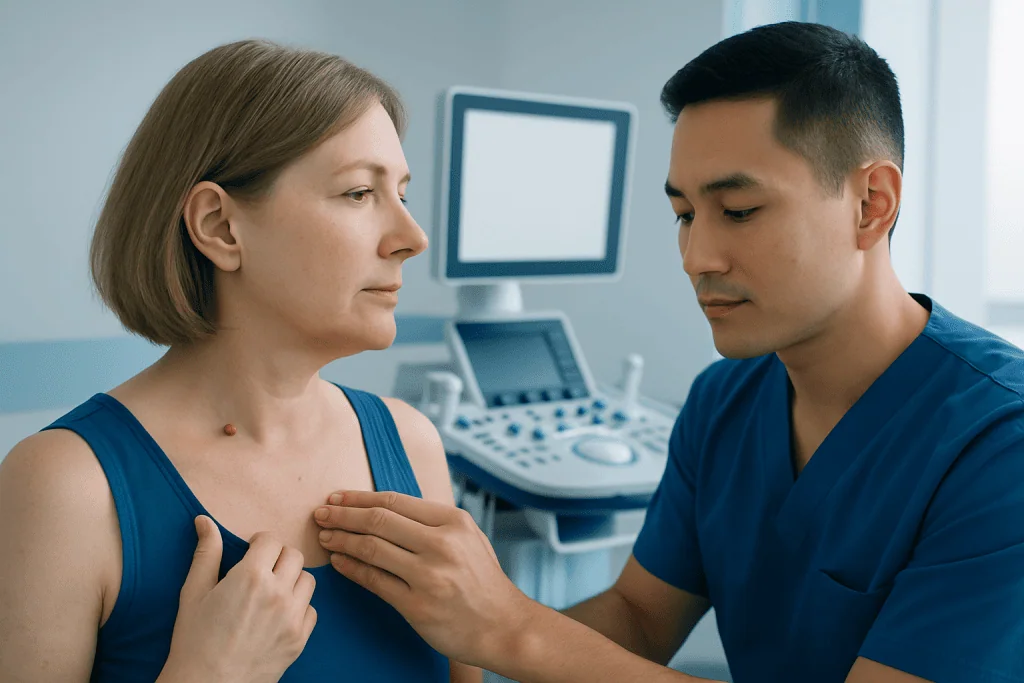
Skin tags are usually small, flesh-colored or slightly darker than the surrounding skin, and attached by a narrow stalk. They may be smooth or slightly wrinkled and can range from tiny bumps to larger soft growths. Most are only a few millimeters wide, though some can become larger over time.
In most cases, a skin tag causes no symptoms. People often notice it only because they can feel it during washing, shaving, or dressing. Some may become irritated if they catch on a razor, necklace, bra strap, or waistband.
When a skin tag twists on its stalk, its blood supply may be reduced. This can make it become red, purple, or black and may cause tenderness. Other harmless skin growths, such as moles or growths linked with warts, can sometimes be confused with skin tags, so visual similarity alone is not always enough for self-diagnosis.
Causes and risk factors

The exact cause of a skin tag is not fully understood, but friction appears to play an important role. This helps explain why they are more common in skin folds and in areas exposed to repeated rubbing. They are not caused by poor hygiene, and they are not usually contagious.
Several factors may make skin tags more likely. They are more common with increasing age, in people who have obesity, and during pregnancy. They may also be seen more often in people with insulin resistance or type 2 diabetes, although a skin tag itself does not confirm any underlying disease.
Family tendency can also matter, suggesting that genetics may contribute. Hormonal changes and local skin irritation may play a role as well. A doctor may consider the broader health picture if someone develops many new tags or has other signs of metabolic concerns.
- Skin-to-skin friction
- Clothing or jewelry rubbing
- Overweight or obesity
- Pregnancy-related hormonal changes
- Insulin resistance or diabetes
- Family history of similar growths
How doctors diagnose a skin tag
Diagnosis is usually straightforward. A doctor often identifies a skin tag by looking at it and checking its size, texture, color, and attachment to the skin. In many cases, no tests are needed.
If a growth has an unusual appearance, is deeply pigmented, has a broad base, grows quickly, or repeatedly bleeds, a closer examination may be recommended. In some cases, the doctor may remove the lesion and send it for laboratory review to confirm that it is benign.
This step is especially important when a growth could resemble another condition, such as a mole, wart, seborrheic keratosis, or another skin lesion. When there is any uncertainty, evaluation by a dermatologist can help guide the safest next step, including whether dermatology assessment and treatment is appropriate.
Treatment options and safe removal
Most skin tags do not need treatment unless they cause irritation, bleed, catch on clothing, or are cosmetically bothersome. If removal is desired, it is best done by a qualified clinician who can confirm the diagnosis and use a method suited to the tag’s location and size.
Common medical removal methods include snipping with sterile instruments, freezing with cryotherapy, or cauterizing with heat. The choice depends on the body area, whether the tag has a narrow stalk, and whether the person has sensitive skin or takes medicines that affect bleeding.
Home removal methods are generally not advised, especially for eyelid growths or lesions in the genital area. Cutting or tying off a growth at home can lead to bleeding, infection, scarring, or mistaken treatment of a lesion that is not a true skin tag. If cosmetic improvement is also a goal, a doctor may explain options that overlap with medical aesthetics or, in selected cases, plastic and reconstructive surgery for other types of skin concerns.
Self-care and prevention
There is no guaranteed way to prevent every skin tag, but reducing ongoing friction may help lower the chance of irritation and perhaps future formation in some areas. Gentle skin care and practical changes in clothing or accessories are often enough to improve comfort.
It may help to keep skin folds dry, choose breathable fabrics, and avoid jewelry or clothing that repeatedly rubs the same spot. Maintaining a healthy weight can reduce friction in body folds and may also support overall metabolic health. People with diabetes or insulin resistance benefit from regular medical follow-up for those conditions.
It is also wise not to pick, twist, or shave over a skin tag if possible. This reduces the risk of pain and bleeding. If a tag sits in a difficult area, such as the eyelid or groin, professional evaluation is safer than trying to manage it alone.
When to seek medical care
A skin tag can usually be mentioned during a routine appointment, but some situations deserve earlier medical attention. A doctor should evaluate any growth that appears suddenly, changes quickly, becomes painful, or does not clearly look like a typical skin tag.
Medical review is also important if a lesion bleeds without being injured, repeatedly catches and tears, becomes infected, or turns dark after a change in shape or size. Growths on the eyelids, genitals, or areas of chronic rubbing may need more careful management because the skin is delicate and complications are easier to cause.
For people seeking diagnosis or removal, Acibadem International’s multidisciplinary specialists in JCI-accredited hospitals evaluate skin lesions and provide treatment planning for international patients. A consultation can help distinguish a simple skin tag from other skin conditions and determine whether removal is necessary.
- Seek care if the growth is painful, rapidly changing, or bleeding often.
- Arrange an appointment if it interferes with vision, shaving, walking, or daily comfort.
- Ask for medical advice before attempting removal at home.
Frequently asked questions
Is a skin tag dangerous?
A skin tag is usually harmless and noncancerous. It does not typically cause health problems unless it becomes irritated, twisted, or repeatedly injured. Any unusual or changing growth should still be checked by a doctor.
What causes a skin tag to form?
Skin tags are thought to be linked mainly to friction in areas where skin rubs together or against clothing. They are also more common with age, obesity, pregnancy, and insulin resistance. In some people, family tendency may contribute.
Can a skin tag fall off on its own?
Yes, some skin tags may dry out and fall off, especially if their blood supply is reduced. However, this is not something to force at home. If a tag changes color or becomes painful, it is best to have it assessed.
Should a person remove a skin tag at home?
Home removal is generally not recommended. It can cause bleeding, infection, scarring, or accidental treatment of a different type of skin lesion. Removal is safest when a clinician first confirms that the growth is truly a skin tag.
Why do skin tags appear on the neck or armpits?
These are common sites because the skin experiences regular friction there. Necklaces, collars, shaving, and skin folds can all contribute to rubbing. The same reason explains why skin tags are also common in the groin and under the breasts.
Can a skin tag be a sign of diabetes?
A skin tag does not diagnose diabetes by itself. However, people with multiple skin tags may more often have insulin resistance or type 2 diabetes than those without them. A doctor may consider this along with other risk factors and symptoms.
References
- American Academy of Dermatology
- National Health Service
- Mayo Clinic
- MedlinePlus
- DermNet
This article is for general information only and is not a substitute for professional medical advice. Please consult a qualified doctor about your individual situation.
Explore treatments in Turkey — costs, top hospitals & a free quote
JCI-accredited · board-certified surgeons · reply within 24h
Add us as a Preferred Source to see more of our trusted health content across Google Search, AI Overviews and Discover.

More from the Health Library

Jammed: A Complete Medical Overview

Patella: An Evidence-Based Guide for Patients

Croup and Newborns: What Patients Need to Know

Resmetirom: What Patients Need to Know

Clammy: A Complete Medical Overview