Achilles Tendinitis: Symptoms, Causes, and Treatment Options

Achilles tendinitis usually develops from repeated strain rather than a single major injury. Pain and morning stiffness above the heel are common early signs.
Key Takeaways
- Achilles tendinitis usually develops from repeated strain rather than a single major injury.
- Pain and morning stiffness above the heel are common early signs.
- Treatment often includes reducing aggravating activity, stretching, strengthening, and addressing footwear or training errors.
- Ignoring ongoing tendon pain can increase the risk of longer-lasting symptoms or tendon injury.
- A medical evaluation is important if pain is severe, sudden, or does not improve with self-care.
Achilles tendinitis is a common overuse problem that affects the strong tendon connecting the calf muscles to the heel bone. It usually causes pain, stiffness, and tenderness above the heel, and most people improve with activity modification, supportive care, and a structured rehabilitation plan.
Overview
Achilles tendinitis is irritation and overload of the Achilles tendon, the thick cord that connects the calf muscles to the heel. It commonly causes pain, stiffness, and tenderness at the back of the ankle or slightly above the heel, especially during walking, running, climbing stairs, or after rest. In many cases, symptoms develop gradually over time rather than starting after one clear injury.
Although the term “tendinitis” suggests inflammation, many long-standing cases involve tendon degeneration and failed healing rather than inflammation alone. For that reason, clinicians may also use the term achilles tendinopathy. Both terms are often used in patient education because they describe a similar pattern of tendon pain related to overuse.
The condition is common in runners and active adults, but it can also affect people who are less active, especially if they suddenly increase exercise or spend long periods on their feet. Early attention matters. Addressing symptoms promptly can ease pain, improve function, and reduce the chance of more persistent tendon problems or a tear.
How the Achilles Tendon Becomes Irritated
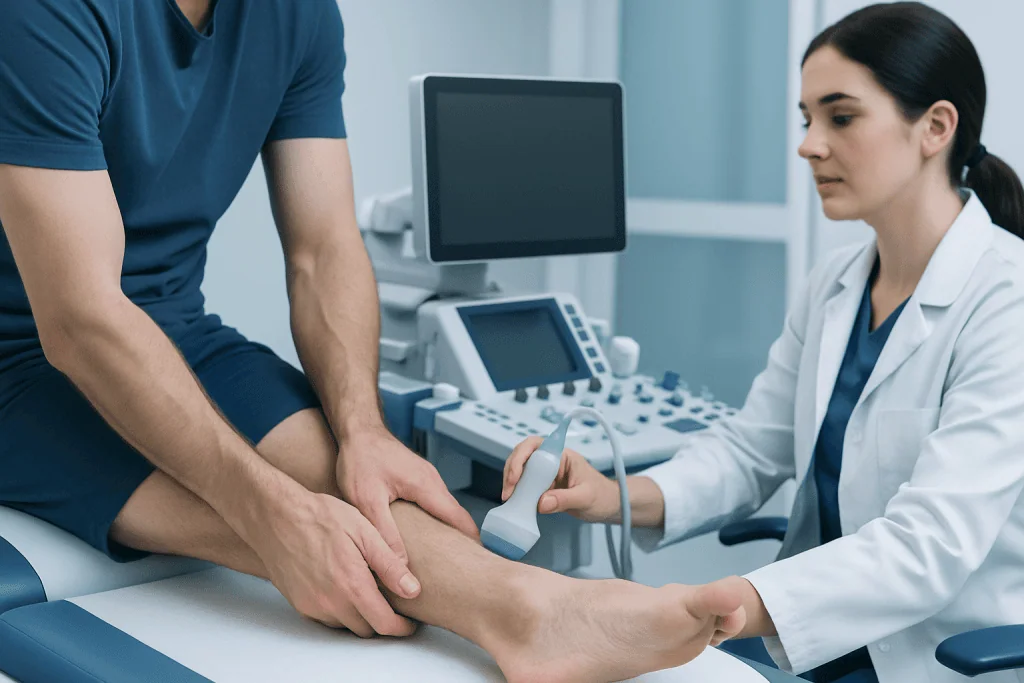
The Achilles tendon stores and releases energy with each step, jump, and push-off. This makes it essential for walking and sports, but it also means the tendon is exposed to very high forces. When those forces increase faster than the tendon can adapt, small areas of strain can build up and lead to pain.
Doctors often describe two broad patterns. Non-insertional Achilles tendinitis affects the middle portion of the tendon, a few centimeters above the heel, and is more common in younger or more active people. Insertional Achilles tendinitis affects the point where the tendon attaches to the heel bone and may be associated with bone spurs, stiffness, or discomfort from shoes pressing against the back of the heel.
This condition can overlap with other causes of heel and ankle pain, such as plantar fasciitis or bursitis near the heel. Because treatment can differ depending on the exact problem, persistent symptoms are best assessed by a qualified clinician.
Symptoms
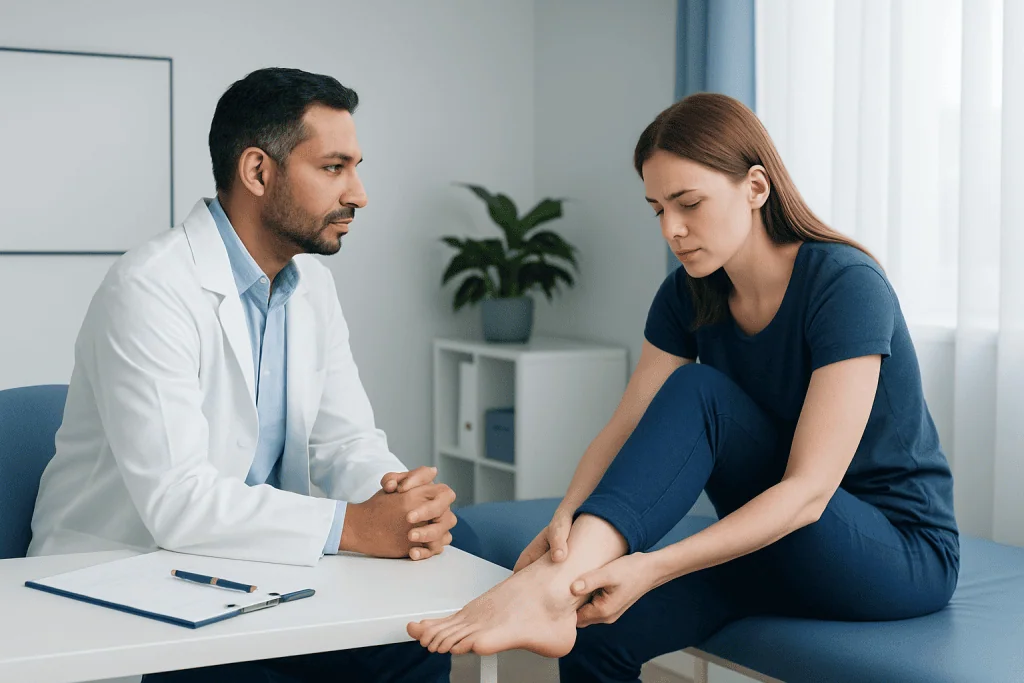
Achilles tendinitis usually causes pain along the back of the lower leg or just above the heel. The discomfort may start as a mild ache after exercise and become more noticeable over time. Some people feel stiffness first thing in the morning or after sitting for a while, with symptoms easing slightly once they begin moving.
Common symptoms include:
- Pain or burning at the back of the ankle or lower calf
- Morning stiffness in the tendon
- Tenderness when pressing on the tendon
- Mild swelling or thickening of the tendon
- Pain that worsens with running, jumping, climbing stairs, or uphill walking
- Reduced comfort when wearing shoes that rub the back of the heel
Symptoms can fluctuate. A person may feel better after warming up, then notice more pain later in the day or the next morning. If there is a sudden snap, marked weakness, or inability to push off the foot, this may suggest a more serious injury such as an Achilles tendon rupture, which needs urgent medical attention.
Causes and Risk Factors
Achilles tendinitis is most often caused by repeated loading of the tendon without enough recovery. A sudden increase in running distance, speed work, hill training, court sports, dancing, or high-impact exercise can all trigger symptoms. Starting a new activity after a period of low fitness is another common pattern.
Risk factors may include tight calf muscles, limited ankle flexibility, weak calf or hip muscles, poor training progression, worn-out or unsupportive footwear, and frequent exercise on hard or uneven surfaces. Some people develop symptoms because of foot mechanics, such as overpronation, while others are affected by jobs or routines that require prolonged standing and walking.
Age can also play a role because tendons become less adaptable over time. In addition, certain medical conditions and medications may affect tendon health. Anyone with diabetes, inflammatory joint disease, or recent use of medicines known to influence tendons should mention this during assessment. A full review can help identify contributing factors and guide effective care, sometimes with support from physical therapy and rehabilitation.
Diagnosis
Diagnosis begins with a medical history and physical examination. The clinician will ask when symptoms began, which activities make them worse, whether there was a sudden injury, and what the pain feels like. Examination often includes checking for swelling, tenderness, tendon thickening, calf tightness, range of motion, and pain during heel raises or pushing off the toes.
Imaging is not always needed at the start, especially when the symptoms and examination are typical. However, ultrasound or magnetic resonance imaging may be helpful if the diagnosis is uncertain, if symptoms are not improving, or if a partial tear is suspected. Imaging can show tendon thickening, small tears, degeneration, or inflammation around the tendon. In some cases, MRI helps distinguish Achilles tendon problems from other foot and ankle conditions.
The main goal of diagnosis is not only to confirm the tendon problem but also to understand why it developed. Identifying contributing issues such as training errors, muscle weakness, limited mobility, or insertional involvement helps shape the most appropriate treatment plan.
Treatment Options
Most cases of Achilles tendinitis improve without surgery. Initial treatment usually focuses on reducing tendon strain while keeping the person as active as safely possible. This may include temporarily cutting back on running, jumping, or uphill walking, using ice after activity, and choosing supportive shoes. Some people benefit from heel lifts or simple adjustments that reduce tension on the tendon during recovery.
Exercise-based rehabilitation is a central part of treatment. A clinician may recommend calf stretching in selected cases, but strengthening is especially important. Gradual loading programs, often including eccentric or heavy-slow resistance exercises, can help the tendon adapt and become more tolerant of activity. These programs should be individualized because insertional Achilles tendinitis may need a different approach from mid-portion tendon pain.
Short-term pain relief may involve over-the-counter anti-inflammatory medicine if suitable for the individual, but medicines alone do not correct the underlying tendon overload. If symptoms persist, other options may be considered after specialist review. In selected situations, clinicians may discuss PRP therapy or other interventions, though suitability varies and evidence is mixed depending on the case.
Surgery is usually reserved for symptoms that continue despite a well-supervised period of conservative treatment or when there is significant tendon damage. Surgical care may involve removing damaged tissue, addressing bone spurs, or repairing the tendon. When necessary, orthopedic surgery is planned after careful assessment of symptom severity, function, and imaging findings.
Self-care, Recovery, and Prevention
Recovery often takes time because tendons heal more slowly than muscle. It is common for improvement to happen gradually over weeks to months, especially if symptoms have been present for a long time. A steady, structured plan is usually more effective than repeated cycles of complete rest followed by a quick return to intense activity.
Helpful self-care steps include:
- Reducing or modifying activities that trigger pain
- Returning to exercise gradually rather than all at once
- Wearing supportive, well-fitted shoes
- Doing prescribed strengthening and mobility exercises consistently
- Warming up before exercise and increasing training load step by step
- Allowing rest and recovery between harder sessions
Prevention focuses on tendon load management. Runners and athletes can benefit from slow progression in distance, speed, and hill work. People returning to activity after illness, travel, or a sedentary period should start below their previous level and build up carefully. If symptoms recur, early review can prevent a mild flare from becoming a chronic problem.
Near the end of recovery, a clinician may guide a graded return to sport, including hopping, calf endurance work, and sport-specific drills. At Acibadem International, multidisciplinary specialists in JCI-accredited hospitals evaluate and treat Achilles tendon conditions for international patients when more advanced assessment or coordinated care is needed.
When to Seek Medical Care
Medical care is important if Achilles pain is getting worse, lasting more than a short period despite self-care, or interfering with walking, work, or exercise. Ongoing tendon pain should not be ignored, especially if it keeps returning whenever activity increases.
Urgent assessment is needed if there is a sudden pop or snap in the back of the ankle, immediate difficulty walking, marked swelling, bruising, or an inability to stand on tiptoe. These features can suggest a partial or complete tendon rupture. Prompt evaluation helps guide the safest treatment and recovery plan.
People with diabetes, inflammatory disease, circulation problems, or concerns about medication-related tendon effects should also seek professional advice early. A doctor can confirm the diagnosis, rule out other causes of heel pain, and recommend the most appropriate next steps.
Frequently asked questions
What is the difference between Achilles tendinitis and Achilles tendinopathy?
These terms are often used interchangeably in everyday care. Tendinitis suggests inflammation, while tendinopathy is a broader term that includes tendon overload, degeneration, and failed healing. In practice, both describe a painful Achilles tendon that needs proper load management and rehabilitation.
Can Achilles tendinitis heal on its own?
Mild cases may improve with rest from aggravating activity and better footwear, but symptoms often return if the underlying cause is not addressed. A structured strengthening and return-to-activity plan usually leads to more reliable recovery. Persistent pain should be assessed by a clinician.
Is it okay to walk with Achilles tendinitis?
Many people can continue gentle walking if it does not sharply increase pain. The goal is usually to reduce overload rather than stop all movement. If walking causes significant pain, limping, or worsening symptoms the next day, medical advice is recommended.
How long does recovery from Achilles tendinitis take?
Recovery time varies depending on how long symptoms have been present, the severity of tendon involvement, and how closely rehabilitation is followed. Some people improve within several weeks, while others need a few months or longer. Tendon recovery is often gradual rather than immediate.
What exercises help Achilles tendinitis?
Calf-strengthening exercises are a key part of treatment, often combined with mobility work and a gradual return to impact activity. The best exercise program depends on whether the problem is in the mid-portion of the tendon or at its insertion on the heel. Exercises should ideally be guided by a qualified professional.
When should someone worry about a torn Achilles tendon?
A sudden pop, sharp pain, rapid swelling, bruising, or difficulty pushing off the foot can suggest a rupture rather than simple tendinitis. Inability to stand on tiptoe is another warning sign. These symptoms need prompt medical assessment.
References
- American Academy of Orthopaedic Surgeons
- American Orthopaedic Foot & Ankle Society
- National Institute for Health and Care Excellence
- MedlinePlus
- Mayo Clinic
This article is for general information only and is not a substitute for professional medical advice. Please consult a qualified doctor about your individual situation.
Joint and spine care in Turkey — expert assessment & treatment
JCI-accredited · board-certified surgeons · reply within 24h
Add us as a Preferred Source to see more of our trusted health content across Google Search, AI Overviews and Discover.