Scalp Psoriasis: What Patients Need to Know

Scalp psoriasis is a chronic inflammatory condition, not an infection and not poor hygiene. Common signs include thick scale, itching, flaking, and patches that may extend beyond the hairline.
Key Takeaways
- Scalp psoriasis is a chronic inflammatory condition, not an infection and not poor hygiene.
- Common signs include thick scale, itching, flaking, and patches that may extend beyond the hairline.
- Treatment often includes medicated shampoos, topical medicines, and sometimes light therapy or systemic treatment.
- Scratching and forceful scale removal can worsen irritation and lead to bleeding or temporary hair shedding.
- A dermatologist can help confirm the diagnosis and tailor treatment when symptoms are severe, recurrent, or hard to control.
Scalp psoriasis is a long-term inflammatory skin condition that causes red, thickened areas and silvery scale on the scalp. It is not contagious, but it can be uncomfortable and persistent, and many people need a combination of self-care and medical treatment to keep symptoms under control.
Overview
Scalp psoriasis is a form of psoriasis that affects the scalp and sometimes the forehead, back of the neck, or skin around the ears. It happens when the immune system drives skin cells to grow and build up too quickly, leading to inflamed patches covered with thick, often silvery scale. The condition may be mild with fine flaking, or more extensive with dense plaques that are difficult to clear.
Patients often wonder whether scalp psoriasis is simply dandruff. While both can cause flaking, scalp psoriasis usually produces more clearly defined patches, thicker scale, and more inflammation. It can also extend beyond the hairline, which is less typical of ordinary dandruff or seborrheic dermatitis.
Scalp psoriasis is not contagious and does not mean the scalp is unclean. It is a chronic condition, which means symptoms may improve and worsen over time. Many people experience flare-ups triggered by stress, illness, weather changes, or skin irritation, but with the right care most can reduce symptoms and protect scalp comfort.
Symptoms and how it may look
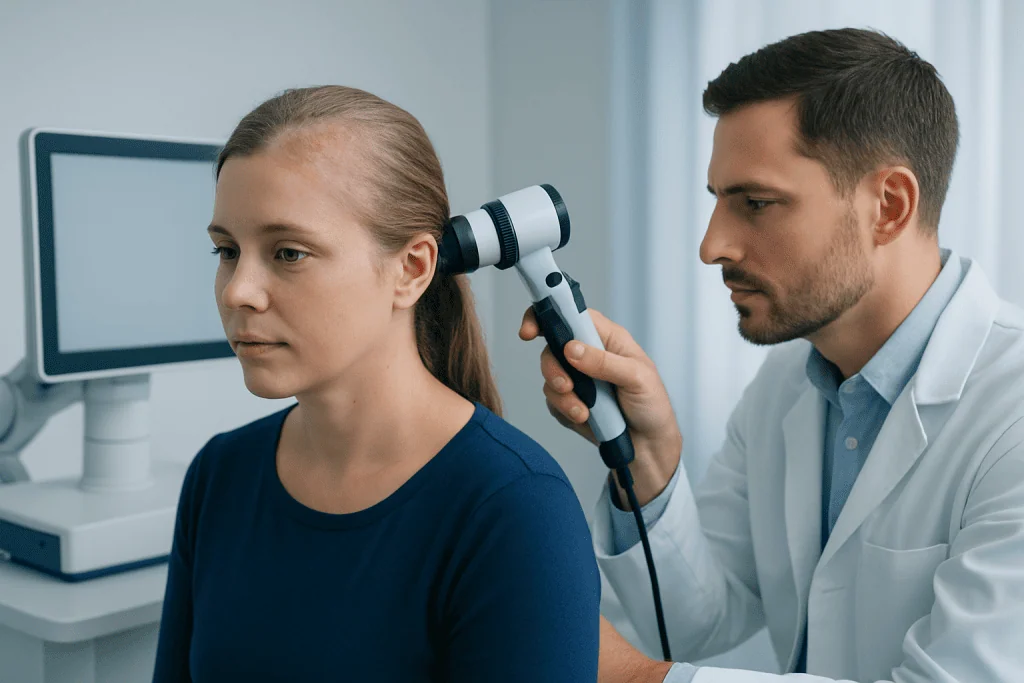
The appearance of scalp psoriasis varies from person to person. Some people have a few small scaly plaques, while others have larger areas of redness and thick scale covering much of the scalp. The scale may look white or silvery, and on darker skin tones the inflamed areas may appear violet, gray-brown, or deeper than the surrounding skin rather than bright red.
Common symptoms include itching, soreness, tightness of the scalp, flaking onto clothing, and occasional burning or stinging. Scratching can break the skin and cause pinpoint bleeding. In some cases, there may be temporary hair shedding, usually related to inflammation or vigorous scratching rather than permanent damage to the hair follicles.
Symptoms that may suggest scalp psoriasis include:
- Well-defined raised patches on the scalp
- Thick or adherent scale that does not wash away easily
- Plaques that extend onto the forehead, behind the ears, or the neck
- Itching that ranges from mild to intense
- Cracking, tenderness, or bleeding from irritated areas
Scalp psoriasis may occur on its own, but some people also have psoriasis on the elbows, knees, nails, or other parts of the body. Nail pitting, nail lifting, or joint stiffness may point to more widespread psoriasis and should be discussed with a doctor.
Causes, triggers, and risk factors
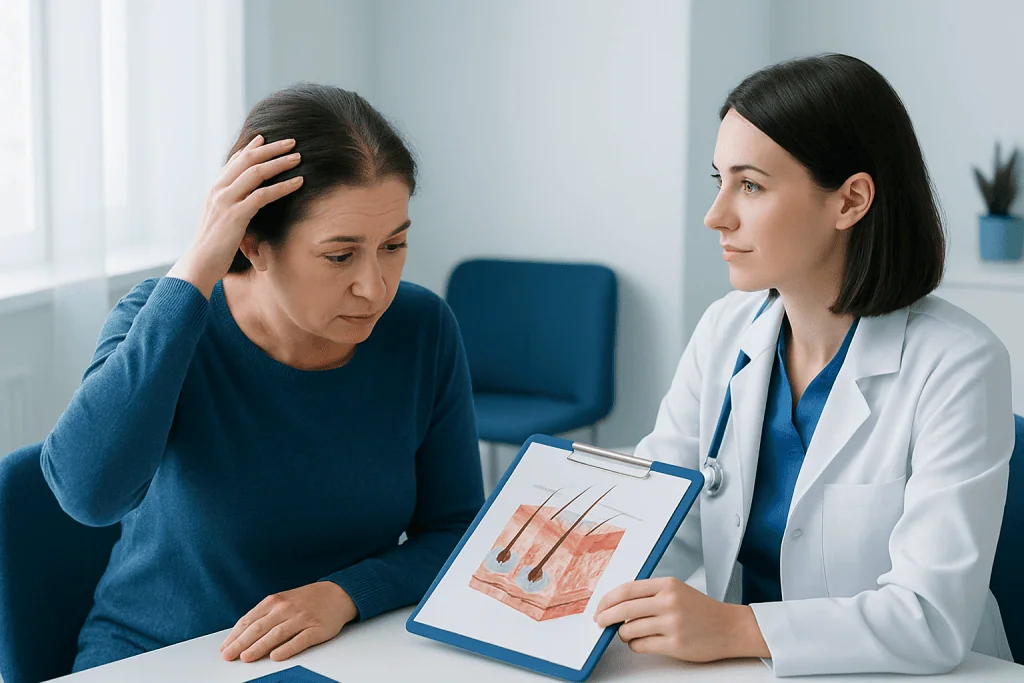
Scalp psoriasis develops because of an immune-mediated inflammatory process combined with genetic susceptibility. It is not caused by an allergy and cannot be passed from one person to another. The body produces skin cells faster than usual, but instead of shedding normally, these cells accumulate on the scalp and form plaques and scale.
Several triggers can worsen symptoms in people who are prone to psoriasis. Emotional stress is a common factor, and some patients notice flare-ups after infections, especially throat infections, or after skin injury from scratching, hair treatments, or harsh products. Cold, dry weather may also make the scalp more irritated and flaky.
Other factors that may contribute include smoking, heavy alcohol use, obesity, and certain medications in susceptible individuals. Not every patient has the same triggers, so it can be helpful to notice patterns over time. A symptom diary that tracks stress, products used, illness, and weather may help identify what tends to worsen the scalp.
Conditions can overlap as well. Some patients have features of both scalp psoriasis and seborrheic dermatitis, which can make diagnosis more challenging and influence treatment choices.
How scalp psoriasis is diagnosed
Diagnosis is usually based on a medical history and physical examination. A doctor, often a dermatologist, looks at the pattern of the lesions, the thickness of the scale, whether the plaques extend beyond the hairline, and whether there are signs of psoriasis elsewhere on the body. The distribution and appearance often provide enough information to make the diagnosis.
It is important to distinguish scalp psoriasis from dandruff, eczema, fungal infection, contact dermatitis, and seborrheic dermatitis because treatment can differ. In some cases, the doctor may ask about hair products, recent illness, joint symptoms, family history, or other skin changes such as nail pitting.
Most people do not need extensive testing. If the diagnosis is uncertain, a dermatologist may occasionally recommend a skin sample or other assessment to rule out other conditions. When scalp disease is severe, persistent, or associated with painful joints, the doctor may also evaluate for broader psoriasis involvement or psoriatic arthritis.
Treatment options
Treatment depends on how severe the scalp psoriasis is, how much of the scalp is involved, and how much it affects daily life. Mild cases may improve with medicated shampoos and scalp solutions, while thicker or more extensive plaques may need stronger prescription treatment. Because hair can make scalp treatment harder to apply, finding a practical routine is an important part of management.
Common first-line options include topical corticosteroids, vitamin D analogs, and keratolytic products that help soften and lift scale. Medicated shampoos may contain ingredients such as coal tar or salicylic acid. For many patients, a doctor may recommend psoriasis treatment that combines more than one topical approach, for example a scale-softening product followed by an anti-inflammatory scalp solution or foam.
If symptoms are more severe, resistant, or frequent, additional treatment may be considered. Some patients benefit from phototherapy for psoriasis in selected situations, while others may need oral or injectable medicines that target inflammation throughout the body. These decisions are individualized and are usually made when scalp disease is significantly affecting comfort, sleep, or quality of life.
When itching, redness, or flaking overlap with other scalp conditions, treatment may need adjustment. A dermatologist may also review hair care practices and advise on products that are less likely to irritate the scalp. In experienced centers, specialists can assess stubborn cases and, when appropriate, guide patients toward dermatology consultation for a tailored plan.
Self-care and prevention of flare-ups
Daily care can make treatment more effective and reduce irritation. Gentle washing with products recommended by a clinician can help remove loose scale without traumatizing the scalp. It is best to avoid picking at plaques or forcefully scraping off scale, because this can worsen inflammation, cause bleeding, and increase temporary hair shedding.
Patients may find it helpful to use scalp medicines exactly as directed and to allow enough time for treatment to work. Topical treatments often need regular use for several weeks before a clear improvement is seen. Hair dyes, straightening products, very hot hair tools, and heavily fragranced products can irritate some scalps, so a simpler routine is often better during a flare.
General health measures may also help reduce flare frequency. These include stress management, good sleep, avoiding smoking, limiting alcohol, and treating infections promptly. Keeping the scalp comfortable in cold, dry weather and protecting it from sunburn can also be useful.
Prevention is mainly about reducing triggers and staying consistent with care rather than permanently curing the condition. A doctor may suggest a maintenance plan once the scalp improves, especially for people who have frequent recurrences.
When to seek medical care
Medical care is important when scalp symptoms are severe, painful, spreading, or not improving with over-the-counter products. A person should also see a doctor if the diagnosis is unclear, if there is significant cracking or bleeding, or if itching is disturbing sleep and daily activities. Professional assessment helps confirm whether the problem is scalp psoriasis or another condition that needs different treatment.
Prompt care is also recommended if there are signs of infection such as increasing pain, warmth, pus, or fever, or if hair loss seems sudden or extensive. Joint pain, morning stiffness, or swelling in fingers and toes should be reported, as these symptoms can sometimes occur with psoriatic disease.
For patients needing specialist evaluation, a multidisciplinary team can be helpful, particularly when symptoms are persistent or associated with nail or joint problems. Acibadem International’s multidisciplinary specialists and JCI-accredited hospitals diagnose and treat this condition for international patients.
Frequently asked questions
Is scalp psoriasis the same as dandruff?
No. Both can cause flaking, but scalp psoriasis usually causes thicker scale, more visible inflammation, and well-defined patches that may extend beyond the hairline. Dandruff is often milder and is commonly linked to seborrheic dermatitis.
Can scalp psoriasis cause hair loss?
It can lead to temporary hair shedding, especially when the scalp is very inflamed or when scratching is frequent. Forceful removal of scale can also contribute. In most cases, hair grows back once the inflammation is controlled and the scalp heals.
Is scalp psoriasis contagious?
No, scalp psoriasis is not contagious. It cannot be spread by touch, shared combs, or close contact. It is an immune-mediated skin condition, not an infection.
What makes scalp psoriasis flare up?
Common triggers include stress, infections, cold or dry weather, scalp irritation, and sometimes certain medications in susceptible people. Not everyone has the same triggers. Tracking flare-ups can help identify personal patterns.
Do over-the-counter shampoos help scalp psoriasis?
They can help some people, especially products designed for psoriasis or heavy scale. However, thicker plaques or persistent symptoms often need prescription scalp treatments. A doctor can recommend the right combination based on severity and hair type.
Will scalp psoriasis go away permanently?
Scalp psoriasis is usually a long-term condition with periods of improvement and flare-up. Many people achieve good control, but symptoms can return over time. Ongoing self-care and a treatment plan from a clinician are often needed.
References
- American Academy of Dermatology
- National Institute of Arthritis and Musculoskeletal and Skin Diseases
- National Psoriasis Foundation
- Mayo Clinic
- National Health Service
This article is for general information only and is not a substitute for professional medical advice. Please consult a qualified doctor about your individual situation.
Psoriasis: in Turkey — costs, top hospitals & a free quote
JCI-accredited · board-certified surgeons · reply within 24h
Add us as a Preferred Source to see more of our trusted health content across Google Search, AI Overviews and Discover.

More from the Health Library

Ham Is Good for Health: What Patients Need to Know

Duodenal Switch: What Patients Need to Know

Green Tea Benefits — Explained by Medical Evidence, Not Myths

Iq Scale: An Evidence-Based Guide for Patients

Uterine Atony: An Evidence-Based Guide for Patients