Croup Symptoms Explained: Common Triggers and Red Flags

Typical croup symptoms are a barking cough, hoarse voice, and inspiratory stridor, especially at night. Most cases are caused by viruses and follow a few days of cold-like symptoms.
Key Takeaways
- Typical croup symptoms are a barking cough, hoarse voice, and inspiratory stridor, especially at night.
- Most cases are caused by viruses and follow a few days of cold-like symptoms.
- Mild croup often improves with calm reassurance, fluids, and medical guidance when needed.
- Breathing difficulty at rest, bluish lips, exhaustion, or drooling are red flags that need urgent evaluation.
- Croup is most common in young children because their airways are smaller and swell more easily.
Croup symptoms most often include a sudden barking cough, hoarseness, and a harsh, noisy sound when a child breathes in. It is commonly caused by a viral infection that irritates and narrows the upper airway, and while many cases are mild, some symptoms need prompt medical attention.
Overview: what croup symptoms usually look like
Croup symptoms are usually easy to recognize once the characteristic sound appears. The most common pattern is a child who has had a runny nose or mild fever, then develops a barking cough, a hoarse voice, and a high-pitched noisy sound when breathing in, called stridor. Symptoms often become more noticeable in the evening or during the night.
Croup happens when the voice box and windpipe become inflamed and swollen. Because young children have naturally narrow upper airways, even a small amount of swelling can make breathing sound loud or tight. This is why croup is seen most often in infants, toddlers, and preschool-age children.
In many children, croup is mild and improves over several days with supportive care and, when appropriate, medical treatment. However, the severity can change quickly, so it is important to pay attention not only to the cough itself but also to how hard the child is working to breathe, how alert they are, and whether they can drink fluids comfortably.
Common croup symptoms and how they may change
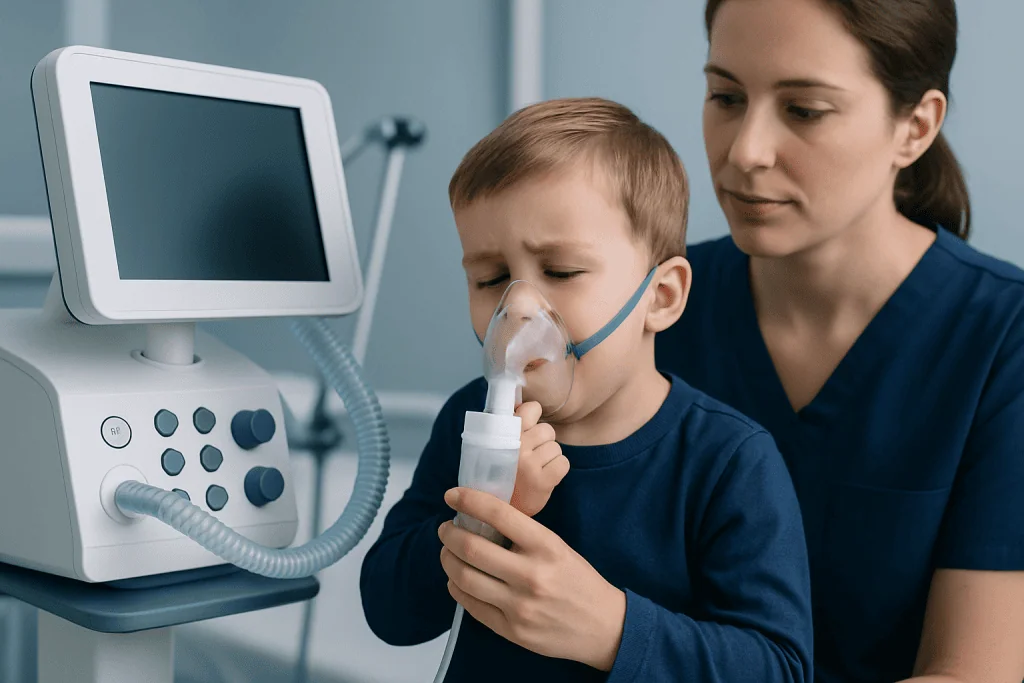
The hallmark of croup is a dry, seal-like barking cough. This cough is often accompanied by hoarseness because the vocal cords are inflamed. Another common symptom is stridor, a harsh or squeaky sound heard during inhalation. Some children have stridor only when crying or active, while others may have it even at rest, which is more concerning.
Croup symptoms often start after ordinary cold symptoms such as a blocked or runny nose, mild sore throat, and low-grade fever. Parents may notice that the child seems relatively comfortable during the day but worsens after bedtime. Nighttime worsening is common because airway inflammation can feel more pronounced when a child is lying down and the surrounding air is drier.
Other symptoms can include fast breathing, restlessness, trouble settling, and reduced interest in food. A child may sound hoarse when speaking or crying. If symptoms progress, there may be visible effort with breathing, such as the skin pulling in between the ribs or at the base of the neck. These signs matter more than the cough alone.
- Barking cough
- Hoarse voice or cry
- Stridor, especially when breathing in
- Runny nose and mild fever
- Symptoms that are often worse at night
- Breathing effort or chest retractions in more severe cases
Common triggers and risk factors

The most common trigger for croup is a viral infection. Parainfluenza viruses are classic causes, but influenza, respiratory syncytial virus, adenovirus, and other respiratory viruses can also lead to croup symptoms. In this setting, croup is not a separate illness from the cold-like infection; it is the way the upper airway responds to that infection.
Age is one of the main risk factors. Children between about 6 months and 3 years are affected most often, though older children can develop it too. Their smaller airway diameter means swelling has a greater effect on airflow. Some children may be more prone to repeated episodes, especially if they have sensitive airways or a history of recurrent respiratory infections.
Symptoms can sometimes be confused with other conditions. For example, wheezing from lower airway problems such as asthma usually sounds different from stridor and is more often heard when breathing out. Allergic reactions, foreign body aspiration, bacterial infections, and anatomical airway problems can also mimic croup, which is why the overall pattern of symptoms is important.
What doctors look for during diagnosis
Croup is usually diagnosed clinically, meaning the diagnosis is based mainly on symptoms and physical examination rather than tests. A doctor will listen to the child’s breathing, assess the sound of the cough, check the level of alertness, and watch for signs of increased work of breathing. They will also ask when symptoms began and whether there were cold symptoms beforehand.
One of the main goals of evaluation is to judge severity. Mild croup may involve barking cough and hoarseness with little or no stridor at rest. Moderate to severe croup is more likely to include persistent stridor at rest, chest retractions, agitation, tiredness, or reduced oxygen levels. This severity assessment helps guide whether treatment is needed at home, in clinic, or in an emergency setting.
Tests are not usually necessary in straightforward cases. Imaging or laboratory studies may be considered if the presentation is unusual or if another condition is suspected, such as epiglottitis, bacterial tracheitis, or inhalation of a foreign object. In children with repeated or atypical episodes, specialists may sometimes evaluate the airway in more detail through bronchoscopy or related ENT assessment.
Treatment options and symptom relief
Treatment depends on how severe the croup symptoms are. Mild cases may only need supportive care, close observation, and advice from a healthcare professional. Keeping the child calm is important because crying can worsen stridor by increasing airflow turbulence through the narrowed airway. Offering fluids in small amounts can help prevent dehydration.
When symptoms are more than mild, doctors often use corticosteroid medication to reduce airway swelling. In more significant cases, nebulized medication may be given to quickly improve breathing while the child is monitored. If the illness is triggered by influenza or another specific infection, treatment may also address that underlying cause, but antibiotics are not useful for typical viral croup.
Hospital care may be needed if a child has ongoing breathing difficulty, poor oxygenation, exhaustion, or trouble drinking. Evaluation by pediatric ENT specialists can be helpful when symptoms are severe, recurrent, or not following the usual pattern. In selected cases, especially if another respiratory disorder is being considered, doctors may also assess for related conditions affecting the airway and lungs, including pediatric pulmonology input.
Home care, prevention, and practical self-care steps
At home, the priority is to keep the child comfortable and observe breathing closely. Calm cuddling, upright positioning, and regular sips of water or other age-appropriate fluids may help. Fever can be managed according to a clinician’s advice using standard child-safe options. Caregivers should avoid smoke exposure, as it can worsen airway irritation.
It is best to be cautious with unproven remedies. Steam, mist, and cold air are commonly discussed, but evidence for a reliable benefit is limited, and they should never delay medical assessment if the child seems to be struggling to breathe. Over-the-counter cough medicines are generally not recommended for young children unless a doctor specifically advises them.
Prevention focuses on reducing viral spread. Frequent handwashing, cleaning commonly touched surfaces, teaching children to cover coughs, and keeping sick children home from nursery or school when appropriate can all help. Routine vaccination also matters, because some infections that can mimic or complicate croup are vaccine-preventable. If a child has repeated episodes or symptoms between illnesses, doctors may look for another explanation such as reflux, allergy, or an underlying airway problem.
When to seek medical care
Many parents mainly want to know when croup symptoms are still within the expected mild range and when they need medical attention. A child should be assessed promptly if they have stridor at rest, seem to be working hard to breathe, are breathing very fast, or cannot speak, cry, or drink normally because of breathing difficulty. Medical review is also important if symptoms start in a very young infant or if there is concern for dehydration.
Emergency care is needed if the child looks blue or gray around the lips, becomes unusually sleepy or difficult to wake, appears exhausted, drools and cannot swallow, or has severe chest retractions. Sudden symptoms without cold symptoms, especially after choking, also need urgent evaluation because this may suggest a foreign body rather than croup.
If a child’s diagnosis is uncertain, or if there are repeated episodes that do not behave like typical viral croup, specialist review may be recommended. Acibadem International’s multidisciplinary specialists and JCI-accredited hospitals evaluate and treat children with airway and respiratory conditions for international patients, including related ENT concerns such as tonsillitis when relevant to the broader assessment.
Frequently asked questions
What are the first signs of croup?
The first signs are often the same as a common cold, such as a runny nose, mild fever, and slight irritability. After this, a barking cough and hoarse voice may develop, often becoming more obvious at night.
How can someone tell croup apart from a regular cough?
Croup usually has a distinctive barking sound and may cause stridor, a harsh noise when breathing in. A regular cough from a common cold does not usually cause hoarseness and noisy inhalation in the same way.
Is croup always serious?
No, many cases are mild and improve with supportive care and, when needed, standard medical treatment. It becomes more concerning when there is breathing difficulty at rest, poor drinking, exhaustion, or color change around the lips.
Why do croup symptoms often get worse at night?
Nighttime worsening is common and may relate to changes in airway irritation, body position, and the way children respond to swelling when they are sleepy or upset. Even so, if symptoms seem clearly worse overnight, the child's breathing should be watched closely.
Can adults get croup symptoms?
Croup is much more common in young children because their upper airways are smaller. Adults can have hoarseness and upper airway inflammation from infections, but the classic barking cough and stridor pattern is less common.
When should parents go to the emergency room for croup?
Emergency care is needed if the child is struggling to breathe, has stridor at rest that is getting worse, looks blue around the lips, seems very sleepy, or cannot swallow normally. Parents should also seek urgent help if symptoms began suddenly after a choking episode.
References
- American Academy of Pediatrics
- Centers for Disease Control and Prevention
- National Institute for Health and Care Excellence
- Mayo Clinic
- Merck Manual Professional Edition
This article is for general information only and is not a substitute for professional medical advice. Please consult a qualified doctor about your individual situation.
Explore treatments in Turkey — costs, top hospitals & a free quote
JCI-accredited · board-certified surgeons · reply within 24h
Add us as a Preferred Source to see more of our trusted health content across Google Search, AI Overviews and Discover.

More from the Health Library



Related Specialists

Assoc. Prof. Dr. Emre Karabay
Urology
Dr. Parvana Mikailova
Clinical Laboratory
Dr. Mustafa Candan
Pediatric Surgery
Assoc. Prof. Dr. Ahmet Küçükçelebi
Aesthetic Plastic & Reconstructive Surgery