Male G Spot — Explained by Medical Evidence, Not Myths

The term male g spot is not a formal medical diagnosis; it commonly refers to the prostate. The prostate can be stimulated externally or internally, but sensitivity and pleasure differ from person to person.
Key Takeaways
- The term male g spot is not a formal medical diagnosis; it commonly refers to the prostate.
- The prostate can be stimulated externally or internally, but sensitivity and pleasure differ from person to person.
- Pain, bleeding, urinary symptoms, or ongoing pelvic discomfort are not normal and should be assessed by a doctor.
- Good communication, lubrication, hygiene, and a gentle approach help reduce discomfort and injury risk.
- People with prostate disease, pelvic pain, or recent rectal surgery should seek medical advice before trying prostate stimulation.
The male g spot usually refers to the prostate, a small gland below the bladder that can feel sensitive for some people during sexual stimulation. Medical evidence supports the anatomy, but experiences vary widely, and many common claims online are oversimplified or misleading.
Overview: what the male g spot means medically
The term male g spot is commonly used to describe the prostate gland as a potentially sensitive area that may contribute to sexual pleasure in some people. From a medical point of view, the prostate is a real anatomical structure, but the phrase “male g spot” is informal and can create unrealistic expectations. Not everyone finds the prostate pleasurable to touch, and there is no single “correct” response.
The prostate sits just below the bladder and surrounds part of the urethra, the tube that carries urine and semen out of the body. Its main biological role is to help produce seminal fluid. Because the gland is close to nerve-rich pelvic tissues, some people may experience pleasurable sensations when the area is stimulated, either indirectly from outside the body or more directly through the rectum.
Medical evidence supports the anatomy, not the myths. In other words, the prostate exists, it can be sensitive, and some men report pleasurable sensations with stimulation. However, claims that it always causes stronger orgasms, guarantees ejaculation, or defines masculinity or sexual orientation are not evidence-based.
Where the prostate is and why it may feel sensitive
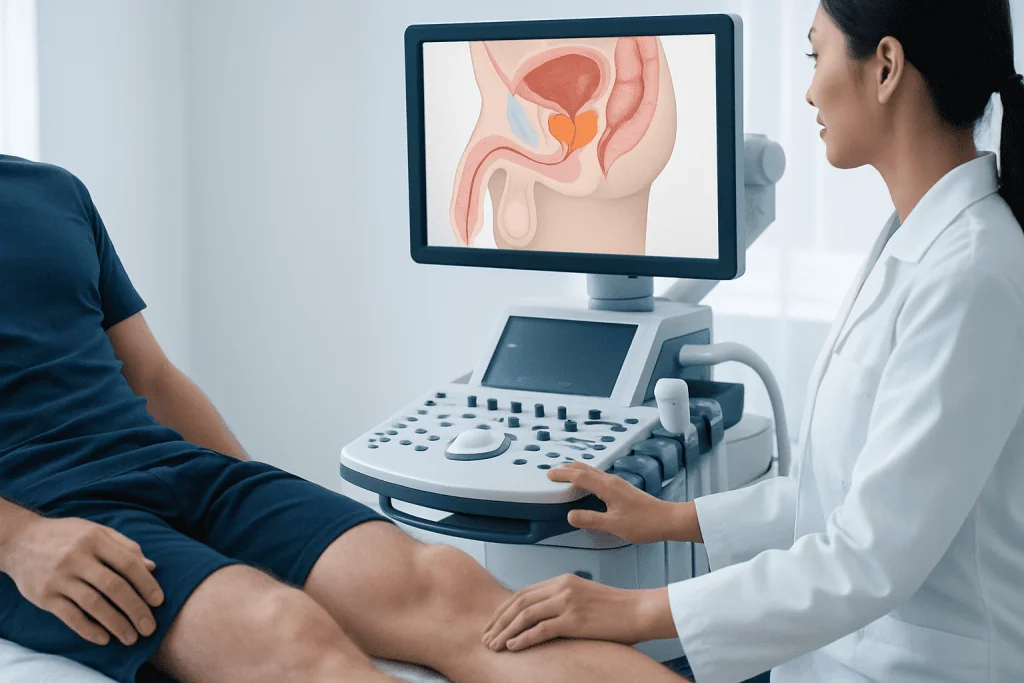
The prostate is a walnut-sized gland in most adult men, located in the pelvis between the penis and the bladder, just in front of the rectum. This location is why the gland may sometimes be felt through the front wall of the rectum during a medical examination or during sexual activity. The area around it includes nerves, muscles, and connective tissue that all contribute to sensation.
Some people describe prostate stimulation as pressure, fullness, warmth, or pleasurable intensity rather than the same type of feeling produced by penile stimulation. Others feel little or nothing at all. These differences are normal and may reflect anatomy, comfort level, emotional context, pelvic floor muscle tension, and overall sexual health.
The prostate can also be indirectly affected by external pressure on the perineum, the area between the scrotum and anus. For some people, this approach feels more comfortable than internal stimulation. A gentle and patient approach is important because the tissues involved are delicate and can become irritated if handled roughly.
It is also useful to remember that sexual sensation is shaped by the brain as well as the body. Relaxation, trust, consent, and communication often matter as much as anatomy. This is one reason why experiences with the so-called male g spot vary so widely from person to person.
What medical evidence says about pleasure, orgasm, and myths

Research and clinical experience suggest that the prostate can be a source of sexual pleasure for some men, but evidence does not support exaggerated or universal claims. There is no medical rule that prostate stimulation is superior to other forms of sexual touch, and there is no normal standard that everyone should try to achieve. Sexual response is individual.
One common myth is that interest in prostate stimulation says something about a person’s sexual orientation. It does not. Orientation is about patterns of attraction, not about which body areas may feel pleasurable. Another myth is that the prostate should always be easy to find and instantly pleasurable. In reality, sensitivity can take time to understand, and some people may simply not enjoy it.
A third myth is that prostate stimulation is inherently therapeutic. While doctors may examine the prostate for medical reasons, sexual stimulation of the prostate is not a treatment for urinary problems, pain, or prostate disease. Symptoms such as pelvic pain, burning, blood, or urinary difficulty need medical evaluation rather than self-treatment. If there are concerns about the gland itself, a doctor may assess for conditions such as prostate cancer or noncancerous enlargement, depending on age and symptoms.
- Evidence supports prostate anatomy and possible sensitivity.
- Evidence does not support claims that everyone has the same response.
- Pain, bleeding, or urinary symptoms are warning signs, not proof of “doing it right.”
Safer ways to explore prostate stimulation
For adults who choose to explore this area, comfort and safety matter most. The rectum does not lubricate itself in the same way as the vagina, so a generous amount of lubricant can help reduce friction and lower the risk of small tears. Gentle touch, gradual progression, trimmed nails, and stopping if there is pain are sensible precautions.
External stimulation of the perineum may be a helpful starting point. Internal stimulation, if chosen, should be slow and never forced. Using clean hands and body-safe devices designed for anal use can reduce injury risk. Objects not designed for anal insertion should not be used because they can cause trauma or become difficult to remove.
People should avoid prostate or anal stimulation if they have active rectal bleeding, a painful hemorrhoid flare, an anal fissure, recent rectal or prostate surgery, or an infection that could be worsened by manipulation. Anyone with significant pelvic pain or urinary symptoms should speak with a clinician first. If assessment is needed, specialists in urology care can evaluate urinary, prostate, and pelvic concerns in a confidential setting.
Condom use on toys, careful cleaning, and not sharing devices without proper sanitation can reduce the spread of infections. If a person notices sharp pain, persistent discomfort, bleeding, fever, or difficulty passing urine afterward, they should stop and seek medical advice.
When symptoms may point to a health problem instead
Because the prostate and nearby pelvic structures can become inflamed or enlarged, not all sensations in this area are related to sexual response. Pelvic pressure, pain with ejaculation, burning with urination, blood in urine or semen, and trouble starting or maintaining urine flow may suggest an underlying medical issue. These symptoms deserve proper evaluation rather than assumption.
Several conditions can affect the prostate and surrounding tissues. These include prostatitis, benign enlargement, pelvic floor dysfunction, and, less commonly, cancer. The symptoms can overlap, which is one reason self-diagnosis is unreliable. A medical assessment may include a history, physical examination, urine tests, blood tests, or imaging when appropriate.
Some men with ongoing pelvic discomfort may have a combination of muscle tension, stress-related pain amplification, and urinary symptoms rather than a single structural problem. In these cases, treatment may involve more than medication alone. Depending on the findings, doctors may recommend prostate MRI or other tests to look more closely at the gland when clinically indicated.
Not every symptom means serious disease, but a change that persists should not be ignored. Early evaluation can help clarify whether the issue relates to the prostate, the rectum, the pelvic floor, or another part of the urinary tract.
How doctors evaluate prostate and pelvic concerns
Doctors usually begin with a detailed conversation about symptoms, sexual history, urinary changes, medications, bowel habits, and any recent injury or infection. This discussion helps guide the next steps and can often narrow the possible causes. Clinicians aim to keep these conversations respectful, private, and nonjudgmental.
A physical examination may include an abdominal exam, genital exam, and sometimes a digital rectal exam to assess the prostate and surrounding structures. Depending on age and symptoms, tests may include urinalysis, urine culture, blood tests such as PSA in selected cases, and imaging. The right evaluation depends on the individual situation, not just on age or one symptom alone.
If rectal symptoms are more prominent, doctors may also consider anorectal causes such as fissures, hemorrhoids, or inflammation. When urinary or prostate findings are more concerning, additional evaluation may be arranged through prostate biopsy or specialist assessment if there is a clinical reason. This does not mean cancer is present; it simply means a closer look may be needed.
Pelvic floor dysfunction is another important possibility. Men with chronic pelvic pain may benefit from a broader plan that addresses muscle tension, stress, bowel habits, and bladder triggers, rather than focusing only on the prostate itself.
Self-care, communication, and sexual wellbeing
Sexual wellbeing is not only about technique or anatomy. Comfort, consent, privacy, and emotional safety strongly influence physical sensation. People exploring prostate stimulation may find it helpful to communicate clearly with a partner about boundaries, pace, pressure, and when to stop. There should never be pressure to continue if something feels uncomfortable or unwanted.
General health habits also support sexual function. Staying physically active, getting enough sleep, managing stress, and seeking help for anxiety or relationship concerns may improve sexual satisfaction overall. Men with erectile difficulties, low libido, or pain during sex should remember that these concerns are common and medically relevant.
If broader sexual health issues are present, an evaluation may be more useful than trying to solve the problem through internet advice alone. In some cases, concerns related to erections may overlap with prostate or pelvic issues, and doctors may discuss options through services such as erectile dysfunction treatment when appropriate. The best approach depends on the person’s symptoms, goals, and overall health.
Near the end of the diagnostic pathway, some international patients choose centers with coordinated care. Acibadem International’s multidisciplinary specialists and JCI-accredited hospitals evaluate and treat prostate, urinary, and sexual health concerns when more detailed assessment is needed.
When to seek medical care
Medical advice is recommended if a person has pain during or after prostate stimulation, rectal bleeding, fever, unusual discharge, persistent pelvic pain, or urinary symptoms such as burning, urgency, weak stream, or trouble emptying the bladder. These symptoms can have many causes, and a proper examination can help identify the right treatment.
Urgent care is especially important for severe pain, inability to pass urine, heavy bleeding, faintness, or signs of infection. New blood in urine or semen, unexplained weight loss, or symptoms that continue for more than a short period should also be discussed with a doctor. Early review is particularly sensible for older men or anyone with a family history of prostate disease.
Seeking care is not an overreaction. It is a practical step that can rule out injury, infection, inflammation, or another pelvic condition. A qualified clinician can also answer questions about anatomy and sexual health without judgment.
Frequently asked questions
Is the male g spot a real body part?
The phrase is informal, but it usually refers to the prostate gland, which is a real anatomical structure. Some men find the area sexually sensitive, while others do not. There is no medical requirement to experience pleasure from it.
Where is the male g spot located?
It usually refers to the prostate, which sits below the bladder and in front of the rectum. Because of this position, it may be stimulated indirectly through the perineum or more directly through the rectum. Anatomy differs slightly from person to person.
Does prostate stimulation always cause orgasm?
No. Some people report pleasurable sensations or stronger orgasms, but others feel neutral, uncomfortable, or simply prefer other types of stimulation. Sexual response is highly individual and influenced by physical and emotional factors.
Can prostate stimulation be harmful?
It can be uncomfortable or cause injury if it is forceful, rushed, or done without lubrication and hygiene. Pain, bleeding, or persistent discomfort are not normal responses and should prompt medical advice. People with rectal disease, infection, or recent surgery should be especially cautious.
Does interest in the male g spot say anything about sexual orientation?
No. Sexual orientation is about attraction, not about which body areas may feel pleasurable. Enjoying or not enjoying prostate stimulation does not define a person’s identity.
When should a man talk to a doctor about prostate-related symptoms?
A doctor should be consulted for pelvic pain, painful ejaculation, blood in urine or semen, burning with urination, weak urine flow, or trouble emptying the bladder. Medical review is also important for rectal bleeding, fever, or persistent pain after stimulation. These symptoms need assessment because they can have several different causes.
References
- National Institute of Diabetes and Digestive and Kidney Diseases
- American Urological Association
- Urology Care Foundation
- National Health Service
- Mayo Clinic
This article is for general information only and is not a substitute for professional medical advice. Please consult a qualified doctor about your individual situation.
Explore treatments in Turkey — costs, top hospitals & a free quote
JCI-accredited · board-certified surgeons · reply within 24h
Add us as a Preferred Source to see more of our trusted health content across Google Search, AI Overviews and Discover.