Blue Light Glasses: What Patients Need to Know

Blue light glasses can help some users with screen comfort, but benefits vary from person to person. Research does not clearly show that blue light glasses prevent eye damage from normal device use.
Key Takeaways
- Blue light glasses can help some users with screen comfort, but benefits vary from person to person.
- Research does not clearly show that blue light glasses prevent eye damage from normal device use.
- Dry eyes, glare, poor lighting, and long periods of near work are common causes of screen-related discomfort.
- Simple habits like regular breaks, blinking more often, and adjusting screen settings are often more helpful than glasses alone.
- Persistent eye symptoms, headaches, or vision changes should be assessed by an eye care professional.
Blue light glasses may help some people feel more comfortable during screen use, especially by reducing glare or improving visual comfort. However, current evidence does not show that they prevent eye disease or protect the retina from everyday digital screens.
What are blue light glasses, and do they work?
Blue light glasses are eyewear designed to filter part of the blue-violet light emitted by digital screens, LED lighting, and some other artificial light sources. Many lenses also include anti-reflective coatings, which can reduce glare and improve visual comfort. For patients wondering whether these glasses are necessary, the short answer is that they may help some people feel more comfortable during screen use, but they are not essential for everyone.
Current medical evidence does not show that blue light glasses prevent eye damage or retinal disease from routine use of phones, tablets, or computers. Most screen-related symptoms are caused by visual habits and the environment rather than blue light alone. Long periods of near focus, reduced blinking, dry eyes, poor posture, and screen glare are often more important reasons for discomfort.
That said, some people report less eye fatigue, fewer reflections, or easier screen use when wearing blue light glasses. This may be due to reduced glare, improved contrast, or simply better visual habits that come with paying attention to eye comfort. For a patient with symptoms, blue light glasses can be one possible tool, but they should be viewed as part of a broader eye-care approach rather than a complete solution.
How screens affect the eyes
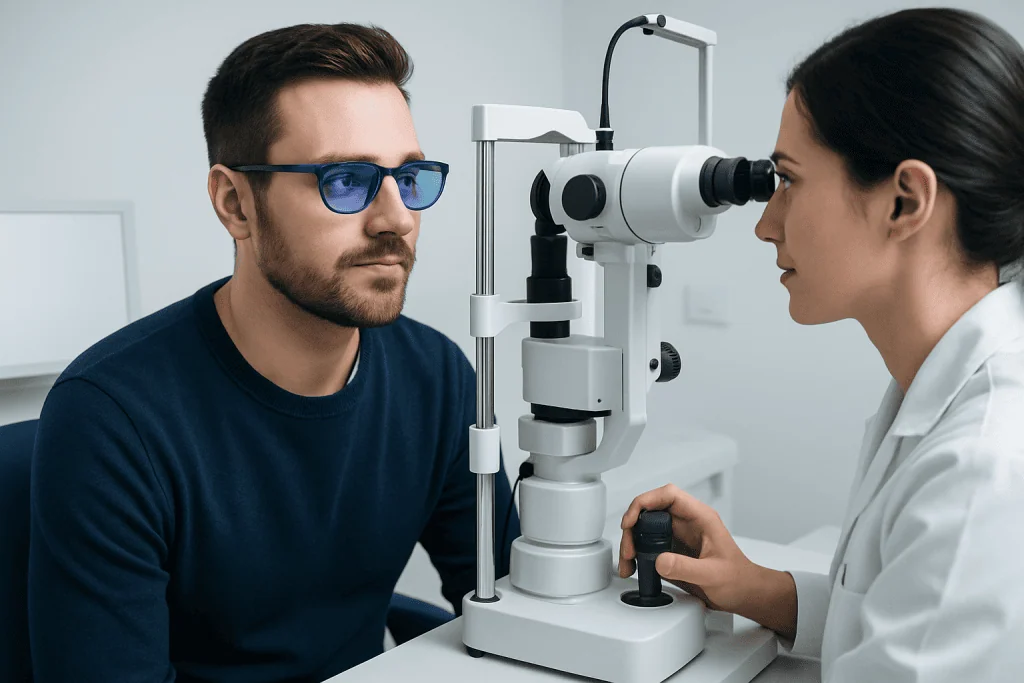
Digital screens place a different kind of demand on vision than reading from paper or looking at distant objects. When a person looks at a screen for a long time, the eyes focus at a near distance continuously. This can tire the focusing system and contribute to what is often called digital eye strain or computer vision syndrome.
Another common issue is reduced blinking. People tend to blink less often while working on a computer or phone, which allows the tear film to evaporate more quickly. As a result, the eyes may feel dry, gritty, burning, or watery. In many cases, discomfort linked to screen time is closely related to dry eye rather than to blue light itself.
Screen position and visual environment also matter. Bright overhead lights, reflections on the screen, poor contrast, or text that is too small can make the eyes work harder. If symptoms include blurry vision, headaches, or trouble keeping focus, a person may benefit from an eye examination to check for uncorrected refractive error, dry eye, or other visual conditions.
Possible benefits and realistic limits

Blue light glasses may be most useful for people who spend many hours at digital devices and notice discomfort from glare or prolonged screen work. Some wearers say they feel less visual fatigue or that screen use is more comfortable, especially in bright offices or at night. Lenses with anti-reflective coatings may be particularly helpful in these settings because they cut down distracting reflections.
However, patients should know the limits. Blue light glasses are not a treatment for all eye symptoms, and they do not replace a proper eye exam. If someone has dryness, incorrect glasses prescription, eye misalignment, or another underlying issue, filtering blue light alone is unlikely to solve the problem.
There is also no strong evidence that blue light glasses prevent common eye diseases. They should not be marketed as a guaranteed way to protect long-term eye health from everyday screens. If a person has ongoing discomfort, a more useful next step may be an evaluation by an eye specialist, especially if symptoms suggest eye diseases that need diagnosis and management.
Who might benefit most from blue light glasses?
Blue light glasses may be worth trying for adults or students who spend long hours on computers and regularly notice tired eyes, glare sensitivity, or visual discomfort by the end of the day. They may also appeal to people who work in artificial indoor lighting and feel that reflections from screens worsen symptoms.
Some patients who already wear prescription glasses can ask whether a blue light filter or anti-reflective coating can be added to their lenses. In many cases, the more important question is whether the prescription is up to date and appropriate for computer distance. Dedicated computer glasses are sometimes more useful than general-purpose blue light lenses because they are tailored to the visual task.
People with sleep concerns sometimes ask whether blue light glasses help at night. Evening light exposure can affect the body clock, so reducing bright screen use before bed may support better sleep. For sleep health, behavioral steps such as dimming the screen, using night-mode settings, and limiting device use before bedtime are often more important than relying on glasses alone.
- Office workers with prolonged computer use
- Students using tablets or laptops for study
- People bothered by glare or reflections
- Those with frequent dry eye or screen-related visual fatigue
What helps more than glasses alone
For many patients, practical changes are more effective than blue light glasses by themselves. Regular breaks are especially important. Looking away from the screen at intervals gives the focusing muscles a chance to relax and can ease strain. A commonly used strategy is the 20-20-20 rule: every 20 minutes, look at something about 20 feet away for 20 seconds.
It also helps to blink consciously, keep screens at a comfortable distance, and position the monitor slightly below eye level. Adjusting font size, contrast, and brightness may make reading easier. Good room lighting can reduce glare, and humidified air or preservative-free artificial tears may help if the eyes feel dry.
If symptoms continue despite these measures, an eye examination is a sensible next step. Assessment may include refraction, tear film evaluation, and a check for issues such as eyestrain, focusing problems, or ocular surface disease. Depending on the findings, the doctor may recommend treatments such as a comprehensive eye examination or options for dry eye treatment to address the true cause of discomfort.
How doctors evaluate persistent eye strain
When screen-related symptoms are frequent or do not improve, doctors look beyond blue light exposure. They ask about the timing of symptoms, device use, work habits, sleep, medications, contact lens use, and any existing eye conditions. This helps identify whether the main issue is dryness, focusing strain, glare, migraine, or another cause.
An eye exam may check visual acuity, whether the current glasses prescription is accurate, how well the eyes work together, and the condition of the front surface of the eye. In some cases, symptoms that seem related to screens may actually come from unrelated conditions such as allergy, eyelid inflammation, or headache disorders.
Treatment depends on the diagnosis. A patient may be advised to update prescription lenses, use lubricating drops, improve workstation ergonomics, or treat an underlying eye condition. If there are concerns about more complex visual problems, referral for specialist ophthalmology care may be appropriate.
When to seek medical care
Occasional tired eyes after heavy screen use are common and are usually not a sign of serious disease. Still, some symptoms should not be explained away as simple screen fatigue. Medical advice is important if discomfort is frequent, severe, or clearly getting worse.
A person should seek assessment if they have persistent blurry vision, double vision, significant light sensitivity, eye pain, repeated headaches linked to visual tasks, or redness that does not settle. Sudden vision loss, flashes of light, a curtain-like shadow, or new floaters require urgent medical attention.
Children who hold screens very close, squint often, complain of headaches, or avoid reading may also need an eye check. Near the end of the care pathway, patients may wish to know that Acibadem International’s multidisciplinary specialists and JCI-accredited hospitals evaluate eye symptoms and related conditions for international patients when further assessment is needed.
Frequently asked questions
Do blue light glasses protect the eyes from screen damage?
Current evidence does not show that blue light glasses prevent eye damage from normal use of phones, tablets, or computers. They may improve comfort for some people, but they are not proven to protect the retina from everyday digital exposure.
Can blue light glasses reduce headaches?
They may help some people if glare or visual discomfort is contributing to headaches. However, headaches can also come from dry eyes, an outdated glasses prescription, poor posture, migraine, or long periods of near work, so persistent symptoms should be evaluated.
Are blue light glasses the same as computer glasses?
Not always. Computer glasses are usually designed for the distance of a computer screen and may include a specific prescription, while blue light glasses focus on filtering certain wavelengths and may or may not be prescription lenses.
Do children need blue light glasses?
Most children do not automatically need them. If a child has eye discomfort, headaches, squinting, or trouble with schoolwork, a proper eye examination is more important than buying blue light glasses first.
Can blue light glasses help with sleep?
Reducing bright light exposure in the evening may support sleep, and some people use blue light filters or glasses for that reason. Still, limiting screen use before bedtime and dimming devices are usually more important sleep-friendly habits.
What is the best way to reduce digital eye strain?
The most effective approach is usually a combination of regular breaks, better blinking, proper screen distance, reduced glare, and treatment of dry eyes or vision problems if present. Glasses can help some patients, but they work best as part of a broader plan.
This article is for general information only and is not a substitute for professional medical advice. Please consult a qualified doctor about your individual situation.
Explore treatments in Turkey — costs, top hospitals & a free quote
JCI-accredited · board-certified surgeons · reply within 24h
Add us as a Preferred Source to see more of our trusted health content across Google Search, AI Overviews and Discover.

More from the Health Library

Goodell Sign: What Patients Need to Know

Remedy for Hemorrhoids: An Evidence-Based Guide for Patients

Hypoallergenic Bedding: What Patients Need to Know

Hair Types: A Complete Medical Overview
Hip Abduction: A Complete Medical Overview