Radius: What Patients Need to Know

The radius is the thumb-side forearm bone and plays a major role in wrist and forearm movement. Radius injuries range from minor stress irritation to simple and complex fractures.
Key Takeaways
- The radius is the thumb-side forearm bone and plays a major role in wrist and forearm movement.
- Radius injuries range from minor stress irritation to simple and complex fractures.
- Pain, swelling, deformity, and trouble rotating the forearm are common warning signs of injury.
- Diagnosis usually involves a physical examination and imaging such as X-rays.
- Treatment depends on the location and severity of the problem and may include splints, casts, rehabilitation, or surgery.
The radius is one of the two long bones in the forearm. It helps the wrist, forearm, and elbow move smoothly, and it is commonly involved in falls, sports injuries, and age-related fractures.
Overview: what the radius is and why it matters
The radius is one of the two bones in the forearm, located on the thumb side. In simple terms, when a patient asks about the radius, the answer is that it is a key forearm bone that helps connect the elbow to the wrist and allows the hand to turn palm up and palm down. It also helps transfer force through the wrist during daily activities such as lifting, pushing, catching a fall, or using a keyboard.
The other forearm bone is the ulna. Together, the radius and ulna work as a pair, but the radius has a particularly important role in wrist movement and forearm rotation. Because of this, even a small injury to the radius can affect gripping, twisting, reaching, and many ordinary tasks.
The radius is also one of the most commonly injured bones in the body. Fractures near the wrist are especially common after falls onto an outstretched hand. In children, athletes, older adults, and people with low bone density, radius injuries may happen more easily. Understanding the bone’s function can help patients recognize symptoms early and seek the right care.
Radius anatomy and how it works
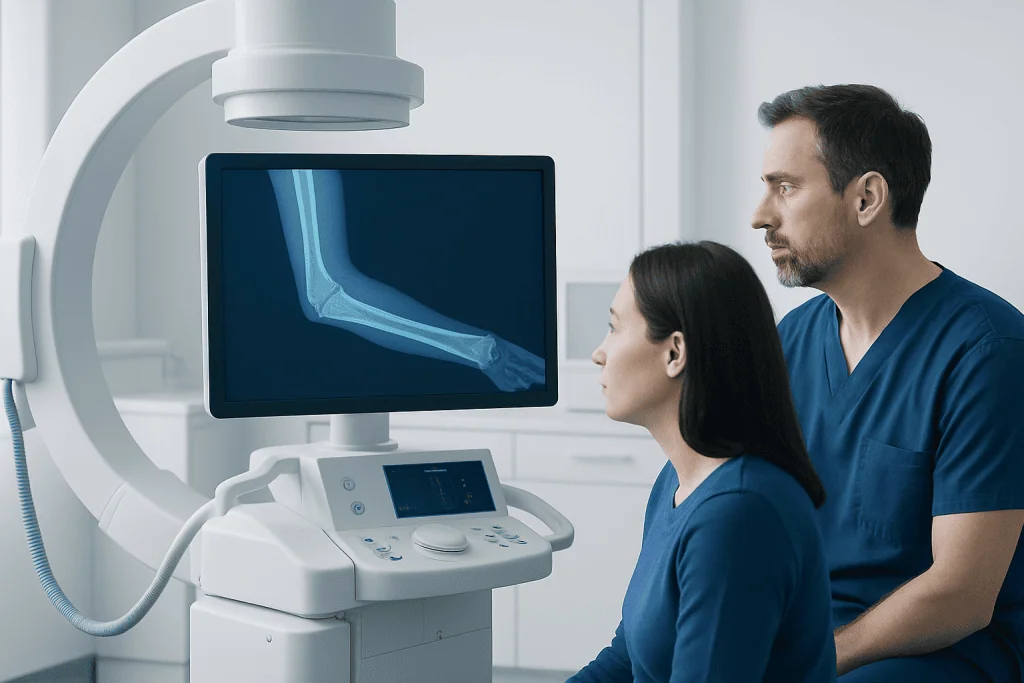
The radius is a long bone with three main parts: the top end near the elbow, the shaft in the middle, and the lower end near the wrist. The upper part of the radius, called the radial head, helps the elbow bend and rotate. The lower end, often called the distal radius, forms a major part of the wrist joint and is the most frequent site of fracture.
One of the radius bone’s most important jobs is forearm rotation. When the hand turns palm up or palm down, the radius moves around the ulna in a smooth, coordinated way. This makes actions like opening a door, turning a key, pouring a drink, or using utensils possible.
Muscles, tendons, ligaments, nerves, and blood vessels all surround the radius. That means an injury may involve more than the bone itself. For example, a fracture may also affect the wrist joint surface, nearby ligaments, or the elbow. In some cases, doctors may assess for related conditions involving the hand, wrist, or shoulder as part of a full musculoskeletal evaluation.
Common radius injuries and conditions

The most common problem involving the radius is a fracture, or broken radius. This can happen at the wrist end, along the shaft, or near the elbow. Distal radius fractures are especially common after slipping and landing on the hand. Some fractures are stable and simple, while others are displaced, involve the joint, or occur along with an ulna injury.
Patients may also develop stress injuries or overuse-related pain in the forearm, especially with repetitive sports or work activities. Less commonly, the radial head near the elbow can be fractured after a fall or direct blow. These injuries may cause elbow pain and difficulty rotating the forearm.
In children, the radius can bend or crack in patterns different from those seen in adults because growing bones are more flexible. In older adults, a broken radius may sometimes be the first sign of weaker bones and may prompt evaluation for bone health. If a fracture is part of a more complex orthopedic issue, doctors may also review conditions such as spinal alignment problems or other musculoskeletal concerns when planning rehabilitation, although these are not direct causes of radius injury.
- Distal radius fracture near the wrist
- Radial shaft fracture in the middle of the forearm
- Radial head or neck fracture near the elbow
- Stress injury from repetitive strain
- Joint or ligament injury associated with the fracture
Symptoms of a radius problem
Symptoms depend on the type and location of the injury. A broken radius often causes sudden pain after a fall or impact. Swelling, bruising, tenderness, and trouble moving the wrist, elbow, or forearm are common. Some patients notice a visible change in shape or feel grinding with movement.
Not every radius problem causes obvious deformity. A small crack, stress injury, or nondisplaced fracture may mainly cause pain with gripping, lifting, or rotation. Pain may be focused near the wrist or elbow, depending on which part of the radius is involved. Stiffness and reduced strength can persist even after the initial swelling improves.
Numbness, tingling, pale fingers, severe swelling, or difficulty moving the hand can suggest a more urgent injury involving nerves, blood flow, or significant displacement. These symptoms should not be ignored. Prompt assessment can help protect function and reduce the risk of long-term stiffness or joint problems.
Causes and risk factors
Falls are the leading cause of radius fractures, especially falls onto an outstretched hand. Sports injuries, bicycle accidents, motor vehicle collisions, and direct blows can also injure the radius. In younger patients, higher-energy trauma is a common cause, while in older adults, even a simple fall from standing height can lead to a fracture.
Bone strength is an important factor. Osteoporosis and age-related bone loss make fractures more likely. So do certain medications, poor nutrition, smoking, low physical activity, and some long-term medical conditions that affect bone health. Repetitive loading in racket sports, gymnastics, manual work, or weight-bearing exercise can also contribute to stress-related problems.
Risk may also increase when balance, vision, or muscle strength is reduced. This is why assessment may include not only the bone injury itself but also broader prevention measures. In some patients, doctors may recommend additional evaluation and rehabilitation support, and if surgery is needed for complex limb injuries, options such as orthopedic surgery may be discussed as part of a personalized treatment plan.
How doctors diagnose radius injuries
Diagnosis starts with a medical history and physical examination. The doctor will ask how the injury happened, where the pain is felt, and whether there is numbness, swelling, or reduced movement. The arm, wrist, elbow, and hand are examined together because symptoms can overlap and associated injuries are possible.
X-rays are usually the first imaging test and are often enough to confirm a fracture and show whether the bone is aligned. In more complex cases, additional imaging may be recommended. A CT scan can help define joint involvement or complicated fracture patterns, while MRI may be used when a stress injury, ligament damage, or an occult fracture is suspected.
Doctors also assess circulation, nerve function, and the stability of nearby joints. This is important because treatment decisions are based not only on whether the radius is broken, but also on where the break is, whether the joint surface is involved, and how likely the bone is to heal in a good position. If needed, advanced MRI imaging or CT scan evaluation may support more precise diagnosis and planning.
Treatment options and recovery
Treatment depends on the exact injury. A stable fracture that remains in good alignment may be treated with a splint or cast while the bone heals. Rest, elevation, ice, and pain management are commonly advised in the early stage. Follow-up imaging may be used to make sure the radius stays in the correct position during healing.
If the fracture is displaced, unstable, involves the joint, or affects movement significantly, a reduction may be needed to realign the bone. Some patients need surgery to restore anatomy and function more accurately. Surgical treatment can involve pins, plates, or screws depending on the fracture pattern and the patient’s age, activity level, and bone quality.
Recovery does not end when the cast comes off or the wound heals. Stiffness of the wrist, elbow, and forearm is common, and hand strength often needs time to return. Rehabilitation may include guided exercises or formal therapy to improve range of motion, swelling control, and daily function. In selected cases, a doctor may recommend physical therapy and rehabilitation to support a safer and more complete recovery.
For international patients who need coordinated orthopedic assessment, Acibadem International’s multidisciplinary specialists at JCI-accredited hospitals diagnose and treat radius injuries with imaging, surgical, and rehabilitation services when appropriate.
Prevention, self-care, and when to seek medical care
Not every radius injury can be prevented, but practical steps can reduce risk. Fall prevention is especially important for older adults. Supportive footwear, strength and balance exercise, good lighting at home, and review of vision and medications can help lower the chance of injury. Bone health also matters, so adequate nutrition, weight-bearing activity, and medical advice about osteoporosis screening may be helpful.
After a minor injury, self-care may include resting the arm, using ice wrapped in a cloth, elevating the limb, and avoiding activities that worsen pain until medical advice is obtained. However, self-care should not replace examination if pain is significant or function is reduced. A fracture may still be present even if the arm does not look obviously deformed.
Patients should seek medical care promptly if there is severe pain, swelling, deformity, inability to use the arm, pain near the wrist or elbow after a fall, numbness, tingling, or fingers that look pale or cold. Urgent evaluation is also needed if pain is worsening, if there is an open wound, or if symptoms do not improve as expected. Early assessment can help prevent avoidable complications such as poor healing, chronic stiffness, or joint problems.
Frequently asked questions
What is the radius bone?
The radius is one of the two bones in the forearm, located on the thumb side. It helps form both the elbow and wrist joints and is essential for rotating the forearm and moving the hand.
Where is the radius located?
The radius runs from the elbow to the wrist along the thumb side of the forearm. It lies next to the ulna, and together these two bones allow coordinated arm and wrist movement.
What are the signs of a broken radius?
Common signs include pain, swelling, bruising, tenderness, and difficulty moving the wrist or forearm after a fall or impact. Some people also notice deformity, weakness, or pain when trying to rotate the hand.
Can a radius fracture heal without surgery?
Yes, many radius fractures can heal without surgery if the bone is stable and well aligned. A doctor may use a splint or cast and monitor healing with follow-up visits and imaging.
How long does it take for a radius injury to heal?
Healing time varies by age, fracture type, bone health, and treatment. Bone healing often takes several weeks, but full return of strength and motion may take longer, especially if the wrist or elbow becomes stiff.
Is wrist pain always caused by a distal radius fracture?
No, wrist pain can have many causes, including sprains, tendon problems, arthritis, or other fractures. Because symptoms can overlap, a medical exam and imaging are often needed for an accurate diagnosis.
References
- American Academy of Orthopaedic Surgeons
- National Institute of Arthritis and Musculoskeletal and Skin Diseases
- MedlinePlus
- Mayo Clinic
- National Health Service
This article is for general information only and is not a substitute for professional medical advice. Please consult a qualified doctor about your individual situation.
Joint and spine care in Turkey — expert assessment & treatment
JCI-accredited · board-certified surgeons · reply within 24h
Add us as a Preferred Source to see more of our trusted health content across Google Search, AI Overviews and Discover.