Adams Apple: What Patients Need to Know

The adams apple is formed by the thyroid cartilage, part of the voice box. Its size and visibility vary naturally with age, sex, body structure, and hormones.
Key Takeaways
- The adams apple is formed by the thyroid cartilage, part of the voice box.
- Its size and visibility vary naturally with age, sex, body structure, and hormones.
- A prominent adams apple is usually normal and does not mean there is a disease.
- Pain, rapid enlargement, hoarseness, or difficulty swallowing should be assessed by a doctor.
- Evaluation may include a physical exam, laryngoscopy, blood tests, or imaging depending on symptoms.
An adams apple is the visible prominence of the thyroid cartilage at the front of the neck. It is a normal body feature for many people, but new swelling, pain, trouble swallowing, or voice changes deserve medical evaluation.
Overview: What an Adams Apple Is
An adams apple is the outward bump seen in the middle of the front of the neck. It is not a separate organ. It is the front portion of the thyroid cartilage, which helps form the larynx, also called the voice box. In many people, this cartilage becomes more noticeable during puberty as the larynx grows.
The adams apple helps protect the vocal cords inside the larynx. It also reflects the shape and angle of the cartilage rather than a health problem by itself. Some people have a very visible adams apple, while others have little or no visible neck prominence. Both can be completely normal.
Questions about the adams apple often come up when a person notices a neck bump, a change in appearance, or symptoms such as soreness or hoarseness. A visible adams apple alone is usually just a normal anatomical feature. The main concern is not the bump itself, but whether it is accompanied by new symptoms or appears to be changing quickly.
Why It Becomes More Noticeable
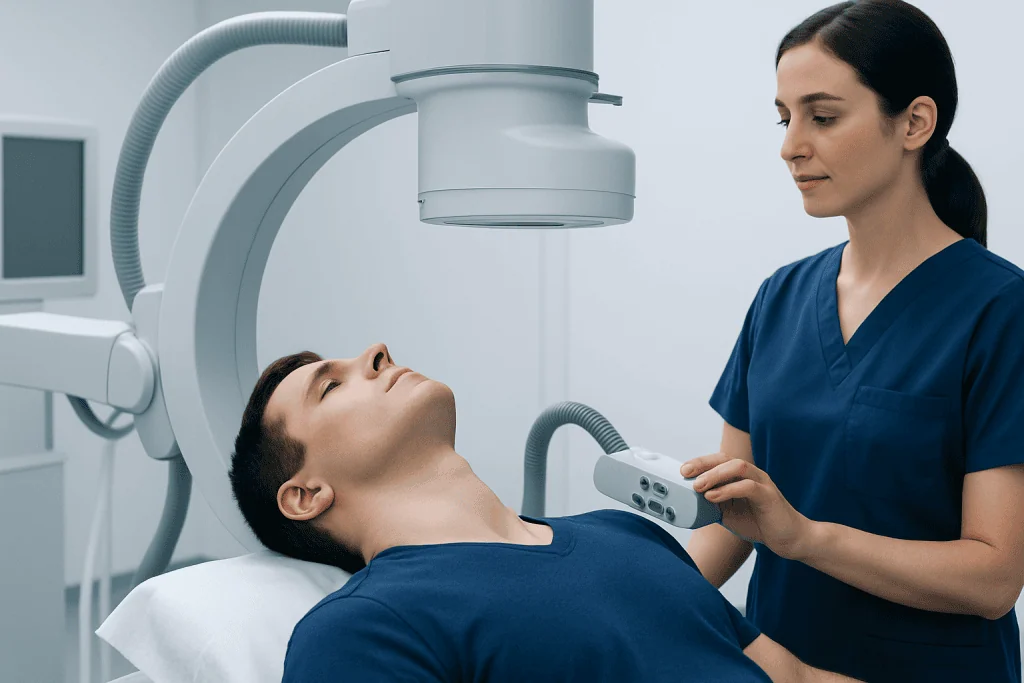
The adams apple usually becomes more prominent during puberty, especially when the larynx enlarges and the vocal cords lengthen. This growth is influenced by hormones, particularly testosterone. As a result, many males develop a more visible neck prominence and a deeper voice during adolescence.
However, an adams apple is not limited to males. Females also have thyroid cartilage and a larynx, but the angle and growth pattern may make the area less visible. Body shape, neck length, weight, genetics, and individual cartilage structure all affect how noticeable it is.
In adults, the adams apple may seem more visible with weight loss because there is less soft tissue covering the neck. In other cases, a person may simply become more aware of normal anatomy over time. A long-standing prominence that is not painful and does not change rapidly is usually not a cause for concern.
Normal Differences and Common Concerns

Many people wonder whether a large or small adams apple means something about health, hormones, or fertility. In most cases, it does not. The size of the adams apple does not reliably show how healthy the thyroid gland is, how strong the voice will be, or whether hormone levels are normal in adulthood.
Another common concern is whether the adams apple is the same as the thyroid gland. They are different structures. The adams apple is cartilage in the larynx, while the thyroid gland sits lower in the neck and wraps around the windpipe. A thyroid condition can cause swelling in the neck, but it does not make the thyroid cartilage itself grow.
People may also confuse the adams apple with a new neck lump. If the area has always looked the same, it is more likely to be normal anatomy. If there is a newly felt lump, tenderness, asymmetry, or visible swelling lower in the neck, a doctor may consider causes such as thyroid cancer, enlarged lymph nodes, cysts, or inflammation.
Symptoms That May Suggest a Medical Problem
A normal adams apple should not be painful. It should not suddenly enlarge, become red, or make swallowing difficult. If symptoms develop in this area, the problem may involve the larynx, surrounding tissues, thyroid gland, or nearby lymph nodes rather than the cartilage alone.
Medical assessment is more important if a person has:
- Persistent pain or tenderness in the front of the neck
- Hoarseness or voice changes lasting more than a few weeks
- Trouble swallowing or a sensation of food getting stuck
- Shortness of breath, noisy breathing, or throat tightness
- A rapidly growing lump or visible swelling
- Fever, redness, or signs of infection
These symptoms may be linked to irritation of the larynx, infection, trauma, thyroid disease, vocal cord problems, or in some cases tumors affecting the throat or neck. For example, persistent hoarseness can sometimes be related to laryngeal cancer, although many benign conditions are much more common. Symptoms should be interpreted in the context of the whole clinical picture.
Possible Causes of Pain, Swelling, or Change
Several conditions can make a person notice the adams apple area more than usual. A sore throat, viral infection, muscle strain, acid reflux, or repeated voice overuse can irritate the larynx and create discomfort in the front of the neck. Even coughing a lot or speaking loudly for long periods may cause temporary soreness.
Trauma is another possibility. A blow to the neck, sports injury, or pressure from an accident can bruise the tissues around the thyroid cartilage. Rarely, cartilage injury can be more serious and may cause pain, swelling, or breathing changes. Any neck injury with trouble breathing or a significant voice change needs urgent medical care.
Other causes come from nearby structures. These include thyroid nodules, thyroid inflammation, enlarged lymph nodes, cysts, or masses in the larynx or pharynx. In some patients, doctors may recommend thyroid surgery if evaluation shows a thyroid condition that needs operative treatment. Treatment depends on the exact cause, not on the appearance of the adams apple itself.
How Doctors Evaluate the Adams Apple Area
Assessment starts with a medical history and physical examination. The doctor asks when the change was first noticed, whether it has grown, and whether symptoms such as hoarseness, swallowing difficulty, pain, reflux, weight loss, or fever are present. They also examine the neck, throat, and voice quality.
If there are throat or voice symptoms, an ear, nose, and throat specialist may look at the larynx using a small flexible camera. This test, called laryngoscopy, helps the doctor see the vocal cords and surrounding tissues directly. In some cases, imaging such as ultrasound, CT, or MRI may be useful to evaluate a neck lump or swelling.
Blood tests may be ordered if a thyroid disorder or infection is suspected. When a lump is found in the thyroid gland or nearby tissues, further testing may be needed to clarify the diagnosis. Depending on the findings, care may involve specialists in ENT, endocrinology, radiology, or oncology. If a structural problem of the voice box is identified, options may include treatment for laryngeal conditions tailored to the underlying diagnosis.
Treatment, Self-Care, and Living With a Prominent Adams Apple
If the adams apple is simply prominent and there are no symptoms, treatment is usually unnecessary. Reassurance is often all that is needed. A visible adams apple is a normal variant, and many people live with it without any health impact.
When symptoms are caused by inflammation, infection, voice strain, or reflux, treatment focuses on the underlying issue. Depending on the cause, this may include voice rest, hydration, avoiding smoking, managing acid reflux, or using medicines prescribed by a doctor. Self-diagnosis is not ideal when symptoms are ongoing, especially if the voice changes or swallowing becomes difficult.
For people who are concerned about appearance, a doctor can explain what is normal anatomy and discuss whether any evaluation is needed first. In selected cases, referral to ENT or plastic surgery may be appropriate, but cosmetic decisions should be made carefully after understanding the risks and expected outcomes. Near the end of the diagnostic and treatment pathway, patients may choose centers such as Acibadem International, where multidisciplinary specialists in JCI-accredited hospitals assess throat, thyroid, and neck conditions for international patients.
When to Seek Medical Care
Medical care is advisable if a person notices a new neck lump, a rapidly changing prominence, or symptoms that persist for more than a short period. Ongoing hoarseness, swallowing problems, pain, or visible swelling should not be ignored. While many causes are minor, an examination helps rule out important conditions and guides appropriate treatment.
Urgent care is needed for breathing difficulty, noisy breathing, severe throat tightness, or significant neck trauma. These symptoms can signal a problem affecting the airway and should be evaluated immediately.
It is also sensible to arrange an appointment if there is a history of smoking, heavy voice use, previous neck surgery, radiation exposure, or thyroid disease. Some patients with throat symptoms may need specialized evaluation or procedures such as head and neck cancer treatment when doctors suspect a more serious underlying disorder. Early assessment supports safer, more effective care.
Frequently asked questions
Is an adams apple normal?
Yes. An adams apple is usually a normal part of the larynx and reflects the shape of the thyroid cartilage. Some people have a more visible prominence than others, and this alone is not usually a sign of disease.
Do only men have an adams apple?
No. Everyone has thyroid cartilage, but it tends to be more visible in many males after puberty because the larynx often grows larger. Females can also have a noticeable adams apple, and that can still be normal.
Can the adams apple get bigger over time?
It commonly becomes more noticeable during puberty. In adulthood, it may seem more visible with weight loss or natural body changes, but a sudden increase in size should be assessed to rule out swelling or a nearby neck mass.
Is the adams apple the same as the thyroid gland?
No. The adams apple is part of the thyroid cartilage in the voice box, while the thyroid gland sits lower in the neck around the windpipe. Problems affecting the thyroid gland and the larynx are different, although both can cause neck symptoms.
Why does my adams apple hurt?
Pain in this area can happen with sore throat, voice strain, reflux, infection, trauma, or inflammation in nearby tissues. Because cartilage itself is not usually painful, persistent pain should be evaluated by a doctor, especially if there is hoarseness or trouble swallowing.
When should someone worry about an adams apple?
A visible adams apple by itself is usually not a problem. Medical review is important if there is a new lump, rapid change, persistent hoarseness, difficulty swallowing, breathing symptoms, or tenderness that does not improve.
References
- American Academy of Otolaryngology–Head and Neck Surgery
- National Institute on Deafness and Other Communication Disorders
- National Health Service
- Mayo Clinic
- Cleveland Clinic
This article is for general information only and is not a substitute for professional medical advice. Please consult a qualified doctor about your individual situation.
Explore treatments in Turkey — costs, top hospitals & a free quote
JCI-accredited · board-certified surgeons · reply within 24h
Add us as a Preferred Source to see more of our trusted health content across Google Search, AI Overviews and Discover.

More from the Health Library



Related Specialists

Assoc. Prof. Dr. Özlem Özgür Gürsoy
Gynecology & Obstetrics
Prof. Dr. Metin Gürsürer
Cardiology
Dt. Hakan Necip İşcan
Dentistry
Assoc. Prof. Dr. Ece Uysal Çine
Neurosurgery