Vesicles: What Patients Need to Know

Vesicles are tiny blisters filled with clear fluid, usually less than 1 centimeter wide. They can appear from everyday causes such as friction and contact irritation, but they may also be linked to infections or inflammatory skin conditions.
Key Takeaways
- Vesicles are tiny blisters filled with clear fluid, usually less than 1 centimeter wide.
- They can appear from everyday causes such as friction and contact irritation, but they may also be linked to infections or inflammatory skin conditions.
- Treatment depends on the cause and may include skin protection, avoiding triggers, prescription creams, or care for an underlying infection.
- Most vesicles are not dangerous, but widespread, painful, infected, or recurring vesicles should be assessed by a doctor.
- It is usually best not to pop vesicles, because intact skin helps lower the risk of infection.
Vesicles are small, fluid-filled blisters that form on the skin or mucous membranes. They are a sign rather than a single disease, and they may happen because of friction, irritation, allergy, infection, eczema, or other skin conditions.
Overview: what vesicles are
Vesicles are small, raised, fluid-filled sacs that develop on the skin or on mucous membranes such as the mouth or genital area. In simple terms, they are tiny blisters. Doctors usually use the word “vesicle” when the blister is less than 1 centimeter in size; larger fluid-filled blisters are often called bullae.
Vesicles are not a diagnosis by themselves. Instead, they are a visible sign that the skin has been irritated, inflamed, infected, or injured. The fluid inside is usually clear, though it may become cloudy or blood-stained depending on the cause and whether the area has been rubbed or infected.
These lesions can appear alone or in clusters. Some are mildly itchy and disappear quickly, while others are painful, recur, or come with a rash, redness, fever, or general illness. Looking at the pattern, location, and associated symptoms helps doctors understand what is causing them.
How vesicles may look and feel
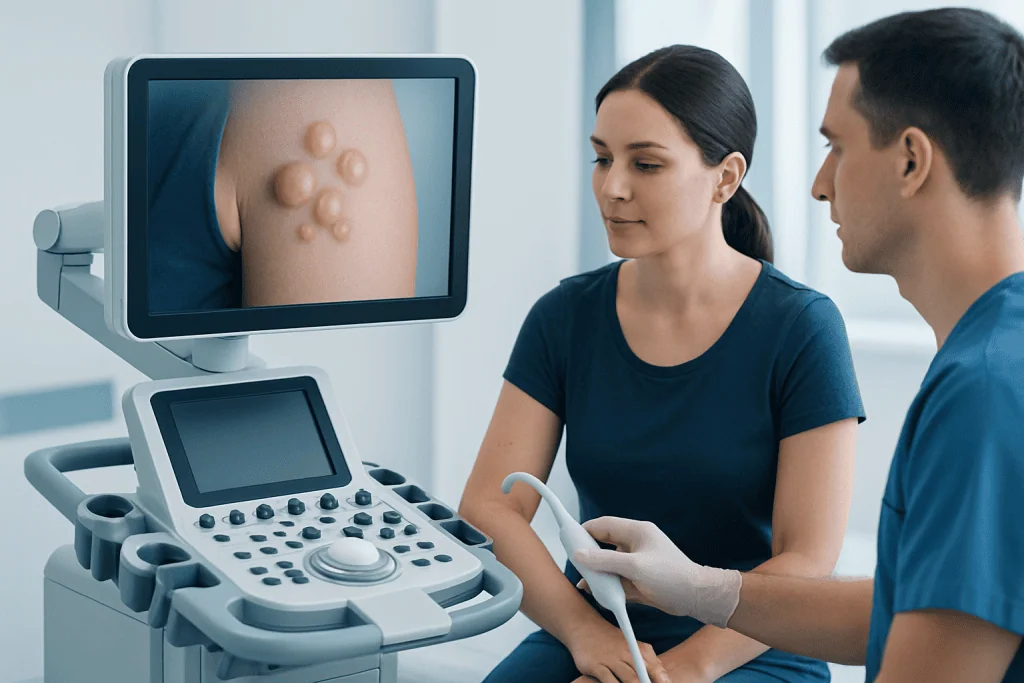
People often notice vesicles as tiny bumps filled with fluid that sit on top of red or otherwise irritated skin. They may feel itchy, tender, burning, or painful. In some cases, they break open and leave shallow raw areas, crusts, or peeling skin as they heal.
The location can offer clues. Vesicles on the hands or feet may happen with dyshidrotic eczema, sweating, or irritation. Vesicles around the lips may suggest a viral cause such as cold sores. A band-like group of painful vesicles on one side of the body can be seen with shingles.
Doctors also consider whether the vesicles are isolated or widespread, whether they affect only the skin or also the mouth and eyes, and whether they keep returning. These details help separate minor skin irritation from conditions that need prompt medical care.
- Common symptoms: itching, burning, pain, tenderness, redness
- Possible skin changes after rupture: crusting, scaling, peeling, mild soreness
- Associated symptoms that matter: fever, swollen glands, spreading rash, mouth sores
Common causes of vesicles

Vesicles can develop for many reasons. A simple cause is friction, such as tight shoes, repeated rubbing, or sports activity. The skin responds to pressure by separating slightly in the upper layers, allowing fluid to collect. Mild burns, including sunburn, may also produce vesicles.
Another common cause is contact irritation or allergy. Skin may react to soaps, cosmetics, metals such as nickel, cleaning products, plants, or workplace chemicals. In these cases, vesicles are often part of a red, itchy rash known as contact dermatitis.
Inflammatory skin diseases are also important causes. Eczema, especially atopic dermatitis, can cause small itchy vesicles during flares. Dyshidrotic eczema tends to cause deep-seated vesicles on the fingers, palms, and soles. Autoimmune blistering disorders are less common but can also lead to blister formation and usually need specialist care.
Infections are another major group. Viral infections such as herpes simplex and varicella-zoster can produce grouped, painful vesicles. Some bacterial skin infections and, less commonly, fungal conditions may lead to blister-like lesions as well. Because the treatment differs greatly by cause, the appearance alone is not always enough to identify the problem.
Risk factors and triggers
Anyone can develop vesicles, but certain triggers make them more likely. Repeated rubbing, sweating, heat, and occlusive footwear can increase the chance of blisters on the feet or hands. People who work with detergents, solvents, or other irritants may develop recurrent vesicles from skin barrier damage.
A history of allergies, eczema, asthma, or sensitive skin may raise the likelihood of vesicle-forming rashes. Viral infections may reactivate when the body is under stress, after illness, or when immunity is reduced. For example, cold sores may recur during stress, sun exposure, or fever.
Some medicines can occasionally trigger blistering reactions, and insect bites may also produce localized vesicles in sensitive individuals. In rarer cases, chronic or severe blistering can be linked to autoimmune disease. A doctor may ask about new products, recent travel, sexual health, occupational exposures, and any pattern of recurrence to identify the most likely trigger.
How doctors diagnose vesicles
Diagnosis starts with a medical history and a close skin examination. A doctor will usually ask when the vesicles started, whether they itch or hurt, whether they have happened before, and whether there has been contact with new products, plants, chemicals, or someone with a contagious rash. The location and arrangement of lesions often provide helpful clues.
In many cases, the cause can be suspected based on the history and appearance. If infection is possible, the doctor may swab the fluid or skin surface for testing. If allergy is suspected, patch testing may be recommended later to identify a trigger. Blood tests are not always needed, but they may be used if there are signs of a broader illness.
Sometimes a dermatologist performs a skin biopsy, especially when vesicles are severe, recurrent, unexplained, or suggest an autoimmune blistering disorder. If the rash affects the eyes, mouth, or large areas of the body, urgent specialist evaluation may be needed. When the cause is unclear, dermatology evaluation can help guide treatment and prevention.
Treatment options for vesicles
Treatment depends on the underlying cause rather than the vesicle itself. For friction blisters, the main goals are to protect the area, reduce pressure, and keep the skin clean. The roof of the blister acts as a natural barrier, so it is usually better not to pop it unless a clinician advises otherwise.
If the vesicles are due to eczema or contact dermatitis, treatment often includes avoiding the trigger and using moisturizers and anti-inflammatory creams prescribed by a doctor. In some cases, doctors may recommend allergy testing if a repeated contact reaction is suspected. For viral causes such as herpes infections, antiviral treatment may be considered, especially if symptoms are early, painful, or recurring.
When infection is present, treatment may involve topical or oral medication depending on the cause. If a blister has broken, gentle wound care is important to lower the risk of secondary bacterial infection. Extensive, severe, or autoimmune blistering disorders may require specialist-directed therapy, including medicines that calm immune inflammation.
People with recurrent or difficult-to-diagnose lesions may benefit from coordinated care. At the appropriate stage, a doctor may also consider a broader medical check-up if vesicles are part of a wider pattern of illness or repeated skin flares.
Self-care and prevention
Good self-care focuses on protecting the skin barrier and avoiding known triggers. Friction-related vesicles may be prevented by wearing well-fitting shoes, moisture-wicking socks, gloves for repetitive hand tasks, and protective dressings on areas that rub. Keeping the skin dry but not overly dried out can also help.
For sensitive or eczema-prone skin, gentle skincare matters. Using fragrance-free cleansers, moisturizing regularly, avoiding harsh detergents, and wearing gloves when using cleaning products may reduce flares. If a certain metal, cosmetic, or topical product has triggered vesicles before, avoiding that exposure is important.
If vesicles are present, people should avoid scratching and should keep the area clean. A non-stick dressing may protect a broken blister. However, home remedies should not replace medical assessment when the rash is severe, infected, widespread, or affecting the face, eyes, mouth, or genitals.
When to seek medical care
Medical care is appropriate if vesicles are very painful, keep coming back, spread quickly, or do not improve. A doctor should also assess vesicles that are accompanied by fever, increasing redness, pus, swelling, or warmth, because these can suggest infection or a more significant inflammatory problem.
Prompt evaluation is especially important if vesicles involve the eyes, inside the mouth, the genital area, or large areas of skin. People with weakened immunity, diabetes, or poor circulation should seek advice sooner, since skin problems can become more complicated in these situations.
Specialist care may be helpful when the diagnosis is uncertain or when a chronic skin condition is suspected. Acibadem International’s multidisciplinary specialists and JCI-accredited hospitals diagnose and treat skin and blistering conditions for international patients when further evaluation is needed.
Frequently asked questions
Are vesicles the same as blisters?
Vesicles are a type of blister. The term usually refers to a small, fluid-filled blister less than 1 centimeter across. Larger fluid-filled blisters are often called bullae.
Should a person pop vesicles at home?
In most cases, it is better not to pop them. The overlying skin helps protect the area from infection and supports healing. If a vesicle is large, painful, or in a high-friction area, a doctor can advise on safe management.
Can vesicles be contagious?
Some can be, depending on the cause. Vesicles caused by viral infections such as herpes simplex or shingles may spread infection through direct contact with fluid or affected skin. Vesicles caused by friction, eczema, or allergy are not contagious.
Do vesicles always mean a skin disease?
No. Sometimes they are a simple response to rubbing, heat, or irritation. However, recurring or widespread vesicles may point to eczema, infection, allergy, or another medical condition that needs diagnosis.
How long do vesicles take to heal?
Healing time depends on the cause. Minor friction vesicles may improve within days, while those linked to eczema, infection, or immune-related conditions may last longer or recur. Persistent symptoms should be assessed by a healthcare professional.
What is the difference between vesicles and pustules?
Vesicles usually contain clear fluid. Pustules contain pus, which is often thicker and may look yellow or white. This difference can help doctors narrow down the possible cause, but it does not confirm a diagnosis on its own.
References
- American Academy of Dermatology
- National Health Service
- Mayo Clinic
- Merck Manual Consumer Version
- World Health Organization
This article is for general information only and is not a substitute for professional medical advice. Please consult a qualified doctor about your individual situation.
Explore treatments in Turkey — costs, top hospitals & a free quote
JCI-accredited · board-certified surgeons · reply within 24h
Add us as a Preferred Source to see more of our trusted health content across Google Search, AI Overviews and Discover.