Jaundice Baby: A Complete Medical Overview

Jaundice in babies is caused by a buildup of bilirubin, a yellow pigment made when red blood cells break down. Many newborns develop mild jaundice in the first week of life, especially if they are born early or are not feeding well.
Key Takeaways
- Jaundice in babies is caused by a buildup of bilirubin, a yellow pigment made when red blood cells break down.
- Many newborns develop mild jaundice in the first week of life, especially if they are born early or are not feeding well.
- Doctors diagnose jaundice by examining the baby and measuring bilirubin with a skin test or blood test.
- Treatment depends on the bilirubin level, the baby’s age in hours, overall health, and risk factors.
- Urgent medical assessment is important if jaundice appears in the first 24 hours, gets worse quickly, or the baby is hard to wake, feeds poorly, or seems unwell.
Jaundice baby most often refers to a newborn whose skin and the whites of the eyes look yellow because bilirubin has built up in the body. It is very common in the first days of life, and while many cases improve with monitoring and feeding support, some babies need timely treatment to prevent complications.
Overview: what jaundice in a baby means
A jaundice baby is a baby whose skin and the whites of the eyes appear yellow because there is too much bilirubin in the blood. Bilirubin is a natural yellow pigment produced when the body breaks down old red blood cells. A newborn’s liver is still adapting after birth, so it may not remove bilirubin as efficiently in the first days of life.
This is why newborn jaundice is very common, especially during the first week. In many babies, it is temporary and settles as feeding improves, bowel movements become more regular, and the liver matures. Even so, jaundice should never be dismissed without proper assessment, because very high bilirubin levels can be harmful if not treated.
Jaundice is a sign, not a disease by itself. Doctors look for the cause, the baby’s age in hours, the bilirubin level, and any risk factors before deciding whether simple monitoring is enough or whether treatment is needed. This careful approach helps protect the baby while avoiding unnecessary interventions.
How jaundice appears and what parents may notice
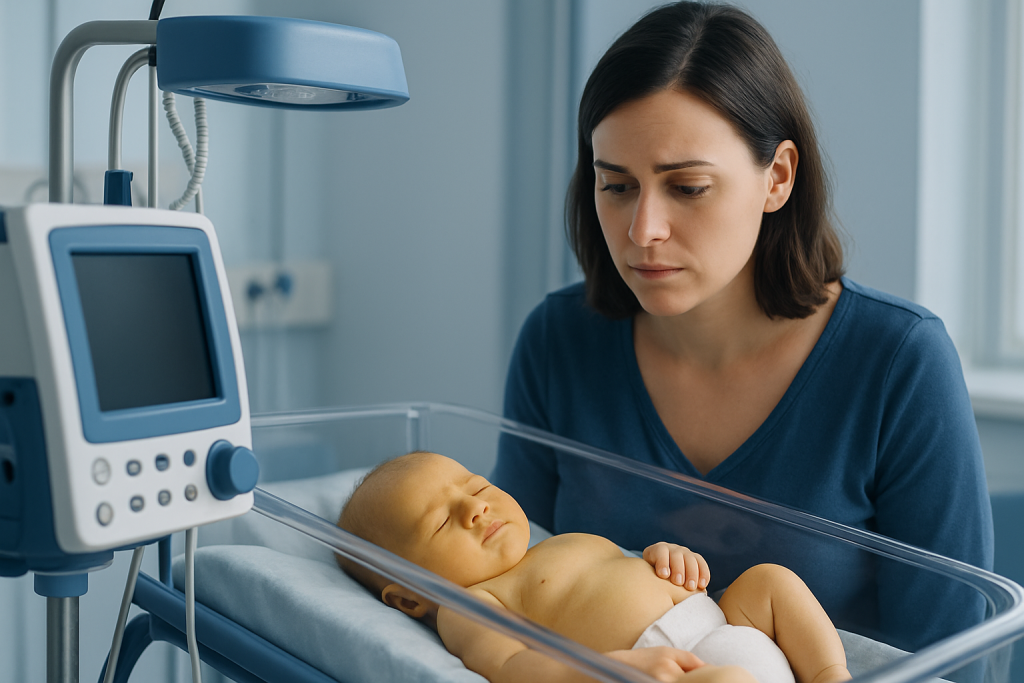
The yellow color of jaundice often starts on the face and then may move down to the chest, abdomen, arms, and legs as bilirubin rises. In babies with darker skin tones, jaundice may be easier to notice in the whites of the eyes, the gums, or the palms and soles. Parents may first see the color change in natural daylight.
Jaundice itself does not always make a baby seem ill. Many babies with mild jaundice are alert and otherwise well. However, the pattern and timing matter. Jaundice that begins in the first 24 hours after birth, becomes deeper quickly, or lasts longer than expected needs medical review.
Other signs that can occur alongside jaundice include poor feeding, fewer wet diapers than expected, excessive sleepiness, difficulty waking for feeds, irritability, or weight loss. These symptoms do not always mean severe illness, but they can suggest that bilirubin is rising or that another problem is affecting the baby.
- Yellowing of the skin or eyes
- Sleepiness or trouble waking for feeds
- Poor sucking or reduced feeding
- Dark urine or pale stools
- Jaundice appearing very early or lasting longer than two weeks
Why babies get jaundice: common causes and risk factors

The most common type is physiologic jaundice, which happens because newborns naturally break down fetal red blood cells after birth and their liver needs time to process bilirubin efficiently. This usually appears after the first 24 hours, peaks over several days, and then improves. It is part of the normal newborn transition, but it still requires observation.
Another common pattern is breastfeeding-related jaundice. This can happen when a baby is not getting enough milk in the first days, often because feeding is not yet well established. Less intake can lead to dehydration and fewer bowel movements, which means bilirubin stays in the body longer. A separate and less common pattern, breast milk jaundice, can persist longer in otherwise healthy babies who are feeding and growing well.
Some babies have a higher risk of significant jaundice. These include premature infants, babies with bruising from birth, babies with a blood group mismatch such as ABO or Rh incompatibility, babies with infection, and babies with inherited conditions that affect red blood cells or liver function. In some situations, jaundice may be linked to liver disease or blockage of bile flow, especially if stools are pale or jaundice continues beyond the newborn period.
Doctors also think about conditions that increase red blood cell breakdown, such as hemolysis, or reduce bilirubin handling in the liver. Because the causes vary, a baby with jaundice benefits from individualized assessment rather than a one-size-fits-all approach.
How doctors diagnose jaundice in newborns
Diagnosis starts with a physical examination and a detailed history. The clinician asks when the yellow color started, how the baby is feeding, how many wet and dirty diapers there are, whether the baby was born early, and whether there are family or blood group risk factors. The baby’s age in hours is important because bilirubin levels are interpreted differently depending on how old the newborn is.
To measure bilirubin, doctors may use a skin device called a transcutaneous bilirubin meter. If the reading is high, if the baby has risk factors, or if the result needs confirmation, a blood test is usually done. Blood testing gives a more precise bilirubin level and may be paired with other tests to look for the cause.
Depending on the situation, the medical team may check blood type, a direct antiglobulin test, hemoglobin, reticulocyte count, and signs of infection or dehydration. If jaundice lasts longer than expected, further tests may assess liver function and the type of bilirubin involved. In some babies, clinicians may use MRI or other imaging only when there is concern about a different underlying condition, not for routine newborn jaundice.
The goal of diagnosis is not only to confirm jaundice but also to decide whether the bilirubin level is safe, whether it is rising too quickly, and whether the baby needs treatment or closer follow-up.
Treatment options and how bilirubin is lowered
Treatment depends on the bilirubin level, the baby’s age in hours, whether the baby was born early, and whether other risk factors are present. For mild jaundice, the main plan may simply be careful observation, repeated bilirubin measurements, and support with effective feeding. Frequent feeding helps babies pass stool more often, which removes bilirubin from the body.
When bilirubin is high enough to need treatment, phototherapy is the standard approach. During phototherapy, the baby is placed under a special blue light that changes bilirubin into a form the body can remove more easily. This treatment is widely used, noninvasive, and carefully monitored. Doctors also check hydration, temperature, and follow-up bilirubin levels while treatment is underway.
If jaundice is caused by a blood group mismatch or another reason for rapid red blood cell breakdown, more intensive treatment may be required. In selected cases, doctors may use intravenous immune globulin or perform an exchange transfusion in a specialist setting. If there is concern for an underlying problem such as infection or biliary atresia, treatment focuses on that cause as well as the bilirubin level.
In babies with prolonged jaundice or signs suggesting a structural problem, clinicians may arrange blood tests and imaging such as ultrasound to assess the liver, gallbladder, and bile ducts. In international referral centers, including Acibadem International, multidisciplinary specialists in JCI-accredited hospitals evaluate and treat newborn jaundice and related conditions for families who need coordinated care.
Feeding, home care, and what helps recovery
At home, the most helpful step is making sure the baby feeds well and often. For breastfed babies, this may mean checking latch, positioning, and feed frequency with a healthcare professional or lactation specialist. Formula-fed babies also benefit from regular feeding according to clinical advice. Good intake supports hydration and helps bilirubin leave the body through the stool.
Parents should not try to treat jaundice with direct sunlight or home remedies. Sun exposure can be unsafe for newborn skin and does not replace medical assessment or phototherapy when treatment is needed. Over-the-counter remedies and herbal products should also be avoided unless a qualified doctor specifically recommends them.
Monitoring the baby’s behavior is just as important as watching the skin color. Parents can keep track of feeding times, diaper counts, and alertness. If a baby is difficult to wake, feeds very little, or looks more yellow day by day, reassessment is important even if the baby was recently seen.
Most babies improve without lasting problems when jaundice is recognized and managed appropriately. Follow-up visits are often arranged after discharge because bilirubin may rise after the baby has gone home, especially in the first several days of life.
When to seek medical care
Medical review is important any time a parent suspects jaundice in a newborn, but some situations need prompt attention. A baby should be assessed urgently if jaundice appears in the first 24 hours after birth, if the yellow color spreads quickly or becomes deep, or if the baby seems unusually sleepy, floppy, or difficult to feed. These can be signs that bilirubin is rising to a concerning level or that another illness is present.
Parents should also contact a doctor if the baby has fewer wet diapers than expected, a fever, poor weight gain, dark urine, or pale, chalky stools. Pale stools are especially important because they can suggest a problem with bile flow rather than simple newborn jaundice. Prolonged jaundice beyond about two weeks in a term baby also deserves further evaluation.
Emergency care is warranted if the baby is hard to wake, has a high-pitched cry, arches the body, has breathing difficulty, or appears acutely unwell. These findings do not always mean bilirubin toxicity, but they require immediate professional assessment. If needed, doctors may coordinate neonatal care and related pediatric evaluations, including pediatric surgery when an underlying surgical cause is identified.
Preventing complications and looking ahead
Not all jaundice can be prevented, but complications can often be avoided through early recognition, timely bilirubin checks, and good feeding support. Hospitals commonly screen newborns before discharge and assess risk based on gestational age, feeding, weight loss, and family history. This helps identify babies who need earlier follow-up after going home.
The outlook is generally very good when jaundice is monitored and treated appropriately. Most newborns recover fully as bilirubin levels fall over days to weeks. The main concern is preventing bilirubin from becoming high enough to affect the brain, which is why prompt assessment matters even when a baby looks otherwise well.
For families, the most reassuring point is that jaundice is common and manageable, but it should be checked rather than guessed at. A qualified pediatrician or newborn specialist can explain whether a baby’s jaundice fits a typical pattern or whether more evaluation is needed. Early attention supports safe recovery and peace of mind.
Frequently asked questions
Is jaundice in a baby always serious?
No. Jaundice is very common in newborns, and many babies have a mild form that improves as feeding and liver function mature. However, every baby with jaundice should be assessed properly because some cases need treatment to prevent complications.
When does newborn jaundice usually start?
Typical physiologic jaundice usually appears after the first 24 hours of life and becomes more noticeable over the next few days. Jaundice that starts in the first 24 hours is not considered typical and needs prompt medical evaluation.
How do doctors check bilirubin levels?
Doctors may first use a device placed on the baby’s skin to estimate bilirubin. If the level is high, if the result needs confirmation, or if the baby has risk factors, a blood test is done to measure bilirubin more accurately.
Can breastfeeding cause jaundice?
Breastfeeding itself is not harmful, but jaundice can become more noticeable if a newborn is not taking in enough milk during the first days. Effective feeding support is important, and many babies continue breastfeeding successfully while jaundice is monitored or treated.
How is baby jaundice treated?
Treatment depends on the bilirubin level and the baby’s overall situation. Some babies only need follow-up and feeding support, while others need phototherapy, which uses special light to help the body clear bilirubin.
Should parents place a jaundiced baby in sunlight?
No. Direct sunlight is not a safe or reliable treatment for newborn jaundice and can expose the baby to overheating or skin injury. Medical assessment is the right way to decide whether observation, feeding support, or phototherapy is needed.
How long can jaundice last in a baby?
Many newborns improve within the first one to two weeks, though the exact timing varies. If jaundice lasts longer than expected, especially beyond two weeks in a term baby, a doctor may check for prolonged jaundice and other underlying causes.
References
- American Academy of Pediatrics
- Centers for Disease Control and Prevention
- National Institute for Health and Care Excellence
- World Health Organization
- MedlinePlus
This article is for general information only and is not a substitute for professional medical advice. Please consult a qualified doctor about your individual situation.
Explore treatments in Turkey — costs, top hospitals & a free quote
JCI-accredited · board-certified surgeons · reply within 24h
Add us as a Preferred Source to see more of our trusted health content across Google Search, AI Overviews and Discover.

More from the Health Library



Related Specialists

Dr. Özgür Özer
Gynecology & Obstetrics
Dr. Oya Yeşim Hacımustafaoğlu Utkan (m)
Dermatology
Dr. Şenay Ağırgöl
Dermatology
Prof. Dr. Vahit Emre Özden
Orthopedic Surgery & Traumatology