Photophobia: What Patients Need to Know

Photophobia means light sensitivity, not a fear of light. It is a symptom rather than a diagnosis, so treatment depends on the underlying cause.
Key Takeaways
- Photophobia means light sensitivity, not a fear of light.
- It is a symptom rather than a diagnosis, so treatment depends on the underlying cause.
- Common causes include migraine, dry eye, eye inflammation, infection, and head injury.
- New, severe, or one-sided symptoms should be assessed by a doctor, especially if vision changes or intense pain are present.
- Simple measures such as reducing glare, treating dry eyes, and managing triggers can help many patients.
Photophobia is an unusual sensitivity to light that can make sunlight, indoor lighting, or screens feel uncomfortable or painful. It is not a disease itself, but a symptom that may come from the eyes, the nervous system, medications, or other underlying health conditions.
Overview: what photophobia means
Photophobia is a heightened sensitivity to light. People with photophobia may squint, feel eye discomfort, develop headache, or want to avoid bright environments because light feels unusually irritating or painful. The term can sound as though it means a fear of light, but in medicine it refers to light sensitivity.
Photophobia is not a diagnosis on its own. Instead, it is a symptom that can appear with a range of eye conditions, neurological disorders, infections, medication effects, or general health problems. In some people it is mild and occasional, such as during a migraine. In others it may be persistent and interfere with daily activities like reading, driving, or using digital screens.
Because the causes vary, evaluation focuses on the full pattern of symptoms. Details such as whether one or both eyes are affected, whether vision has changed, and whether there is eye redness, headache, nausea, or fever can help guide diagnosis and treatment.
How photophobia can feel in daily life
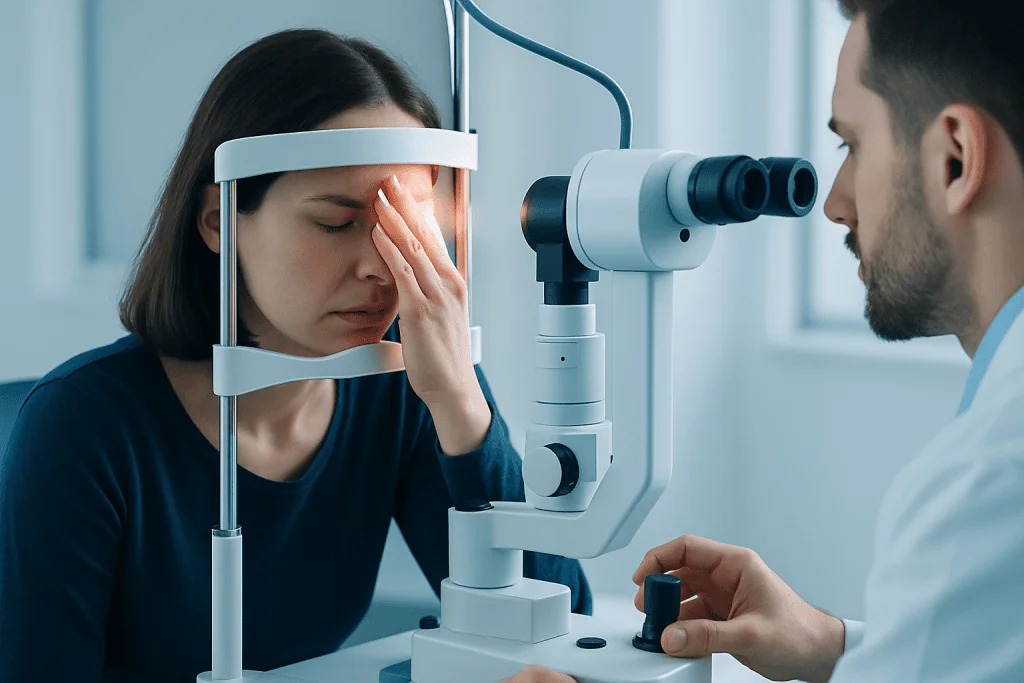
Photophobia may feel different from person to person. Some people notice discomfort only in bright sunlight, while others are bothered by fluorescent lights, headlights at night, or the glow from phones and computer screens. The sensation may be described as glare, burning, eye strain, aching around the eyes, or a strong urge to close the eyes.
It can occur on its own, but it often appears together with other symptoms. For example, migraine may cause throbbing head pain, nausea, and sensitivity to sound as well as light. Dry eye may cause grittiness, tearing, or fluctuating vision. Eye inflammation may lead to redness and pain, especially when looking at light.
In children, light sensitivity may be harder to recognize because they may not describe it clearly. They may rub their eyes, avoid going outdoors, sit in dim rooms, or complain of headache. Persistent or unexplained symptoms in a child should be assessed by a qualified clinician.
- Common triggers include sunlight, bright indoor lighting, glare from reflective surfaces, and prolonged screen use.
- Symptoms may be brief and episodic or constant throughout the day.
- Severity ranges from mild annoyance to significant pain or functional limitation.
Common causes and risk factors

Many cases of photophobia come from the surface or deeper structures of the eye. Dry eye disease, corneal irritation, conjunctivitis, inflammation inside the eye, and eye injury can all make light feel uncomfortable. Conditions affecting the cornea are especially important because the cornea is highly sensitive. Light sensitivity may also occur after eye surgery or during recovery from an eye infection.
Neurological causes are also common. Migraine is one of the best-known triggers of photophobia, and some people remain light-sensitive even between migraine attacks. Concussion or other head injury can cause ongoing sensitivity to light. Less commonly, disorders affecting the brain or its coverings, such as meningitis, can also cause severe photophobia and need urgent attention. Patients who have recurrent headaches and light sensitivity may benefit from assessment for migraine.
Some medications may contribute to photophobia by affecting the eyes, pupil size, or the nervous system. Contact lens overuse, exposure to ultraviolet light, and prolonged visual strain can also worsen symptoms. People who already have dry eyes, migraine, autoimmune disease, or prior eye problems may be more likely to develop light sensitivity.
In a smaller number of cases, photophobia is related to inflammation, autoimmune disease, or structural eye disorders such as uveitis. When the cause is not obvious, specialists may need to assess both eye and neurological factors to understand what is driving the symptom.
How doctors diagnose the cause
Diagnosis begins with a careful medical history. A doctor will usually ask when the sensitivity started, what kinds of light trigger it, whether one or both eyes are affected, and whether there are associated symptoms such as redness, tearing, blurred vision, double vision, headache, fever, nausea, or recent trauma. Medication use, contact lens habits, and any history of migraine or eye disease are also relevant.
An eye examination is often central to the workup. This may include testing vision, checking eye movements and pupils, measuring pressure inside the eye, and examining the front and back of the eye with magnification. If dry eye is suspected, the eye surface and tear film may be assessed. If deeper inflammation is possible, an ophthalmologist may look for signs of uveitis or other internal eye conditions.
When symptoms suggest a neurological or systemic cause, further testing may be needed. Depending on the situation, this can include blood tests, imaging, or specialist assessment. For example, severe headache with neck stiffness, fever, confusion, or sudden vision changes requires urgent medical evaluation to rule out serious conditions.
The goal is not only to confirm that photophobia is present, but to identify its source. This matters because the treatment for dry eye is very different from the treatment for migraine, infection, inflammation, or injury.
Treatment options and symptom relief
Treatment for photophobia focuses on the cause. If dry eye is contributing, lubricating eye drops, changes in the environment, and treatment of eyelid or tear film problems may help. If an infection or inflammation is responsible, prescription treatment may be needed. When migraine is the main trigger, managing migraine attacks and reducing triggers can improve light sensitivity over time. Evaluation by neurology care or ophthalmology care may be appropriate depending on the suspected cause.
Simple adjustments can reduce discomfort while the underlying problem is being treated. Many people benefit from softer indoor lighting, reducing screen glare, taking visual breaks, and wearing brimmed hats outdoors. Sunglasses can help in bright settings, but wearing very dark lenses indoors for long periods is usually not advised unless recommended by a doctor, because it may increase light sensitivity for some people over time.
For screen-related strain, practical steps include adjusting brightness, increasing text size, using antiglare measures, and following regular breaks. If contact lenses are irritating the eyes, a clinician may recommend pausing lens wear until the eye surface recovers. When eye pain, inflammation, or vision symptoms are present, self-treatment alone is not enough and a proper examination is important.
In complex cases, management may involve more than one specialty. Patients with recurrent headache, visual symptoms, or lasting symptoms after head injury may need coordinated assessment, sometimes including headache treatment. Near the end of the care pathway, some international patients choose centers such as Acibadem International, where multidisciplinary specialists in JCI-accredited hospitals evaluate and treat eye and neurological causes of photophobia.
Self-care, prevention, and reducing triggers
Not every cause of photophobia can be prevented, but many patients can reduce symptoms by identifying patterns and avoiding triggers where possible. Keeping a simple symptom diary may help show whether episodes are linked to migraine, poor sleep, bright environments, dehydration, prolonged screen time, or certain medications. This information can also be useful during a medical appointment.
Good eye habits can make a meaningful difference. These include staying hydrated, blinking regularly during screen use, managing dry indoor air, and using contact lenses exactly as directed. People who spend time outdoors should protect their eyes from ultraviolet exposure with appropriate eyewear and hats. Regular eye checkups can help detect treatable problems early.
General health measures may also help, especially when light sensitivity is related to migraine or fatigue. Consistent sleep, balanced meals, stress management, and limiting eye strain can all support symptom control. However, persistent symptoms should not be dismissed as just tired eyes, particularly if they are new or worsening.
- Reduce glare from screens and overhead lighting.
- Take frequent visual breaks during reading or computer work.
- Address dry eye symptoms early rather than waiting for them to worsen.
- Seek professional advice before using medicated eye drops on a regular basis.
When to seek medical care
Medical care is recommended if photophobia is new, persistent, or interfering with daily life. A prompt evaluation is especially important when light sensitivity comes with eye redness, significant eye pain, blurred vision, reduced vision, new floaters, discharge, or symptoms after an eye injury. These features can point to conditions that need targeted treatment.
Urgent assessment is needed if photophobia appears together with severe headache, fever, stiff neck, confusion, weakness, vomiting, or symptoms after a head injury. These combinations may suggest a neurological or infectious problem that should not be delayed. One-sided severe symptoms also deserve timely attention.
Even when symptoms seem mild, it is wise to seek care if they last more than a short period, keep returning, or are unexplained. The right specialist may be an ophthalmologist, neurologist, or primary care doctor depending on the overall picture. Early assessment can help relieve discomfort and identify any condition that should be treated promptly.
Frequently asked questions
Is photophobia an eye disease?
No. Photophobia is a symptom, meaning the eyes or nervous system are reacting to light in an unusual way. The underlying cause may be an eye condition, migraine, medication effect, infection, or another medical issue.
Can migraine cause photophobia without a severe headache?
Yes. Some people experience strong light sensitivity before, during, or even between migraine attacks. In some cases, photophobia may be more noticeable than the headache itself, which is why a careful medical history is important.
Does photophobia always mean something serious?
Not always. It can happen with common and treatable problems such as dry eye, eye strain, or migraine. However, sudden severe symptoms, vision changes, significant pain, or fever should be checked promptly.
What kind of doctor treats photophobia?
That depends on the cause. An ophthalmologist evaluates eye-related causes, while a neurologist may assess migraine, concussion, or other nervous system conditions. A primary care doctor can help guide the first steps and refer when needed.
Do sunglasses help photophobia?
They can help in bright outdoor settings and during short periods of intense light exposure. But wearing very dark lenses indoors all the time may worsen sensitivity for some people, so it is best to use them thoughtfully and follow medical advice.
Can screens make photophobia worse?
Yes. Screens can worsen light sensitivity because of brightness, glare, reduced blinking, and prolonged visual effort. Adjusting screen settings, taking regular breaks, and treating dry eye can often reduce symptoms.
References
- American Academy of Ophthalmology
- National Eye Institute
- National Institute of Neurological Disorders and Stroke
- Mayo Clinic
- MedlinePlus
This article is for general information only and is not a substitute for professional medical advice. Please consult a qualified doctor about your individual situation.
Explore treatments in Turkey — costs, top hospitals & a free quote
JCI-accredited · board-certified surgeons · reply within 24h
Add us as a Preferred Source to see more of our trusted health content across Google Search, AI Overviews and Discover.

More from the Health Library



Related Specialists

Pdg. Ayşe Günsay
Podiatry & Foot Health
Dr. Şahiner Sezgin
Internal Medicine
Prof. Dr. Ahmet Ümit Güllü
Cardiovascular Surgery
Assoc. Prof. Dr. Selçuk Görmez
Cardiology