Calf Strain: What Patients Need to Know

A calf strain is a stretch or tear in one of the calf muscles, usually after sudden pushing off, sprinting, jumping, or changing direction. Typical symptoms include sudden pain, tightness, tenderness, swelling, and pain when walking or rising onto the toes.
Key Takeaways
- A calf strain is a stretch or tear in one of the calf muscles, usually after sudden pushing off, sprinting, jumping, or changing direction.
- Typical symptoms include sudden pain, tightness, tenderness, swelling, and pain when walking or rising onto the toes.
- Mild strains often heal with rest, ice, compression, elevation, and a guided rehabilitation program.
- Severe pain, inability to bear weight, marked swelling, or concern for a blood clot should be assessed by a doctor promptly.
- Recovery time depends on the severity of the injury and whether the person returns to activity gradually.
Calf strain is a common muscle injury caused by overstretching or tearing the muscles at the back of the lower leg. It often improves with rest, ice, and a gradual return to activity, but more severe injuries may need medical evaluation and structured rehabilitation.
Overview
A calf strain is a pulled calf muscle. It happens when muscle fibers in the back of the lower leg are overstretched or torn, often during fast or forceful movement. Many people notice a sudden sharp pain or a feeling that something “grabbed” in the calf while walking quickly, running, jumping, or climbing stairs.
The calf is mainly made up of two muscles: the gastrocnemius and the soleus. These muscles help point the foot downward and push the body forward when walking or running. Because they work hard during everyday movement and sports, they are prone to strain, especially when a person accelerates suddenly or exercises with tight or tired muscles.
Calf strains can range from mild to more serious. A mild strain may cause discomfort but still allow walking, while a larger tear can make it difficult to stand on tiptoe or bear weight. The important difference is that a calf strain is a muscle injury; it is not the same as a tendon rupture or a circulation problem, though those can sometimes cause similar symptoms and may need separate evaluation.
Symptoms and how a calf strain feels
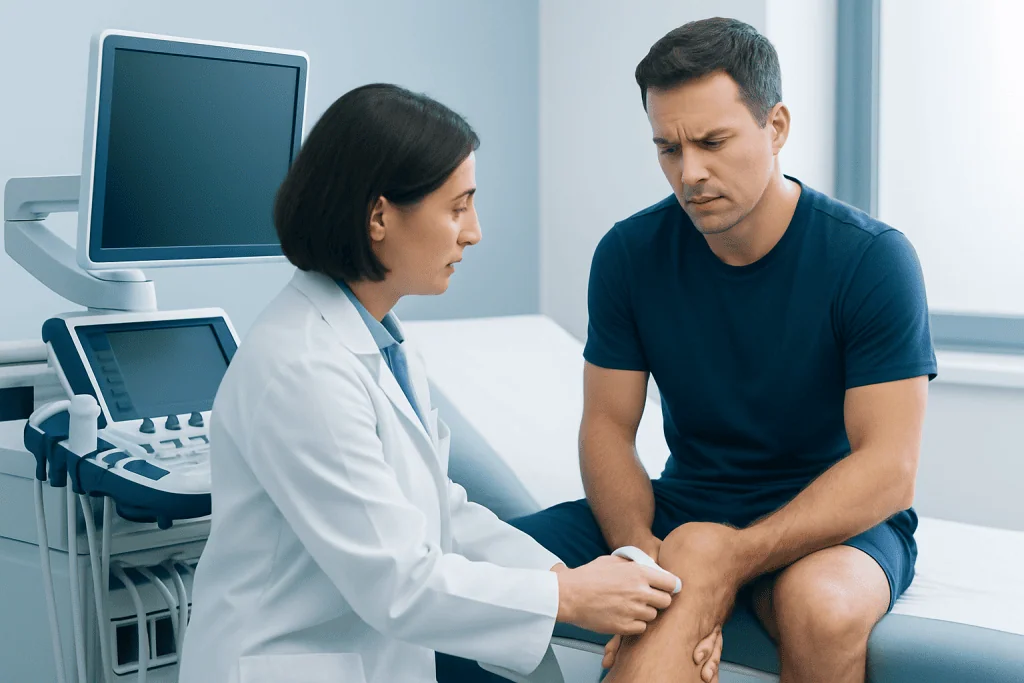
Symptoms often begin at the time of injury. Some people feel a sudden stab, pull, or snapping sensation in the calf. Others notice pain that builds over several hours, especially after exercise. The discomfort may be located high in the calf, lower near the Achilles region, or spread through the back of the leg depending on which muscle is affected.
Common symptoms include:
- Sudden pain in the back of the lower leg
- Tightness or cramping in the calf
- Tenderness when pressing on the muscle
- Swelling or warmth
- Bruising, especially with a larger tear
- Pain when walking, pushing off, or rising onto the toes
- Reduced strength or limited ankle movement
A mild strain may feel like stiffness or soreness that becomes more noticeable after activity. A moderate or severe strain can make normal walking difficult. If the calf becomes very swollen, red, or painful without a clear injury, a doctor may also consider other causes such as deep vein thrombosis, which requires urgent medical attention.
Causes and risk factors

Calf strain usually occurs when the muscle is forced to contract quickly while also being stretched. This commonly happens during sprinting, lunging, jumping, tennis, football, basketball, or sudden changes in direction. Even daily activities can trigger it, especially in people who are deconditioned or returning to exercise too quickly.
Several factors can increase the chance of a calf strain. Tight calf muscles, poor warm-up, muscle fatigue, previous lower-leg injury, and limited ankle flexibility can all play a role. Older adults may also be more prone to this injury because muscles and tendons naturally become less elastic over time. In some people, weakness in the surrounding muscles or altered movement patterns can add extra load to the calf.
Not every pain in the calf is a simple strain. A more significant injury can involve the Achilles tendon or other structures around the ankle and lower leg. If pain is felt lower down near the heel or is linked to a sudden loss of push-off strength, doctors may evaluate for Achilles tendon rupture or other injuries that may need different treatment.
Diagnosis
Doctors usually diagnose calf strain by asking how the injury happened and examining the leg. They look for tenderness, swelling, bruising, weakness, and pain with stretching or calf contraction. They may also compare both legs and assess walking, ankle motion, and the ability to stand on tiptoe.
In many cases, imaging is not necessary. However, ultrasound or MRI may be helpful when the diagnosis is uncertain, symptoms are severe, or recovery is slower than expected. Imaging can show the location and extent of the muscle tear and help distinguish a strain from tendon injury or a large collection of blood within the muscle.
Doctors also think about other possible causes of calf pain. These can include tendon injuries, Baker’s cyst, nerve-related pain, or a blood clot. If there is significant swelling, redness, unexplained pain, recent immobility, or shortness of breath, prompt assessment is important to rule out potentially serious conditions rather than assuming the problem is only a muscle strain.
Treatment options and early recovery
Initial treatment for calf strain is usually conservative. In the first days, the main goals are to reduce pain, protect the muscle, and avoid making the tear worse. Rest from aggravating activity, applying ice for short intervals, using compression, and elevating the leg can help control symptoms. Some people benefit from temporary support such as a compression sleeve or, if walking is painful, a walking aid recommended by a clinician.
After the early painful stage, recovery usually shifts toward gentle movement and progressive rehabilitation. This may include range-of-motion exercises, calf stretching introduced carefully, and strengthening that starts light and becomes more functional over time. A supervised physical therapy and rehabilitation program can be helpful, especially for athletes, older adults, or people with repeat injuries.
Medical treatment depends on severity. Mild strains often improve within weeks, while larger tears may take longer and need closer follow-up. If there is concern for a tendon injury, substantial tearing, or persistent functional loss, specialists may recommend additional imaging or an orthopedic evaluation. In selected cases where symptoms involve surrounding structures or prolonged pain, assessment by orthopedics and traumatology can help guide safe recovery and return to activity.
Prevention and self-care
Not every calf strain can be prevented, but a few practical steps can lower risk. Warming up before exercise, increasing training intensity gradually, and allowing time for recovery between hard sessions are especially important. People who sit for long periods and then become active suddenly may benefit from a short walking warm-up before more demanding exercise.
Self-care during recovery should focus on steady progress rather than rushing back. Helpful measures include:
- Restarting activity gradually once walking is comfortable
- Doing strengthening exercises consistently as advised
- Improving ankle flexibility and lower-limb mobility
- Wearing supportive footwear suited to the activity
- Addressing training errors, overuse, and poor movement mechanics
Repeated calf strains are common when the muscle regains comfort before it regains strength. If symptoms keep returning, clinicians may look at posture, gait, and related conditions affecting the foot, knee, or lower back. In some cases, a broader musculoskeletal or sports medicine assessment can help identify the reason the calf is being overloaded.
When to seek medical care
Medical care is advisable if pain is severe, walking is difficult, the calf is very swollen, or bruising is extensive. A person should also seek assessment if there is a popping sensation at the time of injury, a visible deformity, or an inability to push off the foot. These features can suggest a more significant tear or a tendon injury.
Prompt evaluation is especially important when symptoms do not fit a straightforward muscle strain. Redness, unusual warmth, swelling without a clear injury, or calf pain after a long flight, surgery, or prolonged bed rest can point to a blood clot. Shortness of breath or chest pain requires urgent emergency care.
If the diagnosis is uncertain or recovery is delayed, a specialist may recommend imaging or a structured rehabilitation plan. Near the end of care, some patients benefit from multidisciplinary evaluation to support return to exercise and reduce reinjury risk. Acibadem International’s multidisciplinary specialists in JCI-accredited hospitals diagnose and treat muscle, tendon, and sports-related lower-leg injuries for international patients.
Frequently asked questions
How do people know if they have a calf strain?
A calf strain often causes sudden pain, tightness, or a pulling sensation in the back of the lower leg, usually during exercise or a quick movement. Tenderness, swelling, and pain with walking or pushing off the foot are also common. A doctor can confirm the diagnosis and check for other causes if symptoms are severe or unclear.
How long does a calf strain take to heal?
Healing time depends on how much the muscle is injured. Mild strains may improve in a few weeks, while more significant tears can take several weeks to months. Returning too soon can delay healing and increase the chance of another strain.
Should a person walk on a calf strain?
Light walking may be reasonable if it does not worsen pain, but activity should be reduced during the early phase of recovery. If walking is painful, limping is marked, or weight-bearing is difficult, medical advice is appropriate. A clinician can guide when to progress from rest to gentle movement.
What is the best early treatment for a pulled calf muscle?
Early treatment usually includes resting from painful activity, applying ice for short periods, using compression, and elevating the leg. The goal is to reduce pain and swelling while protecting the muscle from further strain. After the first phase, gradual exercises are often introduced to restore motion and strength.
Can calf pain be something more serious than a strain?
Yes. Although many cases are muscle strains, calf pain can also be caused by tendon injuries, referred pain, or a blood clot in the leg. Sudden severe swelling, redness, warmth, shortness of breath, or pain without a clear injury should be assessed promptly.
When can sports or exercise start again after a calf strain?
Return to sport should happen gradually once walking is comfortable, strength is improving, and the calf can tolerate stretching and loading without significant pain. It is usually safer to base the return on function rather than on a set number of days. A rehabilitation professional can help decide when higher-impact activity is appropriate.
This article is for general information only and is not a substitute for professional medical advice. Please consult a qualified doctor about your individual situation.
Explore treatments in Turkey — costs, top hospitals & a free quote
JCI-accredited · board-certified surgeons · reply within 24h
Add us as a Preferred Source to see more of our trusted health content across Google Search, AI Overviews and Discover.

More from the Health Library

Walking — Explained by Medical Evidence, Not Myths

Hair on the Chin for Females: What Patients Need to Know

Mindfulness Activities: A Complete Medical Overview

Blood and Blood Groups — Explained by Medical Evidence, Not Myths

Trichiasis — Explained by Medical Evidence, Not Myths