Subungual Melanoma: Symptoms, Causes, and Treatment Options
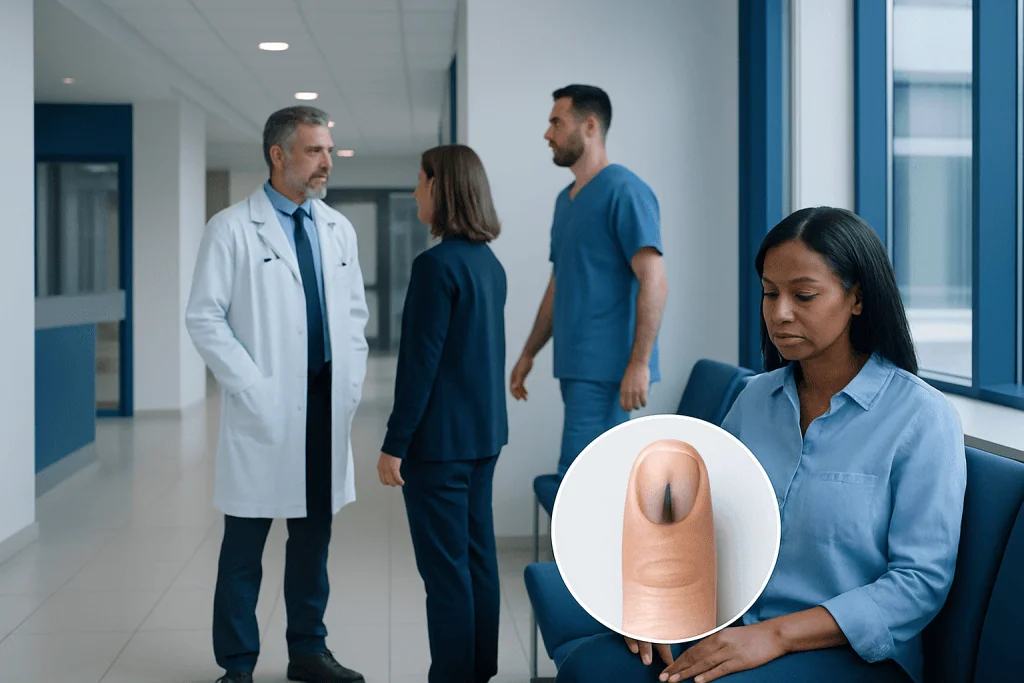
Subungual melanoma is a form of melanoma that affects the nail unit, often on the thumb or big toe. A dark band in the nail is not always cancer, but widening, irregular color, nail damage, or pigment spreading to nearby skin should be assessed.
Key Takeaways
- Subungual melanoma is a form of melanoma that affects the nail unit, often on the thumb or big toe.
- A dark band in the nail is not always cancer, but widening, irregular color, nail damage, or pigment spreading to nearby skin should be assessed.
- Diagnosis usually involves a specialist examination and a biopsy of the nail unit.
- Treatment depends on the stage and may include surgery and, in some cases, additional cancer therapy.
- Prompt medical review improves the chance of earlier diagnosis and more effective treatment.
Subungual melanoma is a rare type of melanoma that develops in or around the nail unit, usually appearing as a dark streak, changing pigment, or a nail that does not heal normally. Early evaluation matters because some nail changes are harmless, but persistent or evolving changes should be checked to rule out cancer.
Overview: what subungual melanoma is
Subungual melanoma is a type of skin cancer that begins in the tissues of the nail unit, including the nail matrix or nail bed. It most often affects a fingernail or toenail and may first appear as a dark streak, an area of discoloration, or a nail change that does not improve over time. Although uncommon, it is important because it can be mistaken for a bruise, fungal infection, or trauma.
This condition belongs to the broader group of melanomas, which develop from pigment-producing cells called melanocytes. Unlike many melanomas that arise on sun-exposed skin, subungual melanoma forms in a site that is less visible and easier to overlook. That is one reason diagnosis can sometimes be delayed.
Not every dark line under a nail is cancer. Benign causes include injury, medications, moles, and natural pigmentation. However, a new or changing band, especially one that becomes wider, darker, irregular, or associated with nail splitting, deserves professional assessment. In the wider context of melanoma, the nail unit is a distinct and clinically important location.
How it may look and feel

The most recognized sign of subungual melanoma is a brown, black, or gray band running lengthwise from the base of the nail toward the tip. In some cases the color is uneven, with darker and lighter areas, blurred borders, or a band that becomes wider over time. The thumb, index finger, and big toe are common sites, but any nail can be affected.
Some people notice that the nail becomes brittle, cracked, lifted, or distorted. The pigment may extend onto the skin next to the nail, including the cuticle or side of the finger or toe. This spread of pigment can be an important warning sign, but it is not present in every case.
Pain is not always an early feature. Some lesions are painless for a long time, while others may bleed, ulcerate, or become tender later. Because these symptoms can overlap with infection or injury, any persistent nail change that does not follow a clear and improving pattern should be examined by a dermatologist or another qualified clinician.
Causes and risk factors

Subungual melanoma develops when melanocytes in the nail unit grow abnormally and form a malignant tumor. The exact trigger is not always known. Unlike many other skin cancers, it is not as strongly linked to ultraviolet exposure, although a person’s overall skin cancer risk profile still matters.
Risk factors may include older age, a personal or family history of melanoma, and the presence of unusual pigmented lesions. Repeated trauma has been reported by some patients, but trauma itself does not clearly explain most cases. In many people, there is no obvious cause.
Subungual melanoma can occur in people of any skin tone. It is also important to remember that darker natural pigmentation in the nail can be completely benign, especially when present in several nails and stable over time. Distinguishing harmless pigmentation from concerning change is one reason specialist evaluation is valuable.
- More concerning features include a new single dark band
- A stripe that widens or changes color
- Irregular borders or variation in pigment
- Nail splitting, destruction, or persistent bleeding
- Pigment extending onto nearby skin
How doctors diagnose subungual melanoma
Diagnosis starts with a careful medical history and examination of the nail and surrounding skin. A doctor will ask when the change first appeared, whether it has grown or changed, whether there was trauma, and whether there is pain, bleeding, or infection. Dermoscopy, a magnified skin examination, may help the clinician look for patterns that suggest benign pigmentation or melanoma.
Because appearance alone cannot always provide a definite answer, a biopsy is usually needed when melanoma is suspected. This involves taking a sample from the nail unit so a pathologist can examine the cells under a microscope. The exact biopsy technique depends on where the abnormal pigment is located and how much of the nail unit is involved.
If melanoma is confirmed, the next step is staging. Staging helps determine how deep the tumor is and whether it has spread. Additional imaging or lymph node assessment may be recommended in selected cases. People with newly diagnosed disease may also be referred to teams experienced in dermatology and oncology for coordinated care planning.
Treatment options and what they aim to do
The main treatment for subungual melanoma is surgery. The goal is to remove the cancer completely while preserving as much healthy tissue and function as possible. The type of surgery depends on the size, depth, and exact location of the tumor. In the past, amputation was commonly used, but current treatment planning is often more individualized and may allow more conservative approaches in appropriate cases.
If the melanoma is more advanced or has spread beyond the nail unit, treatment may involve additional therapies. These can include lymph node evaluation, immunotherapy, targeted therapy for tumors with specific genetic changes, or other systemic treatments recommended by a cancer specialist. The choice depends on stage, pathology findings, and the person’s general health.
Follow-up after treatment is an important part of care. Patients are usually monitored for local recurrence, lymph node changes, and any new suspicious skin lesions. In selected cases, the care pathway may involve medical oncology support for treatment selection and long-term surveillance.
At centers with multidisciplinary expertise, care may include dermatologists, surgeons, pathologists, radiologists, and oncologists working together. Acibadem International’s multidisciplinary specialists in JCI-accredited hospitals diagnose and treat melanoma and related nail-unit cancers for international patients.
Practical self-checks and prevention
There is no guaranteed way to prevent subungual melanoma, but regular attention to nail changes can support earlier detection. Many people look at their skin but rarely examine their nails. A simple monthly self-check of fingernails and toenails can make it easier to notice a new dark band, unexplained nail distortion, or pigment spreading onto nearby skin.
It helps to compare both hands and both feet in good lighting. Taking a clear photo can also be useful if a doctor later needs to know whether a lesion has changed over time. Nail polish, gel products, and artificial nails can sometimes hide changes, so it is worth checking the nails without coverage from time to time.
General skin health habits still matter, even though this form of melanoma is not mainly driven by sun exposure. These habits include protecting the skin from excessive ultraviolet exposure, not ignoring persistent wounds, and seeking medical review for suspicious lesions elsewhere on the body, such as those discussed in skin cancer.
When to seek medical care
Medical advice should be sought if a nail develops a new dark streak or patch that does not grow out like a bruise, especially if it is getting wider, darker, or more irregular. Prompt evaluation is also important if the nail begins to split, lift, bleed, ulcerate, or become persistently painful without a clear explanation.
A person should arrange an appointment sooner rather than later if pigment spreads onto the skin around the nail, if only one nail is affected and the cause is uncertain, or if there is a personal or family history of melanoma. These signs do not always mean cancer, but they do justify expert assessment.
Urgent assessment may be needed if there is rapidly progressive nail destruction, a new enlarging lesion, or significant bleeding. A dermatologist, skin cancer specialist, or clinician experienced in nail disorders can decide whether observation, imaging, or biopsy is the safest next step.
Frequently asked questions
Is subungual melanoma always a dark stripe under the nail?
No. A dark longitudinal band is common, but subungual melanoma can also appear as a patch of discoloration, nail splitting, lifting, or a persistent sore around the nail. Some lesions have little pigment and may be harder to recognize.
How can someone tell the difference between a bruise and subungual melanoma?
A bruise under the nail usually follows injury and gradually moves outward as the nail grows. Subungual melanoma may persist, change in width or color, or involve the skin around the nail. If a mark does not clearly grow out or keeps changing, a doctor should check it.
Is subungual melanoma caused by nail trauma?
Trauma may draw attention to a nail change, but it does not fully explain most cases. Many patients do not recall an injury. A history of trauma should not be used to rule out melanoma if the nail looks suspicious.
What doctor should evaluate suspected subungual melanoma?
A dermatologist is often the most appropriate first specialist, especially one experienced in nail disorders or skin cancer. Depending on the findings, care may also involve a surgeon, pathologist, and oncology team.
Does treatment always mean amputation?
No. Treatment is based on the tumor’s location, depth, and stage. Some patients may be treated with tissue-sparing surgery, while others need more extensive surgery or additional cancer therapies.
Can subungual melanoma be cured?
Many cancers, including subungual melanoma, are more treatable when diagnosed early. The outlook depends on how advanced the melanoma is at diagnosis and whether it has spread. A treating doctor can explain the likely outlook based on the pathology and staging results.
References
- American Academy of Dermatology
- National Cancer Institute
- American Cancer Society
- National Comprehensive Cancer Network
- British Association of Dermatologists
This article is for general information only and is not a substitute for professional medical advice. Please consult a qualified doctor about your individual situation.
Melanoma in Turkey — costs, top hospitals & a free quote
JCI-accredited · board-certified surgeons · reply within 24h
Add us as a Preferred Source to see more of our trusted health content across Google Search, AI Overviews and Discover.

Medical Oncology Department
Medical treatment of cancer with chemotherapy, immunotherapy and targeted therapies under a multidisciplinary tumor board.
60 specialists in this unit