Louse: An Evidence-Based Guide for Patients

A louse is not the same as poor hygiene; anyone can get lice through close contact or shared items. Common types include head lice, body lice, and pubic lice, each affecting different areas of the body.
Key Takeaways
- A louse is not the same as poor hygiene; anyone can get lice through close contact or shared items.
- Common types include head lice, body lice, and pubic lice, each affecting different areas of the body.
- Itching is the most familiar symptom, but some people have few or no symptoms at first.
- Treatment may include medicated products, fine-tooth combing, laundering clothing and bedding, and checking close contacts.
- Medical advice is important if symptoms persist, the skin becomes infected, or the infestation involves the eyelashes or a young child.
A louse is a small parasitic insect that feeds on human blood and may live on the scalp, body, or pubic hair. Most lice infestations are uncomfortable rather than dangerous, and they can usually be treated effectively with careful diagnosis, targeted treatment, and practical hygiene measures.
Overview
A louse is a tiny wingless insect that survives by feeding on human blood. Lice can live on the scalp, in clothing seams, or in coarse body hair depending on the type. Although they are unpleasant and often itchy, they do not reflect a person’s cleanliness and are usually manageable with the right treatment and home care.
There are three main types that affect humans: head lice, body lice, and pubic lice. Head lice are the most common and are especially frequent among school-aged children, though adults can also be affected. Body lice usually live in clothing and move to the skin to feed. Pubic lice usually affect the pubic area but can also involve other coarse hair, such as the chest, beard, or underarms.
Many people use the word “lice” for the condition and “louse” for a single insect. A doctor may call this condition pediculosis. Knowing which type is present helps guide treatment, because the source of infestation and the best control measures can differ from one type to another.
Symptoms and what a louse infestation feels like
The most common symptom of a louse infestation is itching. This happens because the skin reacts to the insect’s saliva during feeding. Itching may be mild at first and then become more noticeable over time, especially if the infestation continues. Some people also describe a tickling or crawling sensation in the hair or on the skin.
Visible signs depend on the type of louse. With head lice, tiny eggs called nits may be attached firmly to hair shafts near the scalp, especially behind the ears or at the back of the neck. Live lice are small and move quickly, so they can be harder to spot. Scratching can lead to redness, irritation, and sometimes small sores.
Body lice often cause itchy bumps on areas where clothing touches the skin, such as the trunk, waist, or shoulders. Pubic lice may cause itching in the genital area and sometimes tiny blue-gray spots or small blood marks on underwear. In some cases, there may be no obvious symptoms at the beginning, which is why infestations can spread before they are noticed.
- Itching of the scalp, body, or pubic area
- Nits attached to hair shafts or lice seen moving
- Red bumps, scratch marks, or irritated skin
- Sleep disturbance from nighttime itching
- Swollen lymph nodes in nearby areas in more irritated cases
Types, causes, and risk factors
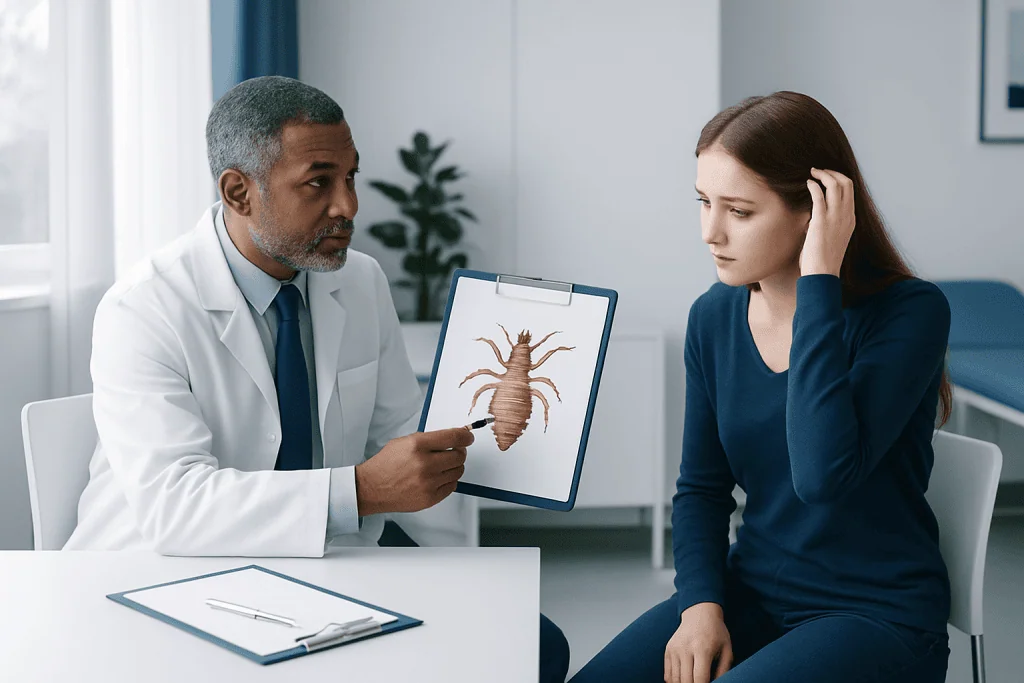
Head lice spread mainly through direct head-to-head contact. This is why they are common among children who play closely together, but adults in the same household can be affected too. Sharing hats, hairbrushes, headphones, or pillows may contribute, though direct contact is the main route. Head lice do not jump or fly; they crawl.
Body lice are different because they usually live and lay eggs in clothing and bedding rather than on the body itself. They are more likely to occur when clothing is not changed or washed regularly, or when people live in crowded conditions with limited access to laundry or bathing facilities. Body lice can sometimes be associated with other health concerns and should be assessed carefully.
Pubic lice usually spread through close physical or sexual contact. Less commonly, they may spread by sharing towels, bedding, or clothing. A clinician may also consider screening for other conditions if pubic lice are diagnosed, because the same close-contact situations can overlap with other infections. People sometimes confuse lice with other skin conditions such as dandruff, eczema, or scabies, so proper identification matters.
Risk factors include close household contact with an affected person, attendance at school or daycare, crowded living environments, and sharing personal items. Having lice is not a sign of poor hygiene, weak health, or social status. It simply means the insect has found an opportunity to spread.
How doctors diagnose a louse infestation
Diagnosis usually begins with a careful history and physical examination. A doctor will ask about itching, exposure to someone with lice, recent travel, living conditions, and any treatments already tried. The most important step is finding live lice or viable nits in the affected area.
For head lice, examination of the scalp and hair under good light is often enough, sometimes with a fine-tooth comb to help detect moving insects. For body lice, the skin may show scratch marks and bumps, but the insects and eggs are more often found in clothing seams. For pubic lice, the clinician will inspect coarse hair and nearby skin. If eyelashes are involved, the evaluation should be especially careful.
Because itching has many causes, a doctor may also consider other diagnoses such as dandruff, eczema, fungal infection, allergic reactions, or psoriasis. If the skin looks infected from scratching, or if symptoms do not improve with standard care, further assessment may be needed. Accurate diagnosis helps avoid unnecessary treatment and makes recurrence less likely.
Treatment options for louse infestations
Treatment depends on the type of louse and the person’s age, symptoms, and overall health. Head and pubic lice are often treated with topical anti-lice products. These may include over-the-counter or prescription options, and a doctor can recommend the most appropriate choice if previous treatment has failed, if the patient is pregnant, or if the infestation involves a young child. Some cases may need careful nit removal with a fine-tooth comb in addition to medication.
Combing is important because eggs attached to the hair may survive if they are not removed or if a repeat treatment is not done at the correct time. Instructions vary by product, so following the label or a clinician’s advice matters. Re-treatment is sometimes needed to kill newly hatched lice. Products should be used only as directed, and stronger or multiple treatments should not be combined unless a doctor advises it.
Body lice are managed differently. The most important treatment is washing the body, changing into clean clothes, and laundering clothing, bedding, and towels in hot water when possible, then drying them thoroughly. In many cases, improving hygiene and clothing care is enough, although some people may also need medication if there is significant skin irritation or another concern.
Complications such as infected scratch marks may require medical attention and occasionally treatment for the skin itself. If symptoms are severe, resistant, or confusing, a dermatologist may help with diagnosis and management, including evaluation through dermatology care. In persistent or unclear cases, a broader skin assessment such as skin disease treatment may also be useful.
Home care, prevention, and cleaning steps
Home care should focus on practical, evidence-based steps rather than aggressive cleaning. For head lice, wash recently used pillowcases, hats, scarves, and bedding according to care instructions, ideally using warm or hot settings when appropriate. Soak combs and brushes in hot water for several minutes. Items that cannot be washed can be sealed in a plastic bag for a period of time according to public health guidance.
It is usually not necessary to deep-clean an entire home or use insecticide sprays on furniture. Lice do not survive long away from the human body, and excessive environmental cleaning can add cost and stress without improving results. For body lice, regular bathing and laundering clothing and bedding are especially important because the insects live mainly in fabrics.
Prevention includes avoiding head-to-head contact during outbreaks, not sharing personal hair items, and checking household members when one person is diagnosed. Children do not need to feel blamed or embarrassed. A calm, organized approach helps families complete treatment correctly and reduce reinfestation.
- Use treatment exactly as directed
- Check close contacts and treat when appropriate
- Wash or isolate recently used personal items
- Avoid sharing combs, hats, towels, and bedding
- Do not use extra pesticides or repeated treatments unless advised by a doctor
When to seek medical care
Medical advice is a good idea if there is uncertainty about whether the problem is truly lice, if symptoms continue after proper treatment, or if the infestation returns quickly. A doctor should also assess any signs of skin infection such as increasing redness, warmth, swelling, pain, or pus after scratching.
Prompt medical care is particularly important for infants, very young children, pregnant people, and anyone with a weakened immune system or significant skin disease. Pubic lice should be evaluated if there are symptoms that suggest another infection, and lice involving the eyelashes should not be treated with routine scalp products unless a clinician specifically recommends it.
A specialist may be helpful if the diagnosis is uncertain or if the skin is very inflamed. In some situations, supportive evaluation in pediatrics or infectious diseases can help guide safe treatment and follow-up. Near the end of the care pathway, some international patients may choose Acibadem International, where multidisciplinary specialists in JCI-accredited hospitals diagnose and treat lice-related skin concerns and other parasitic or dermatologic conditions.
Frequently asked questions
What is a louse?
A louse is a tiny parasitic insect that feeds on human blood. Different types live on the scalp, in clothing, or in coarse body hair, causing itching and irritation.
Can a louse infestation happen even with good hygiene?
Yes. Head lice in particular are very common and spread mainly through close contact, not because someone is unclean. Anyone can get lice, including children and adults with good hygiene habits.
How can someone tell the difference between dandruff and lice?
Dandruff flakes usually brush off easily, while lice eggs are attached firmly to the hair shaft. Live lice may also be seen moving quickly near the scalp, especially behind the ears or at the back of the neck.
Do lice jump or fly from one person to another?
No. Lice do not jump or fly. They spread by crawling, most often during close contact, or less commonly through shared items such as hats, brushes, towels, or bedding.
How long does treatment for lice usually take?
Treatment timing depends on the product used and whether a repeat application is needed to kill newly hatched lice. Many people need both a medicated product and careful combing over several days to remove lice and eggs fully.
When should a person see a doctor for lice?
A doctor should be consulted if the diagnosis is unclear, treatment does not work, the skin looks infected, or the infestation affects the eyelashes. Medical advice is also important for infants, pregnant people, and anyone with significant skin problems or a weakened immune system.
This article is for general information only and is not a substitute for professional medical advice. Please consult a qualified doctor about your individual situation.
Hair transplant in Turkey — costs, graft counts & a free assessment
JCI-accredited · board-certified surgeons · reply within 24h
Add us as a Preferred Source to see more of our trusted health content across Google Search, AI Overviews and Discover.

More from the Health Library

Nadolol: What Patients Need to Know

BUN: A Complete Medical Overview

Vagus Nerve Reset: An Evidence-Based Guide for Patients

Heating Pad for Cramps: An Evidence-Based Guide for Patients

Psoriasis Vulgaris: What Patients Need to Know