Pain Lower Left Back Women: Possible Causes and When to Seek Care

Left lower back pain in women has many possible causes, ranging from muscle strain to kidney, pelvic, or digestive conditions. Clues such as fever, urinary symptoms, numbness, weakness, or abnormal vaginal bleeding can help narrow the cause.
Key Takeaways
- Left lower back pain in women has many possible causes, ranging from muscle strain to kidney, pelvic, or digestive conditions.
- Clues such as fever, urinary symptoms, numbness, weakness, or abnormal vaginal bleeding can help narrow the cause.
- Persistent, severe, or recurring pain should be assessed by a doctor, especially if it affects daily activities.
- Urgent care is needed for red-flag symptoms such as loss of bladder or bowel control, sudden weakness, high fever, or severe abdominal pain.
- Treatment depends on the cause and may include rest, physical therapy, medicines, imaging, or specialist care.
Pain lower left back women may be caused by a simple muscle strain, but it can also relate to the spine, kidneys, digestive tract, or reproductive organs. The best next step depends on the pattern of pain, associated symptoms, and whether any warning signs are present.
Overview: what lower left back pain in women can mean
Pain lower left back women often describes discomfort felt between the lower ribs and the top of the buttock on the left side. In many cases, the cause is musculoskeletal, such as a strained muscle, irritated joint, or a problem involving the lower spine. However, this area is also close to the kidneys, bowel, and female reproductive organs, so pain may sometimes come from outside the back itself.
The type of pain can offer helpful clues. A dull ache after lifting or sitting for long periods may suggest muscle or joint strain. Sharp pain that travels into the buttock or leg may point to nerve irritation. Cramping, deep pelvic discomfort, urinary symptoms, or digestive changes may suggest a non-spinal source.
Because the same symptom can have several explanations, it is useful to look at the whole picture rather than the pain alone. Timing, triggers, menstrual history, bowel and bladder changes, fever, and whether the pain spreads elsewhere all help guide diagnosis and treatment.
Common symptoms that help identify the cause
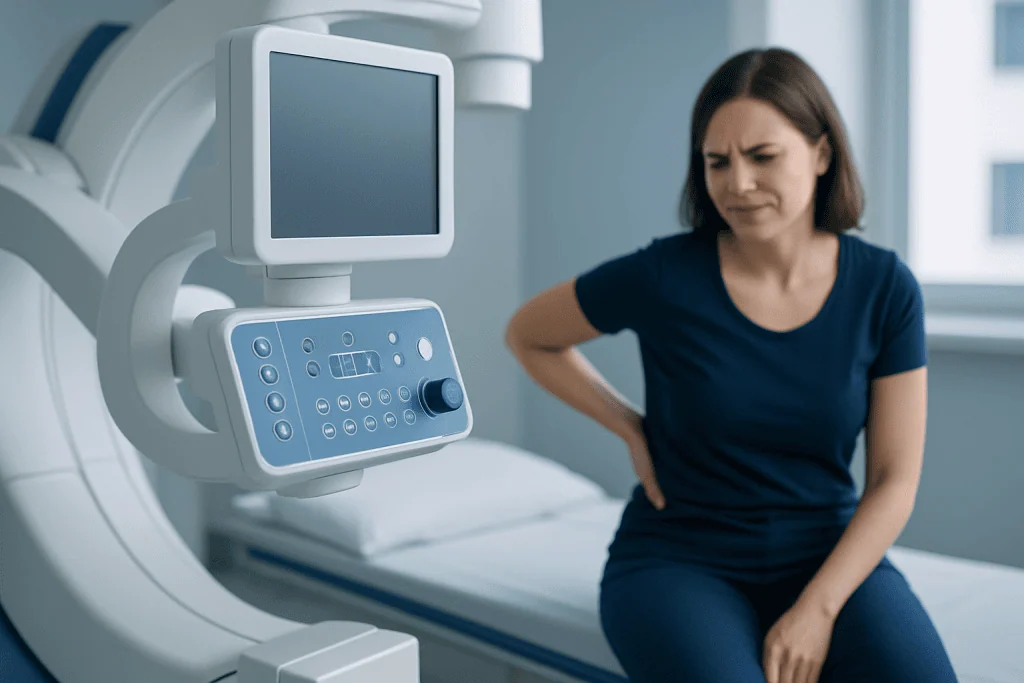
Women may describe lower left back pain in different ways: aching, stabbing, cramping, burning, or tightness. The pain may stay in one spot or radiate into the buttock, hip, groin, abdomen, or down the leg. It may be constant or come and go, and it may worsen with movement, coughing, urination, eating, or around menstruation.
Associated symptoms are especially important. Tingling, numbness, or weakness can suggest nerve involvement. Fever, chills, nausea, painful urination, blood in the urine, or flank tenderness can suggest a kidney or urinary problem. Pelvic pressure, abnormal vaginal bleeding, painful periods, or pain during sex may suggest a gynecologic cause.
Doctors also pay attention to how long the pain has lasted. Sudden pain after a twist or lift often has a mechanical explanation. Pain that slowly worsens over days, keeps returning, wakes a person at night, or is paired with unexplained weight loss or ongoing fatigue deserves medical evaluation.
- Muscle or spine pain often worsens with bending, lifting, or prolonged sitting.
- Nerve-related pain may shoot down the leg or cause pins-and-needles sensations.
- Kidney-related pain may be deeper, higher in the flank, and accompanied by urinary symptoms.
- Pelvic causes may be linked to the menstrual cycle or other reproductive symptoms.
Possible causes of left lower back pain in women
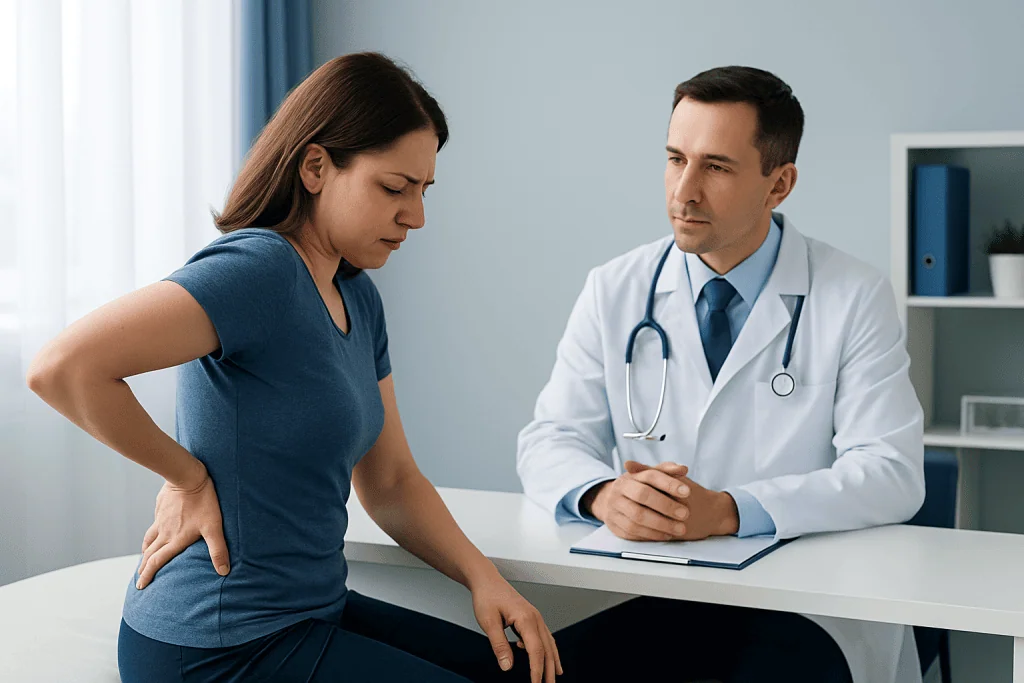
The most common causes are musculoskeletal. These include muscle strain, ligament sprain, poor posture, overuse, sacroiliac joint irritation, and age-related changes in the spine. A bulging or herniated disc can irritate a nearby nerve and lead to sciatica, with pain traveling from the lower back into the buttock and leg. This kind of problem may be related to sciatica or other lower-spine conditions.
Urinary and kidney conditions can also cause pain on one side of the lower back. Kidney stones may cause sudden, severe flank or back pain that may spread toward the groin, often with nausea or blood in the urine. A kidney infection may cause back or side pain with fever, chills, and urinary discomfort. These conditions need medical attention because treatment differs from ordinary back strain.
Gynecologic causes are another important consideration in women. Pain may be related to menstrual cramping, endometriosis, ovarian cysts, uterine fibroids, pelvic inflammatory disease, or, more rarely, ectopic pregnancy. These problems often cause pelvic symptoms as well as back pain. Some women have pain that seems to be in the back but is actually referred from the pelvis.
Digestive causes are also possible. Constipation, gas, diverticular disease, or inflammation in the lower abdomen can produce discomfort that is felt in the left lower back or side. Less commonly, inflammatory bowel disorders can contribute to persistent pain. If pain comes with bowel habit changes, abdominal bloating, or fever, a digestive cause should be considered.
Risk factors and patterns doctors look for
Certain factors make some causes more likely. Recent heavy lifting, new exercise, long periods of desk work, poor sleep position, or caring for a child can contribute to muscle and joint strain. Pregnancy and the postpartum period can also affect posture, core strength, and pelvic support, increasing the chance of back pain.
Doctors also ask about prior episodes of back problems, osteoporosis risk, urinary tract infections, kidney stones, menstrual history, contraception, and sexual health. A history of endometriosis, ovarian cysts, or prior abdominal surgery can be relevant. In older adults, degenerative spine disease becomes more common, while in younger women, muscle strain and menstrual-related causes are often seen more often.
The pain pattern itself matters. Mechanical back pain often improves with position changes and gentle activity, even if movement is initially sore. Pain from internal organs may feel deeper, less tied to movement, and more likely to come with systemic symptoms such as fever, nausea, bleeding, or urinary changes. This difference is not perfect, but it helps guide the next step.
How lower left back pain is diagnosed
Diagnosis begins with a careful history and physical exam. A clinician may ask where the pain started, what it feels like, whether it radiates, and what makes it better or worse. They may also ask about fever, urinary symptoms, bowel changes, menstrual timing, pregnancy possibility, and any injuries or lifting events.
The physical exam may include checking posture, back movement, tenderness, muscle spasm, nerve function, hip motion, and abdominal or pelvic findings when appropriate. If leg pain, numbness, or weakness is present, the doctor may look for signs of nerve root irritation. In some cases, the evaluation may overlap with assessment for lumbar disc herniation when symptoms suggest disc-related pain.
Tests are not always needed for short-term, uncomplicated back pain. However, urine tests, blood tests, pregnancy testing, ultrasound, X-rays, CT, or MRI may be recommended when symptoms suggest kidney disease, pelvic conditions, infection, stones, or a structural spinal problem. Imaging is especially useful when pain is severe, persistent, associated with neurologic symptoms, or not improving as expected.
Treatment options depend on the cause
For uncomplicated muscle or joint strain, treatment often starts with relative rest, heat, gentle activity, stretching, and short-term pain relief medicines if a doctor says they are appropriate. Prolonged bed rest is usually not helpful. Many people improve with gradual return to normal activity and attention to posture, lifting technique, and core support.
If pain is related to a spinal problem, treatment may include guided exercise, rehabilitation, and targeted pain management. For ongoing or recurrent mechanical pain, a doctor may recommend physical therapy and rehabilitation to improve movement, strength, and body mechanics. If symptoms include persistent nerve pain, weakness, or imaging-confirmed disc disease, evaluation by a spine specialist may be appropriate, and some patients may need spine surgery after a full assessment.
Kidney infections, stones, and gynecologic conditions are treated differently from ordinary back strain. These may require antibiotics, hydration advice, medications, gynecologic treatment, or procedures depending on the diagnosis. Pelvic causes such as endometriosis or ovarian cysts may need specialist review, while digestive causes may require dietary guidance, medicines, or further testing.
When symptoms suggest a nerve condition such as ongoing radiating leg pain, numbness, or weakness, doctors may tailor treatment to the severity and underlying cause. In selected cases, options can include imaging, specialist consultation, and conservative management plans related to sciatica treatment. The safest plan is the one based on an accurate diagnosis rather than assuming all one-sided back pain has the same source.
Self-care and prevention strategies
Self-care can be helpful when the pain appears mild, recent, and clearly related to posture or muscle strain. Gentle walking, avoiding heavy lifting for a short period, using heat, and changing positions regularly may reduce stiffness. Supportive sleep positions and an ergonomic work setup can also help lower strain on the back.
Longer-term prevention focuses on movement habits and physical conditioning. Regular exercise that improves core strength, hip mobility, and overall fitness may reduce recurrence. Learning safe lifting techniques and taking breaks from long periods of sitting are practical ways to protect the lower back.
It is also helpful to pay attention to non-back triggers. Staying well hydrated may reduce some urinary problems, while managing constipation and seeking care for recurrent pelvic or menstrual symptoms can prevent delayed diagnosis of non-spinal causes. Recurrent pain should not be managed only with home remedies if the reason for the pain remains unclear.
When to seek medical care
Medical care is recommended if lower left back pain is severe, lasts more than a few days without improvement, keeps returning, or interferes with walking, work, sleep, or daily tasks. A doctor should also evaluate pain that spreads down the leg, causes numbness or weakness, or follows a fall or injury.
Urgent medical care is needed if pain occurs with fever, chills, vomiting, painful urination, blood in the urine, sudden severe abdominal or pelvic pain, fainting, new loss of bladder or bowel control, or marked weakness in a leg. Women who could be pregnant should seek prompt care for lower back pain combined with pelvic pain, dizziness, or abnormal bleeding.
If symptoms suggest a complex or persistent condition, multidisciplinary assessment can be useful. Acibadem International’s specialists in spine, women’s health, urology, and imaging, working in JCI-accredited hospitals, evaluate and treat international patients with lower back pain and its underlying causes.
Frequently asked questions
What is the most common reason for lower left back pain in women?
The most common cause is usually a musculoskeletal problem such as muscle strain, ligament strain, posture-related stress, or irritation in the lower spine or sacroiliac joint. These causes are especially likely if the pain began after lifting, twisting, exercise, or prolonged sitting.
Can period problems cause pain in the lower left back?
Yes. Menstrual cramps, endometriosis, ovarian cysts, and other pelvic conditions can cause pain that is felt in the lower back, including on one side. This is more likely if the pain follows the menstrual cycle or comes with pelvic pressure, abnormal bleeding, or pain during sex.
How do kidney problems feel compared with back strain?
Kidney-related pain often feels deeper and may be higher toward the side or flank rather than only in the lower back. It is more likely to come with urinary symptoms, fever, chills, nausea, or blood in the urine, while back strain is often linked to movement and muscle tenderness.
When should a woman worry about lower left back pain?
Concern is reasonable when the pain is severe, persistent, recurring, or associated with red-flag symptoms such as fever, weakness, numbness, bladder or bowel changes, abnormal vaginal bleeding, or severe abdominal pain. These features do not always mean something serious, but they do mean prompt medical assessment is wise.
Can sciatica cause pain only on the left side of the lower back?
Yes. Sciatica often affects one side and may begin in the lower back or buttock before traveling down the leg. It may also cause tingling, burning, or numbness, especially if a spinal disc or another structure is irritating a nerve.
Should imaging always be done for lower left back pain?
Not always. Many short-term episodes of uncomplicated back pain improve without scans, especially when the symptoms fit a muscle or joint strain. Imaging is more useful when red-flag symptoms are present, the pain is not improving, or there is concern for a kidney, pelvic, nerve, or structural spinal condition.
This article is for general information only and is not a substitute for professional medical advice. Please consult a qualified doctor about your individual situation.
Joint and spine care in Turkey — expert assessment & treatment
JCI-accredited · board-certified surgeons · reply within 24h
Add us as a Preferred Source to see more of our trusted health content across Google Search, AI Overviews and Discover.

More from the Health Library

Does High Blood Pressure Make You Tired? A Doctor-Reviewed Answer

Is Paxlovid Available Over the Counter?

Does Turmeric Lower Blood Pressure? Causes, Explanations, and Next Steps

Is Popcorn Healthy? Causes, Explanations, and Next Steps

What Do Blush Mean? Here Is What the Evidence Says