Chronic Venous Insufficiency Symptoms: Common Causes, Related Conditions, and When to See a Doctor

Chronic venous insufficiency symptoms often include leg swelling, heaviness, aching, itching, cramps, and skin discoloration. Symptoms may start mildly but can progress to persistent swelling, skin thickening, and venous leg ulcers.
Key Takeaways
- Chronic venous insufficiency symptoms often include leg swelling, heaviness, aching, itching, cramps, and skin discoloration.
- Symptoms may start mildly but can progress to persistent swelling, skin thickening, and venous leg ulcers.
- Common contributors include weakened vein valves, previous blood clots, varicose veins, aging, obesity, and prolonged standing.
- Diagnosis often relies on a physical examination and duplex ultrasound to assess blood flow in leg veins.
- Treatment may include compression therapy, exercise, leg elevation, skin care, and minimally invasive vein procedures.
- Medical evaluation is important if one leg suddenly swells, pain is severe, skin breaks down, or symptoms keep worsening.
Chronic venous insufficiency symptoms usually develop when leg veins do not return blood to the heart efficiently. Common signs include leg heaviness, swelling, aching, visible veins, itching, and skin changes that often become worse after long periods of standing or sitting.
Overview: what chronic venous insufficiency symptoms feel like
Chronic venous insufficiency symptoms happen when the veins in the legs have trouble sending blood back toward the heart. This usually occurs because the small valves inside the veins become weak or damaged, allowing blood to pool in the lower legs. The result is a pattern of symptoms that often builds gradually rather than appearing all at once.
Many people first notice a sense of leg heaviness, tiredness, or swelling by the end of the day. Others develop aching, throbbing, or visible enlarged veins. Symptoms often become more noticeable after standing or sitting for long periods and may improve with walking, leg elevation, or rest.
Unlike a temporary feeling of tired legs, chronic venous insufficiency tends to be persistent or recurring. Over time, it may affect the skin as well as the veins, leading to itching, discoloration, dryness, or sores near the ankles. Recognizing the symptom pattern early can help patients seek care before more advanced complications develop.
Common symptoms and how they may progress
The most common chronic venous insufficiency symptoms involve the lower legs and ankles. Swelling is especially typical, often becoming worse later in the day or during warm weather. People may also describe a dull ache, pressure, burning, cramping, or a heavy sensation that makes the legs feel fatigued.
Visible vein changes are also common. These can include spider veins, bulging varicose veins, or a network of enlarged veins under the skin. Some patients notice itching or irritation over the affected area, while others experience nighttime leg cramps or restlessness. The symptoms can affect one or both legs, although one side may be more bothersome.
If the condition progresses, the skin may begin to change because of long-term pressure and inflammation in the veins. Brownish discoloration near the ankles, dry or scaly skin, thickened skin, tenderness, or hardened tissue can occur. In more advanced cases, a slow-healing open sore called a venous ulcer may develop, usually around the inner ankle.
- Leg swelling, especially around the ankles
- Heaviness, aching, or tired legs
- Throbbing, burning, or cramping
- Varicose veins or visible enlarged veins
- Itching, tingling, or skin irritation
- Skin discoloration, thickening, or ulcers
Why these symptoms happen: causes and risk factors

The underlying problem in chronic venous insufficiency is poor venous return. In healthy veins, one-way valves help blood travel upward against gravity. When those valves do not close properly, blood can flow backward and collect in the legs. This raises pressure inside the veins and contributes to swelling, discomfort, and skin changes.
Several factors can increase the risk of developing this condition. Age is one, since vein walls and valves can weaken over time. Pregnancy, obesity, and a family history of vein disease can also make venous problems more likely. Jobs or routines that involve prolonged standing or sitting may contribute because the calf muscles are not helping pump blood upward enough.
Previous blood clots in the deep veins can damage the valves and lead to long-term venous problems. This is one reason clinicians may ask about a personal history of deep vein thrombosis. Chronic venous insufficiency can also be associated with varicose veins, which may be both a sign of vein weakness and a contributing factor to ongoing symptoms.
Related conditions that can look similar
Not all leg swelling or discomfort is caused by chronic venous insufficiency. Lymphedema, heart failure, kidney disease, liver disease, arthritis, cellulitis, and medication side effects can also cause swelling or leg symptoms. Because the treatment approach depends on the cause, a proper medical assessment is important when symptoms are new, persistent, or getting worse.
Chronic venous insufficiency may overlap with other vascular conditions. For example, people with varicose veins can have mild cosmetic changes or more significant venous reflux with swelling and pain. A history of deep vein thrombosis can also lead to post-thrombotic changes that resemble or contribute to chronic venous insufficiency.
Doctors also look for signs of arterial circulation problems, which are different from venous disease but can cause leg discomfort and skin changes. Venous ulcers usually occur near the ankle and are often associated with swelling and discoloration, while arterial ulcers and circulation problems may present differently. Distinguishing between these conditions helps guide safe treatment, especially before recommending compression garments.
How doctors diagnose chronic venous insufficiency
Diagnosis begins with a detailed medical history and physical examination. A doctor will usually ask when symptoms started, whether they worsen with standing, whether one or both legs are affected, and whether there is a history of blood clots, vein procedures, pregnancy, or family vein disease. The skin, ankles, calves, and visible veins are then examined closely.
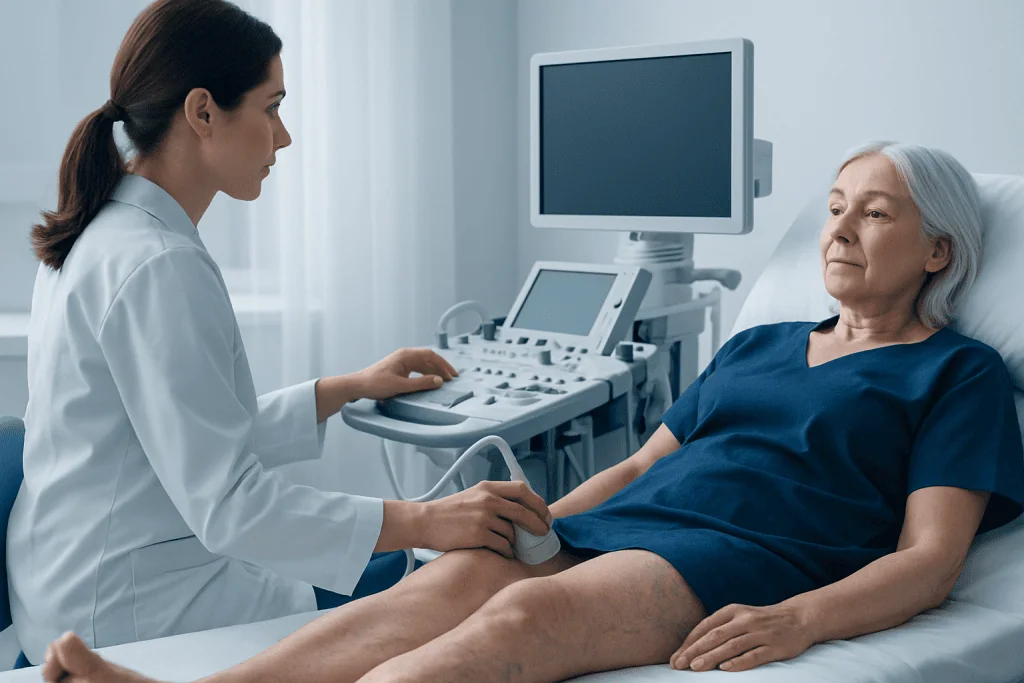
The most common imaging test is duplex ultrasound. This test uses sound waves to show how blood flows through the veins and whether the valves are working properly. It can also help identify vein blockage, reflux, or signs of a current or previous clot. Duplex ultrasound is noninvasive and is often the key test for confirming the diagnosis.
In some cases, additional evaluation may be needed to rule out other causes of swelling or pain. The doctor may also assess the severity of skin changes and check for wounds or ulcers. If treatment is being considered, the imaging results help determine whether conservative care, a procedure, or both are likely to be helpful.
Treatment options and symptom relief
Treatment aims to improve blood flow, reduce symptoms, protect the skin, and lower the risk of complications. For many patients, conservative treatment is the first step. This may include compression stockings, leg elevation, regular walking, calf-muscle exercise, weight management, and avoiding long uninterrupted periods of sitting or standing.
Skin care is also important, especially when there is dryness, itching, or discoloration. Gentle cleansing, moisturizing, and prompt attention to any skin breakdown can help reduce irritation and infection risk. If a venous ulcer is present, wound care may be needed along with compression and specialist follow-up.
When symptoms persist or reflux is significant, doctors may recommend procedures that target abnormal veins. Depending on the person and the vein anatomy, treatment may include minimally invasive varicose veins treatment or other endovenous ablation techniques to close diseased veins and redirect blood flow. In selected cases, a broader vascular surgery evaluation is appropriate, particularly when symptoms are advanced or the diagnosis is complex.
Prevention and self-care in daily life
Although not every case can be prevented, daily habits can help reduce venous pressure in the legs and ease symptoms. Regular movement is one of the most useful strategies. Walking activates the calf muscles, which act like a natural pump to help push blood upward. Even short movement breaks during the day can make a difference.
People who spend long hours standing or sitting may benefit from changing position often, flexing the ankles, and elevating the legs when possible. Maintaining a healthy weight may also reduce stress on the veins. Supportive footwear and comfortable clothing can help, while very tight garments around the waist or legs may worsen discomfort in some people.
Compression stockings should be used only as directed by a healthcare professional, especially if there is a chance of arterial circulation problems. Good skin care matters as well. Keeping the lower legs moisturized, avoiding trauma to fragile skin, and seeking prompt care for any new redness, weeping, or sores can help prevent complications.
When to seek medical care
Medical care is advisable if chronic venous insufficiency symptoms are persistent, worsening, or interfering with daily life. A doctor should assess ongoing leg swelling, aching, visible vein changes, itching, or skin discoloration, especially if symptoms keep returning. Early assessment can help confirm the cause and reduce the chance of skin damage or ulcer formation.
More urgent evaluation is needed if one leg suddenly becomes much more swollen, painful, warm, or red, because this can suggest a blood clot or infection rather than routine venous insufficiency. Immediate medical attention is also important for chest pain, shortness of breath, fainting, or sudden severe symptoms. These are not typical chronic venous insufficiency symptoms and need prompt assessment.
Care should also be sought if there is a nonhealing sore, drainage from the skin, bleeding from a vein, or rapidly changing discoloration around the ankle. Near the end of the care journey, some patients may choose a center with vascular, imaging, wound care, and interventional expertise. Acibadem International’s multidisciplinary specialists and JCI-accredited hospitals diagnose and treat chronic venous insufficiency for international patients when advanced evaluation or treatment is needed.
Frequently asked questions
What are the first signs of chronic venous insufficiency?
Early signs often include leg heaviness, mild swelling around the ankles, aching, or tired legs after standing for long periods. Some people also notice visible veins, itching, or a feeling of pressure that improves with leg elevation.
Do chronic venous insufficiency symptoms come and go?
Yes, symptoms can vary from day to day and are often worse after prolonged sitting or standing. Warm weather, inactivity, and the end of the day may make swelling and discomfort more noticeable.
Is chronic venous insufficiency the same as varicose veins?
Not exactly. Varicose veins are enlarged, twisted veins that can be a sign of underlying vein valve problems, while chronic venous insufficiency refers to ongoing difficulty returning blood from the legs to the heart. A person can have varicose veins with or without more advanced venous insufficiency.
Can chronic venous insufficiency cause skin changes?
Yes, long-term venous pressure can affect the skin, especially around the ankles. Common changes include brown discoloration, dryness, itching, thickening, or in advanced cases, a slow-healing venous ulcer.
How is chronic venous insufficiency diagnosed?
Doctors usually diagnose it through a medical history, physical examination, and duplex ultrasound. The ultrasound shows blood flow in the veins and helps identify valve failure, reflux, or blockage.
Can exercise help with chronic venous insufficiency symptoms?
Regular walking and calf-muscle activity can help improve venous circulation and reduce symptoms for many people. Exercise is usually part of a broader plan that may also include leg elevation, weight management, and compression when appropriate.
References
- National Heart, Lung, and Blood Institute
- Society for Vascular Surgery
- American Venous Forum
- National Institute for Health and Care Excellence
- Mayo Clinic
This article is for general information only and is not a substitute for professional medical advice. Please consult a qualified doctor about your individual situation.
Explore treatments in Turkey — costs, top hospitals & a free quote
JCI-accredited · board-certified surgeons · reply within 24h
Add us as a Preferred Source to see more of our trusted health content across Google Search, AI Overviews and Discover.