Skin Tightening — Explained by Medical Evidence, Not Myths

Skin tightening can help loose or sagging skin, but results depend on the cause and degree of laxity. Topical products and healthy habits may support skin quality, but they do not produce the same change as medical procedures.
Key Takeaways
- Skin tightening can help loose or sagging skin, but results depend on the cause and degree of laxity.
- Topical products and healthy habits may support skin quality, but they do not produce the same change as medical procedures.
- Non-surgical options such as radiofrequency, ultrasound, and laser treatments work best for mild to moderate laxity.
- Surgery is usually the most effective option for significant excess skin, especially after major weight loss.
- A medical assessment helps identify whether skin changes are due to aging, sun damage, weight change, or an underlying condition.
Skin tightening refers to methods that improve mild to moderate skin laxity by supporting collagen, elastin, or removing excess skin when needed. The best approach depends on why the skin has loosened, how severe the laxity is, and whether a person prefers lifestyle measures, office-based treatments, or surgery.
What skin tightening means in medical terms
Skin tightening is the improvement of loose, sagging, or less elastic skin through measures that support the skin’s structure or remove excess tissue. In medical terms, this usually relates to skin laxity, which develops when collagen and elastin decline, the deeper tissues shift, or the skin stretches beyond its ability to retract. This can happen with aging, pregnancy, sun exposure, weight changes, or genetics.
Evidence-based skin tightening is different from marketing claims. No cream, device, or procedure can stop natural aging completely, and no single method works equally well for every person. The goal is usually realistic improvement in firmness, contour, and texture rather than a complete reversal of loose skin.
Doctors typically group skin tightening options into three broad categories: skin care and lifestyle measures, non-surgical treatments, and surgery. Mild changes may respond to topical care and office-based procedures that stimulate collagen. More advanced laxity, especially when there is hanging or excess skin, often requires a surgical solution such as plastic surgery.
Why skin becomes loose or less firm
Several normal biological changes affect skin firmness over time. As people age, the body gradually produces less collagen and elastin, two proteins that help skin stay strong and spring back after stretching. Hyaluronic acid in the skin also declines, which can reduce hydration and make skin appear thinner or more creased.
Sun exposure is one of the most important outside factors. Ultraviolet radiation damages collagen fibers and accelerates breakdown of the skin’s support network. Smoking, air pollution, chronic stress, poor sleep, and repeated weight fluctuations may also worsen laxity by increasing oxidative stress and affecting tissue repair.
Loose skin can also appear after pregnancy or major weight loss. In these situations, the skin may have been stretched for a long period and may not fully contract afterward. When excess skin is substantial, this may overlap with body contour concerns sometimes addressed in bariatric surgery follow-up care or reconstructive planning.
Not all skin changes are simply cosmetic. Rashes, swelling, rapid changes in texture, thickening, discoloration, or skin fragility can suggest another skin or medical issue. In some cases, a dermatologist may evaluate whether a condition such as skin cancer or another skin disorder needs to be ruled out before cosmetic treatment is considered.
Who may benefit from skin tightening

People who may consider skin tightening include those with mild to moderate sagging of the face, jawline, neck, upper arms, abdomen, thighs, or above the knees. It may also be helpful for patients whose skin looks less firm after pregnancy, illness, or weight loss, provided their weight is reasonably stable and there is no untreated medical problem affecting the skin.
The best candidates depend on the treatment type. Non-surgical treatments are usually most useful when the skin still has some ability to recoil and there is not a large amount of extra skin. Surgical options tend to be more appropriate when skin hangs in folds, causes irritation, affects comfort, or does not improve enough with less invasive methods.
Skin tone, scar tendency, active acne, eczema, infections, recent tanning, certain medications, and past procedures may influence which treatment is safest. An individualized assessment is important because the same level of laxity can look different depending on facial structure, body shape, and skin thickness.
Evidence-based options: skin care, devices, and surgery
At-home skin care can support skin quality, especially when used consistently. Daily sunscreen helps prevent further collagen damage and is one of the most important long-term steps. Moisturizers can improve the appearance of fine lines by reducing dryness, while retinoids and other active ingredients may support collagen remodeling over time. These approaches can make skin look healthier, but they generally offer subtle tightening rather than major lifting.
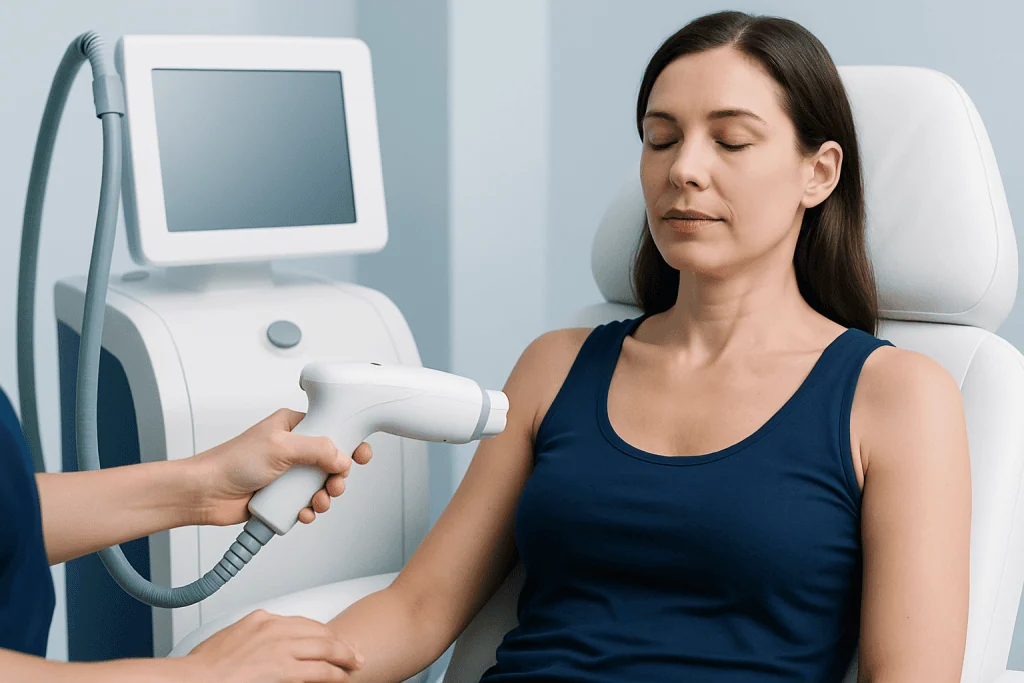
Non-surgical skin tightening treatments use controlled energy to heat tissue and stimulate collagen production. Common examples include radiofrequency, focused ultrasound, and some laser treatments. These methods usually involve gradual improvement over weeks to months because the body needs time to remodel collagen. They are often chosen by people who want limited downtime and have mild to moderate laxity.
Injectable treatments do not tighten skin in the same way as energy-based devices, but they may improve the appearance of sagging in selected cases. For example, replacing lost facial volume can reduce the look of hollowness or tissue descent. Depending on the concern, a doctor may discuss options used alongside dermal fillers or skin surface procedures such as laser skin resurfacing.
Surgery remains the most effective option for significant skin laxity or excess skin. Procedures vary by body area and may include facial lifting, neck contouring, eyelid surgery, tummy tuck, arm lift, or thigh lift. Surgical treatment can create a more dramatic change, but it involves recovery time, scars, and a careful review of risks and expectations.
How doctors assess skin laxity and choose treatment
A proper evaluation starts with the history of the skin change. The doctor may ask when the looseness began, whether it followed weight loss or pregnancy, what treatments have been tried, and whether there are symptoms such as rash, pain, numbness, or recurrent irritation in skin folds. Past surgeries, medications, smoking history, and sun exposure also matter.
During the physical examination, the clinician looks at skin thickness, elasticity, texture, degree of drooping, volume loss, and the condition of deeper tissues. For facial concerns, the jawline, cheeks, neck, and under-eye area may each require a different strategy. For the body, the amount of excess skin and the quality of underlying support are important in deciding whether a non-surgical or surgical plan is more suitable.
Photos may be used to document baseline findings and monitor change over time. Some people also need an assessment for related issues such as pigmentation, scarring, acne, or suspicious lesions. If skin changes are accompanied by unusual moles, sores that do not heal, or rapidly evolving patches, referral for skin evaluation should come before cosmetic treatment.
The final treatment plan usually balances effectiveness, downtime, number of sessions, skin type, and patient preference. In practice, combination care is common. A person may start with sun protection and topical therapy, add a non-surgical collagen-stimulating procedure, and consider surgery later if excess skin remains the main problem.
What results to expect and what can affect them
Results from skin tightening vary widely. Mild laxity often improves more predictably than severe sagging, and younger skin or skin with less sun damage may respond better because it still has stronger repair capacity. Non-surgical treatments usually provide gradual, moderate improvement rather than a dramatic lift.
Maintenance is often needed because the skin continues to age naturally. Healthy lifestyle habits can help preserve results. These include sun protection, not smoking, stable weight, regular physical activity, good nutrition, and attention to sleep and stress. While these measures do not replace treatment, they support tissue health and may slow further loss of firmness.
Every intervention has limits and possible side effects. Temporary redness, swelling, tenderness, pigment change, irregular contour, scarring, or infection are examples that depend on the procedure used. A qualified clinician should explain what is realistic, what recovery involves, and how complications are reduced through proper selection and follow-up.
Prevention and self-care for healthier, firmer-looking skin
Prevention focuses mainly on protecting collagen and avoiding repeated skin stress. Daily broad-spectrum sunscreen, protective clothing, and limiting excessive sun exposure are foundational. These steps do not tighten existing loose skin significantly, but they help reduce further damage and support longer-lasting results from any treatment.
General health also plays a role in skin quality. Staying well hydrated, eating a balanced diet with adequate protein, and maintaining a steady weight can support the skin’s structure. Rapid cycles of weight gain and loss may stretch the skin repeatedly and make laxity more noticeable over time.
Home devices and over-the-counter products are widely marketed for skin tightening, but their effects can be modest. People should be cautious with strong products or devices bought online, especially if they have sensitive skin, darker skin tones at risk for pigment change, or a history of <a href="https://acibademinternational.com/diseases/keloid-scars/”>keloid scars. Professional guidance is safer when there is uncertainty about what the skin can tolerate.
For people considering medical treatment, realistic expectations are part of good self-care. Improvement often comes in stages, and not every concern can be corrected with a single session. Near the end of the treatment pathway, multidisciplinary specialists at Acibadem International and its JCI-accredited hospitals can assess skin laxity and offer suitable medical or surgical options for international patients when needed.
When to seek medical care
Medical advice is appropriate when loose skin causes discomfort, recurrent rashes, hygiene difficulty, or emotional distress, or when a person wants to understand which treatment options are medically suitable. A doctor’s assessment is also helpful before any procedure if there is a history of abnormal scarring, autoimmune disease, recent weight change, or use of medications that affect healing.
Prompt evaluation is important if the skin change is sudden, one-sided, painful, associated with a lump, or accompanied by color change, bleeding, or a sore that does not heal. These features may point to a condition that needs diagnosis rather than cosmetic treatment alone.
People should also seek care if they are unsure whether they have simple skin laxity or another skin problem such as persistent irritation, infection, or a suspicious lesion. Early evaluation helps match the right treatment to the right cause and can avoid ineffective or unsafe self-treatment.
Frequently asked questions
Does skin tightening really work?
Skin tightening can work, but the degree of improvement depends on the cause and severity of looseness. Non-surgical methods tend to help mild to moderate laxity, while surgery is usually more effective for large amounts of excess skin.
What is the best skin tightening treatment?
There is no single best treatment for everyone. The most suitable option depends on the body area, skin quality, amount of sagging, downtime preference, and whether the main issue is collagen loss, volume loss, or true excess skin.
Can creams tighten loose skin?
Creams can improve hydration and may slightly improve the appearance of fine lines or skin texture. However, they usually do not create the same degree of tightening as office-based procedures or surgery.
How long do non-surgical skin tightening results last?
Results often develop gradually over several weeks or months and may last for months to a few years, depending on the treatment and the person’s skin. Because aging continues, maintenance treatments are commonly needed.
Is loose skin after weight loss treatable?
Yes. Mild cases may improve somewhat with time, muscle strengthening, and selected non-surgical treatments, but significant excess skin often responds best to surgery. A medical assessment can help determine which approach is realistic.
Who should avoid cosmetic skin tightening procedures?
People with active skin infections, open wounds, certain inflammatory skin conditions, uncontrolled medical illnesses, or very recent tanning may need to delay treatment. Anyone who is pregnant, prone to problematic scarring, or taking medicines that affect healing should discuss safety with a qualified doctor first.
This article is for general information only and is not a substitute for professional medical advice. Please consult a qualified doctor about your individual situation.
Explore treatments in Turkey — costs, top hospitals & a free quote
JCI-accredited · board-certified surgeons · reply within 24h
Add us as a Preferred Source to see more of our trusted health content across Google Search, AI Overviews and Discover.

More from the Health Library

Reddish Colour Stool: An Evidence-Based Guide for Patients

Facial Tic: An Evidence-Based Guide for Patients

Blood Clot Tingling Sensation in Head Scalp: A Complete Medical Overview

Pulmonary Hypertension: What Patients Need to Know

Dry Elbows — Explained by Medical Evidence, Not Myths