Electrical Muscle Stimulation: What Patients Need to Know
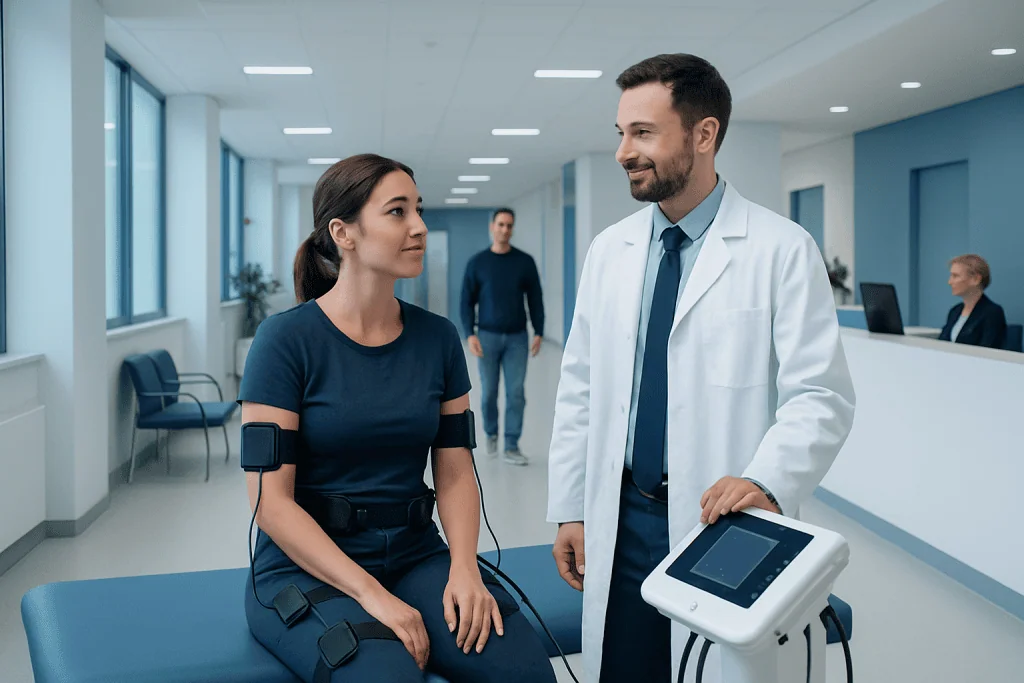
Electrical muscle stimulation can help activate muscles that are weak, injured, or difficult to use after illness or surgery. It is not the same as regular exercise, though it may complement rehabilitation and physical therapy.
Key Takeaways
- Electrical muscle stimulation can help activate muscles that are weak, injured, or difficult to use after illness or surgery.
- It is not the same as regular exercise, though it may complement rehabilitation and physical therapy.
- Safe use depends on proper assessment, correct electrode placement, and medical supervision when needed.
- People with pacemakers, certain heart conditions, epilepsy, pregnancy, or skin injuries may need to avoid EMS or use it only with specialist advice.
- The best results usually come when EMS is part of a broader treatment plan rather than used on its own.
Electrical muscle stimulation is a therapy that uses mild electrical impulses to trigger muscle contractions. It is commonly used in rehabilitation and selected pain-management plans, but its benefits, safety, and suitability depend on the person’s medical condition and treatment goals.
Overview: what electrical muscle stimulation is
Electrical muscle stimulation is a technique that delivers small electrical impulses through the skin to cause targeted muscles to contract. These impulses are sent by a device through adhesive electrodes placed on the body. In healthcare, this method is often used to support rehabilitation, improve muscle activation, and help maintain muscle function when normal movement is limited.
Patients may hear several related terms, including EMS, NMES, or neuromuscular electrical stimulation. While the wording can vary, the goal is similar: to encourage a muscle or group of muscles to contract in a controlled way. This can be useful after injury, after surgery, during recovery from some neurological conditions, or when a person has significant weakness.
Electrical muscle stimulation is different from devices marketed mainly for fitness or cosmetic toning. Medical EMS is used for clearly defined therapeutic goals, usually after an evaluation by a doctor or physiotherapist. It is typically one part of a larger care plan that may also include exercise, stretching, pain management, and physical rehabilitation.
How it works and what a session feels like
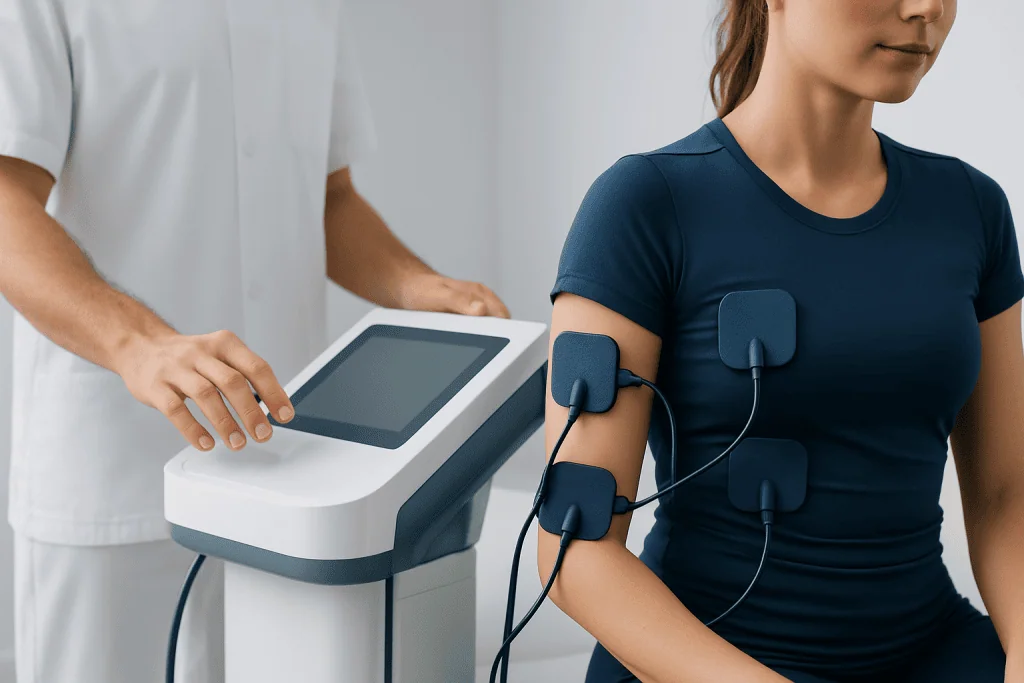
Muscles normally contract when signals travel from the brain and nerves to the muscle fibers. Electrical muscle stimulation works by sending an external signal that prompts the muscle to contract. Depending on the settings used, the stimulation may support muscle re-education, reduce disuse-related weakness, or help a person become more aware of a muscle that is difficult to activate.
During a session, electrodes are placed over the target muscle or nerve pathway. The current is then adjusted to a level that creates a visible or noticeable contraction without causing undue discomfort. Many patients describe the sensation as tingling, pulsing, tapping, or tightening. A therapeutic session should feel tolerable, and the intensity can usually be changed.
Session length and frequency vary according to the reason for treatment. For example, someone recovering from orthopedic surgery may use it differently from someone with nerve-related weakness. The exact program should be tailored to the person’s diagnosis, overall health, skin condition, and rehabilitation goals.
EMS does not replace active movement whenever active movement is possible. Instead, it may prepare a muscle for exercise, assist early recovery, or support therapy when voluntary muscle control is reduced. In many cases, combining electrical stimulation with supervised exercise produces more meaningful functional improvement than using the device alone.
When electrical muscle stimulation may be used
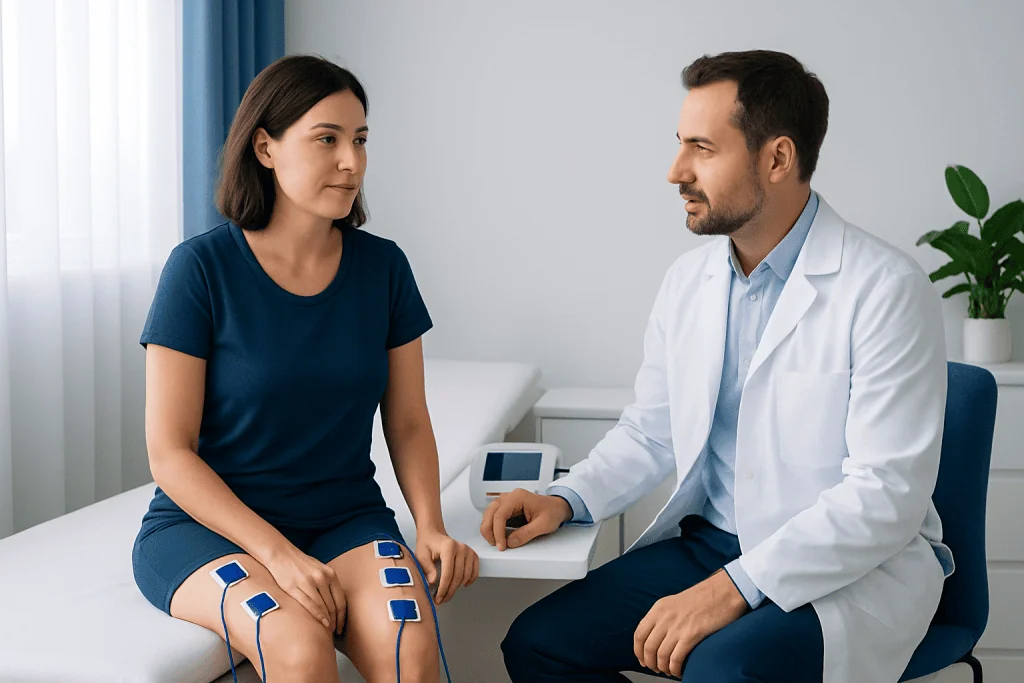
Healthcare professionals may recommend electrical muscle stimulation in several settings. One common use is rehabilitation after injury or surgery, especially when pain, swelling, or temporary immobility makes it hard to use a muscle normally. It may also be used to help preserve muscle activity during periods of limited movement.
Another use is muscle re-education. After some neurological or orthopedic problems, a person may have difficulty recruiting a muscle effectively. EMS can sometimes help improve awareness of that muscle and support training. This approach may be part of care for selected patients with stroke recovery needs or other causes of weakness, always based on an individual assessment.
Some clinicians also use electrical stimulation within broader pain-management plans. In certain cases, this may overlap with other forms of electrotherapy, although pain-relief devices are not always the same as muscle-stimulation devices. For musculoskeletal problems such as weakness around a painful joint or spine condition, the therapy may be combined with physical therapy and rehabilitation or specialist rehabilitation strategies.
Potential reasons a doctor or therapist might consider EMS include:
- Reduced muscle activation after surgery or injury
- Temporary weakness related to immobilization
- Support for rehabilitation after some neurological conditions
- Adjunctive care for selected chronic musculoskeletal problems
- Assistance with specific functional training goals
Benefits, limits, and realistic expectations
The main potential benefit of electrical muscle stimulation is that it can activate a muscle when normal use is difficult. This may help maintain muscle engagement, support rehabilitation progress, and improve confidence during recovery. For some patients, it also provides a structured way to work on a target muscle under professional guidance.
However, EMS has limits. It does not cure the underlying cause of weakness, pain, or nerve dysfunction. If a person has a tendon injury, severe joint disease, nerve damage, or a complex neurological problem, the device may help with one part of recovery but will not solve the entire condition. Treatment outcomes depend on the diagnosis, how early care begins, and how consistently the full rehabilitation plan is followed.
It is also important to set realistic expectations about strength gains. Electrical stimulation may assist muscle contraction, but it does not fully replace functional exercise, walking, balance training, or strength training when those are medically appropriate. Muscles need coordinated movement patterns, endurance, and task-specific practice, which usually come from active rehabilitation rather than stimulation alone.
For persistent movement-related symptoms, clinicians may investigate whether there is an underlying condition such as Parkinson’s disease or another neurological disorder. In these situations, EMS may or may not be appropriate, and treatment decisions should be individualized.
Safety, side effects, and who should be cautious
Electrical muscle stimulation is generally considered safe when used correctly and for the right indication. Even so, it is not suitable for everyone. The most common minor side effects are temporary skin irritation, redness under the electrodes, mild muscle soreness, or discomfort if the intensity is set too high.
Some people should avoid EMS or use it only after medical advice. This includes people with pacemakers or other implanted electronic devices, certain heart rhythm problems, epilepsy, impaired skin sensation, open wounds, active skin infections, or significant circulation problems in the treatment area. Pregnant patients should not use stimulation over the abdomen, pelvis, or lower back unless a qualified clinician specifically advises it.
Electrodes should not be placed over the front of the neck, across the chest in a way that may affect the heart, over broken skin, or near areas where a healthcare professional has advised against it. Good technique matters because incorrect placement may reduce benefit or increase irritation.
A professional assessment is especially important when symptoms are unexplained, worsening, or associated with numbness, severe pain, sudden weakness, or loss of function. In those situations, the priority is diagnosing the cause rather than trying home stimulation first.
Assessment and diagnosis before treatment
Before recommending electrical muscle stimulation, a clinician usually begins with a clear diagnosis and a functional assessment. This may include discussing symptoms, reviewing medical history, examining muscle strength and movement, and identifying whether weakness is due to pain, nerve injury, disuse, or another condition. The aim is to match the treatment to the problem rather than applying a generic approach.
In rehabilitation settings, doctors and physiotherapists often evaluate range of motion, balance, walking ability, and the specific tasks the person wants to improve. If nerve involvement is suspected, additional tests may be needed. Depending on the clinical picture, this can include imaging, laboratory tests, or specialist evaluation in fields such as orthopedics, neurology, or rehabilitation medicine.
When pain or weakness affects the spine or joints, broader management may be required alongside stimulation. Some patients may benefit from rehabilitation programs connected to orthopedics and traumatology care or from structured recovery after procedures such as robotic rehabilitation, if clinically appropriate.
The best treatment plans define measurable goals. These might include improving quadriceps activation after knee surgery, supporting hand function after a neurological event, or increasing tolerance for therapeutic exercise. With clear goals, the care team can decide whether EMS is helping and whether it should be continued, adjusted, or replaced.
Treatment planning, self-care, and practical tips
If electrical muscle stimulation is recommended, patients usually do best when they understand how it fits into a larger rehabilitation plan. A therapist may teach electrode placement, session timing, skin care, and how to tell the difference between a useful contraction and an uncomfortable setting. Following these instructions helps reduce the risk of irritation and improves consistency.
At home, the skin should be clean and dry before use, and electrodes should be applied exactly as directed. The intensity should be increased gradually rather than set too high at the start. If redness lasts, the skin becomes sore, or the sensation changes unexpectedly, treatment should be paused until professional advice is available.
It is also helpful to combine stimulation with the habits that support recovery: regular exercise as advised, enough rest, good nutrition, and attendance at follow-up appointments. People recovering from surgery or injury should not use EMS as a shortcut to return to activity sooner than recommended by their medical team.
Near the end of a rehabilitation pathway, some patients may transition away from EMS as active movement improves. The focus then shifts toward strength, endurance, mobility, and confidence in daily life. For international patients who need coordinated assessment and rehabilitation, Acibadem International’s multidisciplinary specialists in JCI-accredited hospitals diagnose and treat a wide range of conditions that may involve electrical muscle stimulation as part of care.
When to seek medical care
Medical advice is important if weakness, pain, or reduced function begins suddenly, keeps getting worse, or interferes with walking, lifting, swallowing, speaking, or daily activities. These symptoms may have causes that need prompt diagnosis rather than self-treatment.
Patients should also contact a doctor if they develop severe pain, marked swelling, persistent numbness, new skin breakdown, or unusual symptoms during or after electrical muscle stimulation. If there is chest pain, shortness of breath, fainting, or sudden one-sided weakness, urgent medical evaluation is needed.
Even when symptoms are less urgent, it is sensible to seek professional guidance before starting EMS if there is a pacemaker, implanted device, pregnancy, epilepsy, a known nerve disorder, or recent surgery. A clinician can help decide whether the therapy is appropriate, whether another treatment is needed first, or whether a different rehabilitation strategy would be safer and more effective.
Frequently asked questions
What is electrical muscle stimulation used for?
Electrical muscle stimulation is used to trigger controlled muscle contractions through small electrical impulses. In medical care, it may support rehabilitation after injury or surgery, help with muscle re-education, and complement certain therapy programs for weakness or reduced mobility.
Is electrical muscle stimulation the same as exercise?
No. Electrical muscle stimulation can activate a muscle, but it does not fully replace active exercise, balance training, or functional movement practice. It is usually most helpful as part of a broader rehabilitation plan rather than as a stand-alone solution.
Does electrical muscle stimulation hurt?
Many people feel tingling, pulsing, or tightening rather than pain. The sensation should be tolerable, and the intensity can often be adjusted. If it feels painful or causes significant discomfort, the settings or electrode placement may need review by a clinician.
Who should not use electrical muscle stimulation?
People with pacemakers or other implanted electronic devices should avoid it unless a qualified doctor specifically approves it. It may also be unsuitable or require caution in pregnancy, epilepsy, open wounds, skin infection, poor sensation, or certain heart conditions.
Can electrical muscle stimulation help build muscle?
It may help maintain or improve muscle activation in some situations, especially during rehabilitation. However, meaningful strength and function usually improve most when stimulation is combined with medically appropriate exercise and therapy.
Is electrical muscle stimulation safe to use at home?
Home use may be appropriate for some patients, but it is safest after professional instruction. Correct device settings, proper electrode placement, and attention to skin care are important. A home device should not be used to self-treat unexplained weakness or severe pain without medical advice.
This article is for general information only and is not a substitute for professional medical advice. Please consult a qualified doctor about your individual situation.
Explore treatments in Turkey — costs, top hospitals & a free quote
JCI-accredited · board-certified surgeons · reply within 24h
Add us as a Preferred Source to see more of our trusted health content across Google Search, AI Overviews and Discover.

More from the Health Library

Margarita Burn: A Complete Medical Overview

Tryptophan: An Evidence-Based Guide for Patients

Tom Brady Pea Gatling.: A Complete Medical Overview

Junctional Escape Rhythm: A Complete Medical Overview

Cry It Out Method: What Patients Need to Know

Lunesta: An Evidence-Based Guide for Patients
Physical Medicine & Rehabilitation Specialists at Acibadem

Ahmet Turan
Physical Medicine & Rehabilitation
Fzt. Ahsen Ercan
Physical Medicine & Rehabilitation
Fzt. Ali Furkan Gürler
Physical Medicine & Rehabilitation
Dr. Ali Koç
Orthopedic Surgery & Traumatology