Aching Back Hips: A Complete Medical Overview

Aching back hips can come from the spine, hip joint, muscles, tendons, or irritated nerves. The location of pain, what triggers it, and whether it travels down the leg can help identify the cause.
Key Takeaways
- Aching back hips can come from the spine, hip joint, muscles, tendons, or irritated nerves.
- The location of pain, what triggers it, and whether it travels down the leg can help identify the cause.
- Many cases improve with activity changes, guided exercise, pain relief, and physical therapy.
- Urgent medical attention is important for weakness, loss of bladder or bowel control, fever, or pain after major injury.
- Persistent or worsening symptoms should be evaluated to rule out arthritis, disc problems, fractures, or other conditions.
Aching back hips usually means pain felt in the lower back, hips, buttocks, or nearby muscles and joints. It is often linked to strain, posture, arthritis, spine or nerve irritation, and it can usually be assessed clearly with a careful history, physical exam, and targeted tests when needed.
What aching back hips usually means
Aching back hips is a common way people describe pain that seems to involve both the lower back and the hip area at the same time. In many cases, the discomfort comes from structures that work closely together: the lumbar spine, pelvis, hip joints, surrounding muscles, tendons, ligaments, and nearby nerves. Because these areas share movement and load-bearing, a problem in one can easily be felt in the other.
The pattern of pain often gives useful clues. Pain centered in the buttock or outer hip may come from muscles, tendons, or the sacroiliac region. Pain deep in the groin is more suggestive of the hip joint itself. Pain that starts in the lower back and shoots into the buttock or down the leg may point to nerve irritation, such as sciatica.
Not every episode is serious. Overuse, prolonged sitting, sudden lifting, poor sleep posture, or a change in exercise routine can all cause temporary symptoms. Still, pain that lasts, keeps returning, limits walking or sleep, or comes with numbness, weakness, fever, or unintended weight loss deserves medical assessment.
How symptoms can differ from person to person
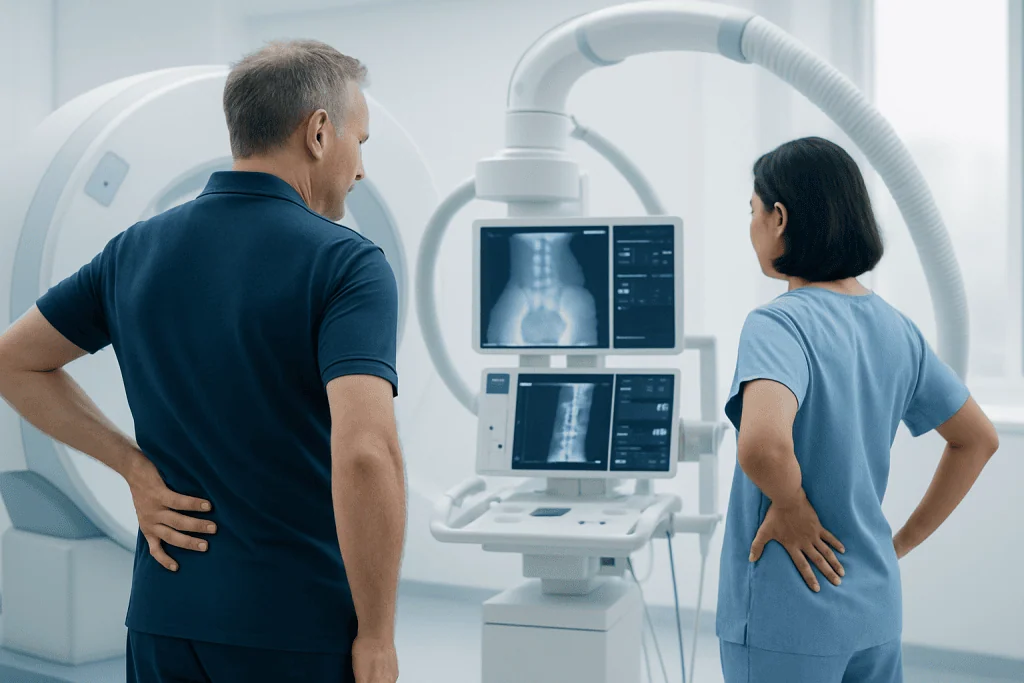
Aching back hips may feel dull, stiff, sharp, burning, or throbbing. Some people notice morning stiffness that improves once they start moving. Others feel pain after standing, walking, climbing stairs, bending, twisting, or sitting for a long time. The symptoms can affect one side or both sides depending on the cause.
There may also be associated symptoms such as reduced range of motion, muscle tightness, clicking in the hip, tenderness over the outer hip, or pain when rolling over in bed. If the problem involves a nerve, symptoms may include tingling, numbness, or pain that travels down the thigh or below the knee. This type of radiating pain is more typical of lumbar spine involvement than of a simple muscle strain.
Keeping track of where the pain begins and where it spreads can be very helpful. Patients may notice that back-dominant pain worsens with bending or prolonged sitting, while hip-joint pain may be more obvious with walking, pivoting, or putting on shoes and socks. A doctor uses this symptom pattern, along with examination findings, to narrow down the likely source.
Common causes and risk factors
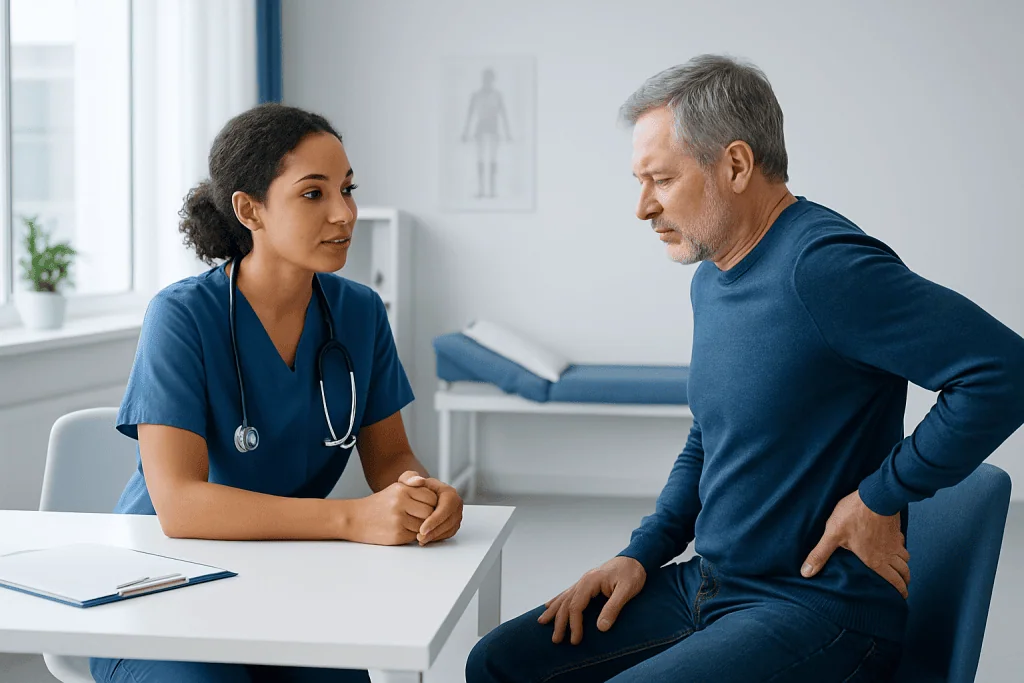
One of the most common causes of aching back hips is musculoskeletal strain. This includes overworked back muscles, gluteal muscles, hip flexors, or ligaments after lifting, repetitive movement, sports, or long periods of poor posture. Tendon irritation around the hip and greater trochanteric pain syndrome can also create pain on the outer hip that seems to connect with the lower back.
Joint-related problems are another major group of causes. <a href="https://acibademinternational.com/diseases/hip-osteoarthritis/”>Hip osteoarthritis may cause stiffness, groin pain, and reduced mobility, while lumbar spondylosis or facet joint irritation may lead to lower back pain with referred discomfort toward the hips. In some patients, degeneration of the spine can contribute to disc problems or narrowing around the nerves. Doctors may also consider a herniated disc when pain shoots into the leg or is accompanied by numbness.
Other possible causes include inflammation of the sacroiliac joints, bursitis, piriformis-related pain, scoliosis, leg length differences, and osteoporosis-related compression fractures in older adults. Less commonly, infection, inflammatory arthritis, avascular necrosis, tumors, or pain referred from pelvic or abdominal organs may be responsible.
Risk factors include getting older, previous injury, obesity, smoking, low physical activity, occupations involving heavy lifting or prolonged sitting, weak core and hip muscles, and certain sports. Pregnancy can also alter posture and pelvic mechanics, leading to temporary lower back and hip discomfort.
How doctors find the source of pain
Evaluation begins with a detailed history. A doctor usually asks when the pain started, whether it followed an injury, where it is felt most strongly, and what makes it better or worse. They also ask about walking tolerance, sleep disruption, stiffness, numbness, weakness, fever, and any history of cancer, osteoporosis, or inflammatory disease.
The physical examination helps distinguish hip pain from spine-related pain. The doctor may assess posture, gait, leg strength, reflexes, flexibility, and range of motion of both the lumbar spine and the hips. Certain movements can reproduce pain from the hip joint, while others can suggest nerve root irritation or sacroiliac involvement. This step is often more informative than imaging alone.
Tests are not always needed for short-lived, uncomplicated pain. However, imaging may be useful when symptoms are severe, persistent, or associated with red flags. Plain X-rays can evaluate arthritis, alignment, or fractures. MRI may be recommended when a disc, nerve, soft tissue, or deeper hip-joint problem is suspected. In selected cases, blood tests or ultrasound-guided injections may help clarify the diagnosis.
Treatment options for aching back hips
Treatment depends on the cause, symptom severity, age, and activity goals of the patient. For many people, the first step is conservative care: temporary activity modification, heat or ice, short-term pain-relieving medicines when appropriate, and gradual return to movement. Bed rest is usually not advised for prolonged periods, because gentle activity often supports recovery better than complete inactivity.
Physical therapy is a central part of care for many spine- and hip-related conditions. A tailored program may focus on posture, core strength, hip stability, flexibility, balance, and movement patterns that reduce strain. Guided rehabilitation can be especially helpful when pain keeps recurring or when patients avoid movement because of fear of worsening symptoms.
If symptoms stem from disc disease, arthritis, or structural problems, additional treatment may be considered. Depending on the diagnosis, a specialist may discuss image-guided injections, rehabilitation, or procedures aimed at reducing pressure on irritated nerves or improving joint function. When conservative treatment is not enough, some patients may need more advanced options such as spine surgery or hip replacement after careful evaluation.
Management is most effective when it addresses the true pain source rather than only the location where pain is felt. In complex cases, multidisciplinary assessment can be helpful. Near the end of the care pathway, centers such as Acibadem International offer evaluation and treatment through multidisciplinary specialists in JCI-accredited hospitals for international patients.
Self-care, movement, and prevention
Daily habits can make a meaningful difference. Good sitting posture, regular movement breaks, supportive footwear, and safe lifting technique help reduce strain on both the lower back and hips. Many patients benefit from avoiding long periods in one position, especially prolonged sitting with poor lumbar support.
Exercise is one of the most useful preventive tools when chosen appropriately. Low-impact activities such as walking, swimming, and cycling can support joint health without excessive loading. Strengthening the abdominal, back, gluteal, and hip muscles may improve alignment and reduce the chance of repeated flare-ups. Stretching tight hip flexors, hamstrings, and buttock muscles can also help some people.
Weight management, stopping smoking, and building bone health through adequate nutrition and medical guidance are also important. People with known arthritis or previous injury may benefit from early rehabilitation and follow-up. If symptoms continue despite self-care, formal assessment is more helpful than repeatedly resting and hoping the pain will pass.
- Take short standing or walking breaks during desk work.
- Warm up before exercise and increase intensity gradually.
- Use proper lifting mechanics and avoid twisting under load.
- Sleep in a position that keeps the spine and hips supported.
When to seek medical care
Medical care should be sought promptly if aching back hips follows a fall, accident, or other significant injury, especially in older adults or anyone with osteoporosis. A same-day or urgent assessment is also important if there is severe weakness, numbness around the groin or saddle area, or loss of bladder or bowel control, as these symptoms can indicate a serious nerve problem.
It is also sensible to arrange medical review if pain is accompanied by fever, chills, unexplained weight loss, night pain that does not ease with rest, or a history of cancer, infection, or immune suppression. These features do not automatically mean a dangerous condition, but they do need careful evaluation.
Even without emergency warning signs, a routine appointment is worthwhile when pain lasts more than a few weeks, keeps returning, limits daily life, or does not improve with reasonable self-care. Depending on the findings, patients may be referred for physical therapy and rehabilitation or for more detailed imaging such as MRI to identify the source clearly.
Frequently asked questions
Can aching back hips come from the hip even if the pain feels like it is in the back?
Yes. Hip-joint problems can sometimes cause referred pain to the buttock, thigh, or lower back, so the true source is not always obvious. This is why doctors assess both the spine and the hip during examination.
How can someone tell the difference between muscle strain and sciatica?
A muscle strain often causes localized soreness, tightness, and pain with certain movements or after activity. Sciatica is more likely to cause burning or shooting pain, tingling, or numbness that travels from the lower back or buttock down the leg.
Is it better to rest or keep moving with aching back hips?
In many cases, gentle movement is better than prolonged bed rest. Short periods of relative rest can help during a flare, but walking, stretching, and guided exercises are often important for recovery unless a doctor advises otherwise.
What sleeping position may help with lower back and hip pain?
Many people feel better lying on their side with a pillow between the knees or on their back with a pillow under the knees. The goal is to keep the spine and hips in a supported, comfortable position rather than twisted or overly arched.
When is imaging needed for aching back hips?
Imaging is not always necessary for recent, uncomplicated pain. It becomes more useful if symptoms are severe, last longer than expected, recur frequently, follow trauma, or come with red-flag signs such as weakness, fever, or night pain.
Can arthritis cause both hip and back pain at the same time?
Yes. Arthritis can affect the hip joints, the lumbar spine, or both, and pain from one area can influence how the other moves. This may lead to stiffness, altered walking, and ongoing discomfort if not addressed.
This article is for general information only and is not a substitute for professional medical advice. Please consult a qualified doctor about your individual situation.
Joint and spine care in Turkey — expert assessment & treatment
JCI-accredited · board-certified surgeons · reply within 24h
Add us as a Preferred Source to see more of our trusted health content across Google Search, AI Overviews and Discover.

More from the Health Library

Anovulation: Symptoms, Causes, and Treatment — Complete Patient Guide

Asplenia: A Complete Medical Overview

Second Puberty: What Patients Need to Know

Pre Diabetic: What Patients Need to Know

Levetiracetam: A Complete Medical Overview

Canola Oil: An Evidence-Based Guide for Patients
Orthopedic Surgery & Traumatology Specialists at Acibadem

Prof. Dr. Aziz Kaya Alturfan
Orthopedic Surgery & Traumatology
Dr. Baran Şen
Orthopedic Surgery & Traumatology
Prof. Dr. Barış Kocaoğlu
Orthopedic Surgery & Traumatology
Dr. Bengü Kasım
Physical Medicine & Rehabilitation