

Acid Reflux for Pregnant Woman Explained: Causes, Management, and When to See a Doctor

Acid reflux and heartburn are common during pregnancy because hormones relax the valve between the stomach and esophagus, and the growing uterus increases pressure on the stomach. Symptoms often include a burning feeling in the chest, sour taste in the mouth, burping, bloating, and discomfort that worsens after eating or when lying down.
Key Takeaways
- Acid reflux and heartburn are common during pregnancy because hormones relax the valve between the stomach and esophagus, and the growing uterus increases pressure on the stomach.
- Symptoms often include a burning feeling in the chest, sour taste in the mouth, burping, bloating, and discomfort that worsens after eating or when lying down.
- Lifestyle steps such as smaller meals, avoiding trigger foods, staying upright after eating, and sleeping with the upper body elevated can help.
- Some antacids and acid-reducing medicines may be used in pregnancy, but they should be chosen with a doctor or midwife.
- Persistent vomiting, trouble swallowing, weight loss, black stools, chest pain, or severe symptoms need prompt medical assessment.
Acid reflux for pregnant woman is a common pregnancy symptom that often feels like burning in the chest or throat, especially after meals or when lying down. It is usually related to normal hormonal and physical changes in pregnancy and can often be improved with eating habits, positioning, and medical guidance when needed.
Overview
Acid reflux for pregnant woman usually means stomach contents flow back into the esophagus, causing heartburn, a sour taste, or throat irritation. In pregnancy, this is very common and often becomes more noticeable as the baby grows. For many women, symptoms are uncomfortable but not dangerous, and they often improve after delivery.
The problem develops for two main reasons. First, pregnancy hormones relax smooth muscle, including the lower esophageal sphincter, the valve that normally helps keep stomach acid in the stomach. Second, the enlarging uterus can increase pressure inside the abdomen, making reflux more likely, especially after meals or when bending over.
Although people often use the terms “heartburn” and “acid reflux” interchangeably, heartburn is actually the burning symptom caused by reflux. Some pregnant women also notice regurgitation, meaning food or sour fluid seems to come back up toward the throat. Others may have cough, hoarseness, or a feeling of irritation in the back of the throat.
Most cases can be managed with simple daily changes and, when appropriate, pregnancy-safe medicines recommended by a clinician. If symptoms are frequent or severe, a doctor may also consider whether a woman has a longer-term reflux condition such as gastroesophageal reflux disease rather than occasional pregnancy-related heartburn alone.
How It Feels During Pregnancy
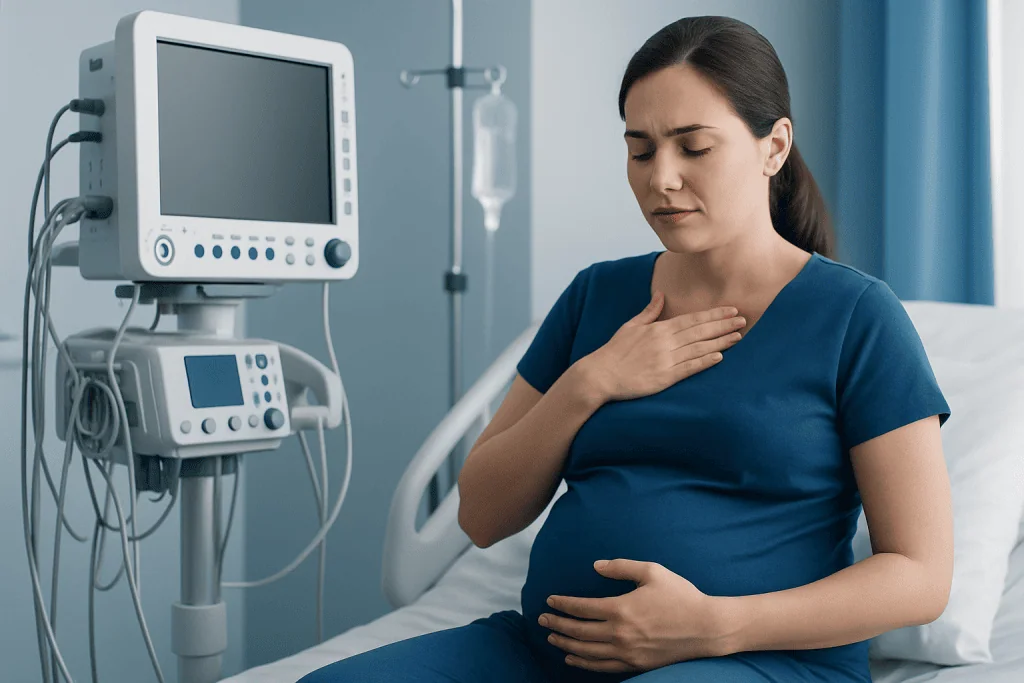
The most common symptom is a burning sensation behind the breastbone that may move upward toward the throat. This often happens after eating, when lying flat, or late in pregnancy when abdominal pressure is greater. Some women notice symptoms mainly at night, which can disturb sleep.
Acid reflux in pregnancy does not always feel the same from person to person. For some, it is mild and occasional. For others, it can feel intense, especially after large meals or foods that are spicy, fatty, acidic, or heavily seasoned.
- Burning in the chest or upper abdomen
- Sour, acidic, or bitter taste in the mouth
- Food or fluid coming back up into the throat
- Frequent burping or bloating
- Nausea made worse after meals
- Hoarseness, throat clearing, or cough, especially at night
Pregnancy can also bring nausea and vomiting for other reasons, especially in the first trimester. That is why it helps to look at the pattern. Reflux symptoms are usually linked to meals, body position, and a burning or sour sensation, while morning sickness may be more generalized and not always related to lying down or certain foods.
Why Pregnancy Increases Acid Reflux

Several natural pregnancy changes can trigger reflux. Progesterone, a hormone that rises during pregnancy, helps relax the uterus but also relaxes the valve between the esophagus and stomach. When that valve is looser than usual, acid can move upward more easily. Digestion may also slow slightly, which can leave food in the stomach longer.
As pregnancy progresses, the growing uterus takes up more space in the abdomen and can push upward on the stomach. This increased pressure makes reflux more likely, particularly after eating a full meal or when bending at the waist. Symptoms commonly become more noticeable in the second and third trimesters, though they can occur at any stage.
Other factors can make reflux more likely during pregnancy. These include carrying extra weight, having reflux before pregnancy, eating large meals, lying down soon after eating, and consuming personal trigger foods. Carbonated drinks, chocolate, caffeine, peppermint, tomato products, citrus, and fried or high-fat foods are common triggers, but not everyone reacts to the same foods.
In some women, reflux overlaps with other digestive issues such as gastritis or indigestion. A careful history helps a clinician decide whether the symptoms fit straightforward pregnancy heartburn or if another condition should be considered.
Diagnosis and What Doctors Look For
In most pregnant women, acid reflux is diagnosed based on symptoms and timing. A doctor or midwife will usually ask when symptoms happen, what they feel like, which foods trigger them, and whether they improve with lifestyle changes or antacids. A physical examination may be done, but special testing is often not needed for mild, typical symptoms.
It is important to tell a clinician if symptoms are severe, frequent, or unusual. Chest discomfort in pregnancy should not automatically be assumed to be reflux, especially if it is associated with shortness of breath, dizziness, or pain that spreads to the arm, jaw, or back. The goal is to identify symptoms that fit reflux and to rule out problems that need different care.
Tests may be considered if symptoms do not respond to treatment, if swallowing becomes difficult, or if there are warning signs such as bleeding or weight loss. Depending on the situation, a gastroenterology specialist may be involved. Diagnostic planning in pregnancy is individualized so that the benefits and risks of each test are carefully weighed.
If symptoms are persistent or complicated, a doctor may discuss evaluation by a gastroenterology team to assess ongoing reflux, upper digestive symptoms, or other causes of discomfort.
Relief and Treatment Options During Pregnancy
Treatment usually starts with practical changes that reduce pressure on the stomach and lower the chance of acid moving upward. Smaller, more frequent meals are often better tolerated than three large meals. Eating slowly, chewing well, and avoiding heavy meals late in the evening may also help. Many women benefit from keeping a simple food and symptom diary to identify personal triggers rather than avoiding long lists of foods unnecessarily.
Posture matters. Staying upright for at least two to three hours after eating can reduce reflux. At night, elevating the head and upper body slightly may help some women more than using extra pillows alone. Tight clothing around the waist can increase pressure and may worsen symptoms, so looser clothing is often more comfortable.
When lifestyle steps are not enough, a clinician may suggest medicine that is considered appropriate in pregnancy. Some antacids can provide short-term relief, and in certain cases doctors may recommend acid-suppressing medicines such as H2 blockers or proton pump inhibitors. The best choice depends on symptoms, trimester, medical history, and the ingredient profile of the medicine, so self-treating without guidance is not ideal.
If symptoms are ongoing despite these measures, doctors may consider a more structured treatment plan through medical gastroenterology care. In rare situations where severe reflux symptoms are linked to another problem such as a hiatal hernia, management may need to be more individualized.
Daily Habits That May Help Prevent Flare-Ups
Prevention in pregnancy is not always possible, because hormonal and physical changes are natural. Still, many women can reduce flare-ups by adjusting daily routines. The aim is to avoid overfilling the stomach, reduce trigger exposure, and use gravity to keep stomach contents where they belong.
- Choose smaller meals and snacks instead of large portions.
- Avoid lying down soon after eating.
- Limit foods or drinks that clearly trigger symptoms.
- Eat the evening meal earlier when possible.
- Sleep with the upper body gently elevated if nighttime reflux is a problem.
- Wear comfortable clothing that does not tighten the abdomen.
- Stay hydrated, but some women find it helps to sip fluids between meals rather than drinking a lot at once with food.
Smoking and alcohol can worsen reflux and are also unsafe in pregnancy, so avoiding them is important. If iron supplements, prenatal vitamins, or other medicines seem to irritate the stomach, a pregnant woman should not stop them on her own, but should ask her doctor whether timing, formulation, or another adjustment may help.
Stress does not directly cause acid reflux, but it can heighten awareness of symptoms and affect eating and sleep patterns. Gentle activity after meals, pregnancy-safe relaxation practices, and regular prenatal care may support overall comfort.
When to Seek Medical Care
Pregnancy-related reflux is usually manageable, but some symptoms should not be ignored. Medical advice is important if heartburn becomes frequent, severe, or disruptive despite home measures. A doctor can help confirm the cause and recommend treatments that fit pregnancy safely.
Prompt assessment is especially important if there is trouble swallowing, pain when swallowing, repeated vomiting, vomiting blood, black stools, unexplained weight loss, or dehydration. New chest pain should also be checked urgently if it comes with shortness of breath, faintness, sweating, or pain spreading to the arm, neck, or jaw.
Persistent symptoms can sometimes reflect another digestive condition rather than simple reflux. A healthcare professional may review whether further evaluation is needed through endoscopic assessment or specialist follow-up, depending on the overall pregnancy situation and symptom pattern.
Near the end of pregnancy, if severe upper abdominal discomfort is accompanied by headache, vision changes, swelling, or high blood pressure, urgent obstetric review is needed because those symptoms may point to a different pregnancy complication. Acibadem International’s multidisciplinary specialists in JCI-accredited hospitals also diagnose and treat digestive symptoms and pregnancy-related concerns for international patients when specialist evaluation is needed.
Frequently asked questions
Is acid reflux normal during pregnancy?
Yes. Acid reflux and heartburn are very common in pregnancy because hormones relax the valve between the stomach and esophagus, and the growing uterus increases pressure on the stomach. Although uncomfortable, it is usually not harmful and often improves after delivery.
What does acid reflux for pregnant woman feel like?
It often feels like burning in the chest or throat, especially after meals or when lying down. Some women also notice a sour taste, burping, bloating, or food seeming to come back up into the throat.
Can acid reflux hurt the baby?
In most cases, acid reflux affects the mother’s comfort rather than the baby’s health. However, if symptoms lead to poor eating, dehydration, repeated vomiting, or weight loss, medical advice is important so both maternal health and pregnancy nutrition can be supported.
What foods commonly trigger reflux in pregnancy?
Common triggers include spicy foods, fried or fatty meals, chocolate, citrus, tomato products, caffeine, and carbonated drinks. Triggers vary from person to person, so it is often more helpful to track individual patterns than to avoid every possible trigger.
Are antacids safe in pregnancy?
Some antacids and acid-reducing medicines may be used during pregnancy, but the best choice depends on the ingredients and the individual pregnancy. A doctor, midwife, or pharmacist should guide treatment, especially if symptoms are frequent or if other medicines are being taken.
When should a pregnant woman see a doctor for heartburn?
Medical advice is recommended if symptoms are severe, happening often, or not improving with lifestyle changes. Urgent care is needed for chest pain with breathing trouble, vomiting blood, black stools, trouble swallowing, dehydration, or significant weight loss.
References
- American College of Obstetricians and Gynecologists
- National Institute of Diabetes and Digestive and Kidney Diseases
- American Gastroenterological Association
- Mayo Clinic
- National Health Service
This article is for general information only and is not a substitute for professional medical advice. Please consult a qualified doctor about your individual situation.
Persistent digestive symptoms? Get evaluated in Turkey
JCI-accredited · board-certified surgeons · reply within 24h
Add us as a Preferred Source to see more of our trusted health content across Google Search, AI Overviews and Discover.

More from the Health Library



Related Specialists

Dr. Güner Esra Kutlu
Pediatrics
Dr. Ünsal Tank
Dermatology
Dr. Tural Khalilov
Orthopedic Surgery & Traumatology
Assoc. Prof. Dr. Ahmet Küçükçelebi
Aesthetic Plastic & Reconstructive Surgery