Gum Shield for Bruxism: An Evidence-Based Guide for Patients

A gum shield for bruxism mainly protects teeth and dental work from grinding and clenching damage. Custom-made guards usually fit better and are more durable than over-the-counter options.
Key Takeaways
- A gum shield for bruxism mainly protects teeth and dental work from grinding and clenching damage.
- Custom-made guards usually fit better and are more durable than over-the-counter options.
- A mouth guard may ease strain on the teeth and jaw, but it does not always stop bruxism itself.
- Persistent jaw pain, headaches, tooth damage, or disturbed sleep should be assessed by a dentist or doctor.
- Stress management, sleep assessment, and treatment of related conditions can improve long-term results.
A gum shield for bruxism is a protective oral appliance that helps reduce tooth wear and cushion the effects of grinding or clenching, especially during sleep. It can be helpful for many people, but it works best when the type of guard, fit, and underlying cause of bruxism are properly assessed by a dental or medical professional.
What a Gum Shield for Bruxism Does
A gum shield for bruxism, often called a night guard or occlusal splint, is designed to protect the teeth from the forces created by grinding and clenching. In practical terms, it acts as a barrier between the upper and lower teeth. This can help limit enamel wear, reduce pressure on fillings or crowns, and lower the risk of cracks and other dental injury.
It is important for patients to know that a gum shield does not cure every form of bruxism. For many people, especially those who grind during sleep, it is a protective tool rather than a complete solution. Some patients also notice less jaw muscle fatigue or fewer morning headaches, but results vary depending on the cause of the grinding and the type of appliance used.
Bruxism can happen while awake, during sleep, or both. Awake bruxism is often linked to jaw clenching during concentration, stress, or anxiety, while sleep bruxism is considered a sleep-related movement disorder. Because these patterns are different, the best management plan may include both a mouth guard and broader medical or dental evaluation.
Signs That Bruxism May Be Affecting Oral Health
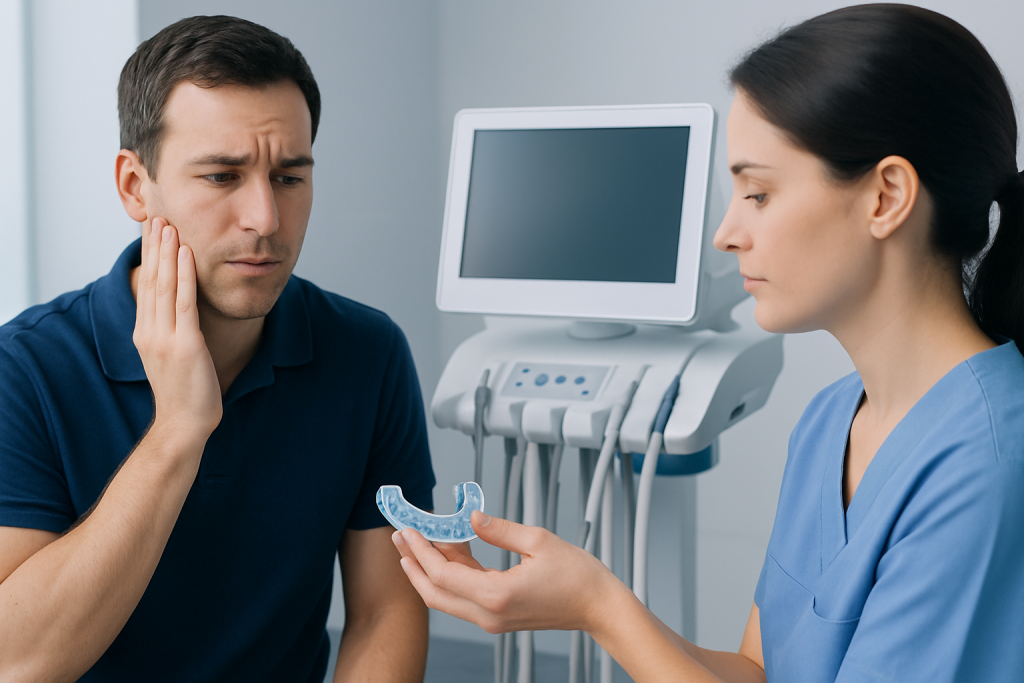
Many people do not realize they grind their teeth until a dentist notices signs of wear or a bed partner hears grinding at night. Common symptoms include flattened or chipped teeth, increased tooth sensitivity, tight jaw muscles, facial soreness, and headaches that are often worse in the morning. Some patients also report disrupted sleep or a feeling that the jaw is tired on waking.
Bruxism can affect more than the teeth. Repeated clenching may overload the jaw joints and surrounding muscles, sometimes contributing to clicking, limited jaw movement, or discomfort when chewing. In some cases, symptoms overlap with temporomandibular joint disorders, which is one reason an accurate assessment matters.
Dental restorations can also be affected. Crowns, veneers, bridges, implants, and fillings may wear down or fracture more quickly in someone with untreated grinding. When a patient already has restorative dental work, using a properly fitted protective device can be especially important.
- Tooth grinding sounds during sleep
- Worn, cracked, or sensitive teeth
- Jaw tightness or aching
- Morning headaches
- Interrupted sleep or daytime fatigue
Causes and Risk Factors: Why Teeth Grinding Happens

Bruxism does not have a single cause. It is usually linked to a combination of physical, psychological, and sleep-related factors. Stress and anxiety are common contributors, particularly in awake bruxism. Sleep bruxism may be associated with sleep arousals, airway issues, snoring, or other sleep disorders. This is why some people benefit from evaluation beyond the teeth alone.
Certain lifestyle factors may also play a role. Caffeine, alcohol, tobacco, and poor sleep habits can worsen grinding in some individuals. Some medicines, especially those that affect the nervous system, may contribute as well. Patients should not stop prescribed medication on their own, but should discuss concerns with their doctor.
Tooth alignment alone is no longer considered the main explanation in most cases. While bite issues can influence symptoms in some people, modern care usually looks more broadly at sleep, stress, muscle activity, and overall oral health. If symptoms are severe or occur together with loud snoring, pauses in breathing, or daytime sleepiness, a doctor may also consider related sleep conditions such as sleep apnea.
Choosing the Right Gum Shield: Over-the-Counter vs Custom
There are several types of gum shields for bruxism. Over-the-counter guards are sold as stock appliances or boil-and-bite devices that soften in hot water and are then shaped at home. These can be a reasonable short-term option for some adults, especially if access to care is delayed, but they may be bulky, wear out sooner, and fit less accurately.
Custom-made guards are produced by a dental professional using impressions or digital scans of the teeth. These appliances tend to fit more securely and comfortably and can be tailored to the patient’s bite, grinding pattern, and dental condition. A better fit may improve comfort, reduce speech interference, and help the patient wear the guard more consistently.
The ideal design depends on the person’s symptoms and dental findings. Some guards are made from softer material for comfort, while others are harder and more durable for stronger grinding forces. A dentist may recommend a custom night guard treatment when tooth wear, cracked restorations, significant clenching, or jaw symptoms are present.
Patients should avoid using a guard that causes new pain, changes the bite noticeably, or feels unstable. Even a well-made appliance may need adjustments after delivery, because comfort and function depend on how evenly it contacts the teeth and how the jaw muscles respond over time.
Diagnosis and Professional Assessment
Diagnosis usually begins with a history and oral examination. A dentist may ask about jaw pain, headaches, sleep quality, and whether a partner has heard grinding at night. The teeth are checked for wear facets, fractures, gum recession, mobility, and damage to fillings or crowns. The jaw muscles and joints may also be examined for tenderness or restricted movement.
In some cases, further tests are useful. Dental imaging may be needed if there is concern about tooth cracks, bone changes, or joint problems. When symptoms suggest a sleep-related cause, referral for sleep evaluation may be appropriate. This is especially relevant if the patient snores heavily, has witnessed breathing pauses, or wakes unrefreshed.
Assessment is important because not all facial or jaw pain is caused by grinding. A clinician may need to distinguish bruxism from gum disease, tooth infection, sinus problems, or more complex jaw disorders. When there is significant bite wear or associated jaw dysfunction, a broader review of TMJ treatment options may be considered as part of a personalized plan.
Treatment Beyond the Mouth Guard
A gum shield for bruxism is often one part of care rather than the whole treatment. The aim is to protect the teeth while also addressing triggers and related symptoms. For some patients, this means improving sleep habits, reducing evening stimulants, treating anxiety, or learning to notice and relax daytime clenching. Small behavior changes can make a meaningful difference over time.
If tooth damage is already present, restorative care may be needed in addition to a guard. Worn or broken teeth sometimes require fillings, crowns, bonding, or other measures to restore function and reduce sensitivity. Patients with severe wear may need more comprehensive dental rehabilitation planned carefully around ongoing bruxism control.
When muscle tension and pain are prominent, a clinician may recommend jaw exercises, physical therapy approaches, or measures such as warm compresses and a soft diet for short periods. If symptoms are driven by snoring or possible airway obstruction, sleep apnea treatment may be part of the long-term solution rather than relying on a guard alone.
In selected cases, specialists from dentistry, sleep medicine, neurology, or maxillofacial care may work together. Near the end of the care pathway, some international patients seek evaluation at Acibadem International, where multidisciplinary specialists in JCI-accredited hospitals diagnose and treat bruxism-related dental and jaw problems.
Daily Use, Cleaning, and Self-Care Tips
For a mouth guard to work well, consistent use matters. Most guards for sleep bruxism are worn at night, while some people with awake clenching may be guided toward daytime habit-awareness strategies instead of wearing a guard during the day. Patients should follow the instructions given for their specific appliance and report any discomfort rather than stopping use without advice.
Cleaning is simple but important. The guard should usually be rinsed after use and cleaned gently with cool or lukewarm water and a mild cleanser recommended by the dentist. Hot water can distort some materials. The appliance should be stored dry in a ventilated case and kept away from pets, which often chew them.
Self-care can support treatment success. Helpful steps may include reducing late-day caffeine, limiting alcohol before bed, maintaining regular sleep hours, and practicing stress-reduction techniques such as breathing exercises or relaxation training. During the day, many patients benefit from checking that the lips are closed, the teeth are apart, and the jaw is relaxed unless chewing or swallowing.
- Use the guard as advised and attend follow-up visits
- Clean it daily and store it properly
- Avoid chewing on the appliance unless instructed
- Limit habits that worsen clenching, such as gum chewing
- Seek review if the guard becomes loose, cracked, or uncomfortable
When to Seek Medical Care
Patients should seek professional care if they have ongoing jaw pain, repeated headaches, tooth sensitivity, cracked teeth, worn dental work, or trouble opening and closing the mouth comfortably. A mouth guard bought without evaluation may protect the teeth to some degree, but it should not replace a proper assessment when symptoms are persistent or worsening.
Medical review is also important if bruxism occurs together with loud snoring, choking during sleep, pauses in breathing, daytime sleepiness, or frequent night waking. These features can suggest an underlying sleep disorder that may need targeted treatment. In children, parents should discuss regular grinding, pain, or sleep concerns with a pediatric dentist or doctor rather than assuming it is always harmless.
Urgent dental attention is needed for sudden severe tooth pain, swelling, a broken tooth, or signs of infection. Prompt care can reduce complications and preserve damaged teeth. Follow-up matters even after a guard is fitted, because the appliance and the bite may need periodic reassessment.
Frequently asked questions
Does a gum shield for bruxism stop teeth grinding completely?
Usually, a gum shield mainly protects the teeth and dental work from the effects of grinding and clenching. Some people feel less tension or discomfort while using one, but it does not always stop the muscle activity itself. The best results often come from combining it with assessment of sleep, stress, and jaw function.
Is a custom mouth guard better than a boil-and-bite guard?
A custom guard usually offers a more precise fit, better comfort, and greater durability. This can be especially helpful for people with strong grinding forces, crowns, implants, or jaw symptoms. Over-the-counter guards may help short term, but they are generally less individualized.
Can wearing a night guard make jaw pain worse?
It can if the guard fits poorly, changes the bite in an unhelpful way, or is not the right type for the patient's condition. Any new pain, pressure points, or difficulty closing the teeth evenly should be reviewed by a dentist. A well-adjusted guard should feel secure and should not create worsening symptoms.
How long does a bruxism guard last?
The lifespan depends on the material, the intensity of grinding, and how well the guard is maintained. Some over-the-counter guards wear out relatively quickly, while custom devices may last longer with proper care. Regular follow-up helps identify thinning, cracks, or fit changes before the guard stops working well.
Should children use a gum shield for bruxism?
Children sometimes grind their teeth, especially during certain stages of growth, and not every child needs treatment. If grinding is frequent, painful, damaging the teeth, or affecting sleep, a pediatric dentist should assess it. The safest choice depends on the child's age, dental development, and symptoms.
What else can help besides a mouth guard?
Depending on the cause, useful measures may include stress reduction, improving sleep habits, limiting caffeine or alcohol in the evening, and treating related sleep or jaw disorders. Dental repair may also be needed if grinding has already damaged the teeth. A tailored plan is more effective than relying on a guard alone.
This article is for general information only and is not a substitute for professional medical advice. Please consult a qualified doctor about your individual situation.
Bruxism in Turkey — costs, top hospitals & a free quote
JCI-accredited · board-certified surgeons · reply within 24h
Add us as a Preferred Source to see more of our trusted health content across Google Search, AI Overviews and Discover.

More from the Health Library

Adnexa: What Patients Need to Know

Mycobacterium Avium Complex — Explained by Medical Evidence, Not Myths

Streptococcus Agalactiae — Explained by Medical Evidence, Not Myths

Somnambulism: An Evidence-Based Guide for Patients

Norethindrone: An Evidence-Based Guide for Patients