Periodontics
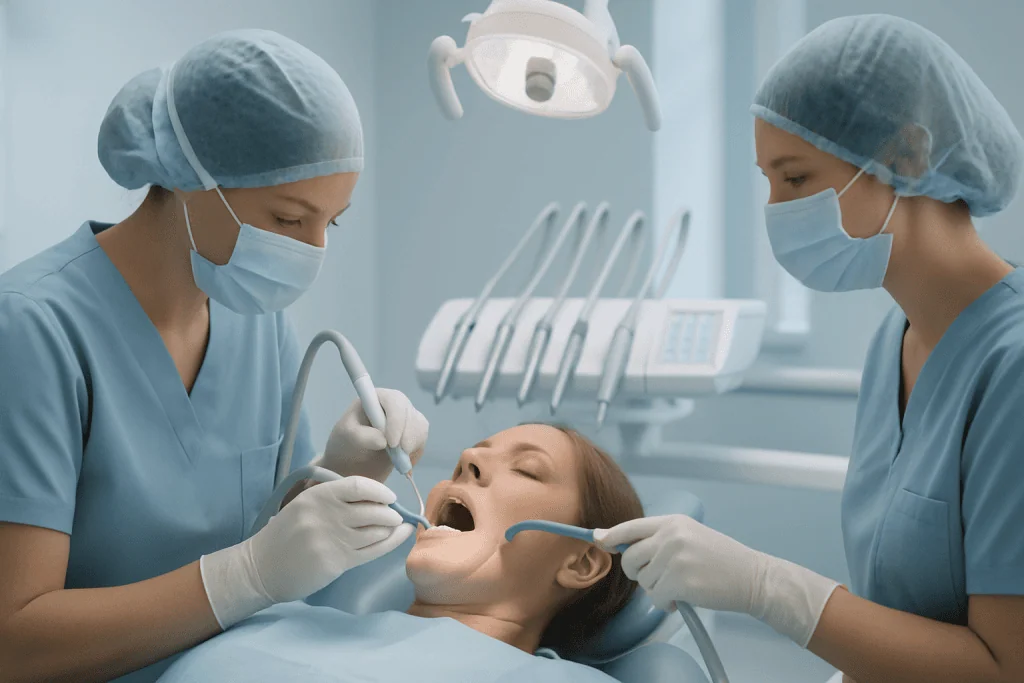
Periodontics focuses on diagnosing and treating gum disease, gum recession, and supporting tissues around teeth. Care may include deep cleaning, maintenance therapy, and periodontal surgery when needed.
Quick answer
Periodontics is the dental specialty that treats the gums, jawbone and other tissues supporting the teeth. A periodontist diagnoses gum disease, performs deep cleaning below the gumline (scaling and root planing), and carries out surgical procedures such as pocket reduction, bone regeneration and gum grafting. Treatment aims to control inflammation, protect remaining bone and keep teeth stable long term.
What Is a Periodontist and What Does Periodontics Cover?
A periodontist is a dentist who has completed additional specialist training in the structures that hold your teeth in place: the gums, the jawbone, the periodontal ligament and the root surfaces. Periodontics is the branch of dentistry devoted to preventing, diagnosing and treating disease in these supporting tissues — and to managing gum recession, bone loss around teeth, inflammation around dental implants, and aesthetic or functional problems at the gumline. If your gums bleed, your teeth feel loose, or your dentist has found deep pockets around your teeth, a periodontist is the specialist trained to establish why, and to plan what should happen next.
Periodontal problems usually begin quietly. A little bleeding when brushing, occasional bad breath, teeth that feel more sensitive, a gumline that seems to be creeping — none of it feels urgent at first. Many people function normally for years while inflammation slowly works on the tissues that support their teeth. By the time teeth feel loose, spaces open between them, or chewing becomes uncomfortable, the disease may already be advanced. That slow, quiet course is exactly why periodontics exists as a distinct specialty: the earlier the process is identified, the more of the supporting structure can usually be kept.
Healthy gums matter for more than appearance. They protect the roots of the teeth, help stabilise the bite and form a barrier against infection. When these tissues become inflamed or damaged, the consequences reach into comfort, chewing, speech, smile aesthetics and long-term oral health. The goal of periodontal care is therefore never simply to “clean the teeth”. It is to diagnose the cause of the problem, control the inflammation, protect the support that remains and build a plan you can realistically maintain over time.
What exactly does a periodontist do?
A periodontist diagnoses and treats disease of the gums and the bone around teeth and implants. Day to day, that means detailed periodontal charting; deep cleaning below the gumline, known as scaling and root planing; surgical procedures to reduce deep pockets; regenerative surgery for selected bone defects; soft tissue grafting for gum recession; crown lengthening before restorative work; and the management of inflamed tissue around dental implants. A periodontist also sets your long-term maintenance schedule and coordinates with restorative dentists, orthodontists and physicians when your wider health, your medications or a complex dental history affects the plan. In other words, the periodontist is responsible not only for treating the disease but for judging which teeth have a favourable outlook and which do not.
What is the difference between a dentist and a periodontist?
A general dentist looks after your whole mouth — examinations, fillings, crowns, routine cleanings — while a periodontist concentrates on the tissues that anchor the teeth. The difference is depth of training and scope: after dental school, a periodontist completes further specialist education focused on gum and bone disease, periodontal surgery and implant-related tissue problems. In practice, the two work together. Your dentist typically refers you to a periodontist when X-rays show bone loss or probing reveals deep pockets, and you continue routine care with your dentist while the specialist manages the gum condition itself. Neither replaces the other; established gum disease simply needs a level of assessment and treatment that goes beyond a standard cleaning appointment.
What Is Periodontal Disease?
Periodontal disease — usually called gum disease — is a bacterial inflammation of the tissues that support the teeth. It begins when plaque accumulates around the teeth and along the gumline. If plaque is not removed thoroughly, it hardens into tartar, which cannot be removed with brushing and flossing alone. The gums respond with inflammation known as gingivitis: they may look red or swollen and bleed easily, but at this stage the deeper supporting structures are usually not yet permanently damaged.
If the inflammation continues, gingivitis can progress to periodontitis. The gum attachment begins to break down and pockets form between the teeth and gums. These pockets collect bacteria and tartar below the gumline, where routine home cleaning cannot reach. Over time, the combination of bacterial activity and the body’s own inflammatory response destroys supporting bone — leading to gum recession, tooth mobility, bite changes and eventual tooth loss if the condition is left untreated.
Two features make periodontal disease deceptive. First, it often causes no pain, even when it is severe; teeth can lose a substantial part of their support before anything actually hurts. Second, it rarely progresses evenly. It may be localised to a few teeth or generalised throughout the mouth, and it can advance in bursts rather than at a steady pace. Regular dental examinations, with probing and periodic X-rays, are the only reliable way to identify it before the damage becomes obvious.
Is periodontal disease contagious?
Not in the way a cold or flu is. The bacteria involved in gum disease can pass between people through saliva — shared cutlery, kissing — so in a narrow sense the microbes are communicable. But transferring bacteria is not the same as transferring the disease. Whether periodontitis actually develops depends on how well plaque is controlled, on the individual immune response, and on factors such as smoking, genetics and general health conditions like diabetes. Two people can carry very similar oral bacteria and have completely different gum health. The practical message for families and couples is not to fear contact, but to recognise that good daily oral hygiene protects everyone in the household.
Signs You May Need Periodontal Treatment
Periodontal treatment begins with recognising that the gums and bone, not the teeth themselves, are the problem. Many patients reach a periodontist through referral, after a general dentist measures deep gum pockets during a routine visit or sees bone loss on X-rays. Others seek care directly because they have noticed visible changes, discomfort or concerns about the appearance of their gums. Common signs that deserve professional assessment include:
- Gums that bleed during brushing or flossing
- Persistent bad breath or a bad taste that does not resolve
- Swollen, tender or receding gums
- Teeth that appear longer than before, or sensitivity near the gumline
- Pus around the teeth or gums
- Loose teeth, shifting teeth or new spaces opening between teeth
- Changes in the way the upper and lower teeth come together when biting
Some patients feel no pain at all, even with significant periodontal disease. This is one of the main reasons regular dental examinations matter: the absence of discomfort tells you very little about the state of the bone under the gumline.
Diagnosis starts with a detailed clinical examination. The dentist or periodontist measures the depth of the spaces between teeth and gums using a periodontal probe. Healthy pockets are shallow; deeper pockets suggest inflammation, attachment loss and areas where bacteria are trapped beyond the reach of a toothbrush. The clinician also records bleeding, gum recession, tooth mobility, bite forces, plaque and tartar levels, restoration margins and the condition of previous dental work — because a crown with a rough or overhanging edge can quietly feed the very inflammation being treated.
Dental X-rays show bone levels around the teeth and the pattern of any bone loss. In more complex cases, three-dimensional imaging may be recommended to assess bone anatomy, tooth roots or implant-related concerns. Intraoral photography helps document the gumline, track recession over time and support communication between specialists. Where systemic conditions, medications, smoking, immune status or unusually aggressive inflammation appear to be influencing gum health, laboratory tests or a medical consultation may be appropriate.
Certain situations raise the likelihood of needing periodontal care: a family history of gum disease, smoking or vaping, diabetes, pregnancy-related gum changes, immune disorders, stress-related lapses in oral hygiene, dry mouth, teeth grinding, poorly fitting crowns or fillings, crowded teeth that are difficult to clean, and any previous history of periodontal treatment. Patients with dental implants need monitoring too, because inflammation around implants can progress and compromise the implant’s support. Gum problems in children and adolescents follow different patterns from adult disease and are assessed within pediatric periodontics.
One further group deserves mention: patients planning major restorative or implant work. Crowns, bridges, veneers, orthodontic treatment and implants all rely on healthy supporting tissues. If gum disease is active, placing new restorations before controlling the infection increases the risk of complications and shortens the life of the dental work. A periodontal assessment before comprehensive treatment is not an optional extra; it is the foundation the rest of the plan stands on.
Conditions Periodontics Addresses
Clinicians often shorten the specialty to perio, and its scope is broader than many patients expect: it covers everything from early gum inflammation to complex bone defects and problems around dental implants. The most frequent indication is gingivitis or periodontitis, but a periodontist also treats recession, aesthetic gumline concerns and inflammatory conditions around implants.
Gingivitis is the earliest stage of gum disease. The gums are inflamed and may bleed easily, but irreversible bone loss has usually not yet occurred. With professional cleaning and consistent home care, gingivitis can often be brought under control effectively.
Periodontitis is the more advanced condition in which inflammation has reached the deeper supporting structures. Treatment aims to reduce the bacterial load, improve pocket depths, stabilise the disease and prevent further attachment and bone loss. Periodontitis may affect only a few teeth or be generalised throughout the mouth, and its severity can vary considerably from one area to another.
Gum recession occurs when the gum margin moves away from the crown of the tooth, exposing the root surface. This can cause sensitivity, raise the risk of root decay and change the look of the smile. Recession may be linked to thin gum tissue, aggressive brushing, orthodontic tooth movement, trauma, periodontal disease or bite-related forces. Depending on the case, management ranges from monitoring and brushing-technique changes to desensitising care or soft tissue grafting.
Periodontal pockets are the deepened spaces between teeth and gums that develop as attachment is lost. Deep pockets are difficult to keep clean at home and act as reservoirs for bacteria. Non-surgical therapy can reduce inflammation and pocket depth; surgery is considered when direct access is needed to remove deposits, reshape tissue or support regeneration.
Bone loss around teeth can follow horizontal or vertical patterns. Some vertical defects are suitable for regenerative treatment using bone grafting materials, membranes, biologic agents or carefully planned surgical techniques. Not every defect can be regenerated, so case selection — and honest discussion of what regeneration can and cannot achieve — is essential.
Peri-implant mucositis and peri-implantitis are inflammatory conditions affecting the tissues around dental implants. Mucositis involves soft tissue inflammation without significant bone loss; peri-implantitis includes bone loss around the implant itself. Treatment depends on severity, implant position, the design of the prosthetic work, cleaning access and the patient’s individual risk factors.
Aesthetic and functional gumline concerns also fall within periodontics: uneven gumlines, excessive gum display when smiling, insufficient gum tissue around teeth or implants, and crown length problems where more tooth structure must be exposed before a restoration can be placed. Any change here has to balance appearance against biology, tooth stability and long-term maintainability — the gumline is living tissue, not a cosmetic surface.
Periodontal Disease Treatment: How It Works, Step by Step
Periodontal disease treatment is organised in phases: accurate diagnosis, control of infection and inflammation, reassessment of how the tissues respond, surgery where non-surgical care is not enough, and structured maintenance for the long term. Not every patient needs every phase. Two people can both be told they have “gum disease” and end up with very different plans — one may need deep cleaning and disciplined maintenance, another may need surgery in selected areas, and a third may need coordinated care involving restorative dentistry, implant planning, orthodontics or medical management of a condition such as diabetes that influences healing.
Care begins with a thorough consultation. The clinician reviews your medical history, current medications, dental history, previous X-rays and symptoms. Bringing recent records, panoramic X-rays, implant details and a complete medication list helps the clinician understand your situation more quickly and avoid repeating investigations unnecessarily.
The first clinical step is periodontal charting. Each tooth is assessed for pocket depth, bleeding, recession, mobility, furcation involvement in multi-rooted teeth and plaque-retention factors. Digital radiographs are used to evaluate bone levels and detect tartar below the gumline, decay, root shape or restoration-related problems. In selected cases, three-dimensional imaging clarifies complex bone defects, implant anatomy or surgical planning questions that plain X-rays cannot answer.
Once the diagnosis is clear, the first active phase focuses on controlling infection and inflammation: oral hygiene instruction tailored to your mouth, professional cleaning, and scaling and root planing. Scaling and root planing is the foundation treatment periodontal patients receive most often — a deep cleaning above and below the gumline that removes bacterial deposits and smooths contaminated root surfaces so the gums can heal more closely around the teeth. Local anaesthesia may be used to keep the procedure comfortable.
How is scaling and root planing performed?
Scaling and root planing is a methodical deep cleaning, usually following a consistent sequence:
- Local anaesthesia is placed where deeper pockets are being treated, so instrumentation below the gumline is tolerable.
- Ultrasonic instruments use controlled vibration and irrigation to disrupt hardened deposits and flush the pocket area.
- Fine hand instruments follow, allowing precise removal of remaining tartar along the root surfaces.
- Root planing smooths the root so that plaque has fewer places to anchor and the gum tissue can readapt against the tooth.
- In selected cases, locally applied antimicrobial agents or medicated rinses are added — selectively, not routinely for every patient.
- The visit ends with home-care coaching matched to your mouth, because what you do daily determines whether the result holds.
Deep cleaning may be completed in one visit or divided into sections of the mouth, depending on severity, comfort, scheduling and the clinician’s recommendation. There is no single correct format; what matters is that every affected surface is treated thoroughly and that healing can be measured afterwards.
After initial therapy, the tissues are reassessed. This step matters because it shows how your gums respond once inflammation and bacterial deposits are reduced. The periodontist measures pocket depths again, checks bleeding, evaluates your plaque control and decides whether further treatment is needed. Many patients improve substantially with non-surgical therapy and maintenance alone. Others are left with persistent deep pockets, bone defects or access limitations that call for surgery.
When is periodontal surgery needed?
Surgery is considered when non-surgical treatment cannot reach or resolve the problem — typically persistent deep pockets, specific bone defects, or gum tissue that needs to be augmented or reshaped. Periodontal surgery is not a single procedure but a family of techniques chosen to fit the defect.
In pocket reduction surgery, the gum tissue is gently lifted to give direct access to the roots and bone. Deposits are removed, the area is cleaned thoroughly, and the gum is repositioned to reduce pocket depth and make long-term cleaning realistic. In regenerative periodontal surgery, grafting materials, membranes or biologic agents are used to encourage new attachment and bone fill in specific types of defects. Whether regeneration is feasible depends on the shape of the defect, tooth stability, oral hygiene, smoking status and other biological factors — which is why a responsible surgeon will decline to attempt it where the anatomy does not support it.
For gum recession, soft tissue grafting may be considered. Tissue can be taken from the palate, or another donor source may be used, depending on the case. The graft is positioned to thicken the tissue, cover exposed root surfaces where possible, stabilise the gum margin or improve the gumline around teeth or implants. How much root coverage is achievable depends on the severity of the recession, the bone levels, the tooth’s position and the quality of the tissue, so expectations are set carefully before treatment rather than adjusted afterwards.
Some patients need crown lengthening, a procedure that adjusts gum — and sometimes bone — levels to expose more tooth structure. It is used before a crown or restoration when a tooth is broken, decayed below the gumline or too short to support durable work, and occasionally for selected aesthetic concerns when it is biologically appropriate.
What is the most feared dental procedure?
Surveys and everyday clinical experience point to the same candidates: root canal treatment and gum surgery are the procedures patients most often say they dread. The fear usually reflects reputation rather than reality. Periodontal procedures are performed under local anaesthesia, and what patients typically report afterwards is tenderness and sensitivity during healing rather than the ordeal they imagined. Anxiety itself is worth mentioning to the clinical team, because pacing, explanation and shorter sessions genuinely change the experience. Fear that delays treatment tends to cost more tissue than the treatment ever would.
Can periodontal disease be cured?
Gingivitis — the early stage — can usually be reversed with professional cleaning and consistent home care, because the deeper structures are not yet permanently damaged. Established periodontitis is different: it cannot be cured, because bone that has been lost does not simply grow back, but it can be controlled and stabilised. Treatment reduces the bacterial load, shrinks pockets and halts or slows further destruction; regenerative surgery can rebuild support in selected defects. Anyone promising to eliminate periodontitis permanently is overstating what dentistry can do. The honest framing is lifelong management: active treatment first, then maintenance visits at intervals matched to your risk, for as long as you want to keep your teeth.
Technology supports every phase of this pathway. Digital radiography assesses bone levels with reduced radiation compared with older film techniques. Three-dimensional imaging clarifies complex anatomy when standard X-rays are not enough. Intraoral cameras and clinical photography document gum changes and make findings visible to the patient rather than abstract. Magnification and microsurgical instruments support delicate soft tissue work; ultrasonic scalers and controlled irrigation make deposit removal efficient; digital records let multidisciplinary teams plan together. The value lies not in the devices themselves but in how they help the clinician diagnose accurately, treat conservatively where possible and plan surgery with clarity.
How long does all this take? A consultation and diagnostic workup usually fit into one appointment. Non-surgical deep cleaning may take one or several visits. Surgical procedures take longer, depending on how many teeth are involved and how complex the defect is. Biological healing times cannot be compressed to fit a calendar, and in some cases it is simply safer to stage treatment across several visits, particularly where surgery, grafting, implants or complex restorative work is involved.
Recovery After Periodontal Treatment
Recovery depends on what was done. After deep cleaning, mild gum tenderness, temporary sensitivity and light bleeding are common for a short period, and they typically settle as the inflammation itself subsides. After surgery or grafting, expect some swelling, bruising, discomfort and dietary restrictions. Patients are usually advised to avoid brushing the surgical site directly for a period, to use prescribed rinses if recommended and to keep to a soft diet while the tissue knits. Sutures may be removed or checked at a follow-up visit, depending on the material and procedure.
| Time Period | What Patients Can Expect |
|---|---|
| Day 1 | After deep cleaning, mild tenderness or sensitivity is common. After surgery, swelling, minor bleeding and numbness from anaesthesia may occur. Soft foods and careful oral hygiene are usually recommended. |
| First Week | Inflammation gradually decreases. Patients may use prescribed rinses or medications if recommended. Surgical sites should be protected from trauma, and follow-up instructions matter. |
| First Month | Gums often feel firmer and bleed less. Sensitivity may continue but usually improves. A reassessment may be scheduled to evaluate pocket depth, plaque control and healing response. |
| Three to Six Months | Periodontal maintenance becomes central. The care team monitors stability, removes new deposits and adjusts home-care tools or intervals based on your risk profile. |
| Longer Term | Continued control depends on maintenance visits, daily plaque removal, smoking cessation if applicable, medical risk control and early management of any recurring inflammation. |
Maintenance therapy deserves emphasis, because it is where periodontal results are won or lost. Periodontal disease can be controlled, but anyone who has had periodontitis remains more susceptible to recurrence for life. Maintenance visits are more detailed than routine dental cleanings and are scheduled at personalised intervals based on risk. At each visit the clinician removes new deposits, measures pockets, reinforces home care and looks for early signs of relapse — catching a recurring pocket at one visit is a minor adjustment; discovering it two years later can mean another round of surgery.
Benefits of Periodontal Treatment
The benefits of treating gum disease are both immediate and long term, particularly when active therapy is followed by consistent maintenance and daily home care.
| Benefit | What It Means for You |
|---|---|
| Reduced gum inflammation | Bleeding, swelling, tenderness and redness may improve as bacterial deposits are removed and the tissues begin to heal. |
| Better control of periodontal pockets | Shallower, healthier pockets are easier to clean and monitor, reducing the chance that disease progresses unnoticed. |
| Protection of supporting bone | Timely treatment can help slow or stop further bone loss around teeth, supporting long-term tooth stability. |
| Improved comfort and function | Healthier gums can make brushing, chewing and speaking more comfortable, particularly where inflammation or infection has been present. |
| Support for future dental work | Stable gums and bone provide a better foundation for crowns, bridges, implants, orthodontics or aesthetic dental procedures. |
| Improved smile appearance | Treatment may reduce swelling, improve gum contours or address recession-related concerns where clinically appropriate. |
Why Acting Early Matters
Gum disease is often slow-moving, but delay makes treatment more complex. In the early stages, inflammation may be reversible and the tissue response to treatment is generally more favourable. As the disease progresses, attachment and bone loss can become permanent. Modern periodontal therapy can often stabilise the disease and improve tissue health, but it cannot always restore support that has already been destroyed.
Delay allows pockets to deepen, making them harder to clean. Bacteria continue to irritate the gums and drive inflammation. Bone loss may progress unevenly, carving defects around particular teeth. Teeth may begin to shift, loosen or become painful when chewing. In advanced cases, saving certain teeth is no longer predictable, and extraction becomes the honest recommendation rather than the last resort.
Untreated periodontal disease also undermines planned dental work. Crowns, veneers, bridges, orthodontics and implants all require stable gum and bone support. If inflammation remains active, gums may recede after restorative work, margins may become exposed and the risk of complications rises. For anyone planning comprehensive dental rehabilitation, controlling the periodontal condition first is usually the necessary foundation, not a detour.
Acting early does not mean acting aggressively. It means obtaining an accurate diagnosis and beginning the right level of care at the right time. For some patients that is improved hygiene and monitoring; for others, deep cleaning and risk-factor management; for a smaller group, surgery in selected areas. The earlier the disease is identified, the more options remain open.
What Influences the Outcome of Periodontal Treatment
A good periodontal result is not defined by how the gums look immediately after treatment. It is measured by reduced inflammation, improved or stable pocket depths, the absence of progressive bone loss, better cleaning access, comfort, and the ability to maintain the result year after year. Several factors shape those outcomes, and it is worth understanding them before treatment rather than after.
Disease stage at diagnosis is one of the most important. Early gingivitis often resolves with professional care and improved hygiene. Advanced periodontitis with severe bone loss may be controllable, but some damage is irreversible. Teeth with extensive mobility, deep vertical defects or furcation involvement carry a more guarded long-term outlook, and a careful periodontist will say so plainly.
Daily oral hygiene directly determines stability. Treatment reduces bacterial deposits and inflammation, but plaque begins to reform soon after every cleaning. You need a home routine matched to your mouth: the right brushing technique plus interdental cleaning with floss, interdental brushes or water-based devices as appropriate. The best tools are the ones you will actually use effectively, every day.
Maintenance therapy is essential after periodontitis. Routine six-monthly cleanings may not be frequent enough for higher-risk patients. Maintenance intervals are set according to pocket depths, bleeding tendency, plaque control, smoking status, diabetes control and previous disease severity. These are not optional polishing appointments; they are disease control.
Smoking and nicotine use significantly affect outcomes. Smoking reduces blood flow to the gums, alters the immune response, masks bleeding — hiding the disease from you — and impairs healing after surgery or grafting. Patients who stop smoking generally improve their capacity to heal and to hold periodontal stability. Vaping and other nicotine products can also affect the tissues and should be discussed openly with the clinician.
Medical conditions matter. Diabetes, particularly when poorly controlled, is strongly associated with more severe periodontal disease and slower healing. Certain medications affect gum tissue, saliva flow, bleeding or immune response. Osteoporosis medications, blood thinners, immunosuppressive therapy, a history of cancer treatment and cardiovascular conditions may all require coordination with the treating physicians before invasive dental procedures — a decision that belongs to the medical and dental team together, never to the patient alone.
Bite forces and tooth position play a role. Teeth that are overloaded, crowded, tilted or hard to clean are more vulnerable. Night-time grinding or clenching can worsen mobility or discomfort. In selected cases, bite adjustment, splinting, orthodontic consultation or restorative changes become part of the broader plan.
The quality of previous dental work influences gum health more than most patients realise. Overhanging fillings, poorly fitting crowns, rough restoration margins and prosthetic designs that cannot be cleaned all trap plaque and feed inflammation. Periodontal therapy may need to be coordinated with restorative dentistry so that both teeth and restorations are designed for long-term maintainability.
Realistic planning ties it all together. Not every tooth can be saved predictably, and not every recession defect can be fully covered. A responsible periodontal plan states which teeth have a favourable prognosis, which need treatment and monitoring, and which may need extraction and replacement. Clear expectations protect you from unnecessary procedures — and from poorly timed ones.
Gum Health and Your General Health
Periodontal inflammation does not stay neatly inside the mouth. It has been associated with systemic conditions such as diabetes and cardiovascular disease, and gum health is harder to maintain when those conditions are not well controlled. The relationship runs in both directions: chronic oral inflammation adds to the body’s overall inflammatory burden, while systemic disease impairs the gums’ capacity to heal. The broader connections are explored on our page on oral health and systemic diseases.
Periodontal treatment is not a replacement for medical care, but it can be a meaningful part of reducing chronic oral inflammation, coordinated with your physicians where needed. Patients being managed for coronary artery disease or heart valve disease, for example, may need their cardiology and dental teams to communicate before invasive periodontal procedures, so that timing, medication considerations and precautions are decided jointly by the treating doctors. Good periodontal care fits into a patient’s overall medical picture; it never operates in isolation from it.
Practical Questions Before You Start
Is periodontics covered by dental insurance?
Often partly, but the details vary enormously by country, insurer and policy. Many dental plans classify periodontal scaling and root planing differently from a routine cleaning, and surgical procedures differently again, with their own conditions, waiting periods and documentation requirements. General medical insurance rarely covers dental treatment unless a policy specifically includes it. The only reliable answer sits in your own policy documents: check how your plan categorises periodontal procedures, what pre-authorisation it requires and what documentation — such as periodontal charting and X-rays — it expects before treatment. A written treatment plan with procedure codes makes that conversation with your insurer far easier.
Timing is the other practical question. Because periodontal care unfolds in phases with healing between them, it rarely compresses into a single week. If you are combining periodontal care with other dental work, the sequencing — periodontal stabilisation first, restorative work after — should be settled in the plan before anything begins, so that no phase is rushed to fit a calendar.
Periodontal Care at Acibadem
At Acibadem, periodontal care is delivered within a hospital-based healthcare environment, with the clinical discipline that setting implies: careful assessment, evidence-based treatment planning, advanced imaging where it genuinely adds information, and structured documentation so that decisions rest on your clinical condition rather than a one-size-fits-all protocol.
Complex periodontal cases benefit from multidisciplinary discussion. A patient with advanced gum disease may also need restorative dentistry, implant planning, endodontic care, orthodontic input or medical evaluation. Specialist collaboration can be arranged within the same organisation, so the periodontal plan fits into a broader oral rehabilitation strategy — which matters most when crowns, implants, full-mouth treatment or aesthetic dentistry are being considered after periodontal stabilisation.
The diagnostic and surgical toolkit reflects the standards described throughout this page: digital radiography for bone assessment, three-dimensional imaging for selected surgical, implant or bone-related questions, intraoral imaging and photography to document change over time, and ultrasonic instrumentation, fine periodontal instruments, magnification and appropriate surgical materials for the delicate work on gum and root surfaces.
Patients who have collected recommendations from several clinicians often find that the plans conflict: one advises extractions, another implants, a third urgent surgery. In that situation, the clinically sound first step is always the same — confirm the diagnosis, assess each tooth’s prognosis individually and distinguish the teeth that can be maintained from those that cannot be kept predictably. A high-quality periodontal consultation should answer clear questions: What is the diagnosis? Which teeth have bone loss? Are the pockets generalised or localised? Is non-surgical therapy enough? If surgery is proposed, what is its purpose? How will healing be monitored, and what maintenance interval follows?
A Realistic Way Forward
A periodontal diagnosis can feel discouraging, especially when you are told that bone has been lost or that particular teeth are at risk. Yet most patients can stabilise their gum health with an accurate diagnosis, the right level of treatment and consistent maintenance. Even where surgery or more complex care is needed, the purpose remains constant: preserve function, reduce inflammation, protect comfort and give you an honest basis for decisions about your long-term oral health.
The pattern that separates good outcomes from poor ones is rarely the sophistication of the surgery. It is the sequence: diagnosis before treatment, infection control before restoration, and maintenance after everything. Gum disease rewards patience and consistency far more than it rewards dramatic intervention — and the sooner the process is identified, the more of your own teeth that patience will save.
Preparation
- A dental and periodontal examination is performed, often with X-rays to assess bone support and gum pockets. Patients should share medical conditions, medications, allergies, and smoking habits. Professional cleaning or infection control may be recommended before advanced periodontal treatment.
Aftercare
- Mild gum tenderness or bleeding can occur after treatment and usually improves within a few days. Patients should follow brushing, interdental cleaning, mouth rinse, and medication instructions carefully. Regular periodontal maintenance visits are important to prevent recurrence and protect long-term oral health.
Turkey vs UK, Germany & USA
Periodontics care can range from preventive gum maintenance to advanced surgery for gum disease, gum recession, and the tissues supporting the teeth. Costs and patient experience vary by disease severity, treatment type, clinic setting, and whether care is planned as part of an international patient package.
This comparison highlights practical factors that may influence the overall cost and experience of periodontal treatment in different healthcare settings.
| Factor | Turkey | UK | Germany | USA |
|---|---|---|---|---|
| Price drivers | Often package-based for international patients; cost depends on diagnostics, deep cleaning, surgery, grafting, and follow-up needs. | Costs vary between public access and private periodontal care; specialist private treatment may add consultation and procedure fees. | Costs depend on private or statutory coverage, specialist involvement, imaging, and surgical materials. | Costs are strongly influenced by insurance coverage, provider network, specialist fees, imaging, and surgical complexity. |
| Hospital and specialist factors | International hospitals and dental departments may coordinate periodontists, prosthodontists, and other specialists in one pathway. | Referral to a periodontist may be needed, especially for advanced gum disease or surgery. | Specialist periodontal care is often structured and documentation-based, with referrals when required. | Care may be delivered in specialist periodontal practices, dental groups, or hospital-linked clinics. |
| Accreditation and quality | Some hospitals serving international patients hold international accreditation such as JCI; protocols, sterilisation, and documentation are key factors to review. | Regulated dental and specialist services; quality indicators vary by provider and setting. | Regulated dental care with established clinical standards; provider credentials and facility protocols should be checked. | Regulated dental and periodontal care; accreditation, board certification, and facility standards vary by provider. |
| Waiting times | Private international scheduling may allow coordinated appointments, depending on case complexity and healing time. | Public pathways may involve referral timelines; private appointments may be faster depending on availability. | Waiting times vary by region, referral pathway, and specialist availability. | Timing depends on insurance authorisation, provider availability, and whether treatment is urgent or elective. |
| Travel and language logistics | International patient teams may assist with appointment planning, translation, transfers, and treatment scheduling. | English-language care is standard; travel logistics depend on patient location and clinic access. | Language support may be available in larger centres; planning may be needed for non-German-speaking patients. | English-language care is standard; travel, accommodation, and insurance coordination can affect the experience. |
| Typical package inclusions | May include specialist consultation, periodontal charting, imaging, treatment plan, selected procedures, translation support, and care coordination. | Private care is often itemised; inclusions should be confirmed before treatment begins. | Plans may be itemised according to diagnostics, procedures, materials, and follow-up visits. | Plans are commonly itemised and may be affected by insurance approvals, deductibles, and network rules. |
What affects your final cost
- Severity and extent of gum disease or gum recession.
- Need for periodontal charting, imaging, microbiological tests, or additional diagnostics.
- Whether treatment is non-surgical, surgical, regenerative, or cosmetic in nature.
- Number of teeth or areas requiring treatment, without assuming the same approach for every case.
- Specialist experience, hospital setting, sedation needs, and material choices.
- Maintenance visits, travel planning, translation, and coordination services for international patients.
Compare your options
Periodontal treatment is personalised after examination by a dentist or periodontist. Suitability for any option is decided by a specialist based on gum health, bone support, medical history, oral hygiene, and patient goals.
| Option | What it is | Typical use | Key considerations |
|---|---|---|---|
| Periodontal assessment and diagnosis | Clinical gum examination with periodontal measurements, imaging, and risk assessment. | Used to identify gum disease, gum recession, bone loss, bleeding, tooth mobility, and treatment priorities. | A detailed diagnosis helps plan whether maintenance, deep cleaning, surgery, or combined care is needed. |
| Professional cleaning and preventive maintenance | Removal of plaque and tartar with ongoing hygiene support and monitoring. | Used for early gum inflammation, prevention, and long-term control after active treatment. | Consistency at home and regular follow-up are important for stable results. |
| Deep cleaning and root surface treatment | Non-surgical cleaning below the gumline to reduce bacterial deposits and support healing. | Commonly used for gum disease with deeper pockets or inflammation around the teeth. | May require local anaesthesia and staged visits; response is reviewed before further treatment is chosen. |
| Periodontal surgery | Surgical access to clean deeper areas, reshape tissues, or manage advanced periodontal defects. | Used when non-surgical care is not enough or when pockets and tissue defects remain. | Healing time, oral hygiene, smoking status, medical conditions, and maintenance care affect outcomes. |
| Gum grafting and recession treatment | Soft tissue procedures to cover or thicken areas affected by gum recession. | Used for sensitivity, root exposure, aesthetic concerns, or to improve tissue support in selected cases. | Not every recession case is suitable; tissue quality, bite forces, and brushing habits are assessed. |
| Regenerative periodontal therapy | Use of selected surgical techniques and materials to support repair of lost supporting tissues. | Used for certain bone defects around teeth when regeneration is clinically realistic. | Case selection is essential, and outcomes depend on defect type, infection control, and maintenance. |
General information only — not medical or financial advice. Final costs depend on the factors above and your individual case; request a free, personalised quote.
Frequently Asked Questions
What affects the cost of periodontics treatment?
The final cost depends on the severity of gum disease, the number of areas involved, diagnostic needs, whether surgery or grafting is required, the specialist and facility, sedation choices, and the follow-up plan. A personalised assessment is needed before an accurate quote can be prepared.
Can I get a quote before travelling to Turkey?
Yes. International patients can usually share dental records, photographs, and recent imaging for an initial review. A final treatment plan and quote are confirmed after an in-person periodontal examination because gum measurements and tissue condition must be assessed directly.
Is periodontics usually completed in one visit?
Some diagnostic and non-surgical care can be planned efficiently, but periodontal treatment often requires staged care and monitoring. Surgical or grafting procedures may also need healing time, so the schedule should be planned with the specialist before travel.
What is typically included in an international periodontal treatment package?
Inclusions vary by provider, but a package may include specialist consultation, periodontal assessment, imaging, selected treatments, care coordination, translation support, and appointment planning. Patients should ask what is included and what may be billed separately.
Does maintenance therapy affect the total cost?
Yes. Periodontics is often focused on long-term disease control, so maintenance visits, hygiene support, and monitoring may be part of the overall plan. These visits help protect treatment results and should be considered when comparing options.
How can I receive a personalised quote?
You can request a free consultation and share your dental history, current symptoms, photographs, and any available imaging. A specialist team can then advise on likely treatment options, travel timing, and a personalised estimate after clinical review.
Medically reviewed by the Acıbadem International Medical Board — August 30, 2026
See our medical review board →
Update history
- PublishedJune 8, 2026
- Medical review approvedAugust 30, 2026
- Last content updateAugust 30, 2026
Trusted care for international patients
Doctors Performing This Treatment

Assoc. Prof. Dr. Ferit Bayram
Oral & Dental Health
Dr. Ezgi Gülüm
Oral Dental & Maxillofacial Surgery
Dr. Emre Çengelli
Oral Dental & Maxillofacial Surgery
Dr. Arzu Morçiçek
Oral & Dental HealthDr. Deniz Turgut
Oral & Dental Health
Dr. Ceyda Sabancı
Oral & Dental Health
Dr. Çağla Su Doğangün Ayduk
Oral & Dental Health
Dr. Begüm Öykü Kesim
Oral & Dental Health
Dr. Eylül Türsen
Oral & Dental Health
Dr. Metin Kınacı
Oral & Dental Health
Dr. Duygu Yavuzer Karadeniz
PeriodontolgyDr. Ali Riza Özdurmuş
Oral & Dental Health
Dr. Bedii Ender Topçu
Oral & Dental Health
Dr. Sebiha Nihal Yılmaz
Oral Dental & Maxillofacial SurgeryDr. Seda Saygılı Özaydın
Oral & Dental Health
Dr. Zeynep Ekin Kılınç
Oral & Dental Health
Dr. Uğur Önder
Oral & Dental Health
Dr. Helin Kuşsever Topçu
Oral & Dental Health
Dr. Pelin Açık
Oral & Dental Health
Dr. İpek Saygılı
Oral & Dental Health
Dr. Halime Bayram
Oral & Dental Health
Dr. Havva Gölalan
Oral & Dental Health
Dr. Merve Ağartıoğlu
Oral & Dental Health
Dr. Mücahit Güner
Oral & Dental HealthMedical Units
Available at These Hospitals