Pediatric Periodontics
Pediatric periodontics focuses on preventing, diagnosing and treating gum problems in children and adolescents, including hygiene guidance, periodontal cleaning, and inflammation management around teeth.
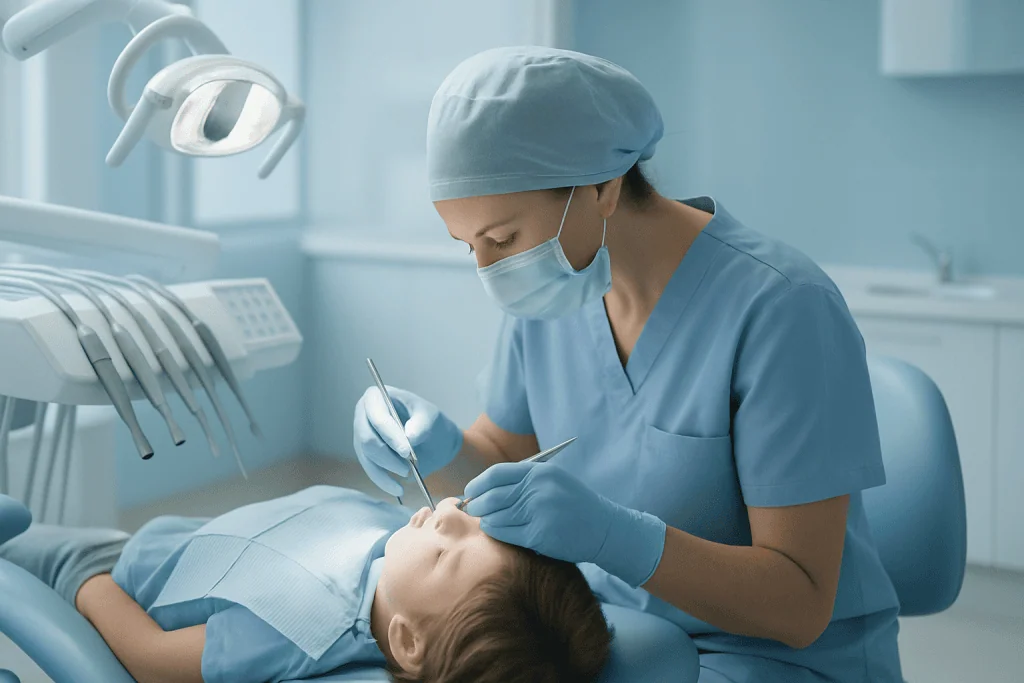
Quick answer
Pediatric periodontics is the branch of dentistry that prevents, diagnoses and treats gum disease in children and adolescents. Care typically involves professional cleaning above and below the gumline, tailored brushing and flossing instruction, monitoring of gum pockets, and management of inflammation around braces or linked to medical conditions. Most childhood gum problems are plaque-related gingivitis, which is often reversible with early treatment and consistent home care.
Pediatric Periodontics: Specialist Gum Care for Children
Pediatric periodontics is the branch of dental care that prevents, diagnoses and treats diseases of the gums and the supporting tissues around children’s teeth. It covers routine gum assessment, plaque and tartar removal, hygiene coaching, care around braces and other orthodontic appliances, and the evaluation of rarer periodontal conditions linked to genetics or general health. It is relevant from the first baby teeth through adolescence, because the gums do essential work at every stage of dental development.
Bleeding gums, persistent bad breath, swelling or gum tenderness in a child can unsettle any parent. Most families associate gum disease with adulthood, so it often comes as a surprise that children and adolescents develop periodontal problems too. The reassuring part is straightforward: in most children, these problems are manageable when they are recognised early and treated with age-appropriate care, careful hygiene guidance and regular monitoring.
The gums and supporting tissues are not decoration. They hold the teeth in place, protect the roots, and provide a stable foundation for chewing, speech and facial development. When inflammation is allowed to continue, it can affect comfort, tooth stability, orthodontic planning and long-term oral health. This is why pediatric periodontics treats gum health as part of the child’s overall development, not as an isolated dental detail.
Periodontal care for a child is never only about the gums. It also involves behaviour, growth, nutrition, brushing habits, medical history, family risk factors and developmental stage. A six-year-old with plaque-related gingivitis, a teenager wearing braces and a child with a systemic medical condition may all need different periodontal strategies. The aim is to treat the current problem while helping the child and family build routines they can actually keep, so that future risk falls rather than rises.
Parents often worry that treatment will hurt, frighten the child or prove too complex for a young patient. Pediatric periodontal care is deliberately gentle, explanatory and adapted to the child’s age and level of cooperation. At Acibadem, children are evaluated with attention to both clinical detail and emotional comfort, and treatment plans may involve pediatric dentists, periodontists, orthodontists and other specialists where the findings call for it.
What Pediatric Periodontics Is
Pediatric periodontics prevents, diagnoses and treats diseases of the gums and the supporting structures around teeth in children and adolescents. In practical terms, it includes routine gum assessment, removal of plaque and tartar, oral hygiene instruction, management of gum inflammation, care around orthodontic appliances, and the evaluation of more complex periodontal conditions that may relate to genetics or general health. It sits alongside adult periodontics, but the methods, communication and priorities are adapted to a growing patient with a mix of baby and permanent teeth.
Gingivitis in children
Gingivitis is inflammation of the gums and it is the most common periodontal condition in children. It is usually caused by plaque accumulating along the gumline. Plaque is a soft bacterial film that forms on the teeth every day; if brushing and flossing do not remove it effectively, it irritates the gum tissue and produces redness, swelling, bleeding and tenderness. Gingivitis does not usually cause permanent damage when it is treated early. It can, however, become persistent if the underlying causes — usually inadequate plaque removal, sometimes combined with other risk factors — are not addressed.
Can a child have periodontitis?
Yes. Periodontitis is far less common in children than in adults, but it does occur, and it deserves careful attention when it does. Unlike gingivitis, periodontitis affects the deeper tissues that support the teeth, including the periodontal ligament and the surrounding bone. In pediatric patients it may be associated with severe plaque accumulation, certain medical conditions, immune system disorders, genetic susceptibility or aggressive bacterial patterns. A key point for parents: periodontitis in a child can progress more quickly than expected, which is why careful diagnosis and structured follow-up matter so much at this age.
The specialty also covers preventive care for children at increased risk. That group includes children with diabetes, immune disorders, special healthcare needs, or developmental conditions that make oral hygiene difficult, as well as children undergoing orthodontic treatment. Adolescence adds its own factor: hormonal changes during puberty can make the gums more reactive to plaque, which is why bleeding gums are common in teenagers — particularly when brushing and flossing are inconsistent.
Day to day, pediatric periodontal treatment may involve professional cleaning above and below the gumline, education on brushing and interdental cleaning, monitoring of gum pockets, management of inflamed areas, evaluation of oral habits, and coordination with orthodontic care or the child’s medical team. The approach is tailored to the child, not simply to the diagnosis on the chart.
Who May Need Pediatric Periodontal Care
A child may need periodontal evaluation when there are signs of gum inflammation: repeated bleeding during brushing, gum swelling, discomfort while eating, or a change in how the teeth or gums look. Some children complain of sore gums. Many others feel nothing at all and are brought in because a parent noticed bleeding, bad breath or receding gum tissue. Adolescents often raise the concern themselves, especially when the gums look puffy around braces or bleed at the slightest touch.
Why would a child need a periodontist?
A child needs a periodontist when gum problems go beyond what routine dental care resolves — for example, gum inflammation that persists despite good brushing, gum recession, deep gum pockets, loose permanent teeth, or periodontal findings connected to a medical condition. For everyday gingivitis, a pediatric dentist usually manages the problem within general pediatric dentistry. A periodontist adds specialist depth when the supporting tissues are involved, when disease is unusual for the child’s age, or when orthodontic or surgical planning depends on the state of the gums. In practice, the two often work together on the same child.
Signs of gum disease in children
Signs of gum disease in children range from the obvious to the easy-to-miss. Typical findings include:
- Red or swollen gums, or gums that look shiny rather than firm and stippled
- Bleeding while brushing or flossing
- Persistent bad breath that returns soon after brushing
- Gum tenderness, or irritability during brushing in younger children
- Visible plaque buildup or hardened tartar deposits along the gumline
- Gum recession, where the tooth root begins to show
- Loose permanent teeth beyond what normal development explains
- Pus around the gums, or a change in how the teeth bite together
- Swollen gum tissue around orthodontic brackets where plaque is hard to remove
In very young children, avoidance of certain foods or resistance to toothbrushing may be the only clue. None of these signs proves periodontal disease on its own — but together they explain why a dental team looks at the gums as carefully as the teeth.
Diagnosis begins with a detailed dental and medical history. The team asks about brushing habits, flossing, diet, orthodontic appliances, previous dental treatment, medications, systemic diseases, family history of gum disease, and any bleeding or immune-related concerns. This history matters because gum inflammation is influenced by far more than brushing technique alone, and the answers often change the treatment plan.
The clinical examination assesses plaque, tartar, gum colour, swelling, bleeding tendency, tooth mobility, gum recession and — where appropriate for the child’s age — the depth of the spaces between the teeth and gums. In selected cases, dental X-rays help evaluate the bone support around the teeth, eruption patterns, dental development and other contributing factors. Imaging is used thoughtfully, with child-appropriate protocols, and only when it adds meaningful diagnostic information. A picture taken for its own sake helps nobody.
What is the “Rule of 7” in pediatric dentistry?
The “Rule of 7” usually refers to the guidance that a child should have a first orthodontic and dental-development assessment by around age seven. By that age, the first permanent molars and the front permanent incisors have typically erupted, which lets a clinician assess how the bite is developing, whether the jaws have space for the incoming teeth, and whether eruption problems are emerging. It is a screening milestone, not a treatment deadline: most seven-year-olds need observation rather than braces. For periodontal purposes, the same visit is a natural point to check gum health, hygiene technique and early risk factors, because problems identified at seven are far easier to correct than problems discovered at fourteen.
Some children come to periodontal evaluation because they are preparing for orthodontic treatment. Healthy gums matter before braces or aligners begin, and periodontal inflammation may need to be brought under control before tooth movement is planned. Others are referred by pediatricians or medical specialists because a general health condition raises the risk of oral inflammation. In every case, the best time for evaluation is not when a problem has become severe, but when the early signs first appear.
Conditions Pediatric Periodontics Addresses
Pediatric periodontics addresses a spectrum of gum and supporting-tissue conditions, from common plaque-related inflammation to rare but serious periodontal disease. The treatment plan depends on the child’s age, the severity of the gum changes, whether baby teeth or permanent teeth are involved, and whether systemic risk factors are present.
Gingivitis is the most frequent indication. It is usually reversible with professional cleaning and improved home care. Children with gingivitis typically have gums that bleed easily, look swollen or shiny, and feel tender when brushed.
Plaque and tartar accumulation may need professional cleaning, particularly once deposits harden into tartar that a toothbrush cannot remove. Tartar irritates the gums directly and makes it harder for the child to keep the gumline clean, so it tends to perpetuate the inflammation that created it.
Gum inflammation around orthodontic appliances is common in adolescents wearing braces. Brackets, wires, expanders and retainers trap food and plaque and make hygiene genuinely harder — this is a design problem, not a character flaw in the teenager. Periodontal support during orthodontic treatment keeps inflammation from becoming persistent while the teeth are being moved.
Gum recession can occur in children and teenagers because of aggressive brushing, tooth position, thin gum tissue, orthodontic movement, oral habits or inflammation. Not every recession needs surgery. Every recession does need evaluation, so that the cause is understood and progression is prevented.
Periodontitis in children and adolescents is uncommon but requires careful diagnosis and treatment. It may present with deep gum pockets, bone loss, loose teeth or localised severe inflammation. Early identification matters because permanent teeth can be affected during a critical developmental window, when their long-term support is still being established.
Periodontal concerns associated with systemic disease arise in children with diabetes, immune system disorders, blood disorders, genetic syndromes or other medical conditions. In these situations, periodontal care is coordinated with the child’s broader medical management rather than handled in isolation — often together with the hospital’s pediatrics team.
Special healthcare needs affecting oral hygiene can raise periodontal risk. Children with motor, sensory, behavioural or developmental challenges may need adapted hygiene tools, caregiver training, desensitisation strategies and more frequent professional maintenance. The plan is built around what the child and family can realistically do, not an idealised routine.
Inflammation related to mouth breathing, diet or oral habits is also within scope. Dry tissues, frequent snacking, high sugar intake and inadequate hydration all contribute to plaque accumulation and gum irritation. Treatment planning addresses these daily-life factors as part of prevention, because ignoring them means treating the same inflammation repeatedly.
How Pediatric Periodontal Treatment Is Performed
Pediatric periodontal care starts with preparation that is both clinical and emotional. Before any treatment, the dentist or periodontist reviews the child’s history, symptoms, oral hygiene routine, medications, allergies, previous dental experiences and any medical considerations. Parents are encouraged to describe what they have noticed at home: bleeding patterns, brushing resistance, breath changes, diet habits, orthodontic difficulties. That information often explains findings that the mouth alone cannot.
What happens at the first visit?
The first visit is usually a gentle examination of the teeth, gums, bite and oral tissues, explained to the child in simple language as it happens. The team assesses the gumline, looks for plaque and tartar, checks for bleeding or swelling, and evaluates whether any teeth are loose beyond what is normal for the child’s stage of development. For older children and adolescents, periodontal probing may be performed carefully to measure gum pocket depth where clinically appropriate. Showing the child what is being done — and why — reduces fear and improves cooperation at this visit and every one after it.
If imaging is needed, dental X-rays or other diagnostic images help evaluate bone levels, tooth development, eruption problems or hidden dental issues. Modern dental imaging provides detailed information while using protective measures and child-appropriate exposure protocols. In more complex cases, digital records, intraoral photographs and periodontal charts let the team track changes over months and years rather than relying on memory.
Professional cleaning and scaling
Professional cleaning removes plaque and tartar from the tooth surfaces and along the gumline, and it is where treatment for mild gingivitis usually begins. The team may use hand instruments and ultrasonic cleaning tools that loosen deposits gently with vibration and water irrigation. The method is chosen according to the child’s age, comfort, the amount of buildup and the level of cooperation. Polishing may follow, smoothing the tooth surfaces so that plaque has less to hold on to.
Teaching home care that actually works
Home-care instruction is central to children’s periodontal treatment, because professional cleaning buys time and home care keeps it. The child and parent are shown how to brush along the gumline, how long to brush, how much toothpaste to use, and how to clean between the teeth once the child is old enough. For children with braces, interdental brushes, floss threaders, water irrigation devices or special orthodontic brushes may be recommended. For younger children, caregiver-assisted brushing is often necessary — fine motor skills develop later than most parents assume, and a motivated child is not automatically a dexterous one. Broader guidance on daily habits sits within pediatric oral health care, and periodontal treatment builds directly on it.
Treating more advanced inflammation
When inflammation is more significant, treatment may include deeper cleaning below the gumline, targeted removal of deposits, and follow-up visits to check healing. In selected cases, local antimicrobial therapy, medicated rinses or prescription hygiene products may be recommended — used carefully in children, and only when appropriate for the age and diagnosis. Where gum disease is associated with a medical condition, the dental plan is coordinated with the child’s pediatrician or specialist physician; decisions about any medication the child takes stay with the treating doctor.
Children with severe or unusual periodontal disease may need a more comprehensive work-up: assessment of systemic risk factors, family history, immune-related issues or bacterial patterns. Treatment can then involve periodontal therapy, closer maintenance intervals and collaboration across pediatric dentistry, orthodontics, oral surgery and medical specialties. The goal is threefold — control the inflammation, protect the tooth support, and understand why the disease occurred in this particular child.
How children are kept calm and comfortable
Behaviour management is part of the procedure, not an afterthought. Most children do well with explanation, positive reinforcement, short appointments and a calm environment. If a child is highly anxious, very young or has special healthcare needs, additional comfort measures — including pediatric dental sedation where clinically justified — may be considered according to clinical necessity and safety standards. The aim is to complete effective treatment without creating negative dental experiences that shadow the child’s future care.
A typical pathway follows a clear sequence:
- Step 1 — History and examination: dental and medical history, gum assessment, and imaging only where it adds diagnostic value.
- Step 2 — Diagnosis and planning: the findings are explained to parent and child, and a plan is agreed that fits the child’s age and abilities.
- Step 3 — Active treatment: professional cleaning above and, where needed, below the gumline; management of inflamed areas; coordination with orthodontic or medical care.
- Step 4 — Home-care coaching: brushing and interdental cleaning taught to the child and, where needed, to the caregiver.
- Step 5 — Review and maintenance: follow-up visits to confirm that bleeding and swelling are settling and that the home routine works in real life.
Planning Treatment: Duration, Follow-Up and Insurance
The duration of pediatric periodontal treatment varies with the findings. A routine cleaning and gum assessment fits into a short visit; more involved periodontal cleaning or treatment planning may need a longer appointment or several sessions. Children with orthodontic appliances, extensive plaque buildup or special healthcare needs often do better with staged visits than with one long, tiring appointment. Follow-up is typically scheduled to confirm that bleeding and swelling are improving and that the agreed home-care plan is holding up in daily life.
Recovery after treatment is usually straightforward. Mild gum tenderness or sensitivity can occur after cleaning, especially where the gums were inflamed beforehand, and it generally settles within a few days with gentle brushing and sensible food choices. Where deeper cleaning was performed, the team gives specific instructions on brushing, rinsing, eating and the timing of the review visit.
Is periodontics covered by dental insurance?
Coverage depends entirely on the policy, and it varies widely between insurers and countries. Many plans treat routine cleanings as preventive care and handle them differently from periodontal therapy such as deeper cleaning below the gumline. Whether a specific treatment is covered usually depends on the policy wording, the diagnosis recorded by the clinician, and sometimes on pre-authorisation requirements. Some policies also distinguish between treatment of baby teeth and permanent teeth, or set age-related conditions for children’s dental benefits. The only reliable answer comes from the family’s own policy documents or insurer, checked before treatment begins — assumptions in this area are a common source of unpleasant surprises.
Why Acting Early Matters
Gum inflammation in a child can look minor, especially when nothing hurts. But bleeding gums are not something to ignore. Bleeding indicates inflammation, and persistent inflammation changes the gum tissue, makes cleaning more difficult, and sets up a cycle in which plaque causes swelling and swelling traps more plaque. The cycle does not break itself.
Early treatment matters because gingivitis is often reversible. When plaque is removed and hygiene improves, the gums can return to a healthier condition. Delay allows inflammation to become established, particularly around orthodontic appliances or in children with systemic risk factors. In some children, untreated periodontal disease affects the bone support around permanent teeth, leading to mobility, recession or long-term vulnerability that could have been avoided.
There are developmental reasons to act early as well. Children are still forming lifelong habits. If brushing hurts because the gums are inflamed, the child avoids brushing, and the condition worsens — a self-reinforcing loop. If a teenager with braces cannot clean effectively, orthodontic treatment may be prolonged or complicated by gum overgrowth and decalcification around the brackets. Timely periodontal support keeps dental development and orthodontic planning on a healthier path.
Delaying evaluation can also mean missing an underlying condition. Most pediatric gum problems are plaque-related, but persistent or severe periodontal findings sometimes point to medical issues, immune concerns, poorly controlled diabetes, medication effects or genetic susceptibility. A careful periodontal assessment identifies when further medical or specialist evaluation is warranted — and, just as usefully, when it is not.
Benefits of Pediatric Periodontal Treatment
The benefits of pediatric periodontal care extend beyond cleaner teeth; they support comfort, development, confidence and long-term oral health.
| Benefit | What It Means for You |
|---|---|
| Reduced gum inflammation | Bleeding, redness, swelling and tenderness often improve when plaque and tartar are removed and home care becomes more effective. |
| Protection of developing teeth | Healthy gums help support baby teeth and permanent teeth during growth, eruption and orthodontic planning. |
| Improved oral hygiene habits | Children and parents receive practical guidance that fits the child’s age, abilities, braces, diet and daily routine. |
| Better orthodontic readiness | Controlling gum inflammation can make braces or aligner treatment safer, cleaner and easier to maintain. |
| Earlier detection of risk factors | Persistent or severe gum problems can be investigated more carefully, including possible links with medical or genetic factors. |
| Greater comfort and confidence | Healthier gums can reduce discomfort during brushing, improve breath, and help children feel more comfortable with their smile. |
Recovery Timeline After Pediatric Periodontal Care
Recovery depends on the severity of the inflammation and the type of treatment performed, but many children improve quickly when professional care is combined with consistent home hygiene.
| Time Period | What Patients Can Expect |
|---|---|
| Day 1 | The gums may feel slightly tender after cleaning, especially if there was swelling or bleeding before treatment. Most children can return to normal activities the same day. |
| First Week | Bleeding during brushing often begins to decrease as inflammation settles. Gentle but thorough brushing along the gumline is important. |
| First Month | Gum colour, swelling, breath and comfort may improve noticeably. A follow-up visit may be recommended if inflammation was moderate or severe. |
| Orthodontic Treatment Period | Children with braces may need more frequent cleaning and hygiene coaching to prevent plaque buildup around brackets and wires. |
| Longer Term | Stable gum health depends on daily brushing, interdental cleaning when appropriate, regular dental visits, and management of individual risk factors. |
What Influences Outcomes and a Good Result
A good result in pediatric periodontics means healthier gums, less bleeding, improved comfort, stable tooth support, and a home-care plan the child and family can realistically maintain. Outcomes depend on several factors — most of which improve with the right guidance, which is precisely why the guidance is part of the treatment.
The most important factor is daily plaque control. Professional cleaning removes existing deposits, but plaque begins to form again soon after eating and drinking. Children need consistent brushing, and many need adult supervision for longer than parents expect. A child can be motivated and still lack the dexterity to clean the gumline thoroughly. Caregiver involvement makes a measurable difference in daily reality, whatever the age on the chart says.
Age and developmental stage matter too. Younger children respond to playful instruction, visual demonstrations and short routines. Adolescents need practical strategies that survive school schedules, sport, social life and orthodontic care. A teenager may understand every instruction and still struggle with consistency; that calls for a supportive, nonjudgmental approach, not a lecture.
Orthodontic appliances are another significant factor. Braces, expanders and retainers create additional surfaces where plaque collects, so children wearing them often need specialised tools and more frequent monitoring. Periodontal care during orthodontics is not a separate concern; it is part of keeping tooth movement safe and protecting the appearance of the finished smile.
Diet and oral habits shape gum health as well. Frequent snacking, sugary drinks, sticky foods and inadequate hydration all encourage plaque accumulation and irritation. Mouth breathing can dry the gum tissue, especially at the front of the mouth. Brushing too aggressively injures the gums, while brushing too little lets inflammation persist — the technique matters as much as the frequency. Treatment planning looks at the whole daily pattern, not just how the gums appear at one appointment.
Medical history influences outcomes. Children with diabetes, immune system differences, blood disorders, certain medications, genetic syndromes or special healthcare needs may need closer coordination and more frequent preventive care. These children can still achieve substantially improved gum health; their plans simply need to be more individualised and more closely monitored.
Family history is relevant too. Some children are more susceptible to periodontal breakdown even with moderate plaque levels. If parents or siblings have a history of early gum disease, tooth mobility or early tooth loss, that information belongs in the evaluation — it can change how intensively the child is monitored and how prevention is structured.
Finally, the child’s emotional experience shapes long-term success. A child who feels frightened or blamed resists dental visits and resists brushing. Pediatric periodontal care works best when the child is engaged in an age-appropriate way, praised for progress and supported by both the dental team and the family. The point is not only to treat the gums today, but to help the child grow into someone who looks after their own health with confidence.
Pediatric Periodontal Care at Acibadem
Families dealing with a child’s gum problems usually want more than a single appointment. They want a careful diagnosis, clear communication, a safe hospital environment, and clinicians who understand that a child needs both technical skill and emotional sensitivity. Pediatric periodontal problems may look confined to the mouth, but they can touch orthodontic planning, systemic health, nutrition, development and family routines — which is where coordinated, hospital-based care earns its keep.
At Acibadem hospitals, pediatric periodontal diagnosis and treatment are planned according to the child’s clinical findings, age, medical background and risk profile. When a case is straightforward, care concentrates on cleaning, inflammation control and hygiene coaching. When a case is more complex, the child can be evaluated with input from the relevant dental and medical specialists within the same organisation, rather than being sent between unconnected providers.
That multidisciplinary structure matters most for children with orthodontic appliances, systemic conditions or unusual patterns of periodontal disease. Pediatric dentists, periodontists, orthodontists, oral and maxillofacial specialists, pediatricians and other physicians can be involved as the findings require. In complex medical situations, coordinated clinical discussion helps ensure that dental treatment aligns with the child’s broader health needs rather than running parallel to them.
Diagnostic pathways are built around usefulness, not display. Digital dental imaging, intraoral photography, periodontal charting and careful clinical documentation help clinicians identify inflammation, monitor gum changes and compare progress over time. These tools exist to support better decisions, clearer explanations to families, and the avoidance of unnecessary treatment.
Communication is part of the care itself. The findings, the reasoning behind the plan and the home-care expectations are explained to parents in plain language, so that the family understands what to expect before, during and after treatment. Follow-up recommendations are designed to remain practical in everyday life, with instructions written clearly enough to share with any dentist involved in the child’s ongoing care.
Personalised planning is especially important in this field. An anxious child, a teenager with braces, a child with diabetes and a young patient with special healthcare needs should not receive identical instructions and identical schedules. Where periodontal findings suggest a possible systemic contributor, the child can be referred for further evaluation within the hospital network. That does not mean every child needs extensive testing; it means the team can investigate responsibly when the clinical picture genuinely calls for it.
What a Good Evaluation Should Give You
Bleeding gums, swollen gum tissue, persistent bad breath, gum recession, discomfort during brushing and inflammation around braces are the findings that most often lead to a periodontal assessment in childhood. Many gum problems in children improve substantially with early professional treatment and consistent daily habits, while the rarer, more complex conditions benefit most from timely diagnosis and coordinated specialist input.
Whoever provides the care, a high-quality pediatric periodontal evaluation should leave a family with five things: a clear diagnosis, an honest explanation of why treatment is recommended, an outline of the alternatives, a plan for keeping the child comfortable through treatment, and realistic follow-up arrangements for maintaining gum health afterwards. A completed procedure without that understanding is only half a result. The gums are treated at the clinic; they are kept healthy at home — and the best pediatric periodontal care is the kind that equips the child and family to do exactly that.
Preparation
- A pediatric dental examination is performed to assess gum health, plaque buildup, tooth eruption, and oral hygiene habits. Parents should share the child’s medical history, medications, allergies, and any bleeding or swelling symptoms. The dentist may recommend brushing and diet adjustments before treatment.
Aftercare
- Children should follow the dentist’s brushing, flossing, and mouth care instructions carefully after treatment. Mild gum tenderness or bleeding can occur briefly, especially after deep cleaning. Follow-up visits help monitor healing, reinforce oral hygiene, and prevent recurrence of gum inflammation.
Turkey vs UK, Germany & USA
Pediatric periodontics costs and patient experience vary according to the child’s gum condition, the care setting, and whether treatment is combined with broader dental or orthodontic care. The comparison below is general information and a personalised assessment is needed before planning treatment.
This overview compares common cost and experience factors for pediatric periodontal care in Turkey, the UK, Germany and the USA.
| Factor | Turkey | UK | Germany | USA |
|---|---|---|---|---|
| Price drivers | Diagnosis, cleaning depth, imaging, specialist input and package contents influence cost. | Costs vary between public and private pathways, with private care affected by clinic location and specialist fees. | Costs depend on clinic setting, diagnostic tests, specialist involvement and insurance pathway. | Costs are strongly influenced by private provider fees, diagnostics, sedation needs and insurance coverage. |
| Hospital and clinician factors | International hospitals and dental teams may offer coordinated pediatric dental, periodontal and orthodontic input. | Care may be provided through general dentistry, pediatric dentistry or specialist referral depending on need. | Care is commonly structured through dental practices or specialist clinics with referral when needed. | Care may involve pediatric dentists, periodontists and larger dental groups depending on complexity. |
| Accreditation and quality | International patients may choose JCI-accredited hospital settings with formal quality and safety processes. | Regulated dental services with established clinical governance in public and private settings. | Regulated dental care with strong emphasis on documentation, diagnostics and clinical standards. | Regulated dental care with a wide range of private providers and hospital-linked options. |
| Typical waiting times | Private appointments for international patients may be coordinated with travel plans, subject to specialist availability. | Public pathways may involve waiting, while private appointments may offer more flexible scheduling. | Waiting time depends on region, insurance route and specialist availability. | Access is often appointment-based in private care and depends on provider availability and insurance approval. |
| Travel and language logistics | International patient teams may assist with appointments, translation, travel coordination and family logistics. | Less travel support is usually needed for residents; international visitors arrange most logistics independently. | Language support varies by clinic; international patients may need help coordinating travel and records. | Travel, accommodation and insurance administration can be significant considerations for international families. |
| What a package may include | Consultation, dental examination, periodontal cleaning, hygiene education, imaging when needed and follow-up planning. | Packages vary; private fees may separate consultation, cleaning, imaging and specialist review. | Packages vary by provider and insurance route, often separating diagnostics and treatment stages. | Itemised billing is common, with separate charges for examination, imaging, cleaning, sedation or adjunctive care. |
- What affects your final cost:
- The child’s diagnosis and severity of gum inflammation.
- Whether care is preventive, non-surgical or requires specialist periodontal management.
- Need for dental imaging, microbiological assessment or orthodontic coordination.
- Use of sedation, behaviour management support or additional pediatric dental care.
- Number of visits, follow-up needs and home-care monitoring.
- Hospital accreditation, clinician experience and international patient support services.
Compare your options
Pediatric periodontal care is usually tailored to the child’s age, oral hygiene, gum findings and any orthodontic or medical factors. Suitability for each option is decided by a pediatric dentist, periodontist or relevant specialist after examination.
| Option | What it is | Typical use | Key considerations |
|---|---|---|---|
| Preventive gum assessment and hygiene guidance | Clinical examination, plaque assessment and age-appropriate brushing and flossing instruction. | Children with early plaque accumulation, bleeding gums or risk factors for gum inflammation. | Success depends on home care, caregiver support and regular monitoring. |
| Professional dental cleaning | Removal of plaque and surface deposits with polishing and preventive education. | Mild gum inflammation or routine prevention in children and adolescents. | May need to be repeated as part of a maintenance plan. |
| Periodontal cleaning for deeper inflammation | More detailed cleaning around the gumline and affected areas to reduce bacterial buildup. | Persistent gingival inflammation, deeper deposits or gum problems linked with orthodontic appliances. | Comfort measures, cooperation and follow-up are important in pediatric care. |
| Inflammation management and topical adjuncts | Use of clinically indicated rinses, gels or local measures alongside mechanical cleaning. | Gum irritation, bleeding or localized inflammation when hygiene measures alone are not enough. | Products must be age-appropriate and used under professional guidance. |
| Orthodontic-related periodontal care | Gum monitoring and cleaning support around braces, aligners or retainers. | Children and adolescents undergoing orthodontic treatment who develop plaque-related gum problems. | Coordination between the orthodontist and dental team helps protect gum health. |
| Specialist periodontal evaluation | Detailed assessment by a periodontist when gum findings are unusual, severe or persistent. | Suspected aggressive periodontal conditions, systemic risk factors or complex cases. | May involve additional tests, medical history review and a longer-term maintenance plan. |
General information only — not medical or financial advice. Final costs depend on the factors above and your individual case; request a free, personalised quote.
Frequently Asked Questions
What affects the cost of pediatric periodontics?
Cost is influenced by the child’s diagnosis, the extent of gum inflammation, the type of cleaning needed, imaging, specialist involvement, sedation or behaviour support, and follow-up requirements. A personalised quote can only be prepared after clinical assessment.
How can I get a personalised quote for my child?
You can request a free consultation and share dental photographs, previous records, X-rays if available and a description of symptoms. The dental team can then advise whether an in-person examination is needed before confirming a treatment plan and quote.
Is pediatric periodontal treatment usually a single appointment?
Some preventive or mild cases may be managed with an initial visit and home-care guidance, while more persistent inflammation may require staged care and follow-up. The schedule depends on the child’s gum condition and cooperation.
What is commonly included in an international patient package?
Packages may include consultation coordination, dental examination, periodontal cleaning, hygiene instruction, treatment planning and language assistance. Imaging, adjunctive treatments, sedation or additional dental procedures may be quoted separately depending on need.
Is this information medical or financial advice?
No. This is general educational information about pediatric periodontics and cost factors. A pediatric dental specialist should assess your child before recommending treatment, and the hospital team can provide a personalised quote after review.
Medically reviewed by the Acıbadem International Medical Board — August 30, 2026
See our medical review board →
Update history
- PublishedJune 8, 2026
- Medical review approvedAugust 30, 2026
- Last content updateAugust 30, 2026
Trusted care for international patients
Doctors Performing This Treatment

Assoc. Prof. Dr. Ferit Bayram
Oral & Dental Health
Dr. Ezgi Gülüm
Oral Dental & Maxillofacial Surgery
Dr. Emre Çengelli
Oral Dental & Maxillofacial Surgery
Dr. Arzu Morçiçek
Oral & Dental HealthDr. Deniz Turgut
Oral & Dental Health
Dr. Ceyda Sabancı
Oral & Dental Health
Dr. Çağla Su Doğangün Ayduk
Oral & Dental Health
Dr. Begüm Öykü Kesim
Oral & Dental Health
Dr. Eylül Türsen
Oral & Dental Health
Dr. Metin Kınacı
Oral & Dental Health
Dr. Duygu Yavuzer Karadeniz
PeriodontolgyDr. Ali Riza Özdurmuş
Oral & Dental Health
Dr. Bedii Ender Topçu
Oral & Dental Health
Dr. Sebiha Nihal Yılmaz
Oral Dental & Maxillofacial SurgeryDr. Seda Saygılı Özaydın
Oral & Dental Health
Dr. Zeynep Ekin Kılınç
Oral & Dental Health
Dr. Uğur Önder
Oral & Dental Health
Dr. Helin Kuşsever Topçu
Oral & Dental Health
Dr. Pelin Açık
Oral & Dental Health
Dr. İpek Saygılı
Oral & Dental Health
Dr. Halime Bayram
Oral & Dental Health
Dr. Havva Gölalan
Oral & Dental Health
Dr. Merve Ağartıoğlu
Oral & Dental Health
Dr. Mücahit Güner
Oral & Dental HealthMedical Units
Available at These Hospitals