Pediatric Oral Health
Pediatric oral health focuses on preventing, detecting, and treating dental problems in children through checkups, fluoride care, hygiene guidance, and age-appropriate dental treatments.
Quick answer
Pediatric oral health care is the prevention, diagnosis and treatment of dental and oral conditions in infants, children and adolescents. It includes check-ups, cleaning, fluoride applications, sealants, fillings, treatment of infection and injury, and monitoring of tooth eruption and jaw growth. Most children benefit from a first dental visit around the first birthday, followed by regular reviews scheduled according to individual risk.
Pediatric Oral Health: Caring for Your Child’s Teeth From the First Tooth
Pediatric oral health is the prevention, diagnosis and treatment of dental and oral conditions in infants, children and adolescents. It covers routine check-ups, professional cleaning, fluoride applications, dental sealants, fillings, treatment of infection and injury, and the ongoing monitoring of how teeth erupt and jaws develop. It exists as its own field because children’s mouths are not small versions of adult mouths. They change constantly, and care has to change with them.
A child’s mouth is rarely still. New teeth appear, baby teeth loosen, permanent teeth push through, eating habits shift, and brushing skills develop over many years. For parents, this brings a steady stream of practical questions. Is my child brushing well enough? Are those white spots near the gumline early decay? Does a cavity in a baby tooth actually need treatment if the tooth will fall out anyway? Why does my child’s bite look different from mine? How does a dentist examine a child’s teeth if the child is anxious or very young? These are reasonable questions, and most of them have clear, evidence-based answers.
Pediatric oral health is not only about treating cavities. It is about helping children grow with healthy teeth, comfortable chewing, clear speech development and confidence in dental care itself. Early prevention and regular assessment reduce the need for more complex treatment later. When problems are found, age-appropriate care protects baby teeth until they are naturally ready to fall out and supports the proper development of the permanent teeth forming beneath them. Your child’s dentist, seeing the same mouth at regular intervals, can catch small changes long before they become painful problems.
Whoever your child’s dentist is, trust matters as much as technique. Parents want a careful diagnosis, gentle communication, sound infection-control standards, plain explanations and a treatment plan that respects the child’s age, medical history and emotional needs. This page explains what pediatric oral health care involves, who needs it, how it is performed, and what shapes the results, so you can weigh decisions about your child’s care with clear information.
What Is Pediatric Oral Health Care?
Pediatric oral health care spans the full range of dental services adapted to childhood: routine examinations, professional cleaning, fluoride applications, dental sealants, oral hygiene education, nutritional counselling, cavity detection, fillings, treatment of dental infections, management of dental trauma, monitoring of tooth eruption, and evaluation of jaw growth and bite development. Some of this work is preventive, some is restorative, and some is watchful waiting — deciding, on good evidence, that a finding needs monitoring rather than immediate intervention.
Children are not simply small adults in the dental chair, and this shapes every part of the visit. Baby teeth have thinner enamel than adult teeth, which means decay can progress noticeably faster once it starts. Young children often cannot describe pain accurately; a toddler with a deep cavity may simply refuse certain foods or become irritable rather than point to a tooth. Some children are frightened by unfamiliar instruments and sounds. Others have medical conditions, developmental differences, allergies or previous difficult experiences that call for a tailored approach. Good pediatric care accounts for all of this rather than working around it.
A pediatric oral health visit aims to answer a defined set of questions. Are the teeth and gums currently healthy? Is the child at low, moderate or high risk for cavities? Are the permanent teeth developing and erupting as expected? Is there evidence of enamel weakness, grinding, thumb-sucking effects, mouth breathing or early bite problems? And finally: does this child need preventive care only, or is active treatment needed to stop disease and protect function?
Depending on those answers, care may be simple — an exam, a cleaning and a fluoride application — or it may involve restorative dentistry: a tooth-coloured filling, a stainless steel crown for a severely damaged baby tooth, pulp therapy for a deeply infected tooth, a space maintainer after premature tooth loss, or urgent care after an injury. Whatever the situation, the guiding principle is the same: choose the least invasive effective option while protecting the child’s comfort, health and development.
What is a dentist for children called?
A dentist who specialises in treating children is called a pediatric dentist, and in some countries a pedodontist or paediatric dental specialist. Pediatric dentists complete additional training after dental school focused on child development, behaviour guidance, growth of the teeth and jaws, treatment of baby teeth, dental trauma in children, and care for children with medical or developmental conditions. General dentists also treat children, particularly for routine check-ups and simple care, and many families use both depending on the child’s needs. You can read more about the scope of this specialty on our pediatric dentistry page. What matters most is that the clinician examining your child’s teeth adapts the visit to the child’s age, cooperation level and history, rather than delivering adult dentistry at a smaller scale.
What age should a child go to a dentist?
Most professional guidance recommends a first dental visit when the first tooth appears, and no later than the first birthday. That may sound early for a child with only a few teeth, but the first visit is less about treatment and more about establishing a baseline: checking that eruption is on track, examining early enamel for signs of weakness, discussing feeding and bottle habits that affect decay risk, and showing parents how to clean small teeth effectively. After that, review intervals are set individually. A child with healthy teeth, good habits and low risk may be seen at routine intervals; a child with early decay, enamel defects or high sugar exposure may need closer follow-up. Waiting until a child complains of pain means the first dental memory is often a difficult one — early, calm visits build familiarity before anything hurts.
Who May Need Children’s Dental Care
Children’s dental care benefits every child, even when there are no obvious symptoms. Many dental problems begin quietly. Early tooth decay can appear as faint white marks near the gumline long before a hole forms. Bite problems may be visible on examination before they cause any discomfort. Gum inflammation is often mild at first. Regular visits allow the dentist to identify these small concerns and act — or advise — before the problem becomes complex.
Parents often seek an appointment when they notice symptoms: tooth sensitivity, toothache, swelling, bleeding gums, persistent bad breath, visible holes or dark spots, difficulty chewing, delayed tooth eruption, crowding, jaw discomfort, or an injury to the mouth. Younger children may not complain directly. Instead they may avoid certain foods, chew on one side only, wake at night, become irritable, touch the face repeatedly or resist brushing. A parent who notices any of these patterns is usually right to want a dentist to look at the child’s mouth properly rather than guessing at the cause.
Diagnosis begins with a detailed conversation with the parent or caregiver. The dentist reviews the child’s medical history, dental history, medications, allergies, feeding habits, brushing routine, fluoride exposure, previous dental experiences and current symptoms. The clinical examination covers teeth, gums, tongue, palate, jaw movement, bite relationship, eruption pattern and soft tissues. Depending on age and findings, dental imaging may be recommended to detect decay between teeth, evaluate tooth roots, check developing permanent teeth or assess trauma.
Some children warrant closer monitoring because their risk of dental disease is higher. This includes children with frequent snacking or sugary drinks, prolonged bottle use, night-time feeding after teeth erupt, inadequate fluoride exposure, enamel defects, dry mouth, orthodontic crowding, chronic illness, immune concerns, reflux, or a history of cavities at a young age. Children receiving medical treatments that affect the mouth may need coordinated dental care before, during or after that treatment, and children with special healthcare needs may benefit from the adapted approach described on our special care dentistry page.
Families sometimes arrange pediatric dental assessment as part of a broader planned health visit. Common scenarios include a second opinion on a proposed treatment plan, evaluation of multiple cavities, assessment before orthodontic care, management of significant dental anxiety, or coordination with other pediatric specialties when oral symptoms may relate to a wider medical condition.
Conditions and Indications Pediatric Oral Health Care Addresses
The most common indication is dental caries — tooth decay. Cavities in children can progress quickly and may disturb sleep, nutrition, school attendance and general comfort. Treating decay in baby teeth matters more than many parents assume: these teeth help children chew, speak and smile, and they hold space in the jaw so the permanent teeth beneath them can erupt into the right positions. A baby tooth lost early to decay is not a problem that simply disappears; it can change how the neighbouring teeth drift and how the permanent successor emerges.
Preventive care carries equal weight. Regular cleaning, fluoride application and dental sealants reduce the likelihood of decay, particularly in the deep grooves of back teeth where food and bacteria are easily trapped. Practical oral hygiene instruction — matched to the child’s age, dexterity and risk level — gives families routines they can actually maintain at home rather than idealised advice that gets abandoned within a week.
Pediatric visits also identify gum problems, most commonly gingivitis caused by plaque build-up, incomplete brushing, mouth breathing, orthodontic appliances or underlying medical conditions. Managing gum inflammation early prevents discomfort and supports the long-term health of the tissues that anchor the teeth.
Eruption and growth monitoring is another core function. The dentist assesses whether baby teeth are falling out on schedule, whether permanent teeth are erupting properly, whether crowding is developing, and whether habits such as thumb sucking or prolonged pacifier use are influencing jaw development. When appropriate, the child is referred for orthodontic evaluation at the right stage of growth — not too early to be useful, and not so late that options narrow.
Dental trauma is a frequent reason children need urgent dental assessment. Falls, sports injuries and accidents can chip, loosen, displace or knock out teeth. Prompt evaluation matters because the correct treatment depends on whether the injured tooth is a baby tooth or a permanent one, how much of the tooth is affected, and whether the root, nerve or surrounding bone has been injured. The management of a knocked-out baby tooth and a knocked-out permanent tooth is entirely different, which is one reason self-diagnosis after an injury is unreliable.
Other indications include tooth discolouration, enamel defects, tooth grinding, mouth ulcers, oral infections, abscesses, jaw pain, extra or missing teeth, speech-related oral concerns, and dental clearance before medical procedures where an oral infection could add risk. In complex situations, pediatric dentistry works alongside pediatrics, ear-nose-throat specialists, orthodontics, maxillofacial surgery, anaesthesiology and other departments so the plan is safe and coordinated rather than fragmented.
How Pediatric Dental Care Is Performed
Pediatric dental care follows a structured pathway: preparation, examination, prevention, and — only where needed — treatment. Each stage is adjusted to the child’s age, temperament and clinical picture.
Before the Visit: Preparation and Planning
A successful visit begins before the child enters the clinic. Parents are encouraged to describe the appointment in calm, simple language. For younger children, it often helps to say that the dentist will count the teeth, clean them and help keep them strong. Avoiding frightening vocabulary — needles, drills, pain — reduces anticipatory anxiety, because children borrow their expectations from the adults around them. If the child has had a difficult dental experience before, telling the care team in advance allows the visit to be paced and planned differently.
Before the appointment, the team asks about medical conditions, medications, allergies, previous surgeries, developmental needs and any history of sedation or anaesthesia. This becomes especially important if treatment beyond a routine check-up may be required. Where earlier dental records or X-rays exist, reviewing them lets the dentist compare findings over time and avoid unnecessary repeat imaging when the existing images are adequate.
The pre-visit discussion also varies by age. For infants and toddlers, it may cover feeding practices, bottle use, breastfeeding patterns, pacifier habits, teething symptoms and how to clean the first teeth. For older children and teenagers, it may cover brushing technique, flossing, diet, sports mouthguards, orthodontic appliances, wisdom tooth development and habits such as nail biting, vaping or frequent acidic drinks. Structured guidance of this kind is part of broader oral health education, which is a treatment in its own right rather than an afterthought.
The Dental Examination
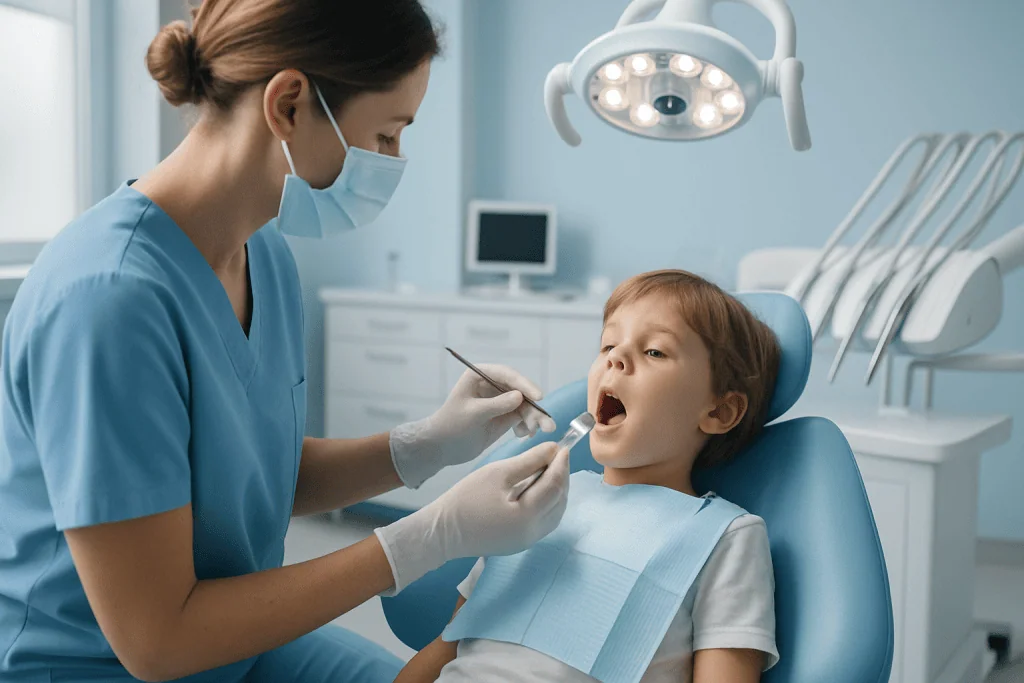
During the examination, the dentist evaluates the teeth, gums, bite, oral soft tissues and jaw development, adjusting the approach to the child’s cooperation level. A very young child may sit on a parent’s lap in a knee-to-knee position; an older child sits in the dental chair. Using a small mirror, light and gentle instruments, the dentist checks for plaque, early decay, enamel changes, gum inflammation, loose teeth and eruption patterns. A thorough first assessment of a cooperative child can be surprisingly quick, and much of it looks — deliberately — like counting and looking rather than treating.
Dental imaging is recommended when a concern cannot be fully evaluated visually. Digital dental X-rays detect cavities between teeth, monitor tooth roots, show developing permanent teeth and assess injuries. Imaging is used selectively, based on the child’s risk profile and clinical need, never as a routine reflex. Protective measures and child-appropriate techniques keep radiation exposure as low as reasonably achievable while still producing diagnostically useful images.
Preventive Care: Cleaning, Fluoride, Sealants and Education
Where appropriate, the visit includes professional cleaning to remove plaque and tartar, followed by age-specific hygiene guidance. For small children, parents remain responsible for brushing because fine motor skills are still developing — most children cannot brush effectively on their own until they can manage other precise tasks reliably. For school-age children, the focus shifts to technique and consistency. For adolescents, guidance may cover flossing around braces, cleaning aligners, protecting teeth during sport, and reducing decay risk from frequent snacking or sweetened drinks.
Fluoride may be applied as a varnish, gel or other professional preparation to strengthen enamel and support remineralisation of early weakened areas. The form and frequency are matched to the child’s age and risk. Dental sealants may be recommended for permanent molars with deep grooves: thin protective coatings placed on the chewing surfaces to make them easier to keep clean. Sealants are not a substitute for brushing, flossing or sensible nutrition, but for children at risk they add a genuinely useful layer of protection.
A typical first or routine visit follows a recognisable sequence:
- Discussion of medical history, habits, diet and any current concerns with the parent or caregiver.
- Clinical examination of teeth, gums, soft tissues, bite and eruption pattern, adapted to the child’s age.
- Selective imaging only if a concern cannot be assessed visually.
- Cleaning and fluoride application where indicated.
- Individual risk assessment: low, moderate or high risk for decay.
- Practical home-care and diet guidance matched to the child’s age and risk.
- A follow-up plan — routine review, closer monitoring, or a scheduled treatment appointment if disease was found.
Treatment When a Problem Is Found
If a cavity or injury is identified, your child’s dentist explains the findings and the options before anything happens. A small cavity is usually treated with a filling after the decayed area is removed; tooth-coloured materials are often suitable. If a baby tooth has extensive decay but can still be saved, a pediatric crown may be recommended to protect it until it is naturally ready to fall out. If decay has reached the nerve tissue inside the tooth, pulp therapy may be needed to remove infected or inflamed tissue and preserve the tooth where that is realistic.
When a tooth cannot be saved, extraction is considered. If a baby tooth is removed earlier than nature intended, a space maintainer may be recommended to stop neighbouring teeth drifting into the gap, reducing the risk of crowding and eruption problems later. Dental infections with swelling or fever are treated as urgent in clinical practice: treatment may involve drainage, definitive treatment or removal of the tooth, and medication when clinically indicated. Antibiotics alone rarely resolve the source of a dental infection — the underlying tooth problem almost always needs definitive care, which is why an infected tooth that “settles down” on medication has usually paused rather than healed.
Should a 5 Year Old Get a Filling?
Often, yes — if the cavity is active and the tooth still has years of work ahead of it. The baby molars a five-year-old uses for chewing typically remain in place for several more years, and an untreated cavity in that time can deepen, reach the nerve, cause pain and infection, and threaten the permanent tooth developing underneath. That said, not every mark on a tooth needs a filling. Very early enamel changes without a cavity can sometimes be managed with fluoride, sealing and diet changes, under monitoring. The honest answer depends on how deep the decay is, whether there are symptoms, how long the tooth must last, and whether the child can tolerate the procedure comfortably. A dentist weighing your child’s individual situation — not a rule of thumb — should make that call with you.
Comfort, Behaviour Guidance and Safety
Children vary enormously in how they respond to dental treatment. Many do well with gentle explanation, positive reinforcement, short appointments and a gradual, tell-show-do approach. Some need additional behaviour guidance, particularly if they are very young, highly anxious, facing extensive treatment, or living with special healthcare needs.
When needed, the dentist discusses options that make necessary treatment safer and more manageable: local anaesthesia to numb the tooth, mild sedation approaches for selected patients, or treatment under general anaesthesia for children who cannot safely tolerate essential care in a standard setting. None of these decisions is taken lightly. Sedation and anaesthesia require careful medical review, informed consent and appropriate monitoring throughout, and children who need this level of support are assessed together with the relevant medical teams, including anaesthesiology, according to their health status and the planned treatment. Our pediatric dental sedation page explains these options and their assessment process in more detail. It is worth being clear about limits: sedation makes treatment feasible for children who could not otherwise receive it; it is a clinical tool with its own criteria, not a convenience to be requested casually.
Technology Used in Pediatric Oral Health
Modern pediatric dental care uses technology to sharpen diagnosis, improve precision and make findings easier to understand. Digital dental imaging provides detailed views of teeth and developing structures with efficient image capture. Intraoral cameras let parents and older children see areas of concern on a screen, which makes treatment recommendations concrete rather than abstract. Magnification and focused lighting support careful examination and minimally invasive work. Contemporary restorative materials allow teeth to be repaired in ways that preserve as much healthy structure as possible.
Technology is most valuable when it is used selectively and interpreted by experienced clinicians. A child’s treatment plan should never rest on an image alone; it should combine the clinical examination, symptoms, risk factors, growth stage, family preferences and evidence-based guidance. A dentist reviewing your child’s X-ray without examining your child is offering half an opinion.
How Long Does a Visit Take, and What Is Recovery Like?
A routine pediatric dental visit usually takes less than an hour, depending on the child’s age, cooperation and whether cleaning, fluoride or imaging is included. A simple filling can often be completed in a similarly short appointment, while multiple treatments, trauma care or care under sedation take longer and may be scheduled separately.
Recovery after preventive care is usually immediate. After fluoride varnish, families receive instructions about eating, drinking and brushing for the remainder of the day. After a filling done under local anaesthesia, children should be supervised so they do not chew a numb lip or cheek before sensation returns — a common and avoidable source of soreness. Mild sensitivity can occur briefly after restorative treatment. After an extraction, families receive specific guidance on bleeding control, diet, hygiene and activity, along with clear signs that would warrant review by the treating dentist.
Why Acting Early Matters
Dental problems in children progress faster than many parents expect. A small area of decay in a baby tooth can deepen and reach the nerve, causing pain, infection, swelling or difficulty eating. If infection spreads, it can affect the developing permanent tooth beneath or require urgent treatment. In children with medical vulnerabilities, an untreated dental infection can become a broader health concern rather than a purely dental one.
Delaying care also carries an emotional cost. A child whose first dental visit happens because of pain or an emergency tends to associate dentistry with fear, and that association is stubborn. Preventive visits let children become familiar with the environment, the sounds and the routines before anything is wrong, which makes all future care easier and steadily reduces anxiety over time.
Timing matters for growth and development too. Early loss of baby teeth can allow neighbouring teeth to shift, reducing the space available for permanent teeth. Habits that influence jaw growth are easier to address when identified early. Enamel defects, bite concerns and eruption problems can be monitored and managed before they compound into more complex issues.
Acting early does not always mean treating early. Sometimes the right decision is careful observation, preventive support and a scheduled follow-up. The point is to know what is happening in your child’s mouth and to make decisions from a professional assessment — rather than letting pain become the signal that something needed attention months ago.
Benefits of Pediatric Oral Health Care
Comprehensive pediatric dental care supports your child’s comfort, development and long-term habits in several practical ways.
| Benefit | What It Means for You |
|---|---|
| Early detection of dental problems | Small cavities, enamel changes, gum inflammation and eruption concerns can be identified before they become painful or more complex to treat. |
| Reduced risk of tooth decay | Professional cleaning, fluoride care, sealants and personalised home-care guidance help protect teeth during the high-risk childhood years. |
| Protection of baby teeth | Healthy baby teeth support chewing, speech development, facial growth and proper spacing for the permanent teeth. |
| Improved comfort and nutrition | Treating tooth pain, sensitivity or infection helps children eat, sleep and take part in daily activities more comfortably. |
| Better dental confidence | Positive, age-appropriate dental experiences help children feel less anxious about future care. |
| Guidance for parents | Families receive practical advice on brushing, fluoride, diet, habits, sports protection and when treatment is genuinely needed. |
Recovery and Follow-Up Timeline
Recovery depends on whether the child has had preventive care, a filling, an extraction, trauma treatment or care under sedation — but most children return to normal routines quickly after routine services.
| Time Period | What to Expect |
|---|---|
| Day 1 | After a check-up or cleaning, most children resume normal activity immediately. After local anaesthesia, chewing should be supervised until numbness wears off. After an extraction or more involved treatment, soft foods and specific home instructions may apply. |
| First Week | Mild sensitivity after a filling or gum tenderness after cleaning improves gradually. Persistent pain, swelling, fever, bleeding or difficulty eating is not part of normal recovery. |
| First Month | Children treated for cavities or infection may have a follow-up plan to assess healing, review brushing and diet, and confirm that symptoms have resolved. Preventive habits matter most in this window. |
| Longer Term | Regular check-ups are scheduled according to the child’s risk level. Children with high cavity risk, orthodontic appliances, medical concerns or previous dental disease may need closer monitoring. |
Factors That Influence Outcomes
A good result in children’s dental care depends on more than what happens in the clinic. It is shaped by the child’s biology, daily habits, family routines and follow-up. The single most influential factor is cavity risk. Children who frequently consume sugary snacks, juice, soda, sweetened milk or sticky carbohydrates are more likely to develop decay, especially if brushing is inconsistent. A point worth sitting with: reducing the frequency of sugar exposure often matters as much as reducing the amount, because each exposure gives oral bacteria a fresh window to produce acid against the enamel.
Fluoride exposure is the second major factor. Fluoride strengthens enamel and supports remineralisation of early weakened areas. The right approach depends on the child’s age, local water supply, toothpaste use, swallowing ability and cavity risk — fluoride is beneficial when matched to the child’s developmental stage, and your child’s dentist will advise what is appropriate for your family’s circumstances.
Home hygiene comes third, and it is where most plans succeed or fail. Young children need a parent to brush for them or to supervise closely; even motivated children routinely miss the gumline and the back teeth. Flossing becomes necessary once teeth touch and a brush can no longer clean between them. Children with braces, expanders, retainers or aligners often need additional cleaning tools and adapted routines, because appliances trap plaque in places a standard brush does not reach.
Timing shapes what treatment is even possible. A small cavity may be managed with a conservative restoration; the same cavity found later may require nerve treatment, a crown or extraction. A dental injury assessed promptly usually has more treatment options than one assessed days afterwards. Early identification of orthodontic or eruption concerns lets families plan intervention at the developmentally right moment instead of reacting late.
Medical history is relevant throughout. Children with reflux, dry mouth, asthma medications, diabetes, immune conditions, heart conditions, developmental differences or special healthcare needs may require tailored prevention and closer collaboration between dental and medical teams. Some children need dental clearance before certain medical treatments to reduce the risk of an oral infection complicating their wider care — an area where the links between oral health and systemic diseases become directly practical.
Finally, the child’s emotional experience influences long-term oral health more than any single procedure. A calm, respectful approach builds trust. When children understand what is happening in age-appropriate language, and when parents are included in decisions, dental care stops being intimidating. The aim is not only to fix today’s problem but to send an adult into the world who keeps their own dental appointments without dread.
Children’s Dental Care at Acibadem
Pediatric oral health at Acibadem is delivered within the wider Dental & Oral Health unit, with attention to the child’s age, medical background, emotional readiness and family priorities. Treatment plans are individual rather than standardised: a child with one small cavity needs a different approach from a child with multiple dental infections, dental trauma, special healthcare needs or significant anxiety. The care team explains the findings, sets out the options — including the option of monitoring where that is clinically sound — and explains why a particular course is recommended, so parents decide with the full picture in front of them.
Where dental concerns overlap with other health issues, a multidisciplinary hospital environment has practical value. Pediatric dentists can coordinate with pediatricians, anaesthesiologists, orthodontists, ear-nose-throat specialists, maxillofacial surgeons and radiology teams. This matters most for children who require sedation or general anaesthesia, have complex medical histories, need evaluation for mouth breathing or jaw development, or are receiving care for broader conditions at the same time.
Diagnostic pathways rely on digital imaging with child-appropriate protocols, detailed clinical examination and structured risk evaluation, so clinicians can decide when to treat, when to prevent and when to watch. Contemporary restorative materials and minimally invasive principles are used to preserve healthy tooth structure wherever suitable. For children with extensive treatment needs, planning considers how to complete necessary care efficiently while maintaining safety and comfort — sometimes across a small number of coordinated appointments rather than many fragmented ones. Where a child’s ongoing care will continue with another dentist, records and a clear follow-up framework can be shared so that continuity is not lost between appointments. Where parents want independent confirmation of a proposed plan — multiple fillings, extractions, crowns, sedation or orthodontic intervention — a second-opinion review can confirm the diagnosis, set out alternatives and clarify the reasoning. No clinician can promise a specific outcome, but a thorough review reduces uncertainty, and that is its honest value.
Building Lifelong Children’s Dental Health Habits
Children’s dental health is built in ordinary weeks, not in clinic visits: teeth brushed properly twice a day, sugar kept to mealtimes rather than grazed through the afternoon, water instead of sweetened drinks, a mouthguard worn for contact sports, and dental reviews kept even when nothing hurts. The clinic’s role is to catch what home care cannot see, treat what prevention could not stop, and adjust the plan as the child grows.
Pediatric oral health care works best when it begins early, continues regularly and adapts to the child’s changing needs — from the first tooth, through the mixed years when baby and permanent teeth share the mouth, into adolescence when independence, appliances and new habits change the risks again. The habits and confidence a child builds in these years tend to persist: the same principles simply carry forward into adult and, eventually, older-age oral health. A childhood of calm, regular, well-explained dental care is one of the quieter gifts a parent can give — and it starts with a first visit that happens before anything is wrong.
Preparation
- Parents should bring the child’s medical history, medication list, and any previous dental records or X-rays if available. Children should brush their teeth before the visit and avoid heavy snacks immediately beforehand. The dentist may ask about feeding habits, brushing routines, thumb sucking, and any tooth pain or sensitivity.
Aftercare
- Children can usually return to school and normal activities right away. Parents should follow the dentist’s brushing, flossing, fluoride, and diet recommendations at home. If any treatment was performed, avoid very hard or sticky foods for the period advised and schedule regular follow-up visits.
Turkey vs UK, Germany & USA
Pediatric oral health costs vary according to the child’s needs, the type of preventive or restorative care required, and the care setting. Comparing destinations can help families understand differences in access, coordination, accreditation, and travel logistics before requesting a personalised quote.
The overall experience for pediatric dental care depends on clinical complexity, appointment availability, child-friendly services, and what is included in the care plan.
| Factor | Turkey | UK | Germany | USA |
|---|---|---|---|---|
| Price drivers | Costs are influenced by clinic setting, specialist involvement, imaging, preventive care, restorations, sedation if needed, and package coordination. | Costs vary between public and private pathways, with private pediatric dental care often shaped by specialist fees and appointment availability. | Costs depend on insurance status, private supplements, specialist care, materials, and the complexity of treatment planning. | Costs are strongly affected by insurance coverage, provider network, sedation or hospital-based care, and specialist participation. |
| Hospital and specialist factors | International hospital groups may coordinate pediatric dentistry with wider medical services when needed, including child-focused support. | Care may be delivered through dental practices, community services, or hospital departments depending on need and referral pathway. | Care is typically structured through dental practices, pediatric dentists, and specialist referrals when more complex treatment is required. | Families may choose between private dental offices, pediatric dental specialists, and hospital-based services for complex cases. |
| Accreditation and quality | JCI-accredited hospitals can offer internationally audited safety processes and multidisciplinary coordination for visiting families. | Quality oversight depends on the care setting, professional registration, and local regulatory standards. | Quality oversight is supported by national professional standards, licensing, and structured specialist referral systems. | Quality processes vary by provider, with accreditation and hospital privileges relevant for sedation or complex care. |
| Typical waiting times | Private appointments for international patients can often be coordinated in advance, depending on clinical urgency and specialist availability. | Waiting times can differ widely between public referral routes and private appointments. | Access depends on region, insurance arrangements, and whether specialist pediatric dentistry is required. | Appointment timing depends on insurance networks, provider availability, and whether hospital-based care is needed. |
| Travel and language logistics | International patient departments may help with scheduling, interpretation, transfers, and family-oriented visit planning. | Travel logistics are usually arranged by the family unless using a private coordinator or international service. | Language support may be available in larger centers, while logistics often depend on the clinic or hospital selected. | Language support and coordination vary by provider, region, and insurance pathway. |
| Package inclusions | A package may include consultation, dental examination, imaging if needed, treatment planning, selected procedures, interpretation, and coordination support. | Inclusions depend on whether care is public, private, or specialist-led, and follow-up may be billed separately. | Care plans may separate examination, imaging, procedures, materials, and follow-up depending on coverage and provider policy. | Quotes often separate provider fees, facility fees, imaging, sedation, materials, and follow-up depending on the setting. |
What affects your final cost
- The child’s oral health status and whether care is preventive, restorative, urgent, or specialist-led.
- The need for dental imaging, fluoride care, sealants, fillings, crowns, pulp therapy, or space maintainers.
- Whether sedation, anesthesia support, or hospital-based care is recommended for comfort and safety.
- The experience of the pediatric dentist and whether multidisciplinary medical input is required.
- The materials used and the number of visits needed to complete care safely.
- Travel planning, interpretation, transfers, and any additional family support services included in the package.
Compare your options
Pediatric oral health care includes prevention, early diagnosis, and age-appropriate treatment. Suitability for any option is decided by a pediatric dental specialist after examining the child.
| Option | What it is | Typical use | Key considerations |
|---|---|---|---|
| Dental checkup and risk assessment | A child-focused examination of teeth, gums, bite, oral habits, and dental development. | Used to detect early decay, gum concerns, developmental issues, or habits that may affect oral health. | The dentist may recommend imaging, preventive care, or follow-up based on the child’s risk level and cooperation. |
| Fluoride care and hygiene guidance | Professional fluoride application with tailored advice on brushing, diet, and home care routines. | Used to strengthen enamel and reduce the risk of tooth decay in children who may benefit from extra protection. | Recommendations depend on the child’s decay risk, diet, brushing habits, and previous dental history. |
| Fissure sealants | A protective coating placed on the chewing surfaces of suitable back teeth. | Used to help protect deep grooves that can trap food and plaque. | Sealants are preventive, not a substitute for brushing, and require periodic review by the dentist. |
| Restorative treatment | Age-appropriate repair of teeth affected by decay or minor damage, such as fillings or pediatric crowns. | Used when a tooth has a cavity, fracture, or structural weakness that needs restoration. | Material choice, cooperation, tooth type, and expected tooth development influence the treatment plan. |
| Pulp therapy | Treatment for a baby tooth or young permanent tooth when decay or trauma has affected the inner tooth tissues. | Used to relieve symptoms, preserve function, and maintain space where appropriate. | The decision depends on symptoms, tooth condition, infection status, and whether the tooth can be predictably maintained. |
| Space maintenance and orthodontic monitoring | Monitoring tooth eruption and bite development, with appliances used when needed to preserve space. | Used after early tooth loss or when developing bite concerns need observation or referral. | Timing, growth, cooperation, and future orthodontic needs are assessed by the specialist. |
General information only — not medical or financial advice. Final costs depend on the factors above and your individual case; request a free, personalised quote.
Frequently Asked Questions
What affects the cost of pediatric oral health care?
Cost depends on the child’s oral health, the type of care needed, imaging, materials, specialist involvement, sedation if recommended, and whether international coordination services are included. A personalised quote is provided after clinical review.
How can I get a quote for my child’s dental care in Turkey?
You can request a free consultation and share your child’s dental history, symptoms, recent images if available, and any previous treatment notes. The team can then advise on the likely care pathway and prepare a personalised estimate.
Is pediatric dental care usually offered as a package for international families?
Packages may include consultation, examination, treatment planning, selected dental procedures, interpretation, scheduling support, and travel coordination. Inclusions vary by case, so the written quote should be reviewed carefully.
Will my child need sedation or anesthesia?
Not every child needs sedation. It may be considered when treatment is complex, the child is very anxious, cooperation is limited, or medical safety requires additional support. The decision is made by qualified clinicians after assessment.
Are follow-up visits included in the cost?
Follow-up arrangements depend on the treatment plan and package terms. Families should ask whether reviews, adjustments, emergency support, or future preventive visits are included or quoted separately.
Is this information medical or financial advice?
No. This is general educational information. A pediatric dental specialist should assess your child before treatment decisions are made, and a free consultation can help provide a personalised quote based on your child’s needs.
Medically reviewed by the Acıbadem International Medical Board — August 30, 2026
See our medical review board →
Update history
- PublishedJune 8, 2026
- Medical review approvedAugust 30, 2026
- Last content updateAugust 30, 2026
References2
- Child Dental Health — medlineplus.gov
- Oral Health — cdc.gov
Trusted care for international patients
Doctors Performing This Treatment

Assoc. Prof. Dr. Ferit Bayram
Oral & Dental Health
Dr. Ezgi Gülüm
Oral Dental & Maxillofacial Surgery
Dr. Emre Çengelli
Oral Dental & Maxillofacial Surgery
Dr. Arzu Morçiçek
Oral & Dental HealthDr. Deniz Turgut
Oral & Dental Health
Dr. Ceyda Sabancı
Oral & Dental Health
Dr. Çağla Su Doğangün Ayduk
Oral & Dental Health
Dr. Begüm Öykü Kesim
Oral & Dental Health
Dr. Eylül Türsen
Oral & Dental Health
Dr. Metin Kınacı
Oral & Dental Health
Dr. Duygu Yavuzer Karadeniz
PeriodontolgyDr. Ali Riza Özdurmuş
Oral & Dental Health
Dr. Bedii Ender Topçu
Oral & Dental Health
Dr. Sebiha Nihal Yılmaz
Oral Dental & Maxillofacial SurgeryDr. Seda Saygılı Özaydın
Oral & Dental Health
Dr. Zeynep Ekin Kılınç
Oral & Dental Health
Dr. Uğur Önder
Oral & Dental Health
Dr. Helin Kuşsever Topçu
Oral & Dental Health
Dr. Pelin Açık
Oral & Dental Health
Dr. İpek Saygılı
Oral & Dental Health
Dr. Halime Bayram
Oral & Dental Health
Dr. Havva Gölalan
Oral & Dental Health
Dr. Merve Ağartıoğlu
Oral & Dental Health
Dr. Mücahit Güner
Oral & Dental HealthMedical Units
Available at These Hospitals