Left Mid Back and Side Pain: Common Causes, Related Conditions, and When to See a Doctor

Left mid back and side pain can come from muscles, joints, ribs, nerves, kidneys, or digestive organs. Pain after lifting, twisting, coughing, or poor posture often suggests a musculoskeletal cause.
Key Takeaways
- Left mid back and side pain can come from muscles, joints, ribs, nerves, kidneys, or digestive organs.
- Pain after lifting, twisting, coughing, or poor posture often suggests a musculoskeletal cause.
- Fever, urinary changes, shortness of breath, chest pain, or a rash may point to a non-muscular cause.
- Persistent, worsening, sudden, or severe pain should be assessed by a qualified doctor.
- Treatment depends on the cause and may include rest, medicines, physical therapy, imaging, or specialist care.
Left mid back and side pain is a symptom rather than a diagnosis. It commonly relates to muscles, ribs, the thoracic spine, kidneys, or nearby organs, and the pattern of pain and associated symptoms helps doctors identify the cause.
Overview: what left mid back and side pain can mean
Left mid back and side pain usually refers to discomfort between the lower edge of the shoulder blade and the waist, extending toward the left flank or side of the torso. In many people, it is caused by a strained muscle, irritated rib joint, poor posture, or overuse. However, pain in this area can also come from the spine, nerves, kidneys, lungs, or nearby digestive organs.
The most helpful clues are how the pain feels, when it started, what makes it better or worse, and whether other symptoms are present. For example, pain that worsens with movement may suggest a muscle or joint problem, while pain with fever or urinary symptoms may suggest a kidney issue. Because several structures sit close together in this region, the same symptom can have more than one possible explanation.
This symptom should be assessed in context rather than assumed to be “just back pain.” A doctor may ask about recent lifting, exercise, falls, coughing, work posture, infections, kidney stone history, digestive symptoms, or breathing problems. Careful evaluation helps distinguish common causes from conditions that need more urgent treatment.
Common symptoms and how the pain may feel
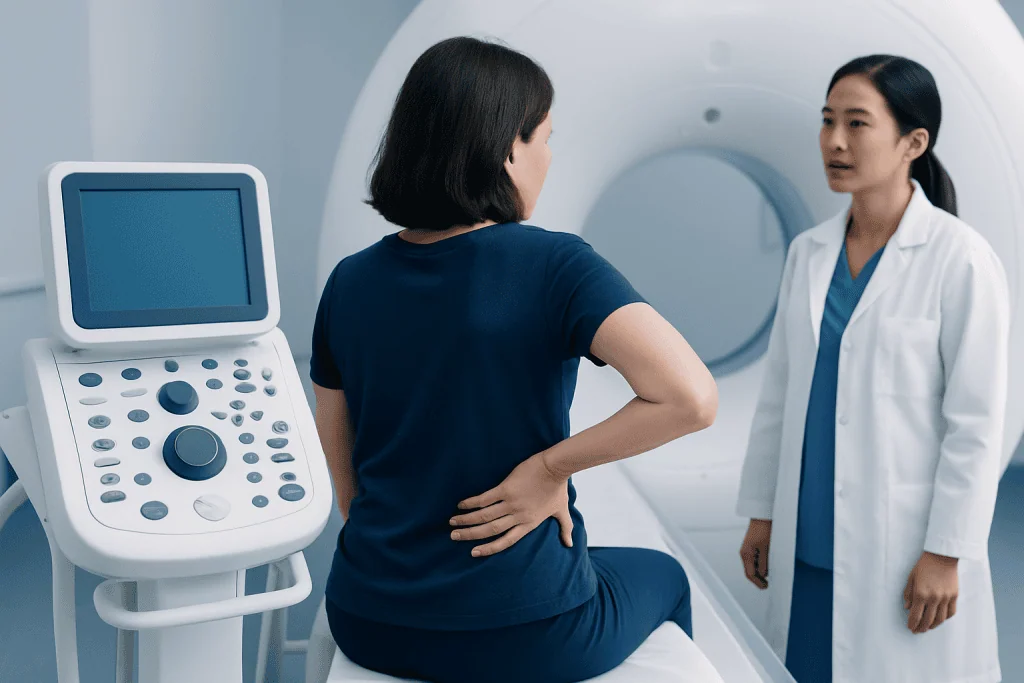
Left mid back and side pain can feel dull, sharp, aching, burning, stabbing, cramping, or pressure-like. It may stay in one spot or spread toward the ribs, chest, shoulder blade, abdomen, or groin. Some people notice pain only with certain movements, while others feel it constantly or in waves.
Associated symptoms often help narrow the cause. Musculoskeletal pain may come with stiffness, tenderness, muscle spasm, or pain when twisting, bending, reaching, or taking a deep breath. Nerve-related pain may feel burning or shooting and can be linked with tingling or numbness.
When the cause is not mainly muscular, other symptoms may appear. These can include fever, nausea, vomiting, urinary burning, blood in the urine, cough, shortness of breath, abdominal bloating, heartburn, constipation, or a blistering rash. The timing also matters: pain that follows exercise differs from pain that begins suddenly at rest or wakes a person from sleep.
- Muscle strain: soreness, tightness, pain with movement
- Rib or joint irritation: sharp pain with coughing, twisting, or deep breathing
- Kidney stone: severe flank pain that may come in waves, sometimes with nausea
- Kidney infection: aching side pain with fever and urinary symptoms
- Nerve irritation or shingles: burning pain, sensitivity, or rash
Common causes: muscles, ribs, and the spine

The most frequent explanation for left mid back and side pain is a musculoskeletal problem. This includes strained muscles, overuse after exercise, awkward lifting, prolonged sitting, poor workstation setup, or sleeping in an uncomfortable position. These problems often improve with time, activity modification, and supportive self-care.
The ribs and their joints can also cause pain in this area. Intercostal muscle strain, rib joint irritation, or inflammation after coughing can create sharp pain along the side of the chest or back. Because breathing moves the ribs, pain may become more noticeable when taking a deep breath, sneezing, or laughing.
The thoracic spine is another possible source. Disc problems, age-related wear, poor posture, scoliosis, or referred pain from the joints of the spine may trigger discomfort in the mid back. If spinal cord or nerve root compression is suspected, doctors may assess strength, sensation, reflexes, and whether pain radiates around the chest wall. In some cases, more structured evaluation for spinal disorders or specialist-led spine surgery may be considered when conservative treatment is not enough.
Other related conditions: kidneys, lungs, nerves, and digestion
The kidneys lie toward the back of the upper abdomen, so kidney-related conditions can cause left flank pain that feels as though it is in the back or side. A kidney stone often causes intense pain that may come in waves and travel downward. A kidney infection can cause a more constant ache with fever, chills, nausea, or urinary symptoms. When doctors suspect this type of problem, they may investigate for kidney stones or other urinary conditions.
Lung and pleural conditions can also be felt in the mid back or side. Pneumonia, pleurisy, or other inflammation around the lungs may cause pain that becomes sharper with deep breathing or coughing. If pain is accompanied by shortness of breath, chest discomfort, or fever, prompt medical assessment is important.
Nerve irritation is another possibility. Shingles may begin with burning, tingling, or sensitivity on one side of the body before a rash appears. Less commonly, digestive organs can refer pain to the back or side. Constipation, gas, pancreatitis, or problems involving nearby abdominal organs may be part of the picture, especially when abdominal symptoms occur alongside the back pain.
Although not every case requires extensive testing, pain that does not behave like a simple strain should not be ignored. Pattern recognition is important, but a formal diagnosis depends on history, examination, and sometimes imaging or lab tests.
How doctors diagnose the cause
Diagnosis begins with a detailed history. A doctor will usually ask when the pain started, whether there was an injury, how severe it is, and whether it is sharp, dull, or cramping. They may also ask about work activities, exercise, recent infections, urinary symptoms, breathing symptoms, skin rash, digestive complaints, and previous episodes of back or kidney problems.
A physical examination often includes checking posture, range of motion, tenderness, breathing, abdominal findings, and the skin over the painful area. Neurological checks may be done if there is numbness, weakness, or pain radiating around the trunk. This step helps separate a likely muscle or joint cause from conditions affecting internal organs or nerves.
Tests are chosen based on the suspected cause rather than ordered routinely for everyone. They may include urine testing for infection or blood, blood tests, chest imaging, X-rays, ultrasound, or CT or MRI scans. When the diagnosis remains unclear, MRI or other radiology imaging studies may help identify spine, soft tissue, or organ-related causes. The goal is to match testing to symptoms so that treatment is both appropriate and efficient.
Treatment options and what may help
Treatment depends entirely on the cause of left mid back and side pain. For a simple muscle strain or postural pain, doctors often recommend relative rest, gentle movement, heat or ice, and short-term pain relief as appropriate. Many people improve gradually over days to weeks, especially when they avoid activities that repeatedly trigger pain.
If muscle tightness, poor posture, or spinal mechanics are contributing, physical therapy may be helpful. Guided exercises can improve flexibility, strengthen supporting muscles, and reduce the chance of recurrence. Manual therapy, posture training, and ergonomic adjustments may also be part of the plan.
When a kidney stone, infection, lung condition, shingles, or another underlying illness is responsible, treatment focuses on that problem. This may include medicines, hydration advice, antibiotics when indicated, or hospital-based care for more serious cases. Persistent or unexplained pain should not be self-treated for long periods without proper assessment.
Near the end of the diagnostic pathway, some patients need care from more than one specialty. Acibadem International’s multidisciplinary specialists in JCI-accredited hospitals diagnose and treat back, kidney, and related conditions for international patients when further evaluation is needed.
Prevention and self-care
Not every cause can be prevented, but many musculoskeletal episodes can be reduced with simple habits. Regular movement, attention to posture, and safe lifting technique help lower strain on the mid back and rib region. Breaks from prolonged sitting are especially important for people who work at a desk or drive for long periods.
Balanced exercise can support spine health. Gentle strengthening of the core and back muscles, stretching, and gradual progression in physical activity may reduce overuse injuries. Warming up before sports and avoiding sudden increases in training intensity can also help.
Hydration may help lower the risk of some kidney stones in certain people, although prevention plans vary by stone type and medical history. It is also sensible to seek timely treatment for urinary infections, persistent cough, or skin rashes, since these can sometimes contribute to pain in the back or side.
- Use proper lifting form and avoid twisting while carrying weight
- Adjust seating and screen height to support better posture
- Stay active, but avoid pushing through severe pain
- Drink enough fluids unless a doctor has advised fluid restriction
- Keep follow-up appointments if pain keeps returning
When to seek medical care
Medical care is recommended if left mid back and side pain is severe, lasts more than a few days without improvement, keeps returning, or interferes with daily activities. A person should also seek assessment if there is fever, urinary burning, blood in the urine, shortness of breath, chest pain, abdominal pain, a new rash, numbness, weakness, or pain after a fall or other injury.
Urgent care is especially important when pain starts suddenly and is intense, comes with fainting, trouble breathing, new confusion, or inability to pass urine. These symptoms can signal conditions that need prompt treatment rather than home care.
Even when symptoms seem mild, it is reasonable to speak with a qualified doctor if the pattern does not fit a typical strain or if self-care is not helping. Early evaluation can provide reassurance, identify related conditions, and guide the right treatment plan.
Frequently asked questions
Is left mid back and side pain usually muscular?
Often, yes. Muscle strain, posture-related tension, and irritation of the ribs or spine are common causes, especially after lifting, exercise, coughing, or long periods of sitting. However, kidney, lung, nerve, and digestive conditions can cause pain in the same area, so associated symptoms matter.
Can kidney problems cause pain in the left mid back and side?
Yes. The kidneys are located toward the back of the upper abdomen, so kidney stones or kidney infection can cause flank pain that feels like back or side pain. Fever, nausea, urinary burning, frequent urination, or blood in the urine make a kidney cause more likely.
How can someone tell whether the pain is from a muscle or an organ?
Pain that gets worse with twisting, bending, pressing on the area, or certain movements is more suggestive of a muscle, rib, or joint source. Pain with fever, urinary changes, breathing symptoms, or abdominal symptoms may point to an internal organ. A doctor can assess the full pattern and decide whether tests are needed.
When should left mid back and side pain be considered urgent?
It should be assessed urgently if it is sudden and severe, follows an injury, or comes with chest pain, shortness of breath, fainting, high fever, weakness, numbness, or trouble passing urine. These signs may indicate a condition that needs prompt treatment.
What helps relieve left mid back and side pain at home?
If the pain seems mild and muscular, short-term rest, gentle movement, heat or ice, and avoiding aggravating activities may help. Good posture, hydration, and gradual return to normal activity are also useful. Home care is not a substitute for medical evaluation when pain is severe, persistent, or linked to other symptoms.
Will imaging always be needed for this type of pain?
No. Many cases can be evaluated through medical history and physical examination alone, especially when the symptoms strongly suggest a simple strain. Imaging or lab tests are more likely when the pain is persistent, unexplained, severe, or associated with warning signs.
References
- National Institute of Arthritis and Musculoskeletal and Skin Diseases
- National Institute of Diabetes and Digestive and Kidney Diseases
- American Academy of Orthopaedic Surgeons
- Centers for Disease Control and Prevention
- Mayo Clinic
This article is for general information only and is not a substitute for professional medical advice. Please consult a qualified doctor about your individual situation.
Joint and spine care in Turkey — expert assessment & treatment
JCI-accredited · board-certified surgeons · reply within 24h
Add us as a Preferred Source to see more of our trusted health content across Google Search, AI Overviews and Discover.