Pons Stroke: What Patients Need to Know
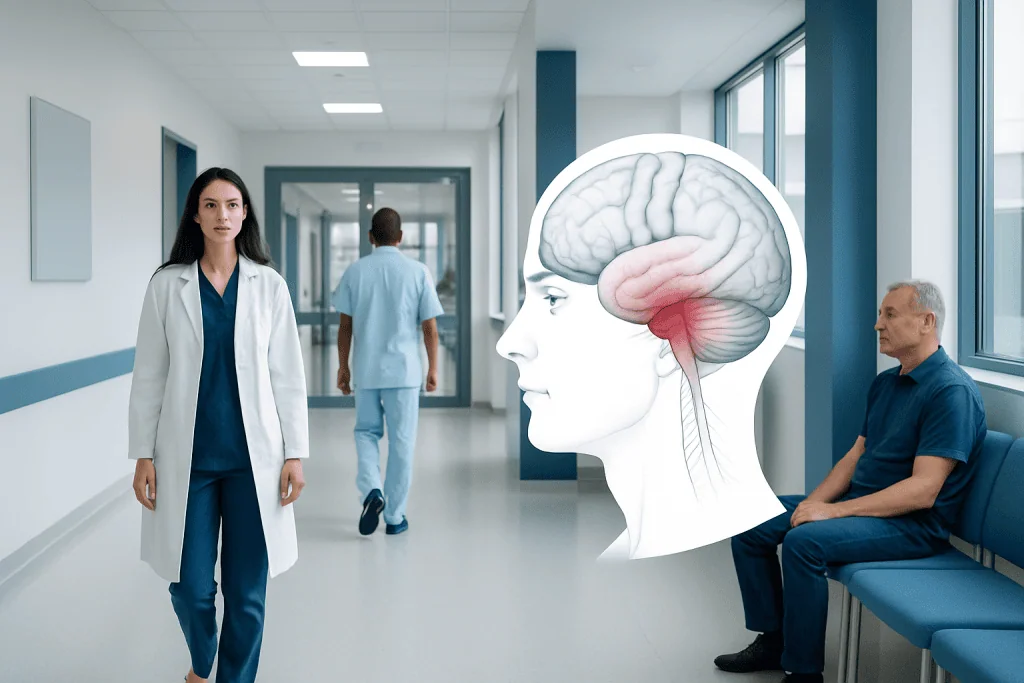
A pons stroke affects the brainstem and can become a medical emergency very quickly. Symptoms may include weakness, dizziness, double vision, slurred speech, swallowing difficulty, and imbalance.
Key Takeaways
- A pons stroke affects the brainstem and can become a medical emergency very quickly.
- Symptoms may include weakness, dizziness, double vision, slurred speech, swallowing difficulty, and imbalance.
- Most pons strokes happen because blood flow is blocked, but some are caused by bleeding.
- Brain imaging and urgent neurological evaluation help confirm the diagnosis and guide treatment.
- Recovery often involves rehabilitation for movement, speech, swallowing, and daily function.
- Managing blood pressure, diabetes, cholesterol, smoking, and heart disease can help reduce future stroke risk.
A pons stroke is a type of brainstem stroke that can disrupt important body functions such as movement, sensation, speech, swallowing, balance, and breathing. Because the pons controls vital pathways between the brain and body, fast diagnosis and treatment are essential.
Overview: what a pons stroke means
A pons stroke is a stroke that affects the pons, a small but critical part of the brainstem. The pons helps carry signals between the brain and the body and supports functions such as facial movement, eye movement, balance, swallowing, breathing, and sleep-wake control. Even though it is a relatively small area, an injury here can have wide-ranging effects.
Most pons strokes happen when blood flow to this region is blocked by a clot or narrowing of an artery. Less commonly, the stroke is caused by bleeding into the brain tissue. Because the brainstem contains many important nerve pathways in a compact space, symptoms can appear suddenly and may affect several body systems at once.
A pons stroke is often discussed under the broader term stroke. However, it can look different from strokes that affect the outer parts of the brain. Some people have obvious weakness on one side of the body, while others mainly notice double vision, dizziness, trouble speaking, or difficulty swallowing. This is one reason brainstem strokes may be harder to recognize early.
Prompt medical assessment matters. Fast treatment can improve the chance of limiting brain injury, protecting breathing and swallowing, and supporting recovery. After the emergency phase, many patients benefit from a coordinated plan that includes neurology, rehabilitation, and close follow-up of stroke risk factors.
Common symptoms and why they happen
The symptoms of a pons stroke depend on the exact area involved and whether the damage is small or extensive. Because the pons contains pathways for movement and sensation as well as several cranial nerve connections, symptoms may involve the face, arms, legs, speech, eyes, and balance. They often begin suddenly.
Possible symptoms include numbness or weakness of the face, arm, or leg, often on one or both sides of the body. Some people develop slurred speech, facial drooping, poor coordination, or an unsteady gait. Others notice vertigo, nausea, or difficulty focusing the eyes. Double vision can occur if the nerves that control eye movements are affected.
Swallowing difficulty is especially important in pons stroke because it can raise the risk of choking or food entering the lungs. In more severe cases, the stroke may affect consciousness, breathing, or the ability to move much of the body. Rarely, a person may be awake and aware but unable to speak or move normally because of severe brainstem injury.
Symptoms may include:
- Sudden weakness or numbness
- Slurred speech or trouble speaking clearly
- Double vision or abnormal eye movements
- Dizziness, loss of balance, or trouble walking
- Difficulty swallowing
- Facial weakness or altered facial sensation
- Severe drowsiness or reduced alertness
- Breathing problems in severe cases
Causes and risk factors
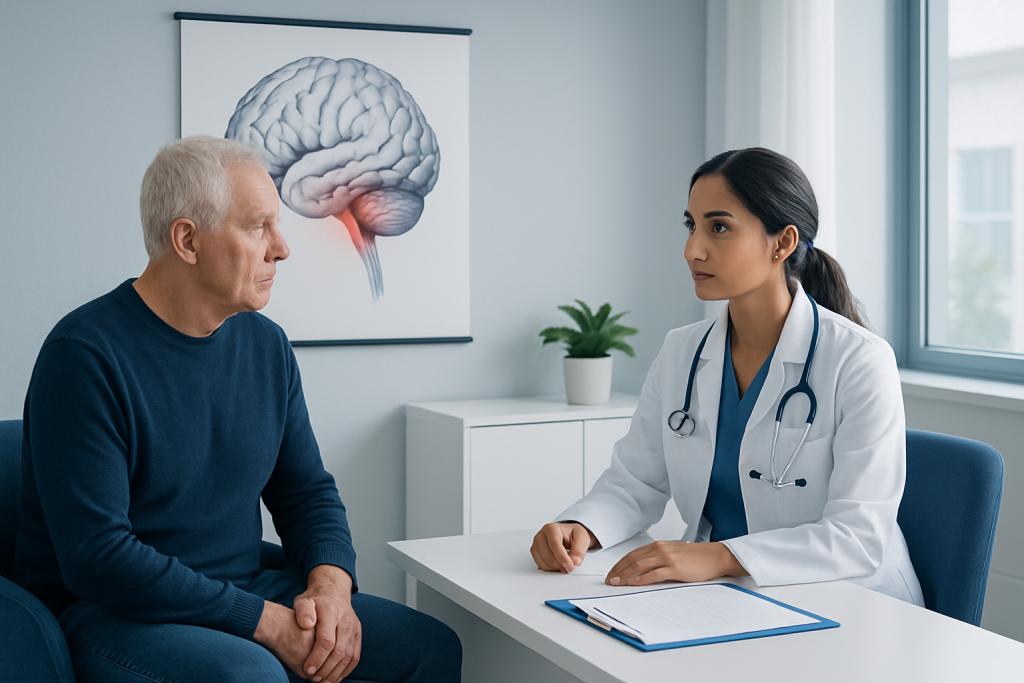
The most common cause of a pons stroke is an ischemic stroke, which means a blood vessel supplying the pons becomes blocked. This can happen when a clot forms in a small artery within the brainstem, when a larger artery narrows because of atherosclerosis, or when a clot travels from elsewhere in the body, such as the heart. Less often, a pons stroke is hemorrhagic, meaning it is caused by bleeding.
High blood pressure is one of the most important risk factors for both blocked-vessel and bleeding strokes in the pons. Other major risks include diabetes, high cholesterol, smoking, atrial fibrillation, obesity, physical inactivity, sleep apnea, and older age. A history of prior stroke or transient ischemic attack also raises the risk.
In some patients, stroke in the brainstem is related to disease of the vertebral or basilar arteries, which supply blood to the back part of the brain and brainstem. Doctors may consider this when symptoms suggest a posterior circulation event. In selected cases, further evaluation may look for artery disease or heart rhythm problems that can increase stroke risk.
Not every patient has the same pattern of risk. A younger person may have a different cause, such as an arterial dissection or an uncommon clotting disorder, while an older adult may be more likely to have long-standing vascular risk factors. This is why the evaluation is tailored to the individual rather than based on symptoms alone.
How doctors diagnose a pons stroke
Diagnosis begins with an urgent clinical examination and a careful review of when symptoms started. Doctors assess strength, sensation, speech, eye movements, coordination, swallowing, and breathing. Because brainstem strokes can sometimes be subtle at first, it is important that persistent or unusual neurological symptoms are taken seriously even when they do not match the classic public image of stroke.
Brain imaging is central to confirming the diagnosis and distinguishing between a blockage and bleeding. A CT scan is often the first emergency test because it is fast and can quickly show hemorrhage. However, some small brainstem strokes may be difficult to see on early CT, so MRI is often especially helpful when a pons stroke is suspected.
Additional tests may be used to look for the cause and to plan treatment. These can include CT angiography or MR angiography to assess blood vessels, heart rhythm monitoring, echocardiography, and blood tests. Swallowing assessment is also important, because even mild swallowing problems can affect nutrition and increase the risk of aspiration.
Specialist input helps guide next steps. In many hospitals, the evaluation involves emergency medicine, neurology, radiology, and rehabilitation teams. If symptoms suggest an acute brain stroke, rapid triage can help determine whether clot-busting medicine, advanced stroke procedures, or intensive supportive care may be appropriate.
Treatment options and early hospital care
Treatment depends on whether the pons stroke is caused by a blocked artery or bleeding, how severe the symptoms are, and how quickly the person reaches medical care. In ischemic stroke, some patients may be candidates for emergency clot-dissolving medication if they arrive within the appropriate time window and meet safety criteria. In selected cases involving larger vessel blockage, doctors may consider stroke thrombectomy to remove the clot.
If the stroke is caused by bleeding, treatment focuses on stabilizing the patient, controlling blood pressure, monitoring the brain closely, and managing complications. For both ischemic and hemorrhagic pons strokes, careful attention is paid to breathing, heart function, blood sugar, temperature, and hydration. Swallowing safety is checked early to reduce the chance of aspiration pneumonia.
After the emergency phase, treatment shifts toward preventing another stroke and addressing the effects of the current one. Depending on the cause, this may include antiplatelet medicines, anticoagulation for certain heart rhythm disorders, cholesterol-lowering treatment, blood pressure control, and diabetes management. When narrowing in major neck arteries contributes to overall stroke risk, some patients may be evaluated for carotid endarterectomy or carotid angioplasty and stenting.
Because pons strokes can affect speech, swallowing, mobility, and coordination at the same time, early rehabilitation planning is an important part of treatment. This often includes physical therapy, occupational therapy, and speech-language therapy, started as soon as the medical condition is stable.
Recovery, rehabilitation, and possible complications
Recovery after a pons stroke varies widely. Some people recover well from a small stroke, while others need prolonged rehabilitation and support. The outcome depends on the size and location of the stroke, how quickly treatment began, age, overall health, and whether complications such as pneumonia or severe swallowing problems occurred.
Rehabilitation is usually focused on practical goals: improving strength and balance, making walking safer, restoring as much independence as possible, and working on speech or swallowing. Progress may be steady but gradual. It is common for recovery to continue for weeks to months, and sometimes longer, especially when therapy is consistent and tailored to the patient’s needs.
Possible complications include falls, aspiration, malnutrition, muscle stiffness, pain, fatigue, mood changes, and another stroke. Some patients also experience emotional strain, frustration, or anxiety during recovery. Family education and follow-up care can make a meaningful difference in daily function and confidence.
When needed, care may involve several specialties working together. Near the end of the care journey, some international patients look for coordinated evaluation through centers such as Acibadem International, where multidisciplinary specialists in JCI-accredited hospitals diagnose and treat complex stroke conditions and support rehabilitation planning.
Prevention and self-care after a pons stroke
Prevention after a pons stroke focuses on reducing the risk of another event. For many patients, the most important steps are keeping blood pressure in a healthy range, taking prescribed medicines regularly, controlling diabetes and cholesterol, and stopping smoking. Regular medical follow-up is important because stroke prevention usually depends on several small but consistent actions rather than one single change.
Healthy lifestyle habits support medical treatment. A balanced diet, physical activity suited to the person’s ability, good sleep, and limiting alcohol can all help lower vascular risk. If a patient has swallowing problems, diet texture and fluid recommendations should follow advice from the treating team to make eating safer.
Self-care also includes watching for warning signs of complications or recurrence. New weakness, sudden dizziness, speech changes, chest symptoms, worsening confusion, or repeated choking episodes should be reported promptly. Patients should not stop blood thinners, antiplatelet medication, or blood pressure treatment without speaking to a doctor.
Caregivers often play a key role. They may help with appointments, medication schedules, exercise practice, and emotional support. Clear communication with the rehabilitation team can help families understand what changes are expected, what improvements are realistic, and when new symptoms need urgent attention.
When to seek medical care
A pons stroke is always a reason to seek emergency medical care. If sudden weakness, facial drooping, slurred speech, loss of balance, double vision, severe dizziness, trouble swallowing, or reduced alertness develops, emergency services should be contacted immediately. Waiting to see whether symptoms pass can delay treatment that may protect brain tissue and function.
Urgent care is also needed if a person who is recovering from stroke develops new neurological symptoms, breathing difficulty, chest pain, repeated vomiting, or signs of aspiration such as coughing and choking during meals. These may signal a new stroke, a medical complication, or a swallowing problem that needs prompt assessment.
Non-emergency follow-up is still important even when symptoms are mild or improving. A doctor should review rehabilitation progress, risk-factor control, swallowing safety, and medication plans. Any sudden or unexplained neurological symptom should be discussed with a qualified clinician without delay.
Frequently asked questions
Is a pons stroke the same as a brainstem stroke?
A pons stroke is a type of brainstem stroke. The brainstem includes the midbrain, pons, and medulla, and each area has different functions. Because the pons helps control movement, facial function, balance, and swallowing, symptoms can be distinctive.
Can a pons stroke be missed at first?
Yes, sometimes it can be harder to recognize than other strokes. Symptoms such as dizziness, double vision, nausea, or imbalance may be mistaken for other problems, especially early on. This is why sudden neurological symptoms should always be evaluated urgently.
What is the most common symptom of a pons stroke?
There is not one single symptom that occurs in every case. Common features include sudden weakness, slurred speech, dizziness, double vision, trouble walking, and swallowing difficulty. The exact pattern depends on the location and size of the stroke.
How serious is a pons stroke?
A pons stroke can range from mild to life-threatening. Small strokes may cause limited symptoms and allow meaningful recovery, while larger strokes can affect breathing, swallowing, and consciousness. Early treatment and careful supportive care are very important.
Can people recover after a pons stroke?
Many people do recover to some degree, but recovery varies from person to person. Rehabilitation often helps improve mobility, speech, swallowing, and independence in daily life. Progress may continue over months, especially with ongoing therapy and risk-factor management.
What tests are usually done for a suspected pons stroke?
Doctors usually begin with a neurological examination and urgent brain imaging, often CT followed by MRI when needed. They may also examine the blood vessels, heart rhythm, and swallowing function. These tests help confirm the diagnosis and identify the cause.
This article is for general information only and is not a substitute for professional medical advice. Please consult a qualified doctor about your individual situation.
Explore treatments in Turkey — costs, top hospitals & a free quote
JCI-accredited · board-certified surgeons · reply within 24h
Add us as a Preferred Source to see more of our trusted health content across Google Search, AI Overviews and Discover.
Check your numbers in seconds
BMI, calories, due date, blood pressure and 30+ more clinical calculators — free, instant, doctor-reviewed ranges.

More from the Health Library

Disorganized Behavior: What Patients Need to Know

Altitude Sickness — Explained by Medical Evidence, Not Myths

Sardines Benefits: What Patients Need to Know

Foamy Faeces: An Evidence-Based Guide for Patients

Gas Gangrene: What Patients Need to Know