Greyish Eyeballs: What Patients Need to Know

Greyish eyeballs often refer to discoloration of the sclera, the white outer part of the eye. Common causes include normal aging, scleral thinning, pigmentation changes, irritation, and certain medical conditions.
Key Takeaways
- Greyish eyeballs often refer to discoloration of the sclera, the white outer part of the eye.
- Common causes include normal aging, scleral thinning, pigmentation changes, irritation, and certain medical conditions.
- New, one-sided, painful, or vision-related changes should be assessed promptly by an eye specialist.
- Diagnosis usually involves a medical history, eye examination, and sometimes blood tests or imaging.
- Treatment depends on the underlying cause and may range from simple monitoring to managing an eye or systemic disease.
Greyish eyeballs usually describe a gray, blue-gray, or dull discoloration of the white part of the eye rather than the iris itself. In some people this is a benign age-related change, but it can also signal an eye condition or a broader health issue, so an eye examination is the safest way to understand the cause.
What greyish eyeballs usually mean
When patients notice greyish eyeballs, they are usually seeing a change in the sclera, which is the normally white outer layer of the eye. The color may look gray, blue-gray, or dull rather than bright white. Less often, people may be referring to a gray appearance in the clear front surface of the eye or around the colored part of the eye.
This change is not a diagnosis by itself. In some cases, it reflects a harmless variation, age-related thinning, or lighting effects. In others, it may be linked to irritation, inflammation, mineral deposits, inherited connective tissue conditions, or disorders that affect the surface or inner structures of the eye.
The most useful first step is to notice exactly what has changed: whether the discoloration affects one eye or both, whether it is new or long-standing, and whether it comes with pain, redness, discharge, blurred vision, light sensitivity, or swelling. These details help an eye doctor decide whether the change is likely benign or needs further workup.
How the eyes can look gray or blue-gray
The eye can appear grayish for different reasons depending on which part is involved. If the sclera becomes thinner, the darker tissue underneath can show through, giving a blue-gray appearance. This may happen with aging or certain connective tissue disorders. If there is pigment or a deposit on or under the surface, the eye may look patchy, slate-colored, or diffusely gray.
The cornea, which is the clear dome at the front of the eye, can also develop a gray ring or haze. A common example is corneal arcus, a gray-white ring near the edge of the cornea. In older adults this is often a normal age-related finding, while in younger adults it may prompt a doctor to check cholesterol and other risk factors.
Another pattern is a localized dark or gray spot. This can come from a benign pigmented lesion, previous injury, or inflammation. Because appearances can overlap, an eye specialist may use a slit-lamp exam to determine whether the color change is in the sclera, conjunctiva, cornea, or a deeper structure.
Symptoms that can occur with greyish eyeballs

Greyish eyeballs may occur without any other symptoms, especially when the cause is age-related or longstanding. However, symptoms that occur at the same time are often more important than the color change itself because they can point to infection, inflammation, or vision-threatening disease.
Patients should pay attention to:
- Eye redness or irritation
- Pain, pressure, or tenderness
- Blurred vision or reduced visual clarity
- Light sensitivity
- Excess tearing or discharge
- A feeling of dryness or grittiness
- Swelling around the eye
- New floaters, flashes, or sudden visual changes
If the gray appearance develops together with pain, a sudden drop in vision, significant redness, or trauma, urgent assessment is important. These symptoms can occur with inflammation of the sclera, corneal injury, or other conditions that should not be managed at home.
Possible causes and risk factors
There is no single cause of greyish eyeballs. One common explanation is natural thinning of the sclera with age, which can make the eye look slightly blue-gray. This is often more noticeable in older adults and may be seen in both eyes. Corneal arcus is another age-related change that can create a gray ring around the cornea.
Other causes involve eye disease. Surface inflammation, long-term irritation, degenerative changes, prior surgery, or healed injury can change the color or clarity of the eye. Inflammatory disorders affecting the sclera or nearby tissues may also alter the appearance, sometimes with pain and redness. Doctors may consider glaucoma or other eye diseases when the appearance change is accompanied by pressure symptoms or vision loss, although glaucoma itself does not usually cause a gray sclera.
Systemic conditions can matter as well. Some inherited connective tissue disorders are associated with blue-gray sclera because the outer coat of the eye is thinner than usual. Metabolic or autoimmune disorders may also affect the eye. Rarely, medication exposure or pigment deposition can play a role. Risk is higher when there is a history of eye injury, chronic inflammation, high cholesterol, autoimmune disease, or a family history of connective tissue disorders.
How doctors diagnose the cause
Diagnosis starts with a careful description of the change. The doctor will ask when the gray color first appeared, whether it is stable or worsening, and whether it affects one eye or both. They will also ask about pain, redness, vision changes, dry eye symptoms, previous eye surgery, contact lens use, medications, and general medical history.
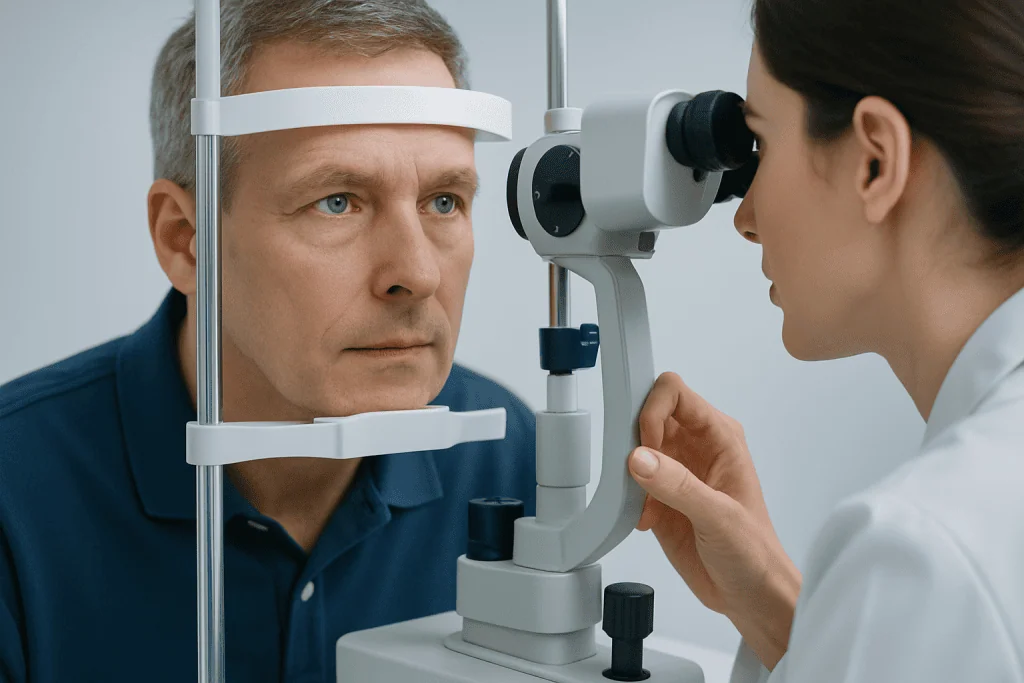
The main test is a detailed eye examination. With a slit-lamp microscope, the specialist can determine whether the gray color involves the sclera, cornea, conjunctiva, lens, or another structure. Vision testing and measurement of eye pressure may also be needed. If the doctor suspects deeper structural disease, they may recommend a comprehensive eye examination with additional imaging.
Further tests depend on the suspected cause. Blood tests may be used if autoimmune, inflammatory, metabolic, or connective tissue disorders are possible. Corneal imaging or other ophthalmic scans can help assess the front structures of the eye. When cataract is suspected as part of a general complaint about a gray or cloudy look in the eye, the doctor may also evaluate for cataract because patients sometimes use similar wording for different visual changes.
Treatment options and what care may involve
Treatment for greyish eyeballs is guided entirely by the underlying cause. If the change is due to a normal age-related finding such as corneal arcus in an older adult, no eye treatment may be necessary, though general cardiovascular risk assessment may still be appropriate. If the doctor finds a benign pigmentation change or long-standing scleral thinning without active disease, monitoring may be enough.
When irritation, dryness, or mild surface inflammation is contributing, treatment may include lubricating drops, eyelid care, avoidance of triggers, or prescription anti-inflammatory medication when medically indicated. More significant inflammation of the sclera or adjacent tissues may require systemic evaluation and treatment under ophthalmology supervision.
If the gray appearance is related to a structural eye problem affecting vision, treatment may be more specific. Depending on the diagnosis, patients may be referred for cornea treatment or for management in a dedicated ophthalmology service. The goal is not to change eye color for cosmetic reasons, but to protect eye health, relieve symptoms, and preserve vision.
Near the end of the care pathway, some patients benefit from coordinated assessment when the eye findings may be part of a broader medical issue. Acibadem International’s multidisciplinary specialists in JCI-accredited hospitals evaluate and treat eye conditions for international patients when specialist care is needed.
Self-care and prevention
Not every cause of greyish eyeballs can be prevented, especially age-related or inherited changes. Still, several habits support overall eye health. Protective eyewear can reduce injury risk, and managing dry eye symptoms early may help prevent chronic surface irritation.
General prevention measures include:
- Scheduling regular eye examinations, especially with age or existing eye disease
- Seeking assessment for new color changes rather than relying on photographs alone
- Using eye protection during sports, home repairs, or work with debris or chemicals
- Managing cholesterol, blood pressure, and autoimmune disease with a doctor’s guidance
- Avoiding unsupervised use of steroid eye drops
- Following contact lens hygiene carefully
Home remedies should not be used to try to “whiten” or lighten the eyes. Over-the-counter products marketed for cosmetic brightness can mask symptoms or irritate the eye surface. If the discoloration is new, persistent, or associated with discomfort, professional assessment is safer than self-treatment.
When to seek medical care
A routine eye appointment is appropriate for a gray or blue-gray eye appearance that is new, unexplained, or gradually changing, even if there is no pain. This is especially true if the change affects only one eye, appears as a distinct spot, or is noticed in a younger person without an obvious explanation.
Prompt medical attention is important if greyish eyeballs occur with eye pain, marked redness, sudden blurred vision, light sensitivity, discharge, swelling, or after an injury. Emergency evaluation is also needed for sudden vision loss, chemical exposure, or a severe headache with eye symptoms.
Because the same visual description can represent very different problems, a qualified eye doctor is best placed to identify the cause and advise on treatment. Early assessment can also help rule out serious conditions and provide reassurance when the finding is benign.
Frequently asked questions
Are greyish eyeballs always a sign of disease?
No. A gray or blue-gray appearance can sometimes be related to normal aging changes, especially if it is symmetrical and has been stable for a long time. However, a new or changing discoloration should still be assessed because some causes do need treatment.
What part of the eye usually looks gray?
Most often, patients are noticing the sclera, the white part of the eye, or a gray ring near the edge of the cornea. Less commonly, a spot on the conjunctiva or another eye structure creates the gray appearance. An eye exam helps identify the exact location.
Can high cholesterol cause a gray ring in the eye?
It can be associated with a gray-white ring around the cornea called corneal arcus, particularly in younger or middle-aged adults. In older adults, this finding is often age-related. A doctor may recommend checking cholesterol and cardiovascular risk factors based on the person’s age and health history.
Should a child or young adult with greyish eyeballs see a doctor?
Yes, it is sensible to arrange an evaluation. Although the cause may still be benign, gray or blue-gray sclera in a younger person can sometimes be linked to inherited connective tissue conditions or other medical issues. Early assessment helps clarify whether further testing is needed.
Can dry eyes make the eyes look dull or grayish?
Dry eye does not usually turn the sclera gray, but it can make the eyes look dull, irritated, or less clear. Surface dryness may also highlight other underlying changes. If lubricating drops do not help or symptoms persist, an eye examination is advisable.
When is a gray appearance in the eye an emergency?
It needs urgent evaluation if it appears after trauma or chemical exposure, or if it comes with severe pain, sudden vision loss, pronounced redness, or strong light sensitivity. These features can indicate a serious problem affecting the eye surface or deeper structures. Immediate medical attention can help protect vision.
This article is for general information only and is not a substitute for professional medical advice. Please consult a qualified doctor about your individual situation.
Explore treatments in Turkey — costs, top hospitals & a free quote
JCI-accredited · board-certified surgeons · reply within 24h
Add us as a Preferred Source to see more of our trusted health content across Google Search, AI Overviews and Discover.
Check your numbers in seconds
BMI, calories, due date, blood pressure and 30+ more clinical calculators — free, instant, doctor-reviewed ranges.

More from the Health Library

Child Rotten Teeth: A Complete Medical Overview

Yoga Poses for Constipation — Explained by Medical Evidence, Not Myths

Adams Apple: What Patients Need to Know

Operation Prk: A Complete Medical Overview

Ointment: A Complete Medical Overview