Knock Knees: A Complete Medical Overview
Knock knees are common in early childhood and often improve naturally with growth. Medical evaluation is important if knock knees are severe, uneven, painful, or continue beyond the usual age range.
Key Takeaways
- Knock knees are common in early childhood and often improve naturally with growth.
- Medical evaluation is important if knock knees are severe, uneven, painful, or continue beyond the usual age range.
- Causes can include normal development, genetics, excess weight, bone disorders, injury, or arthritis.
- Diagnosis usually involves a physical exam and may include standing X-rays to measure leg alignment.
- Treatment depends on the cause and may range from observation and exercise guidance to surgery in selected cases.
Knock knees, also called genu valgum, describe a leg alignment in which the knees angle inward and touch while the ankles remain apart. This is often a normal stage of growth in children, but persistent, painful, or worsening knock knees can sometimes signal an underlying bone, joint, or developmental problem.
Overview: What knock knees mean
Knock knees are a leg alignment pattern in which the knees move inward toward each other while the ankles stay farther apart. The medical name is genu valgum. In many children, this is a normal part of development rather than a disease, and the leg position gradually changes as the bones grow.
Parents often notice knock knees when a child stands or walks. The knees may touch first, and there may be a visible gap between the ankles. In most healthy children, this alignment becomes more noticeable between early toddler years and about age 3 to 4, then slowly improves over the following years.
In teenagers and adults, knock knees are less likely to be a normal growth pattern. When they appear later in life or remain pronounced, they may affect walking mechanics, place extra stress on the joints, or increase the risk of discomfort around the knees, hips, feet, or lower back. The key question is not only whether knock knees are present, but whether they are expected for age, symmetric, painless, and stable.
This distinction helps guide care. Some people only need reassurance and follow-up, while others need an assessment to look for bone growth problems, prior injury, nutritional issues, or joint disease. If knee alignment is linked with ongoing joint symptoms, doctors may also evaluate for related problems such as knee pain.
How knock knees can look and feel
The most obvious sign is the appearance of the legs when standing. The knees come together or nearly touch, while the ankles remain apart. In mild cases, this may be mostly cosmetic and cause no symptoms. In more marked cases, walking can look less smooth, and the feet may point outward to compensate.
Some children and adults with knock knees report tired legs after activity or discomfort around the front or inner side of the knees. Others may notice foot strain, hip discomfort, or lower back pain because leg alignment influences the way body weight moves through the joints. Symptoms are more likely if the alignment is significant or if one leg is affected more than the other.
Other signs that can accompany problematic knock knees include:
- Frequent tripping or an awkward gait
- Knee pain during walking, running, or climbing stairs
- Uneven shoe wear
- Stiffness or reduced range of motion
- A visible difference between the right and left leg
- Progressive worsening rather than gradual improvement
Children with normal developmental knock knees usually remain active and comfortable. Pain, limping, swelling, or limitation in sports and daily activity are more concerning features and should be discussed with a doctor.
Causes and risk factors
In young children, the most common cause is normal bone growth. Leg alignment changes in predictable stages during early childhood, and many children briefly pass through a knock-kneed phase before their legs settle into a more neutral position. Family traits can also influence alignment, so some variation is inherited.
When knock knees are more pronounced, persistent, or develop outside the usual age range, doctors consider other causes. These can include bone disorders such as rickets, conditions that affect the growth plates, previous fractures around the knee, infections involving bone or joint tissue, or neuromuscular conditions that alter muscle balance and posture.
In adults, knock knees may develop or worsen because of joint wear, especially when arthritis affects one side of the knee more than the other. Extra body weight can increase the load on the legs and may make abnormal alignment more symptomatic. Prior surgery, ligament injury, or poorly healed fractures can also change the mechanical axis of the leg. For some patients, assessment may overlap with broader osteoarthritis evaluation when joint degeneration is suspected.
Risk factors that may make knock knees more noticeable or more likely to need treatment include obesity, vitamin D deficiency, metabolic bone disease, skeletal dysplasia, and a history of trauma to the growth plate. Because the possible causes differ by age, the same leg shape can mean very different things in a toddler, a teenager, and an older adult.
How doctors diagnose knock knees
Diagnosis begins with a detailed history and physical examination. The doctor asks when the alignment was first noticed, whether it is changing over time, and whether there is pain, limping, or difficulty keeping up with usual activities. Growth history, nutrition, previous injuries, and family history can provide useful clues.
During the exam, the legs are observed while standing and walking. The clinician may measure the distance between the ankles when the knees are together, compare both sides, and assess the hips, knees, ankles, and feet. They also look for signs of rotational problems, ligament laxity, muscle imbalance, or other bone deformities that can make the legs appear more angled.
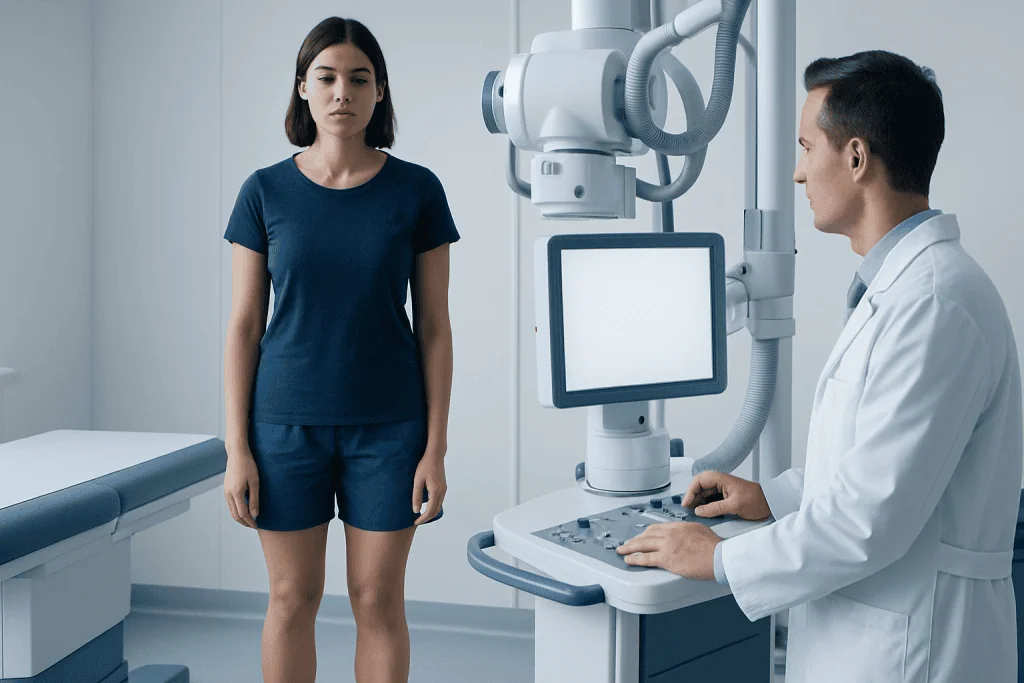
If the pattern appears normal for age and there are no warning signs, no further testing may be needed. If the alignment is severe, asymmetrical, painful, or persistent, imaging is often recommended. Standing long-leg X-rays help show the overall mechanical axis and whether the problem comes from the thigh bone, shin bone, or both. Blood tests may be used if a nutritional or metabolic bone problem is suspected.
In selected cases, referral to an orthopedic specialist is appropriate for detailed planning. This is especially true when surgery is being considered or when the doctor wants to rule out structural problems around the knee joint. Advanced imaging is not always necessary, but it may be used if there is concern about associated injuries or cartilage damage.
Treatment options for children and adults
Treatment depends on age, severity, symptoms, and the underlying cause. For most young children with typical developmental knock knees, observation is the main approach. Parents are usually advised to monitor growth and attend follow-up visits so the doctor can confirm that the alignment is improving with time.
If knock knees are linked to a medical problem, treatment focuses on that cause. For example, nutritional correction may be needed in children with vitamin D deficiency or rickets, and weight management may help reduce stress on the joints. Physical therapy can support strength, balance, and movement patterns, especially if discomfort or gait changes are present, but exercise alone does not usually change bone alignment once a structural deformity is established.
Bracing has a limited role in many cases of true bony knock knees, though it may occasionally be considered depending on the child’s age and diagnosis. When leg alignment is significant and growth remains, orthopedic surgeons may consider guided growth procedures that gradually correct the angle by influencing the growth plate. In skeletally mature adolescents or adults with substantial deformity, corrective bone surgery may be recommended.
If knee symptoms are related to joint damage or advanced wear, treatment may also include broader orthopedic care such as knee replacement in selected adults, or physical therapy and rehabilitation to improve function and reduce pain. In cases where leg-axis correction is needed because the deformity is centered around the knee, evaluation by specialists in orthopedics and traumatology can help determine the safest option.
Daily care, exercise, and prevention
There is no guaranteed way to prevent all forms of knock knees because many cases are related to normal development or inherited bone structure. Still, healthy habits can support bone and joint health. A balanced diet with adequate vitamin D and calcium, regular age-appropriate physical activity, and maintaining a healthy weight are practical steps that may reduce strain on the legs.
Exercises can help improve strength, flexibility, and movement control, even if they do not fully correct the angle of the bones. A physical therapist may recommend work for the hips, thighs, and core to support better alignment during walking, running, and stair climbing. This may be especially useful for teenagers and adults who have discomfort or fatigue with activity.
Supportive footwear may improve comfort for some people, especially if flat feet or abnormal foot mechanics are contributing to strain. However, shoe inserts or special shoes do not reliably fix true bony genu valgum. They are best viewed as comfort aids rather than curative treatments.
For children, the most important self-care step is usually observation rather than aggressive intervention. Parents can take occasional photos over time, note whether the legs are becoming more or less aligned, and keep track of pain, limping, or activity limits. Any concerning change should be discussed with a healthcare professional rather than managed with home remedies alone.
When to seek medical care
Medical advice is recommended if knock knees are severe, getting worse, or present mainly on one side. A child should also be evaluated if the alignment does not begin to improve with age, or if knock knees first appear later than expected rather than during the usual early childhood phase.
Prompt assessment is also important when there is pain, limping, swelling, frequent falls, reduced activity, or difficulty walking. These signs can suggest that the problem is affecting function or that another condition is present. Adults with new or progressive knock knees should be checked for arthritis, prior injury, or other structural causes.
Urgent evaluation is appropriate if deformity follows an injury, if there is fever or marked swelling, or if the person cannot bear weight. These are not typical features of simple developmental knock knees and need timely medical review.
For international patients who need orthopedic assessment, Acibadem International’s multidisciplinary specialists in JCI-accredited hospitals diagnose and treat limb alignment and knee conditions using individualized care plans.
Outlook and long-term considerations
The outlook for knock knees is often very good, especially in children with normal developmental genu valgum. In these cases, the leg shape usually improves as growth continues, and long-term problems are uncommon. Regular observation offers reassurance while allowing the doctor to identify any unusual pattern early.
When knock knees are caused by an underlying condition, outcomes depend on early recognition and proper treatment. Correcting nutritional problems, managing weight, treating joint disease, or addressing a growth-plate issue can improve symptoms and help protect long-term joint function. Delay in treatment may allow abnormal mechanics to place continuing stress on the knees and surrounding joints.
Adults with persistent knock knees may benefit from treatment when pain, instability, or progressive joint wear interferes with daily life. The goal is not only to change appearance, but also to improve alignment, function, and comfort. A personalized plan is important because the best treatment varies according to age, bone maturity, activity level, and the exact source of the deformity.
Anyone concerned about leg alignment should seek evaluation from a qualified clinician rather than relying on appearance alone. A clear diagnosis can distinguish a normal developmental pattern from a condition that deserves closer follow-up or treatment.
Frequently asked questions
Are knock knees normal in children?
Yes. In many children, knock knees are a normal part of growth and often become most noticeable in early childhood before improving gradually. A doctor should assess them if they are severe, painful, uneven, or do not improve with age.
What is the medical term for knock knees?
The medical term is genu valgum. It describes a leg alignment in which the knees angle inward while the ankles stay apart when standing.
Can exercise fix knock knees?
Exercise can improve muscle strength, balance, and movement patterns, which may reduce discomfort and improve function. However, exercise usually does not fully correct a true bony alignment problem on its own.
Do adults get knock knees?
Yes. Adults can have persistent knock knees from childhood or develop them later because of arthritis, previous injury, or bone alignment changes. New or worsening knock knees in adults should be evaluated by a doctor.
When is surgery considered for knock knees?
Surgery may be considered when the deformity is significant, causes pain or walking problems, or is linked to joint damage. The type of surgery depends on age, bone growth remaining, and where the alignment problem is located.
Can knock knees cause pain?
They can, especially if the alignment is marked or if there is an associated knee or hip problem. Some people develop knee strain, fatigue with activity, or discomfort in the feet, hips, or lower back.
This article is for general information only and is not a substitute for professional medical advice. Please consult a qualified doctor about your individual situation.
Joint and spine care in Turkey — expert assessment & treatment
JCI-accredited · board-certified surgeons · reply within 24h
Add us as a Preferred Source to see more of our trusted health content across Google Search, AI Overviews and Discover.

More from the Health Library
Hypertelorism: An Evidence-Based Guide for Patients

Naturopathic Doctor: An Evidence-Based Guide for Patients

Camphor: An Evidence-Based Guide for Patients

Holosystolic Murmur: What Patients Need to Know

Metcon — Explained by Medical Evidence, Not Myths

Dha Docosahexaenoic — Explained by Medical Evidence, Not Myths
Orthopedic Surgery & Traumatology Specialists at Acibadem

Fzt. A.Sercan Soyarslan
Physical Medicine & Rehabilitation
Dr. Abdullah Yener İnce
Orthopedic Surgery & Traumatology
Dr. Adnan Abbasoğlu
Orthopedic Surgery & Traumatology
Prof. Dr. Ahmet Alanay
Orthopedic Surgery & Traumatology