Can You Pass Gallstones? Causes, Explanations, and Next Steps

Small gallstones may sometimes pass on their own, but not all gallstones do. Many gallstones cause no symptoms and are found incidentally.
Key Takeaways
- Small gallstones may sometimes pass on their own, but not all gallstones do.
- Many gallstones cause no symptoms and are found incidentally.
- Severe or repeated right upper abdominal pain, fever, jaundice, or vomiting need medical attention.
- Doctors usually diagnose gallstones with an exam, blood tests, and ultrasound.
- Treatment depends on symptoms, stone location, and whether there are complications.
Yes, some very small gallstones can pass out of the gallbladder and sometimes leave the body without causing lasting problems. However, gallstones can also block bile ducts and lead to pain, infection, or inflammation, so persistent symptoms or warning signs should be assessed by a doctor.
Can gallstones pass on their own?
Yes, it is possible for some gallstones to pass on their own, especially if they are very small. In many people, this happens without clear symptoms or with only brief discomfort. This is one reason gallstones are often harmless and may never require treatment.
That said, not every stone will pass, and the process is not always straightforward. Gallstones usually form in the gallbladder, a small organ that stores bile. A stone may stay there quietly, move out into a bile duct, or temporarily block the flow of bile. Whether a person notices symptoms often depends on the stone’s size, location, and whether it causes inflammation.
The most important point is that passing a stone can be uneventful, but symptoms that are severe, prolonged, or accompanied by fever or yellowing of the skin are not something to ignore. Those signs can suggest a blockage or complication that needs prompt medical care.
What it feels like when a gallstone moves
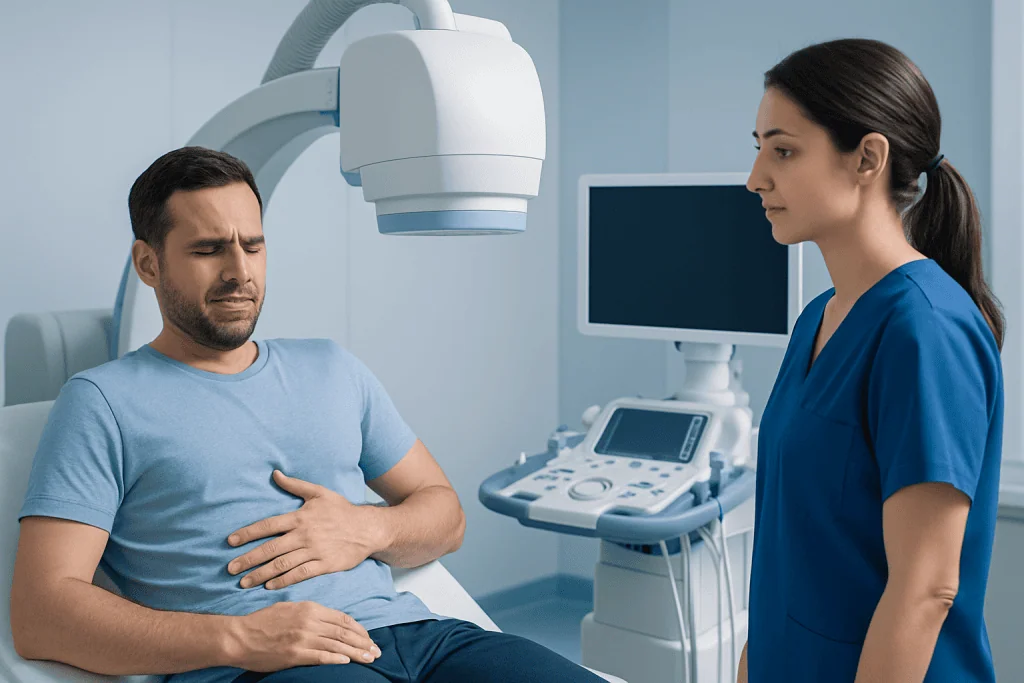
When a gallstone leaves the gallbladder or briefly blocks a duct, it can cause a pattern of pain often called biliary colic. This is usually felt in the upper right side of the abdomen or in the center, just below the breastbone. The pain may come on suddenly, build over minutes, and last from a short time to several hours.
Some people also feel pain in the back or right shoulder blade area. Nausea, bloating, or discomfort after a fatty meal may occur as well. Once the stone moves on and bile can flow again, the pain may ease.
It is also common for gallstones to cause no symptoms at all. A person may only learn they have them during an ultrasound or scan done for another reason. By contrast, if a stone remains stuck or leads to inflammation, symptoms tend to become more intense or persistent.
- Upper right abdominal pain
- Pain after meals, especially heavy or fatty foods
- Nausea or occasional vomiting
- Pain spreading to the back or right shoulder
- Episodes that come and go
Why gallstones form and who is more likely to get them

Gallstones develop when substances in bile, most often cholesterol or pigment, form solid particles. Over time, these particles can grow into stones of different sizes. Some remain tiny, while others become large enough to stay in the gallbladder and increase the chance of symptoms.
Certain factors make gallstones more likely. Risk tends to rise with age, family history, obesity, pregnancy, diabetes, and rapid weight loss. Hormonal changes and some medications can also influence bile composition and gallbladder emptying.
Diet alone does not explain every case, but lifestyle can play a role. Long periods of fasting, major changes in body weight, and metabolic conditions may contribute. People with symptoms linked to stones may also have related gallbladder inflammation, such as cholecystitis, which can change the urgency of treatment.
When a passing stone becomes a problem
A small stone may leave the gallbladder and pass through the bile ducts without causing major trouble. Problems arise when a stone becomes lodged. This can block the flow of bile and trigger pain, swelling, or infection in the gallbladder, bile ducts, or pancreas.
Complications may include acute gallbladder inflammation, infection of the bile ducts, or pancreatitis. These conditions can cause pain that does not settle, fever, chills, jaundice, dark urine, pale stools, or repeated vomiting. In these situations, the issue is no longer just about passing a stone naturally; it requires medical assessment.
Doctors may also investigate whether symptoms are truly from gallstones, because other digestive conditions can cause similar pain. In some cases, symptoms overlap with issues such as pancreatitis or liver and stomach disorders, which is why proper diagnosis is important.
How doctors diagnose gallstones
If gallstones are suspected, a doctor usually begins with questions about the pattern of pain, triggers such as meals, and any warning signs like fever or yellowing of the eyes. A physical examination can help identify tenderness or signs of inflammation.
Blood tests are often used to look for infection, liver test changes, or signs that the pancreas may be affected. The main imaging test is usually abdominal ultrasound, which is widely used because it can show gallstones and changes in the gallbladder clearly.
If a stone may be in the bile duct, additional imaging may be recommended. Depending on the situation, this can include MRI-based biliary imaging or endoscopic procedures that both diagnose and treat obstruction. In selected patients, doctors may discuss ERCP to find and remove stones in the bile duct, or endoscopic ultrasound when more detailed evaluation is needed.
Treatment options after gallstones are found
Treatment depends on whether the stones are causing symptoms and whether there are complications. Gallstones found by chance and causing no symptoms often do not need immediate treatment. A doctor may simply advise monitoring and follow-up if symptoms develop later.
When gallstones cause repeated pain or inflammation, treatment is more likely to be recommended. The most common definitive treatment is gallbladder removal surgery, because stones can recur if the gallbladder remains in place. This is often performed with minimally invasive techniques such as laparoscopic gallbladder removal.
If a stone is blocking the common bile duct, the first step may be to remove it endoscopically before or around the time of surgery. Pain control, fluids, antibiotics when infection is present, and short-term dietary adjustments may also be part of care. For international patients, Acibadem International’s multidisciplinary specialists in JCI-accredited hospitals diagnose and treat gallstone disease using imaging, endoscopic, and surgical approaches when clinically appropriate.
What people can do at home and when to seek medical care
If symptoms are mild and brief, it can help to avoid very fatty meals until a doctor has assessed the problem. Staying hydrated, eating regular balanced meals, and avoiding crash diets may support overall gallbladder health. However, home care cannot remove a problematic stone or safely rule out complications.
Medical review is especially important if pain lasts more than a few hours, returns often, or interferes with eating and daily life. A person should seek prompt care for fever, chills, jaundice, severe abdominal tenderness, repeated vomiting, faintness, or dark urine and pale stools. These symptoms can point to blockage, infection, or pancreatic involvement.
In general, it is reasonable to remember three steps: many gallstones are harmless, certain red flags need quick attention, and doctors can usually clarify the cause with an exam, blood tests, and ultrasound. That approach helps avoid both unnecessary worry and unnecessary delay.
Frequently asked questions
Can you pass gallstones in your stool?
Sometimes a very small gallstone can pass through the bile ducts and eventually into the intestine, where it leaves the body in stool. Most people do not notice this happening, and the stone is not usually visible. Larger stones are less likely to pass easily.
How do you know if a gallstone has passed?
Often the main clue is that pain settles and other symptoms improve. However, symptoms improving does not always prove the stone has fully passed, because a blockage can be temporary. If there has been significant pain, jaundice, fever, or abnormal blood tests, a doctor may need imaging to confirm what happened.
Can gallstones go away without surgery?
Some small stones may pass naturally, and some silent gallstones never cause problems. But stones that repeatedly cause pain or lead to complications often require treatment, and surgery is the most common long-term solution. A doctor can advise whether observation or treatment is safer in an individual case.
What are the warning signs that a gallstone is stuck?
Warning signs include severe or persistent pain in the upper abdomen, fever, chills, yellowing of the skin or eyes, dark urine, pale stools, and repeated vomiting. These symptoms can suggest a blocked bile duct or infection. They should be assessed promptly.
Are gallstones always painful?
No, many gallstones cause no symptoms at all. These are sometimes called silent gallstones and may only be found during tests for another reason. Treatment is not always needed unless symptoms or complications develop.
Can diet help prevent gallstone problems?
A balanced eating pattern, maintaining a healthy weight, and avoiding rapid weight loss may help reduce risk. Very restrictive diets and repeated cycles of losing and regaining weight can increase the chance of gallstones in some people. Diet cannot reliably dissolve most existing stones, but it can support overall digestive health.
References
- National Institute of Diabetes and Digestive and Kidney Diseases
- American College of Gastroenterology
- National Health Service
- Mayo Clinic
- Society of American Gastrointestinal and Endoscopic Surgeons
This article is for general information only and is not a substitute for professional medical advice. Please consult a qualified doctor about your individual situation.
Gallstones in Turkey — costs, top hospitals & a free quote
JCI-accredited · board-certified surgeons · reply within 24h
Add us as a Preferred Source to see more of our trusted health content across Google Search, AI Overviews and Discover.
Check your numbers in seconds
BMI, calories, due date, blood pressure and 30+ more clinical calculators — free, instant, doctor-reviewed ranges.

General Surgery
Open, laparoscopic and robotic surgery for a broad range of abdominal and soft-tissue conditions.
120 specialists in this unit