Blue Light Phototherapy for Acne: A Complete Medical Overview
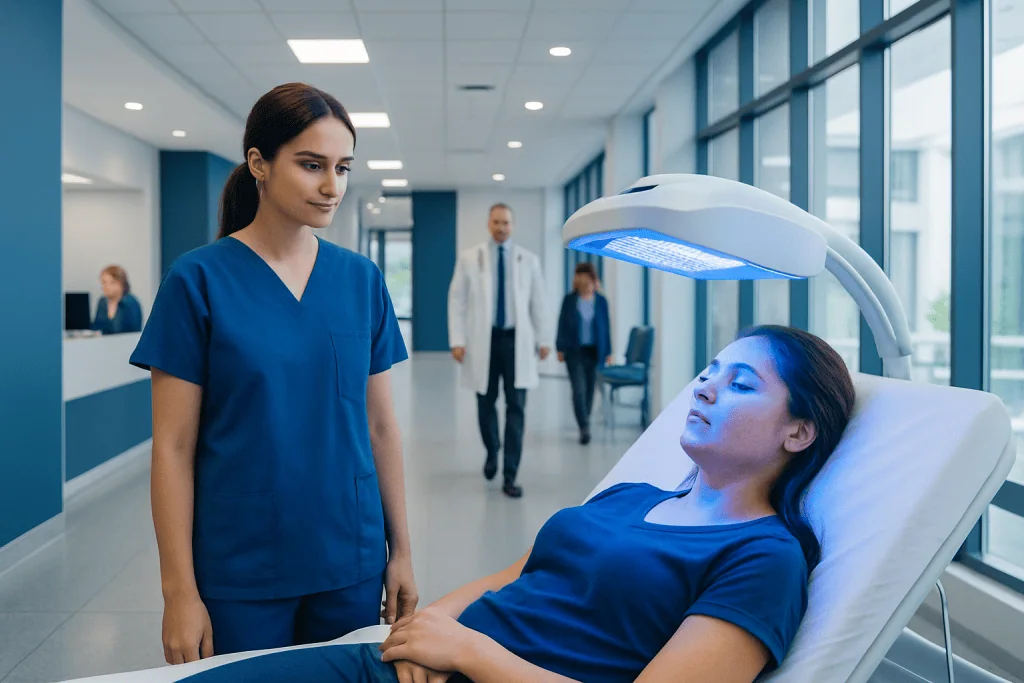
Blue light phototherapy targets acne-related bacteria and may reduce inflammatory breakouts. It is most often used for mild to moderate acne and usually requires a series of treatment sessions.
Key Takeaways
- Blue light phototherapy targets acne-related bacteria and may reduce inflammatory breakouts.
- It is most often used for mild to moderate acne and usually requires a series of treatment sessions.
- Results are gradual, and maintenance skin care or other acne treatments may still be needed.
- This therapy does not suit every type of acne, especially severe nodulocystic acne or acne with significant scarring.
- A dermatologist can help decide whether light therapy, medication, or a combination approach is most appropriate.
Blue light phototherapy for acne is a noninvasive treatment that uses specific wavelengths of visible light to reduce acne-causing bacteria and calm inflammation. It can help some people with mild to moderate acne, especially when used as part of a broader skin care plan guided by a doctor.
Overview: What blue light phototherapy for acne does
Blue light phototherapy for acne is a medical or clinic-based light treatment that uses visible blue wavelengths to help manage acne. In simple terms, it works by affecting Cutibacterium acnes, the bacteria involved in many inflammatory acne lesions, while also helping reduce local skin inflammation. It is considered a noninvasive option because it does not involve incisions or injections.
This treatment is not a cure for acne, and it does not permanently stop future breakouts. Instead, it can lower the number of active pimples over time, especially red, inflamed spots such as papules and pustules. Many people notice gradual improvement after a course of repeated sessions rather than after a single treatment.
Blue light phototherapy is usually considered when acne is mild to moderate, when standard topical treatments are not well tolerated, or when a patient wants to add a non-drug approach to a broader acne plan. It may also be discussed alongside care for acne when a dermatologist is tailoring treatment to skin type, acne severity, and lifestyle.
How the treatment works in the skin
Acne develops through several processes happening at the same time: excess oil production, clogged pores, bacterial overgrowth, and inflammation. Blue light mainly targets the bacterial part of this cycle. Certain compounds produced by acne-related bacteria absorb blue light, creating a reaction that can damage the bacteria and reduce their activity on the skin.
Because blue light works close to the skin surface, it is most helpful for inflammatory acne lesions in areas where bacteria contribute to redness and swelling. It does not directly clear deep pore blockages in the same way that retinoids do, and it does not shrink oil glands as strongly as some prescription medications. This is why doctors often position it as one part of treatment rather than a complete stand-alone solution.
Different devices may use blue light alone or combine blue and red light. Red light is sometimes added because it may help calm inflammation and support skin healing. A dermatologist or qualified clinician can explain whether a simple blue light approach or a combined light approach is more appropriate for a person’s acne pattern.
Who may benefit most from blue light therapy

Blue light phototherapy for acne may be helpful for teenagers and adults with mild to moderate inflammatory acne, especially if breakouts include red bumps and small pus-filled spots. It can be a useful option for people who cannot tolerate certain topical medications because of dryness, irritation, or sensitivity. Some patients also prefer it when they want to limit antibiotic use or add a procedural treatment to improve control.
It is usually less effective for blackheads, whiteheads, and very deep cystic acne on its own. For severe acne, extensive scarring, or painful nodules, doctors often recommend more comprehensive treatment, which may include prescription creams, oral medicines, hormonal treatment, or procedures such as acne treatment planned by a dermatology team.
People with darker skin tones can often use blue light therapy safely, but device choice and treatment settings should be individualized. A skin assessment matters because post-inflammatory discoloration, active eczema, rosacea, or unusual light sensitivity can influence whether treatment is advisable.
What happens before, during, and after a session
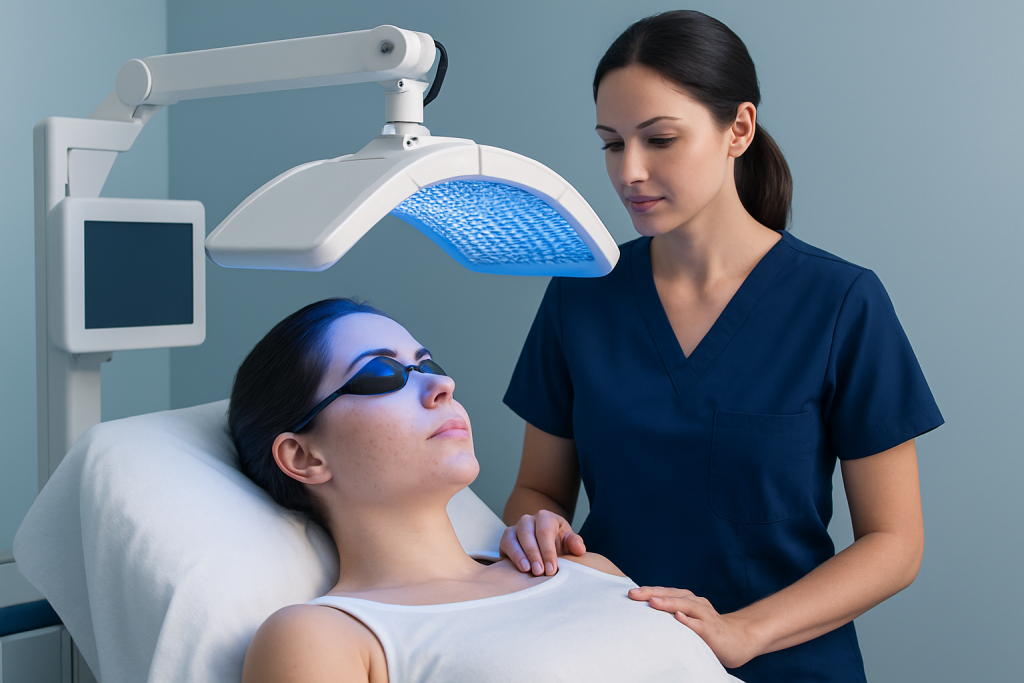
Before treatment, the skin is usually cleansed to remove makeup, sunscreen, oil, and debris. The clinician reviews current medications, recent skin products, and any history of light sensitivity. Eye protection is typically worn during the session because bright light exposure can be uncomfortable and should be controlled carefully.
During the procedure, the light source is positioned over the treatment area for a set amount of time. Sessions are generally brief and are usually well tolerated. Most people do not describe the treatment as painful, although a mild warm, tingling, or dry sensation can occur. A course commonly involves multiple sessions over several weeks because acne improves gradually.
After treatment, many people can return to normal activities right away. The skin may look slightly pink or feel dry for a short time. Gentle cleansing, regular moisturizing, and daytime sun protection are usually advised. If the doctor recommends combining phototherapy with topical agents or dermatology follow-up care, using those treatments consistently often improves the overall result.
Benefits, limitations, and possible side effects
The main advantages of blue light phototherapy are that it is noninvasive, does not require recovery time, and can reduce inflammatory acne without the systemic effects associated with some oral medicines. It may be particularly appealing to patients looking for an additional option beyond cleansers and creams. In some cases, it also helps support adherence because treatments are supervised and structured.
Its limitations are equally important. Results are not immediate, and improvement varies from person to person. Blue light does not address every cause of acne, so clogged pores, hormonal triggers, and excess oil production may still need separate treatment. Maintenance sessions or ongoing skin care may be necessary if breakouts return after the initial course.
Side effects are usually mild and temporary. They can include dryness, redness, slight irritation, or a feeling of warmth during or after treatment. Rarely, people may experience worsening irritation if they are using strong exfoliants or photosensitizing products at the same time. Anyone with a history of light-triggered skin reactions should discuss this in advance with a doctor.
- Possible benefits: noninvasive care, no downtime, gradual reduction in inflamed spots
- Possible drawbacks: repeated sessions needed, variable response, not ideal for severe cystic acne
- Possible side effects: temporary redness, dryness, irritation, sensitivity
How doctors compare blue light with other acne treatments
Blue light therapy is best understood as one option within a larger acne treatment toolkit. Topical retinoids help normalize shedding inside pores, benzoyl peroxide reduces bacteria and resistance risk, and salicylic acid can help with clogged follicles. Oral antibiotics, hormonal therapies, and isotretinoin may be used for more extensive or resistant acne. Each treatment targets a different part of the acne process.
In practice, dermatologists often combine methods. For example, a patient with inflammatory acne might use a gentle cleanser, a non-comedogenic moisturizer, a topical retinoid, and periodic light sessions. Someone with persistent marks or scars after acne has settled may later discuss options such as laser treatment if appropriate, although this is separate from controlling active acne itself.
Phototherapy may be chosen when medication side effects are a concern, when adherence to daily treatment is difficult, or when a patient prefers to limit oral medicine exposure. The best plan depends on acne severity, skin sensitivity, pregnancy status, other medical conditions, and the likelihood of follow-up. A consultation helps set realistic expectations before starting therapy.
Self-care during treatment and preventing future breakouts
Daily skin habits still matter, even when blue light therapy is used. A gentle routine can reduce irritation and support better outcomes. This usually includes washing the face with a mild cleanser, avoiding harsh scrubs, choosing non-comedogenic makeup and sunscreen, and not picking or squeezing spots. Picking can worsen inflammation and increase the chance of marks or scars.
It is also helpful to use acne products exactly as directed. Applying too many active ingredients at once can irritate the skin and make treatment harder to tolerate. If a doctor has prescribed a retinoid, benzoyl peroxide, or another topical medicine, they may suggest adjusting timing around light sessions to keep the skin comfortable.
Preventing breakouts often requires patience. Acne can fluctuate with hormones, stress, sweat, sleep disruption, and cosmetic products. While diet is not the only cause, some people notice patterns with specific foods. Keeping a simple record of products, flare-ups, and menstrual or lifestyle changes can help a clinician fine-tune care over time.
When to seek medical care
Medical advice is important when acne is painful, leaving scars, spreading to large areas, or not improving with over-the-counter treatment after several weeks. A doctor should also assess sudden severe acne, acne accompanied by irregular periods or excess hair growth, or breakouts that appear alongside a new medication. These patterns may point to hormonal or medication-related causes that need a different approach.
People should seek prompt care if a skin treatment causes severe redness, swelling, blistering, eye symptoms, or signs of an allergic reaction. Blue light therapy should be supervised if there is a history of unusual photosensitivity, lupus, porphyria, or use of medicines that increase light sensitivity. A qualified clinician can decide whether phototherapy is safe or whether another treatment is better.
For international patients needing evaluation and personalized skin care, Acibadem International’s multidisciplinary specialists in JCI-accredited hospitals diagnose and treat acne and related skin concerns. The most suitable plan may include medical therapy, procedural care, or a combination based on the individual patient’s skin and goals.
Frequently asked questions
Does blue light phototherapy for acne really work?
It can help many people with mild to moderate inflammatory acne by reducing acne-related bacteria and calming inflammation. Results tend to be gradual and usually require repeated sessions. It is often most effective when combined with a broader skin care or medical treatment plan.
How long does it take to see results from blue light acne treatment?
Most people do not see immediate clearing after one session. Improvement commonly appears over several weeks as treatments are repeated and inflammation decreases. The exact timeline depends on acne severity, skin type, and whether other treatments are used at the same time.
Is blue light therapy safe for all skin types?
It is generally considered safe for many skin types when performed appropriately, but it is not suitable for everyone. People with photosensitive conditions or who take certain medicines may need a different approach. A medical review helps identify any special risks before treatment starts.
Can blue light therapy cure acne permanently?
No, it does not permanently cure acne. It helps control active breakouts, especially inflammatory lesions, but acne may return if underlying triggers remain. Many patients still need maintenance skin care or other medical treatments.
What are the side effects of blue light phototherapy for acne?
Side effects are usually mild and short-lived. They can include temporary redness, dryness, slight irritation, or warmth in the treated area. More significant reactions are uncommon but should be assessed by a doctor if they occur.
Is blue light better than acne creams or tablets?
Not necessarily better, but different. Blue light mainly targets bacteria and inflammation, while creams and tablets may also affect clogged pores, oil production, or hormones. The most effective choice depends on the type and severity of acne and a person’s overall health.
This article is for general information only and is not a substitute for professional medical advice. Please consult a qualified doctor about your individual situation.
Acne in Turkey — costs, top hospitals & a free quote
JCI-accredited · board-certified surgeons · reply within 24h
Add us as a Preferred Source to see more of our trusted health content across Google Search, AI Overviews and Discover.

More from the Health Library

Waist — Explained by Medical Evidence, Not Myths
Phlegm — Explained by Medical Evidence, Not Myths
Ambien: What Patients Need to Know

Delusions of Grandeur: An Evidence-Based Guide for Patients
Mbti Test: An Evidence-Based Guide for Patients