MS Diagnosis: Symptoms, Causes, and Treatment Options

MS diagnosis is based on a combination of medical history, neurological examination, MRI, and sometimes spinal fluid and evoked potential tests. There is no single test that proves multiple sclerosis; doctors also need to rule out conditions that can look similar.
Key Takeaways
- MS diagnosis is based on a combination of medical history, neurological examination, MRI, and sometimes spinal fluid and evoked potential tests.
- There is no single test that proves multiple sclerosis; doctors also need to rule out conditions that can look similar.
- Common early symptoms include vision changes, numbness, weakness, balance problems, and unusual fatigue.
- Treatment does not cure MS, but it can reduce relapses, slow disease activity, and help manage symptoms.
- Prompt medical review is important when new neurological symptoms appear, especially vision loss, weakness, or difficulty walking.
MS diagnosis is the process of confirming multiple sclerosis using a person’s symptoms, neurological examination, MRI findings, and selected laboratory tests while excluding other causes. Early evaluation can help clarify the diagnosis, guide treatment, and support long-term symptom management.
What MS diagnosis means
MS diagnosis means identifying whether a person’s symptoms and test results fit multiple sclerosis, a long-term condition that affects the brain, spinal cord, and optic nerves. In MS, the immune system mistakenly damages myelin, the protective covering around nerve fibers, which can disrupt the way signals travel through the nervous system.
Doctors do not rely on one blood test or one scan alone. Instead, they look for evidence that inflammation or damage has occurred in different parts of the central nervous system and at different points in time, while also making sure another condition is not a better explanation.
This is why MS diagnosis can sometimes take time. Some people are diagnosed after a first clear neurological episode and MRI findings, while others need follow-up imaging or specialist assessment before the picture becomes clear. A careful, step-by-step approach helps avoid both missed diagnoses and overdiagnosis.
Symptoms that may lead to MS evaluation
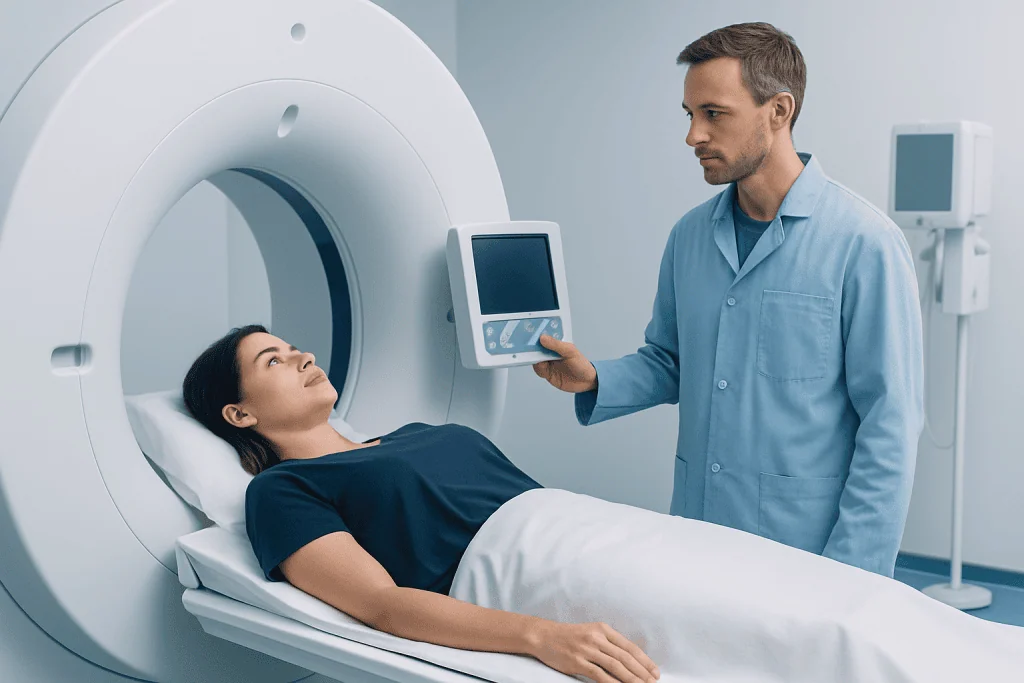
The symptoms that prompt MS evaluation can vary widely from person to person. They depend on which part of the central nervous system is affected. Symptoms may come and go, develop over days, or persist between flare-ups.
Common symptoms include:
- Blurred or reduced vision, sometimes with eye pain
- Numbness or tingling in the face, arms, legs, or trunk
- Weakness in one or more limbs
- Problems with balance, coordination, or walking
- Muscle stiffness or spasms
- Unusual fatigue that interferes with daily life
- Dizziness or vertigo
- Bladder, bowel, or sexual function changes
- Difficulty with concentration, memory, or word-finding
Many of these symptoms are not specific to MS, which is one reason diagnosis requires expert review. Symptoms such as optic neuritis, partial spinal cord inflammation, or numbness affecting one side of the body may raise stronger suspicion and often lead to referral for multiple sclerosis assessment.
Some people first experience a single neurological episode called clinically isolated syndrome. This does not always develop into MS, but it deserves medical attention because imaging and follow-up can show whether there is a higher future risk.
Causes and risk factors

The exact cause of MS is not fully understood. It is considered an immune-mediated disease influenced by a mix of genetic tendency and environmental factors. It is not contagious, and it does not develop because of stress alone, although stress may affect symptom burden in some people.
Researchers believe that certain genes can increase susceptibility, but genes are only part of the picture. Factors associated with a higher likelihood of MS include a family history of the condition, previous Epstein-Barr virus exposure, smoking, low vitamin D levels, and living farther from the equator during childhood in some populations.
MS is more commonly diagnosed in younger and middle-aged adults, and it is more frequent in women than in men. Even so, MS can occur in men, in children, and in older adults. Because symptoms can overlap with migraine, vitamin deficiency, stroke, autoimmune disease, or infections, careful testing is important before confirming the diagnosis.
How doctors make an MS diagnosis
MS diagnosis starts with a detailed medical history and neurological examination. A neurologist asks about past and present symptoms, how long they lasted, whether they improved, and whether there have been separate attacks over time. The examination checks strength, sensation, reflexes, coordination, walking, and eye movements.
MRI is one of the most important tools. Brain and spinal cord MRI can show lesions that are typical of MS and may reveal whether the disease has affected more than one area of the central nervous system. MRI with contrast may also help show whether some lesions are newer than others, which supports the pattern doctors look for in diagnosis.
Additional tests are often used when the diagnosis is uncertain or when another illness must be excluded. These may include a lumbar puncture to examine spinal fluid for immune markers, evoked potential tests to measure nerve signal speed, and blood tests to look for infections, vitamin deficiencies, thyroid disease, or autoimmune disorders that can mimic MS.
Doctors commonly use internationally accepted diagnostic criteria, including the idea of showing damage that is spread in space and time. In simple terms, this means finding evidence that more than one part of the central nervous system has been involved and that disease activity has happened on more than one occasion. Sometimes diagnosis can be made at the first assessment; in other cases, follow-up MRI and repeat specialist review are the safest next steps.
Conditions that can look like MS
One of the most important parts of MS diagnosis is ruling out other causes of similar symptoms or MRI findings. This protects patients from unnecessary treatment and ensures that the real condition is not missed. Many disorders can mimic MS, especially in the early stages.
Examples include migraine with white matter changes on MRI, vitamin B12 deficiency, thyroid disease, lupus, Sjogren syndrome, small-vessel disease, certain infections, and neuromyelitis optica spectrum disorder. In some people, symptoms may also overlap with peripheral nerve disease or structural spinal problems.
Because of this overlap, diagnosis is best made by clinicians experienced in neuroimmunology and imaging interpretation. If the clinical picture is unusual, the lesion pattern is atypical, or symptoms do not match the scan results, doctors may recommend additional testing before giving a firm diagnosis. That careful approach is a strength, not a delay.
Treatment options after diagnosis
Once MS diagnosis is confirmed, treatment is tailored to the type of MS, current symptoms, MRI activity, general health, and personal preferences. Treatment plans usually include three parts: managing relapses, using disease-modifying therapy to reduce future disease activity, and treating ongoing symptoms that affect daily life.
Relapses may be treated with short-term anti-inflammatory medicines under medical supervision. Longer-term care often focuses on multiple sclerosis treatment with disease-modifying medications that can lower the frequency of relapses and reduce new inflammatory lesions on MRI. The exact choice depends on disease pattern, safety considerations, and monitoring needs.
Symptom management is also essential. People may benefit from physical therapy for balance and mobility, occupational therapy for daily activities, vision assessment, continence support, pain management, and treatment for fatigue or spasticity when appropriate. In selected cases where walking, weakness, or rehabilitation needs are prominent, a structured neurological rehabilitation program may support function and independence.
Regular follow-up matters because MS can change over time. Specialists may repeat MRI scans, review symptom patterns, and adjust treatment if there is new disease activity or if side effects become a concern. For international patients, Acibadem International’s multidisciplinary specialists and JCI-accredited hospitals diagnose and treat MS with coordinated neurology, imaging, and rehabilitation services.
Living well with MS: self-care and prevention of complications
MS cannot currently be prevented in a guaranteed way, but healthy daily habits can support overall wellbeing and may help reduce complications. Stopping smoking is especially important because smoking is linked with worse outcomes in MS. Good sleep, regular movement, and a balanced diet also support energy, mood, and general health.
People with MS often benefit from pacing activities and planning rest periods to manage fatigue. Staying active within comfortable limits can help preserve strength, flexibility, and balance. If mobility is affected, a rehabilitation specialist can suggest exercises, walking aids, or home adjustments to reduce fall risk.
Preventive care should not be overlooked. Vaccinations, bone health, mood screening, bladder care, and routine checkups remain important. Patients should discuss supplements, pregnancy planning, and any new medicines with their doctor because treatment choices may need adjustment over time.
Support from family, counseling, peer groups, or a chronic illness educator can also be valuable. Emotional health is part of neurological health, and practical support often makes symptom management easier over the long term.
When to seek medical care
Medical review is advisable whenever a person develops new neurological symptoms that last more than 24 hours without an obvious explanation, especially vision changes, numbness, weakness, imbalance, or bladder problems. Early assessment can help determine whether symptoms are due to MS or another condition that needs treatment.
Urgent care is needed for sudden severe weakness, sudden loss of vision, major difficulty walking, new confusion, severe dizziness with inability to stand, or symptoms that could suggest stroke or infection. These symptoms are not always caused by MS and should not be ignored.
People who already have MS should contact their clinician if symptoms are clearly worsening, if a relapse may be starting, or if treatment side effects are suspected. In some cases, doctors may recommend MRI, a medication review, or assessment by related specialists such as ophthalmology, urology, or rehabilitation medicine. If symptoms include marked movement problems or concern for another neurological disorder, evaluation may also involve services related to Parkinson’s disease or other movement conditions as part of the differential diagnosis.
Frequently asked questions
Can MS be diagnosed with a blood test?
No. There is no single blood test that confirms MS. Blood tests are mainly used to rule out other conditions that can cause similar symptoms, such as infections, vitamin deficiencies, or autoimmune diseases.
How long does MS diagnosis take?
It varies. Some people receive a diagnosis after one specialist evaluation and MRI, while others need repeat imaging or follow-up over time to show a clear pattern. The timeline depends on symptoms, test results, and whether alternative diagnoses need to be excluded.
What is usually the first symptom of MS?
There is no single first symptom for everyone. Common early signs include vision problems, numbness or tingling, weakness, balance difficulty, and unexplained fatigue. Because these symptoms can have other causes, medical assessment is important.
Does a normal MRI rule out MS?
Not always, but a normal MRI can make MS less likely in many situations. If symptoms strongly suggest MS, a neurologist may consider spinal cord imaging, repeat MRI, or other tests such as spinal fluid analysis. Diagnosis depends on the full clinical picture, not one result alone.
Is MS curable after diagnosis?
MS is not currently considered curable, but it is treatable. Modern therapies can reduce relapses and disease activity, and supportive care can help manage symptoms and maintain quality of life. Many people live active lives with ongoing medical follow-up.
What kind of doctor diagnoses MS?
MS is usually diagnosed by a neurologist, often one with experience in neuroimmunology or demyelinating diseases. Diagnosis may also involve radiologists, ophthalmologists, rehabilitation specialists, and laboratory teams depending on the symptoms and test findings.
References
- National Institute of Neurological Disorders and Stroke
- National Multiple Sclerosis Society
- Multiple Sclerosis International Federation
- Mayo Clinic
- Cleveland Clinic
This article is for general information only and is not a substitute for professional medical advice. Please consult a qualified doctor about your individual situation.
Joint and spine care in Turkey — expert assessment & treatment
JCI-accredited · board-certified surgeons · reply within 24h
Add us as a Preferred Source to see more of our trusted health content across Google Search, AI Overviews and Discover.

More from the Health Library



Related Specialists

Dr. Mustafa Şener Yıldırım
Intensive Care
Prof. Dr. Çiğdem Ünal Gülmeden
Aesthetic Plastic & Reconstructive Surgery
Fzt. Asım Sakallı
Physical Medicine & Rehabilitation
Dr. Nuray Keçecioğlu
Pediatrics